
Why Your Roof Installation Method Matters More Than You Think
An expert roof installation is the single most important factor determining the longevity and performance of your roofing system. It’s the critical difference between a roof that diligently protects your home and family for decades and one that fails prematurely, leading to a cascade of costly, unexpected repairs. The process involves far more than simply nailing down shingles; it is a complex science requiring specialized knowledge, precision techniques, and an unwavering commitment to quality. Every component—from the underlying deck to the final ridge cap—must be installed to function as part of a cohesive, integrated system. As a leading provider of comprehensive roofing solutions, we know from decades of experience that the quality of the installation outweighs even the quality of the materials themselves. A professional job is your best defense, protecting your significant financial investment by preventing premature failures, ensuring strict code compliance, activating the full manufacturer warranties, and guaranteeing the safety of your property.
Industry data consistently shows that a professionally installed roof can recoup 60-70% of its cost in increased home value—a significant return on investment. Conversely, studies by roofing material manufacturers reveal that improper installation is the number one cause of early roof deterioration and failure. The stakes are particularly high for homeowners in Central Alabama, where the climate relentlessly tests every seal, seam, and fastener. The combination of intense summer heat, high humidity, torrential downpours, and the threat of severe thunderstorms and tropical storm-force winds demands a roof built to a higher standard. A roof replacement performed by true experts ensures every component is selected and installed specifically to withstand these harsh local conditions, providing you with lasting peace of mind.
Key elements of an expert installation that distinguish a professional from an amateur include:
- Thorough Preparation and Structural Assessment: This begins with a complete tear-off of all old roofing materials. Cutting corners by roofing over old shingles is a recipe for disaster. A full tear-off is the only way to properly inspect the underlying roof deck for signs of rot, water damage, or delamination and make necessary repairs to ensure a solid foundation.
- Installation of a Multi-Layer Water-Shedding System: An expert installation focuses on redundancy. This includes the proper installation of high-quality, tear-resistant synthetic underlayment, a self-adhering ice-and-water shield in all vulnerable areas (eaves, valleys, penetrations), and new, custom-fabricated metal flashing to create a robust secondary barrier against water intrusion.
- Unyielding Adherence to Specifications and Codes: Professionals follow manufacturer-specified fastening patterns and nailing schedules to the letter. This is crucial for wind resistance and warranty compliance. They are also intimately familiar with local building codes, ensuring every aspect of the job, from deck repairs to ventilation, is fully compliant and will pass inspection.
- Creation of a Balanced, Functional System: A roof is more than just shingles; it’s a complete system. This includes creating a balanced ventilation system with adequate intake (soffit vents) and exhaust (ridge vents) to prevent the buildup of heat and moisture in the attic, which can destroy shingles from the inside out and lead to mold growth.
As Bill Spencer, owner of Prime Roofing & Restoration, I’ve personally witnessed how a meticulous, code-compliant installation protects homeowners from the financial and emotional toll of roof failure. Our unwavering commitment to superior craftsmanship is what has earned us the trust of property owners throughout Alabaster, Orange Beach, and the surrounding communities. We don’t just build roofs; we build confidence.
Why Professional Installation is a Non-Negotiable Investment
Hiring professionals for your expert roof installation is not just a purchase; it’s a long-term investment in your home’s health, safety, and value. The benefits extend far beyond aesthetics, culminating in a roof that is structurally sound, highly durable, and capable of performing optimally for its entire expected lifespan. These advantages are the pillars of a successful roofing project.
1. Superior Materials and Advanced Techniques
Expert roofers have access to professional-grade materials that are often superior to those available at retail home improvement stores. More importantly, they possess the technical skill to install them to perfection. An expert installation involves applying advanced, manufacturer-approved techniques to ensure every component works in harmony. This includes things like using a specific six-nail pattern for high-wind areas, installing a dedicated starter strip at the eaves to prevent wind uplift, and ensuring proper shingle overhang to protect the fascia. These details, often overlooked by amateurs, are what prevent common issues like leaks, shingle blow-offs, and premature wear.
2. Uncompromising Safety and Liability Protection
Roofing is consistently ranked as one of the most dangerous professions. Professionals are trained in rigorous safety procedures mandated by organizations like OSHA (Occupational Safety and Health Administration). They use specialized safety equipment such as personal fall arrest systems, guardrails, and toe boards to protect their workers. This commitment to safety not only prevents tragic accidents but also protects you, the homeowner, from devastating liability. A properly insured contractor carries both general liability and workers’ compensation insurance, shielding you from financial responsibility in the event of an accident or property damage.
3. Significant Long-Term Cost Savings
While a professional installation may have a higher upfront cost compared to a cut-rate job, it provides substantial long-term savings. A correctly installed roof is less likely to require frequent, costly repairs. Proper ventilation and insulation, integral parts of an expert installation, can significantly reduce your heating and cooling bills. Most importantly, a professional job extends the roof’s lifespan to its maximum potential, delaying the massive expense of a premature replacement by years or even decades. A cheap roof that fails in 10 years is far more expensive than a quality roof that lasts for 30.
4. Access to Enhanced, Ironclad Warranties
One of the most significant advantages of hiring a certified professional is access to superior warranty protection. Manufacturers often reserve their best, most comprehensive warranties for contractors who have completed their rigorous training and certification programs. Instead of just a basic material warranty, you can receive an enhanced system warranty that covers not only the materials but also the workmanship, tear-off costs, and disposal fees for an extended period. This gives you invaluable peace of mind, knowing your entire roofing investment is protected by both the contractor and the manufacturer.
5. Invaluable Peace of Mind
There is no substitute for the confidence that comes from knowing your home’s primary shield against the elements has been installed correctly by trusted, vetted professionals. You can rest easy during severe weather, knowing your roof is secure and your family and belongings are protected. This peace of mind, free from the constant worry of potential leaks or structural issues, is one of the most underrated yet essential benefits of an expert installation.
Telltale Signs Your Roof Needs an Expert’s Touch
Your roof is under constant assault from the elements. Recognizing the early warning signs of distress can help you prevent minor issues from escalating into major structural problems. If you observe any of the following, it’s time to schedule a professional inspection.
- Missing, Cracked, or Damaged Shingles: Gaps in your roof’s armor are an open invitation for water. Wind, hail, or simple aging can cause shingles to crack or break off, leaving the underlayment exposed to moisture and UV rays, which can lead to leaks.
- Curling or Buckling Shingles: Shingles that are curling at the edges or buckling in the middle are a definitive sign they have reached the end of their functional life. They are no longer shedding water effectively and have become brittle, making them highly susceptible to wind damage.
- Excessive Granule Loss in Gutters: The sandpaper-like granules on asphalt shingles are their primary layer of protection against UV radiation and fire. Finding a large accumulation of these granules in your gutters means your shingles are rapidly deteriorating and losing their protective capabilities.
- A Sagging Roof Deck: A drooping or sagging roofline is a serious structural red flag. It often indicates that the underlying roof decking has been compromised by moisture and has begun to rot and weaken. This requires immediate professional assessment to prevent a potential collapse.
- Interior Leaks or Water Stains: Brownish or discolored stains on your ceilings or walls are undeniable proof of a roof leak. By the time water is visible inside, the problem in the attic and roof structure is often far more advanced. Prompt intervention is critical to mitigate damage.
- Damaged or Rusted Flashing: Flashing is the metalwork that protects the most vulnerable areas of your roof, such as around chimneys, skylights, and vents. If this flashing is bent, rusted, missing, or improperly sealed, it creates a direct pathway for water to seep into your home.
If your roof is approaching the end of its typical 20-30 year lifespan or is exhibiting several of these symptoms, a full replacement is almost always more cost-effective and safer than attempting a series of temporary repairs.
Vetting the Pros: What to Look for in a Roofing Expert
Choosing the right roofing contractor is the single most critical decision you will make in your roof installation project. The quality of your finished roof is directly tied to the expertise, reliability, and integrity of the team you hire. To protect your investment and ensure a successful outcome, you must perform due diligence. Here are key questions to ask any potential contractor to separate the true professionals from the rest.
1. Are you fully licensed and insured in Alabama?
This is the first and most important question. A legitimate contractor must be able to provide a copy of their state-issued license. In Alabama, you can verify a contractor’s license through the Alabama Licensing Board for General Contractors. Equally important, they must carry two types of insurance: general liability insurance to protect your property from damage, and workers’ compensation insurance to cover their employees in case of injury. Never hire a contractor without verifying both, as you could be held financially liable for accidents or damages.
2. What manufacturer certifications do you hold?
Top-tier contractors invest in training to become certified by the manufacturers of the products they install. Look for prestigious certifications like GAF Master Elite, CertainTeed SELECT ShingleMaster, or Owens Corning Preferred Contractor. These designations are not easy to obtain; they require a proven track record of quality installations, financial stability, and passing rigorous exams. The primary benefit to you is that certified contractors can offer exclusive, enhanced warranties that provide far greater protection than standard warranties.
3. Can you provide a list of local references and project addresses?
A reputable contractor will be proud of their work and eager to share it. Ask for a list of recent local projects and take the time to drive by to see the quality of their work firsthand. Also, ask for phone numbers of past customers you can speak with. Ask these references about their experience: Was the crew professional and respectful? Was the project completed on time and on budget? How was the final cleanup? A contractor who is hesitant to provide references is a major red flag.
4. Will you provide a detailed, itemized quote?
Avoid any contractor who provides a vague, one-line estimate. A professional quote should be a detailed, itemized document that clearly breaks down all anticipated costs. This includes the specific type and brand of materials (shingles, underlayment, flashing), labor costs, tear-off and disposal fees, permit fees, and the cost for replacing any damaged decking (usually priced per sheet). This transparency protects you from unexpected charges and ensures you are comparing apples to apples when evaluating multiple bids.
5. What specific warranties do you offer on workmanship and materials?
You need to understand the two types of warranties that come with a new roof. The manufacturer’s warranty covers defects in the roofing materials themselves. Ask if it’s a prorated or non-prorated warranty and for how long. The more critical warranty is the contractor’s workmanship warranty. This covers errors made during the installation process. A confident, expert installer will offer a long-term workmanship guarantee, sometimes up to 25 years, demonstrating their faith in their own work. Ensure the warranty is in writing.
6. How do you manage building permits and code compliance?
A professional contractor will be an expert on local building codes and will handle the entire permitting process on your behalf. They should be able to explain how their installation process meets or exceeds these codes, particularly regarding wind mitigation, decking requirements, and ventilation standards. The contractor should schedule all necessary inspections with the local building department to ensure the job is officially approved and documented.
7. Can you explain your installation and property protection process?
Ask for a step-by-step breakdown of the entire project. How will they protect your landscaping, windows, and siding from damage during the tear-off? What is their plan for daily and final cleanup? A professional crew will have a clear process that includes laying down tarps, covering sensitive areas, and performing a thorough cleanup with magnetic rollers to find stray nails. This shows respect for your property.
8. How do you inspect and prepare the roof deck?
This question reveals a lot about a contractor’s commitment to quality. The only correct answer is that they perform a complete tear-off of the old roof to thoroughly inspect the wooden deck underneath. They should explain that they will check for soft spots, water damage, and delamination, and that any compromised sheathing will be replaced before the new roof is installed. A contractor who suggests roofing over your old shingles is cutting a critical corner that will compromise your new roof from day one.
The Anatomy of an Expert Roof Installation
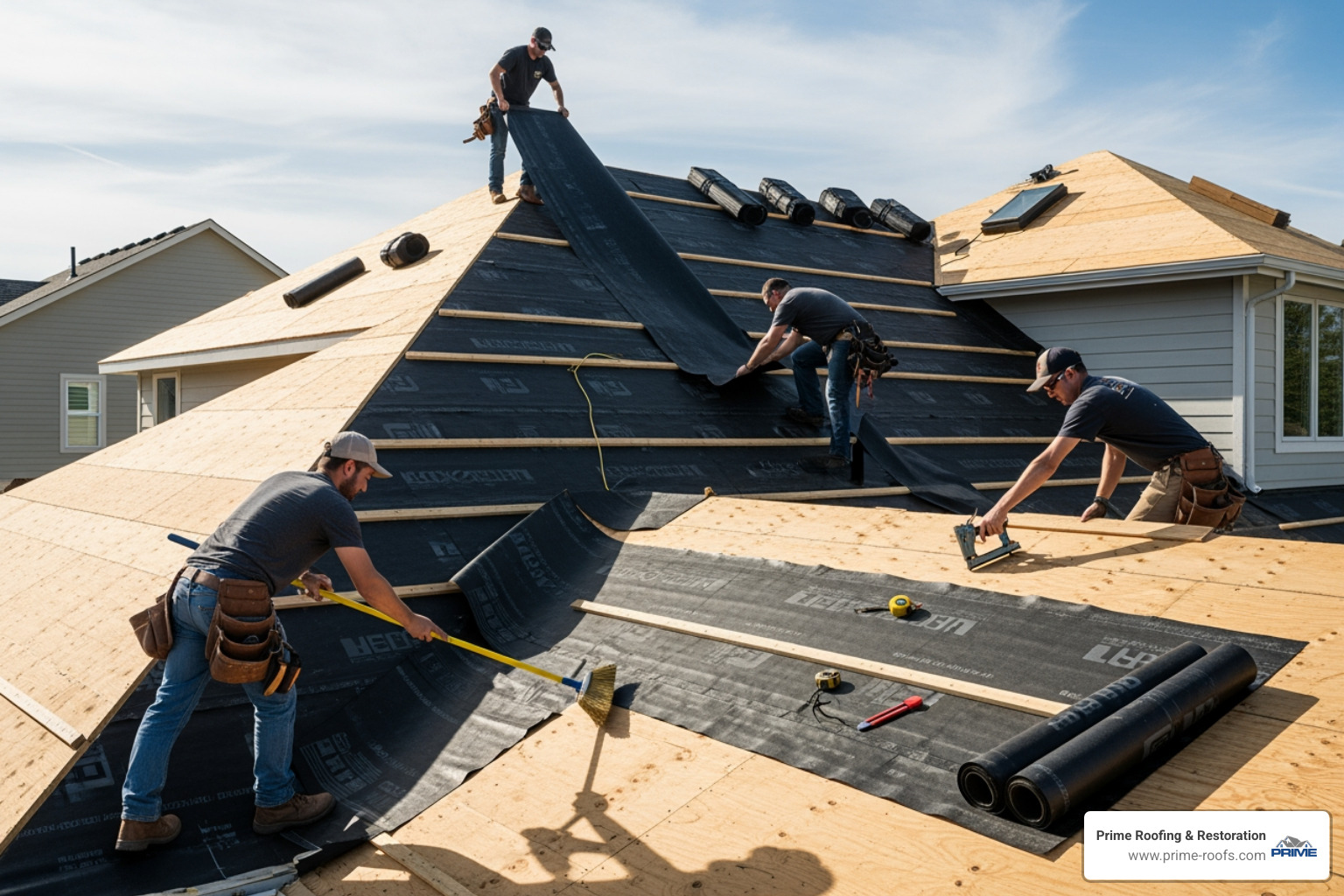
An expert roof installation is a systematic, highly technical operation where every step is meticulously executed to ensure maximum durability, weather resistance, and longevity. While a typical residential project on an average-sized home can often be completed in one to three days, factors like roof complexity, unexpected structural repairs, or adverse weather can extend this timeline. Each stage is a critical building block for the roof’s overall performance and integrity.
Here is a detailed breakdown of the professional installation process:
-
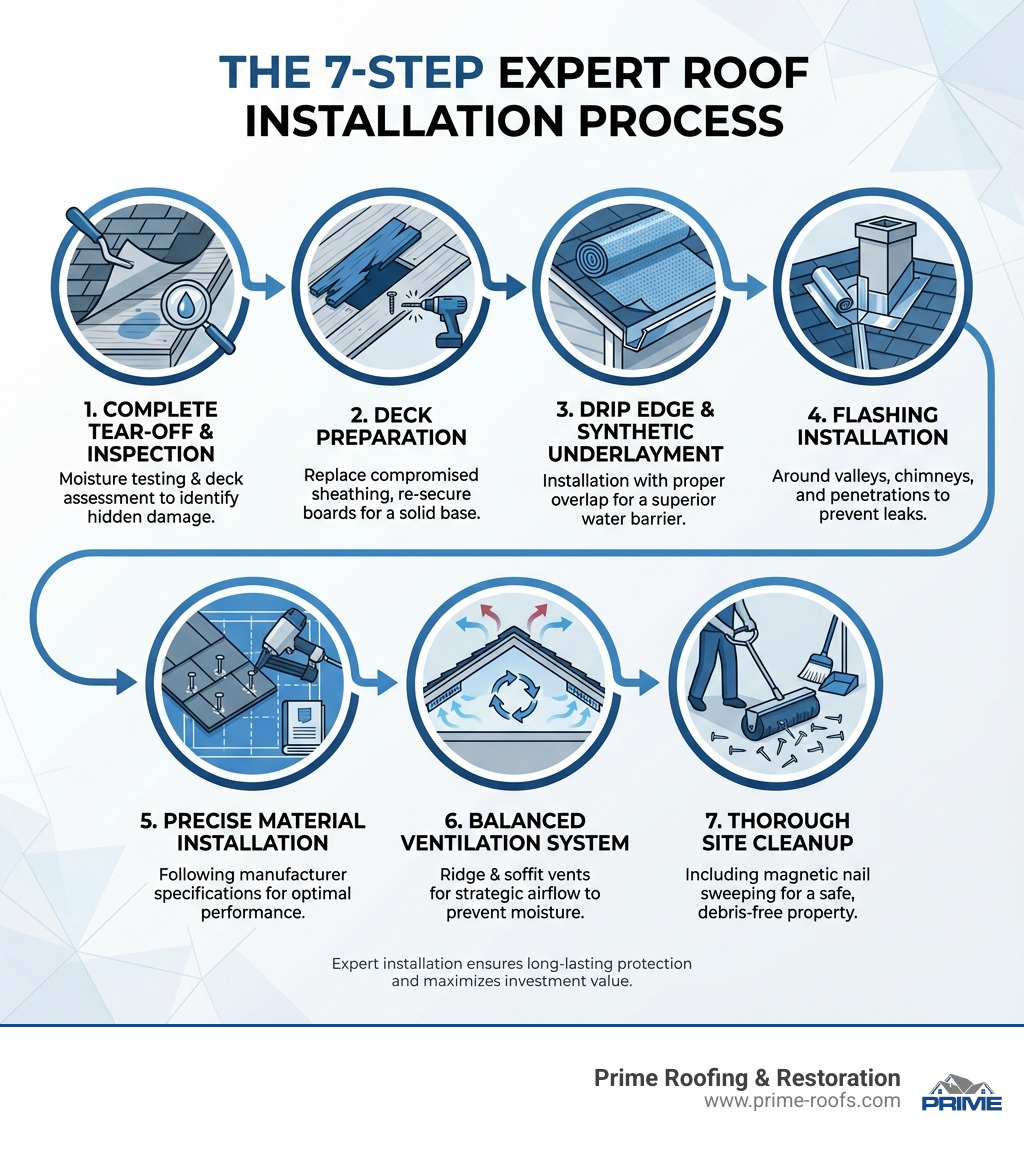
Step 1: Property Protection, Tear-Off & Thorough Inspection: The process begins before a single shingle is removed. The crew protects your property by covering landscaping, A/C units, and windows with tarps or plywood. Then, they systematically remove all old roofing materials down to the bare wood deck. This is non-negotiable. This step allows for a complete and thorough inspection of the deck, where they look for water stains, soft or spongy wood indicating rot, and delaminated plywood. They also check to ensure the deck is properly fastened to the roof trusses.
-
Step 2: Roof Deck Preparation: This is where the foundation for the new roof is perfected. Any rotted or compromised plywood or OSB sheathing identified during the inspection is cut out and replaced with new, code-approved material. The crew will also re-fasten any loose deck boards to the rafters to create a solid, smooth, and secure substrate. A weak or uneven deck will telegraph imperfections through the new shingles and can lead to premature failure.
-
Step 3: Drip Edge & Secondary Water Barrier Installation: First, a metal drip edge is installed along all eaves to direct water directly into the gutters and away from the wooden fascia boards. Next, a self-adhering ice-and-water shield is applied to the most vulnerable areas of the roof—the eaves, valleys, and around all penetrations like chimneys and vents. This sticky membrane provides a crucial waterproof seal in areas prone to ice dams and wind-driven rain. Finally, a high-quality synthetic underlayment is rolled out over the entire roof deck, providing a robust secondary barrier against water intrusion should any water ever get past the shingles.
-
Step 4: Flashing and Critical Component Installation: This step requires true craftsmanship. New, corrosion-resistant metal flashing is custom-bent and installed in all valleys to channel water safely off the roof. Step flashing is woven into the shingle courses along walls, and counter-flashing is installed over it to create a watertight seal. New pipe boots are fitted over plumbing vents, and all critical areas are sealed with high-grade roofing sealant. Reusing old flashing is a major sign of a low-quality job and is a primary cause of leaks.
-
Step 5: Precise Roofing Material Installation: Whether it’s asphalt shingles or metal panels, this is where precision is paramount. The crew starts by installing a dedicated starter strip along the eaves and rakes to provide a secure seal and prevent wind uplift. The chosen roofing material is then installed with meticulous attention to alignment and exposure, following strict manufacturer specifications. The correct nailing pattern (typically 4-6 nails per shingle, depending on wind requirements) and precise nail placement within the designated nailing zone are absolutely critical to ensure the roof’s wind rating and validate the manufacturer’s warranty.
-
Step 6: Ventilation and Ridge Cap Installation: A roof must breathe. A balanced attic ventilation system is installed to allow cool, dry air to enter through soffit vents and hot, moist air to escape through an exhaust vent, typically a ridge vent running along the peak of the roof. This airflow prevents heat and moisture buildup that can lead to mold, ice dams, and shingle deterioration. Finally, special ridge cap shingles are installed over the ridge and hips to provide a finished look and a watertight seal at the roof’s peaks.
-
Step 7: Thorough Site Cleanup and Final Inspection: A professional crew takes pride in leaving your property immaculate. They conduct a thorough cleanup of all construction debris from your yard, flower beds, and driveway. Critically, they use high-powered magnetic rollers to meticulously sweep the entire area for fallen nails. A final inspection of the completed roof is performed to ensure every detail meets the highest standards of quality.
Decoding the Investment: Materials and Cost Factors
Understanding the components that make up the cost of an expert roof installation is essential for any homeowner. A full roof replacement is a significant investment, with prices often ranging from $7,000 to over $30,000. This wide range is influenced by a number of key variables. For homeowners in our service areas like Alabaster, AL, local factors such as stringent coastal building codes and the need for high-wind-rated materials can also play a significant role in the final cost.
Primary factors that influence the total investment include:
- Roof Size, Pitch, and Complexity: The total square footage of your roof is the most basic cost factor. However, a steep pitch (slope) increases the difficulty and risk for the crew, which increases labor costs. Complex roofs with multiple facets, dormers, skylights, and valleys also require more time, more detailed labor, and more materials, adding to the overall price.
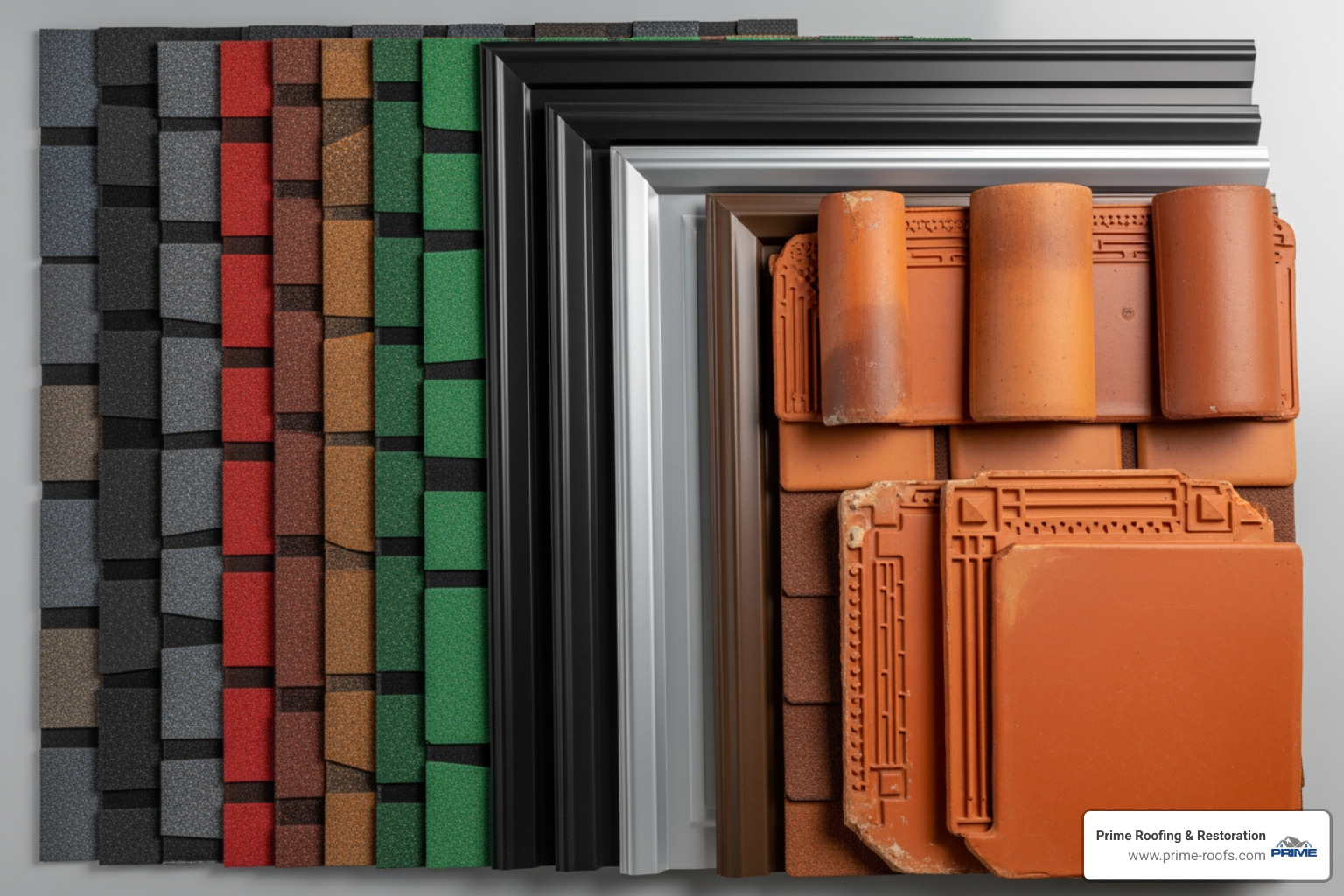
- Choice of Roofing Material: The material you select is a major cost determinant. Economical architectural asphalt shingles offer a great balance of price and performance, while premium materials like standing seam metal or tile represent a much larger upfront investment but offer superior longevity and durability.
- Labor Costs and Crew Expertise: Skilled labor is an investment in a quality outcome. The cost of labor reflects the crew’s experience, training, manufacturer certifications, and proper insurance coverage. Paying for expert labor is your best insurance against installation errors and premature roof failure.
- Geographic Location and Code Requirements: Labor rates, material availability, and disposal fees can vary significantly by region. Furthermore, local building codes (such as those in coastal areas requiring enhanced wind mitigation) can mandate more expensive materials or installation techniques, affecting the final price.
- Condition of the Existing Roof Deck: The cost of replacing rotten or damaged decking is one of the most common variables. A reputable contractor will include a per-sheet price for plywood or OSB replacement in their contract. While this can add to the total cost, it is absolutely crucial for the structural integrity of your new roof.
Choosing the Right Roofing Material for Your Home
The choice of roofing material is a balance between your budget, desired aesthetic, and long-term performance goals. Each option offers a unique set of benefits.
| Material | Cost (Installation) | Lifespan (Years) | Maintenance | Key Benefits |
|---|---|---|---|---|
| Architectural Asphalt Shingles | $7,000 – $15,000 | 25-30 | Low; regular inspections and occasional shingle replacement. | Excellent balance of cost, durability, and aesthetics. Wide variety of colors. |
| Standing Seam Metal Roofing | $15,000 – $30,000 | 50-70+ | Very Low; resistant to rot, moss, and insects. Requires occasional inspection. | Extremely durable, high wind resistance, energy-efficient (cool roof), modern look. |
| Tile (Clay/Concrete) | $20,000 – $40,000+ | 50-100+ | Moderate; requires professional inspection for cracked or slipped tiles. | Exceptional longevity, superior fire resistance, classic aesthetic. Heavy. |
| Slate | $30,000 – $60,000+ | 100+ | Low-Moderate; extremely durable but requires specialized repair by experts. | Unmatched lifespan (“100-year roof”), natural beauty, impervious to rot and insects. |
-
Asphalt Shingles: The most popular roofing material in North America, modern architectural (or dimensional) shingles offer a rich, textured appearance that mimics wood shake. They are composed of a fiberglass mat coated in asphalt and topped with ceramic granules for UV protection. Brands like GAF Timberline HDZ and Owens Corning Duration are known for their excellent performance, wind resistance, and strong warranties, making them a fantastic value for most homeowners.
-
Metal Roofing: Once relegated to commercial buildings, metal roofing, particularly standing seam, has become a popular premium choice for residential homes. Its interlocking panels provide outstanding protection against wind and rain. Metal roofs are also highly energy-efficient, as many colors are ENERGY STAR® rated to reflect solar heat, which can lower cooling costs by 10-25%. While the upfront cost is higher, the 50+ year lifespan and minimal maintenance can make it a more cost-effective choice in the long run.
-
Tile and Slate: These are luxury roofing materials that offer unparalleled beauty and longevity. Concrete and clay tiles provide a classic Mediterranean or Spanish look and are extremely durable and fire-resistant. Natural slate is the ultimate roofing material, a natural stone that can genuinely last for over a century. Both tile and slate are very heavy and may require a structural engineer to verify that the home’s framing can support the additional weight. Installation requires highly specialized artisans, contributing to their premium cost.
Protecting Your Investment: Post-Installation Maintenance
An expert roof installation provides a durable, long-lasting shield for your home, but proactive care is essential to maximize its lifespan and ensure it continues to perform as designed. A few simple, routine maintenance tasks can prevent minor issues from escalating into major, costly problems, protecting your investment for decades to come.
Conduct Regular Visual Inspections
At least twice a year (in the spring and fall) and after any major storm, take a few minutes to inspect your roof. You can do this safely from the ground with a pair of binoculars. Look for any obvious signs of trouble: missing or cracked shingles, shingles that have lifted or curled, or damaged flashing around chimneys and vents. Identifying these issues early allows for a quick, inexpensive repair before a leak can develop.
Keep Gutters and Downspouts Clean
This is one of the most critical maintenance tasks. Gutters are designed to channel water away from your roof and foundation. When they become clogged with leaves, pine needles, and other debris, water can back up and overflow. This backed-up water can seep under the edge of your shingles, leading to rot in the fascia boards and the underlying roof decking. Clean your gutters at least twice a year to ensure water can flow freely.
Remove Debris and Trim Overhanging Branches
Don’t allow leaves, pine straw, or branches to accumulate on your roof’s surfaces, especially in valleys. This trapped organic matter holds moisture against the shingles, which can promote the growth of algae and moss and accelerate the deterioration of the roofing materials. Additionally, trim any tree branches that are overhanging or touching your roof. Rubbing branches can scrape off the protective granules on shingles, and falling limbs during a storm can cause significant damage.
Check Sealants and Exposed Fasteners
Annually inspect the sealant around flashing, pipe boots, and other roof penetrations. Over time, sun exposure can cause sealants to dry out, crack, and pull away, creating a potential entry point for water. If you notice any degradation, have it professionally resealed with a high-quality, long-lasting roofing sealant. On some roof types, you may also want to check for any exposed fasteners that may have backed out and need to be secured.
Schedule Periodic Professional Check-ups
While your own inspections are helpful, they can’t replace the trained eye of a professional. Consider scheduling a professional roof inspection every 3-5 years, or immediately after a severe hailstorm. An expert can safely get on the roof to identify subtle or hidden damage, such as hail impacts that have bruised the shingle mat, or wind-lifted shingles whose seals have been broken. Many reputable roofing companies, like Prime Roofing & Restoration, offer maintenance plans that can help you stay ahead of any potential issues and ensure your roof remains in peak condition.
Frequently Asked Questions about Expert Roof Installation
How long does a typical roof installation project take?
A typical residential asphalt shingle roof installation on a home of average size (around 2,000–3,000 sq ft) is usually completed in 1 to 3 days. This timeline assumes good weather and no major structural issues found with the roof deck. More complex projects, such as those with very steep pitches or multiple skylights, or those using specialized materials like metal or tile, can take longer, typically from 3 to 7 days.
How do I know if I need a roof repair or a full replacement?
The decision between repair and replacement depends on several factors: the age of your roof, the extent of the damage, and the nature of the problem. If your roof is relatively new (less than 10-12 years old) and has isolated damage, such as a few shingles blown off in a storm, a professional repair is often the most sensible solution. However, if your roof is nearing the end of its 20-25 year lifespan and is showing widespread issues like curling shingles, extensive granule loss, and multiple small leaks, a full replacement is the more cost-effective and safer long-term investment.
What happens if the crew finds rotten wood on my roof deck?
This is a common occurrence and a sign that your roof replacement was necessary. A professional, transparent contractor will have a plan for this. Their contract should specify a per-sheet price for replacing any damaged plywood or OSB decking. When they discover rotten wood, they should stop work in that area, show you the damage (often with photos), explain the necessity of the repair, and get your approval before proceeding. This practice ensures there are no surprise charges and that your new roof is being installed on a solid, structurally sound foundation.
Can a new metal roof be installed over an existing shingle roof?
While technically possible in some jurisdictions, no reputable expert installer will recommend this. A complete tear-off of the old shingle roof is the only professional approach for several critical reasons. First, it’s the only way to inspect the roof deck for rot or damage. Second, installing a metal roof over shingles can trap moisture, leading to mold and deck rot. Third, the uneven surface of the old shingles can cause stress points and fastener problems for the new metal panels. Finally, most manufacturers will void their warranty if the roof is not installed on a clean, solid deck.
Will a new roof lower my homeowner’s insurance premium?
In many cases, yes. Insurance companies love when homeowners reduce risk, and a new roof does exactly that. Many insurers offer significant discounts for new roofs, especially if you install impact-resistant (UL 2218 Class 4) shingles or if the new roof meets fortified standards for wind mitigation. Once your expert roof installation is complete, contact your insurance agent, provide them with the documentation for your new roof system, and ask about available discounts.
What are the main differences between residential and commercial roof installations?
Residential and commercial roofing are two distinct specialties. Residential roofs are typically steep-sloped (pitched) to shed water quickly and use materials that enhance curb appeal, like asphalt shingles, metal, or tile. The projects are smaller in scale. Commercial roofs, on the other hand, are often very large and either flat or low-sloped. This requires completely different materials and techniques designed to handle standing water, such as single-ply membranes (TPO, EPDM, PVC) and complex internal drainage systems. The focus for commercial roofing is on long-term durability, energy efficiency, and protecting a large-scale business asset.
Your Home Deserves the Best: The Final Word
An expert roof installation is far more than a simple home improvement project; it is a fundamental investment in your home’s safety, long-term value, and structural integrity. By understanding the hallmarks of a truly professional job—from meticulously vetting licensed and certified contractors to appreciating the systematic, multi-step installation process—you empower yourself to make the best possible choice for your property. You recognize that the upfront cost of quality is minimal compared to the immense financial and emotional cost of a premature roof failure. For homeowners in Alabama who demand superior quality, lasting durability, and long-term peace of mind, settling for anything less than expert craftsmanship is a risk not worth taking.
When you’re ready to protect your home with a roof that is engineered and built to last, the team at Prime Roofing & Restoration provides the expertise, dedication, and transparency your investment deserves. We invite you to experience the difference that true professionalism makes.
Contact Your Local Roofing Experts
Ready to schedule a free, no-obligation inspection and estimate? Contact our team today. We are proud to serve homeowners in Alabaster, Orange Beach, and the surrounding communities.
Prime Roofing & Restoration
Alabaster Office:
123 Main Street
Alabaster, AL 35007
Phone: (205) 555-7663
Orange Beach Service Area:
Serving the Gulf Coast
Phone: (251) 555-7663