
Immediate Interior Response: Stopping the Damage Before It Spreads
When you first spot a leak, your primary goal is containment. Water damage is a progressive problem; the longer it sits, the more it destroys. For homeowners in Alabama, securing expert roofing services in Alabaster is the first step toward preventing long-term structural decay. Start by relocating any valuables, electronics, or furniture away from the impact zone. If an item is too heavy to move, cover it tightly with plastic sheeting. Water doesn’t just ruin the finish on wood; it can seep into the internal components of electronics, causing short circuits and permanent failure.
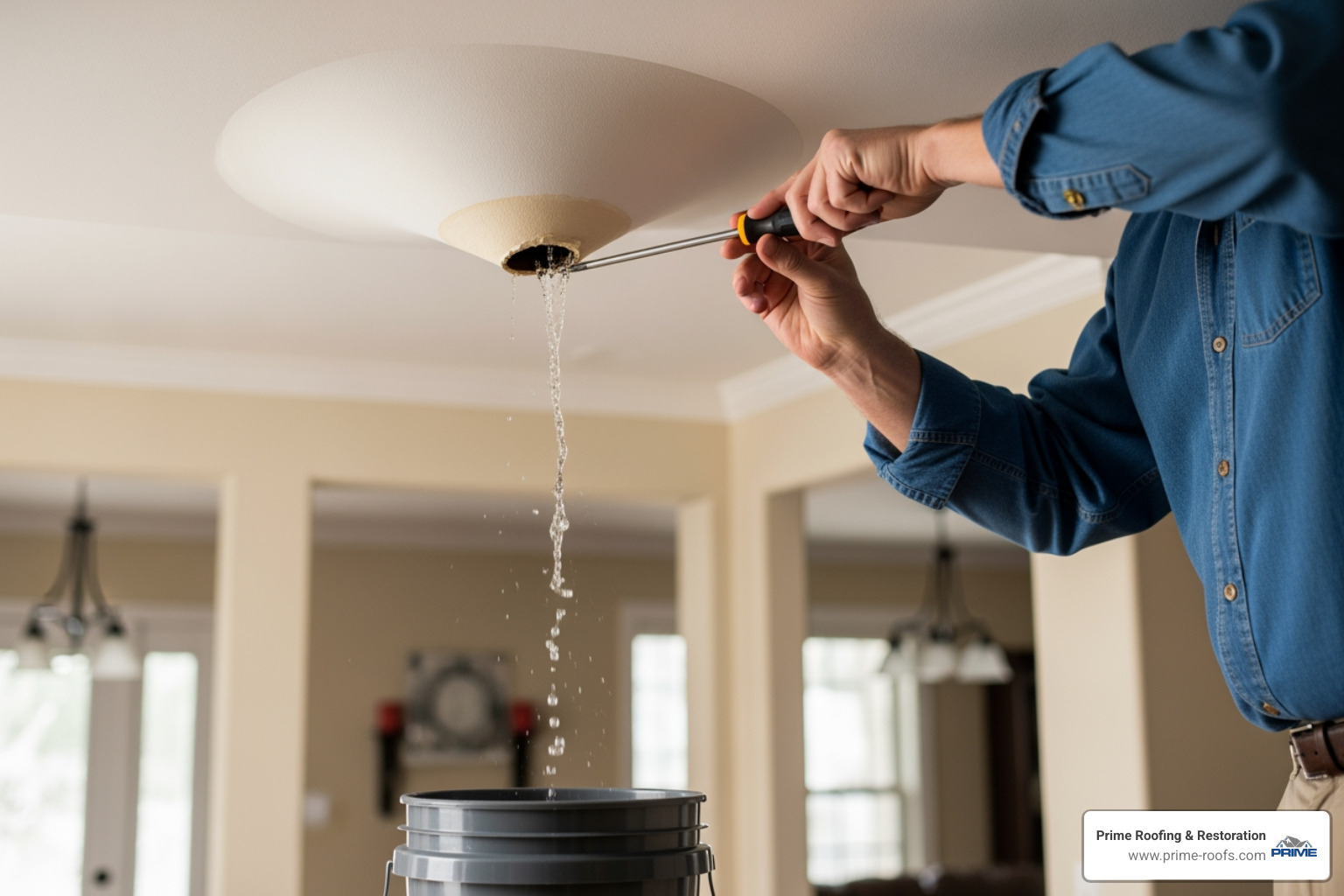
One of the most effective ways to prevent a ceiling collapse is to “drain the bubble.” If you see a bulge in your drywall or plaster, water is pooling behind it. This is known as hydrostatic pressure. Drywall is essentially a paper-backed gypsum product; when it becomes saturated, it loses its structural integrity. Use a screwdriver or an awl to poke a small hole in the center of the bulge. This creates a controlled stream that you can direct into a bucket, relieving the weight pressure that would otherwise cause the entire ceiling section to cave in. A single gallon of water weighs approximately 8.34 pounds; if a large area of your ceiling is holding several gallons, the risk of a sudden, catastrophic collapse is high.
To minimize splashing and noise, use the “string trick.” Tie a piece of heavy string or twine to the leak point in the ceiling and let the other end rest inside your bucket. Surface tension will guide the water down the string, ensuring every drop lands in the container rather than splashing onto your flooring or insulation. This is particularly useful if the leak is in a bedroom or living area where the constant ‘drip-drip’ sound can add to the stress of the emergency.
If water is dripping near light fixtures or outlets, go to your breaker box and shut off the power to that specific room immediately. Mixing water with your home’s electrical system is a recipe for fire or electrocution. Water is an excellent conductor, and even a small amount of moisture inside a junction box can cause arcing. Once the interior is stabilized, you should contact a team specializing in Emergency Roofing to assess the structural damage. Remember to keep a log of your mitigation efforts; knowing how insurance covers roof leaks can help you recover these costs later. Insurance adjusters look for evidence that the homeowner took ‘reasonable steps’ to mitigate damage, and documenting your use of buckets and tarps is key to a successful claim.
Finding the Source for an Emergency Roof Leak Fix
Finding the entry point is often the hardest part of an emergency roof leak fix. Water rarely travels in a straight line. It often enters through a cracked shingle or failed flashing, runs down a rafter, and drips onto your ceiling several feet away from the actual hole. This phenomenon is caused by gravity and the natural slope of your roof’s internal structure.
Grab a high-powered flashlight and head into the attic. Look for:
- Wet insulation: Saturated fiberglass or cellulose is a clear sign of a nearby leak. Wet insulation loses its R-value (insulating power) and must usually be replaced to prevent mold.
- Water trails: Look for shiny streaks or dark “tide marks” on the wooden rafters. These marks indicate where water has traveled over time.
- Mold or mildew: If the leak has been happening for more than 48 hours, you may see fuzzy black or white spots. According to FEMA’s guide on mold, mold can begin to grow in as little as 24 hours in humid environments like Alabama.
Always trace the water “uphill.” Follow the moisture to its highest point on the underside of the roof deck. This is your true source. If the attic is dry but the ceiling is wet, the leak may be originating from a wall penetration, a window higher up, or even a leaking HVAC condensation line. In some cases, ‘ice damming’ can occur during rare Alabama cold snaps, where ice prevents melting snow from draining, forcing it under the shingles.
Minimizing Secondary Damage
Once the leak is under control, you must address the humidity. In Alabaster and Orange Beach, our high humidity levels accelerate mold growth. Mold can colonize a damp surface within 24 to 48 hours, leading to respiratory issues and further structural degradation.
Set up dehumidifiers and high-velocity fans to circulate air. If insulation is soaked, it must be removed; wet fiberglass becomes a heavy, soggy mess that traps moisture against your ceiling joists, leading to wood rot. Wood rot (specifically brown rot) can compromise the load-bearing capacity of your home’s frame if left unaddressed.
Essential Interior Tool Checklist:
- Heavy-duty plastic buckets (at least two to allow for swapping when full)
- Absorbent towels or rags (microfiber is best for high absorption)
- Screwdriver or awl (for draining ceiling bubbles)
- Plastic tarps or heavy-duty drop cloths
- High-powered flashlight (LED is preferred for clarity)
- String or twine (for the surface tension trick)
- Utility knife (for cutting away damaged drywall if necessary)
How to Safely Execute an Emergency Roof Leak Fix
Safety is non-negotiable. Never climb onto a roof during a rainstorm, high winds, or at night. A wet roof is as slippery as ice, and the risk of a fall far outweighs the benefit of a quick patch. Wait for a break in the weather and ensure the roof surface is dry before attempting any exterior work. Wind speeds as low as 20 mph can make handling a tarp extremely dangerous, as the tarp acts like a sail and can pull you off the roof.
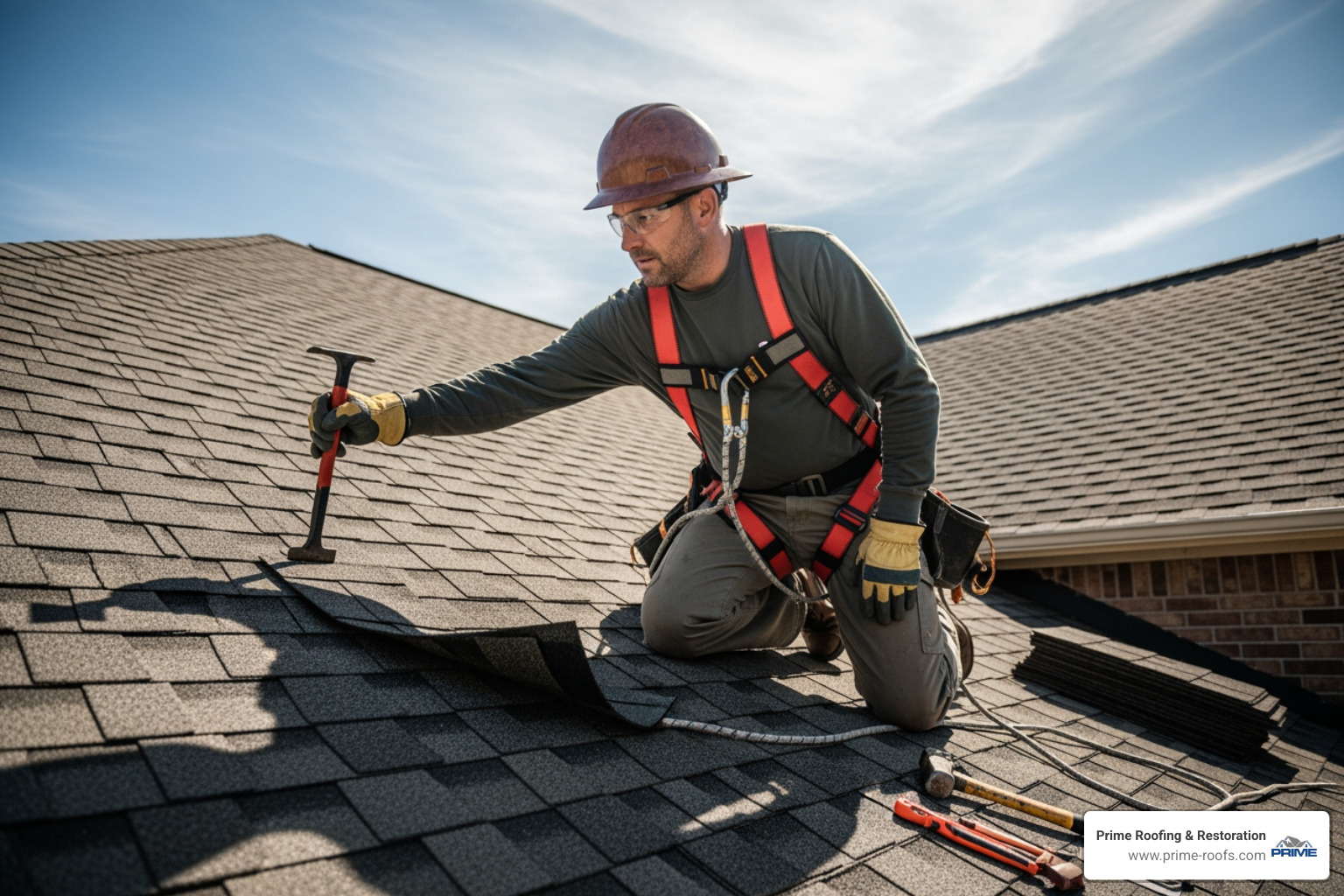
If you must go up, follow the “three-point contact” rule: always have two hands and one foot, or two feet and one hand, firmly on the ladder or roof at all times. Use a safety harness if the pitch is steep. For those uncomfortable with heights, following a Step-by-Step: How to Patch a Roof in an Emergency guide can provide the necessary safety protocols to keep you grounded while you wait for us. It is also vital to wear rubber-soled shoes with good traction and to have a spotter on the ground to steady the ladder.
Applying a Temporary Emergency Roof Leak Fix
For small holes or missing shingle tabs, a “shingle slide” or roofing cement patch is often sufficient as a stop-gap. These methods are designed to divert water away from the vulnerable underlayment until a permanent repair can be made.
- Roofing Cement: Apply a generous amount of roofing cement under the damaged shingle and press it down. This creates a water-resistant seal that can last a few weeks. Roofing cement is a thick, asphalt-based adhesive that remains somewhat flexible even after it sets, allowing it to expand and contract with temperature changes.
- Metal Flashing: You can slide a piece of galvanized metal flashing under the course of shingles above the leak. The flashing acts as a bridge, directing water over the hole and onto the shingles below. Ensure the flashing is tucked at least 4 inches under the shingles above to prevent ‘capillary action’ from drawing water upward.
- Rubberized Patches: Self-adhesive roofing tape is a quick, peel-and-stick option for small punctures or cracked pipe boots. These tapes are often reinforced with aluminum or UV-resistant backing to withstand the intense Alabama sun.
While these fixes are helpful, they are not permanent. UV rays will degrade these materials quickly, and the adhesive properties of roofing cement can fail after repeated rain cycles. Schedule a professional assessment as soon as possible to avoid a recurrence that could lead to more expensive repairs.
The Tarping Method for Severe Damage
If a large section of shingles has been stripped away by wind or a fallen branch, a tarp is your best defense. We recommend using a heavy-duty 6-mil polyethylene tarp. Thin, blue tarps found at general hardware stores are often too flimsy for high-wind conditions and may tear within days.
To install it correctly, the tarp must extend at least 4 feet past the damaged area on all sides. Ideally, the top of the tarp should go over the ridge (the peak) of the roof to prevent water from running underneath it. This is a critical step; if the top edge of the tarp is below the ridge, water will simply flow down the roof and under the tarp, rendering it useless.
Secure the tarp using 2×4 wooden battens. Wrap the edges of the tarp around the wood and screw the wood into the roof rafters using 3-inch deck screws. Do not nail directly through the tarp, as this creates hundreds of new tiny holes for water to enter. The battens provide a ‘sandwich’ effect that holds the tarp securely against the roof deck. For a deeper dive into the technical aspects of this process, see our Emergency Tarping Complete Guide. Proper tarping is an art form that requires understanding wind uplift and water flow dynamics.
Professional Restoration: Costs, Safety, and Insurance
Understanding the financial side of an emergency roof leak fix helps you make informed decisions during a crisis. While DIY fixes are cheap, they often fail to address the root cause, leading to more expensive structural repairs later. A professional repair includes a comprehensive inspection of the decking, underlayment, and flashing—components that are often overlooked by homeowners.
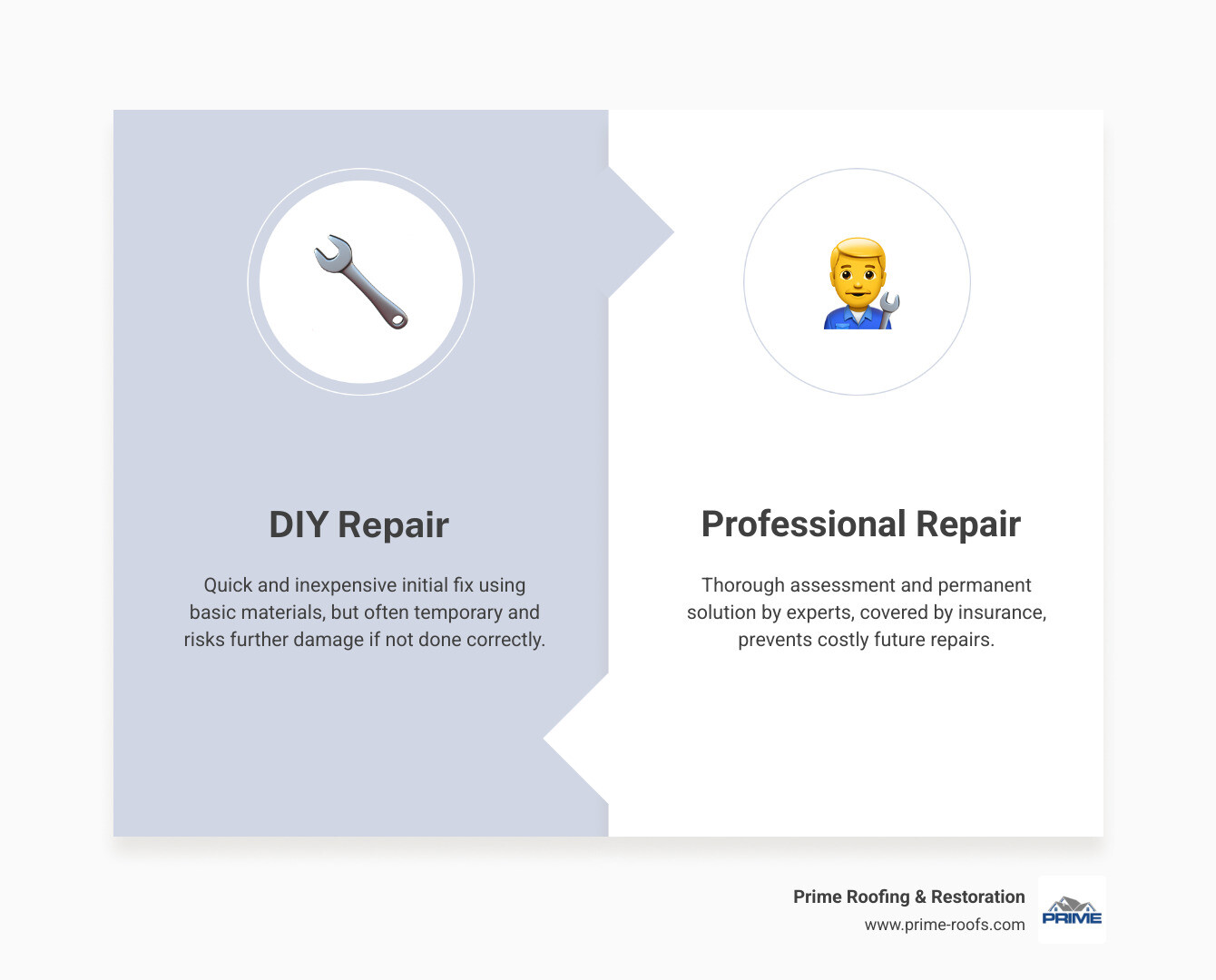
| Damage Level | DIY Estimated Cost | Professional Estimated Cost | Time to Repair |
|---|---|---|---|
| Minor (1-2 shingles) | $50 – $150 | $250 – $500 | 2 – 4 Hours |
| Moderate (Flashing/Vents) | $150 – $400 | $600 – $1,500 | 4 – 8 Hours |
| Major (Structural/Large Area) | Not Recommended | $2,500 – $6,000+ | 1 – 3 Days |
| Full Tarping Service | $100 (Materials) | $400 – $800 | 2 – 3 Hours |
For a more detailed breakdown of what affects these prices, check our guide on Water Leak Roof Repair Cost. Factors such as roof pitch (steepness), height, and the type of roofing material (asphalt vs. metal vs. tile) significantly impact the final invoice.
When to Call a 24/7 Specialist
There are certain scenarios where DIY is simply not an option. You should call a professional immediately if you notice:
- Structural Sagging: This indicates that the roof decking or rafters are saturated and could collapse. This is a life-safety issue.
- Electrical Hazards: If water is flowing through light fixtures or your breaker panel. Do not touch any metal surfaces in the home if this is occurring.
- Large-Scale Loss: If more than a 5×5 foot area of shingles is missing, the structural integrity of the underlayment is likely compromised.
- Complex Materials: Tile and slate roofs require specialized equipment and knowledge; walking on them incorrectly will cause more damage than the leak itself. Slate, in particular, can be brittle and requires specific hooks for access.
Finding reliable emergency support ensures that the job is done right the first time, preventing “ghost leaks” that disappear and reappear with every storm. These intermittent leaks are often the most dangerous because they cause slow, hidden rot.
Navigating the Insurance Claim Process
Most homeowners’ insurance policies cover roof leaks if they are caused by a “sudden and accidental” event, such as a storm, hail, or a fallen tree. They typically do not cover leaks caused by wear and tear, age, or lack of maintenance. This is why regular inspections are so important.
To protect your claim and ensure you receive a fair settlement:
- Take Photos and Video: Capture the active leak, the damaged interior (ceilings, walls, floors), and the exterior roof damage from the ground. Do not risk your safety for a photo.
- Keep All Receipts: Save every receipt for buckets, tarps, fans, and professional mitigation services. These are often reimbursable under the ‘Loss Mitigation’ clause of your policy.
- Be Proactive: Insurance companies expect you to take “reasonable steps” to prevent further damage. If you fail to tarp a hole and a second storm causes more damage, the insurer may deny the additional costs.
- Call Us First: We can meet with your adjuster to ensure they see the full extent of the damage. Adjusters are often busy during storm seasons and may miss subtle signs of damage that a professional roofer will catch.
For more assistance with the technical side of emergency repairs, visit our emergency tarping guide.
Frequently Asked Questions about Emergency Roof Leak Fix
How long does a temporary emergency roof leak fix last?
A well-installed tarp or a roofing cement patch typically lasts between 30 and 90 days. However, this depends heavily on weather conditions. In coastal areas like Orange Beach, high winds can rip a tarp off in a single afternoon. Sealants also require 24-48 hours of dry weather to cure properly; if it rains immediately after application, the fix may fail. You should view any DIY fix as a 48-hour solution until a pro arrives.
Can I use Flex Seal or spray foam for an emergency roof leak fix?
Professional roofers generally advise against using “as seen on TV” sealants or spray foam. These products often seal the exit point of the water inside your home without stopping the entry point on the roof. This traps water inside your ceiling or walls, leading to rapid wood rot and mold. Furthermore, these materials are extremely difficult to remove and can make a permanent professional repair more expensive because the roofer may have to replace entire sections of decking that were covered in foam.
What are the most common causes of sudden roof leaks?
- Damaged Flashing: The metal transitions around chimneys, dormers, and vents are the most common failure points. Over time, the sealant around flashing dries out and cracks.
- Pipe Boot Failure: The rubber seal around plumbing vents can crack due to Alabama’s intense heat and UV exposure. These usually last about 10 years, while shingles last 20+.
- Clogged Gutters: When water can’t flow off the roof, it backs up under the shingles via capillary action. This is why gutter cleaning is a vital part of roof maintenance.
- Wind-Blown Debris: Branches or hail can puncture the protective granule layer of your shingles, exposing the asphalt mat to the elements.
Does a roof leak mean I need a whole new roof?
Not necessarily. Many leaks are localized to a specific area like a valley or a vent pipe. If the rest of the roof is in good condition and has remaining service life, a targeted repair is often sufficient. However, if the leak is caused by widespread shingle degradation or if the roof is over 20 years old, a replacement may be the more cost-effective long-term solution.
How do I know if my roof leak is an emergency?
If water is entering the living space, affecting electrical systems, or causing visible ceiling sagging, it is an emergency. If you only notice a small water stain in the attic that isn’t growing, it may be a ‘priority repair’ but not necessarily a midnight emergency call. When in doubt, call a professional to prevent the situation from escalating.
Conclusion
An emergency roof leak fix is a race against the clock. By acting quickly to protect your interior and calling in the experts for the exterior, you can save your home from devastating mold and structural decay. The best emergency fix is the one you never have to make. Regular seasonal inspections and gutter cleaning are your best defense against the unpredictable Alabama weather.
At Prime Roofing & Restoration, we treat your home like our own. Whether you’re in Alabaster or Orange Beach, our team is ready to provide the 24/7 support you need to get through the storm. We pride ourselves on rapid response times and high-quality craftsmanship that stands up to the Gulf Coast climate.
Don’t let a small drip turn into a major disaster. For immediate 24/7 assistance from the most reliable roofers in Alabaster, AL, call us today at 205-901-0401. We’ll be there to stop the drip and restore your peace of mind.
Company Information & Location
Prime Roofing & Restoration
Address: Alabaster, AL 35007
Phone: 205-901-0401
Hours: Open 24/7 for Emergency Services
Find Us on Google Maps:
View our Alabaster Location