
Why Immediate Action for Damaged Roof Repair Makes All the Difference
Damaged roof repair is one of the most critical and time-sensitive tasks a homeowner will face, particularly for those of us living in Central Alabama, where severe weather is a common occurrence. When a storm strikes and compromises your roof, every moment counts. Taking swift, informed action can be the deciding factor between a manageable, straightforward fix and a catastrophic, expensive full roof replacement. Understanding the comprehensive process for a professional roof repair is the essential first step in safeguarding your home, your family, and your financial well-being.
Your roof is more than just a cover; it’s an integrated system that serves as the primary shield for your entire home structure. When it’s damaged, the consequences can cascade rapidly. A single missing shingle can allow water to penetrate the underlayment, seep into the roof decking, and eventually lead to rot, mold growth in your attic, and water stains on your ceilings. What begins as a minor issue can quickly compromise your home’s structural integrity, ruin insulation, and even create electrical hazards.
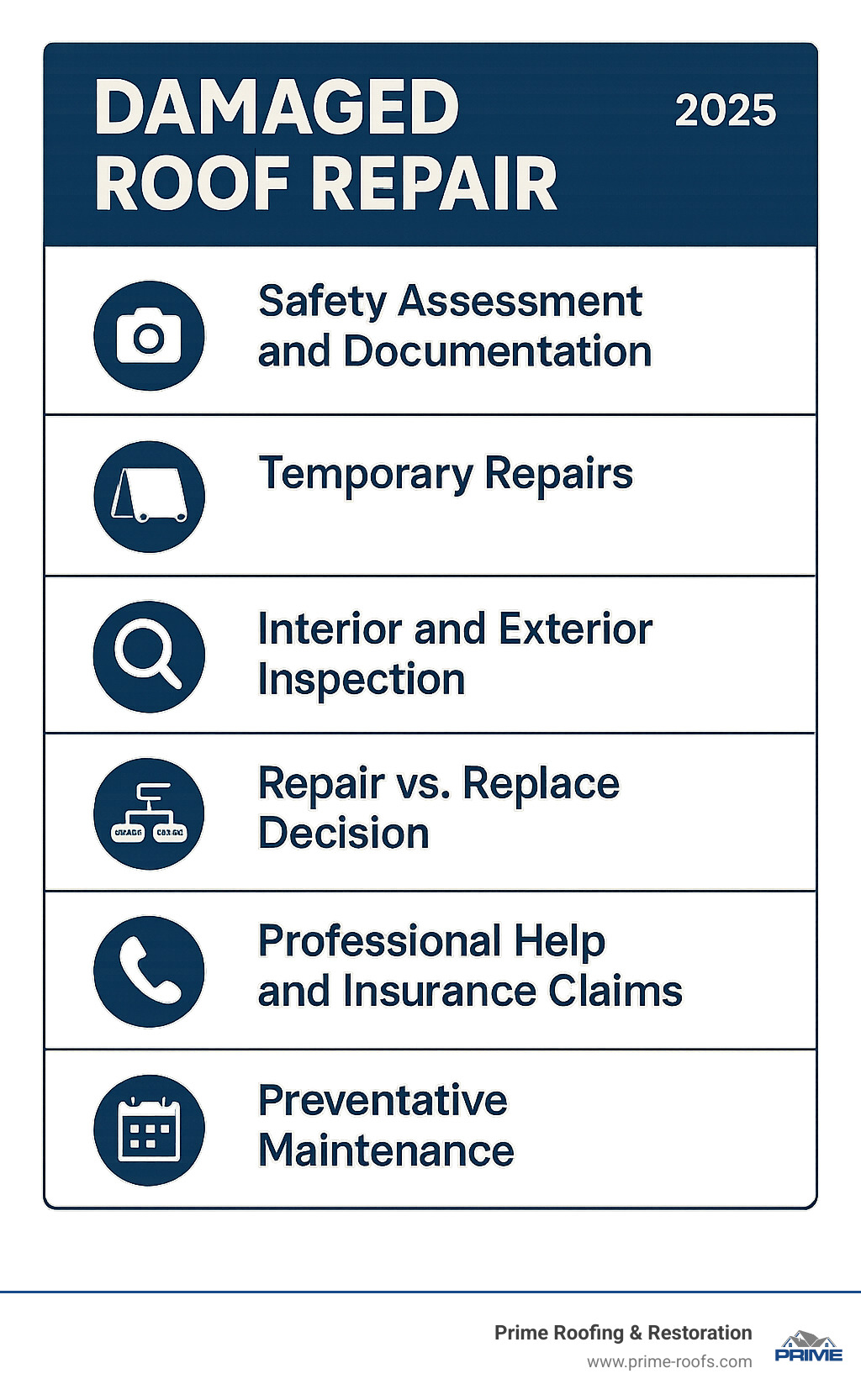
Quick Answer for Damaged Roof Repair:
- Safety First: Your well-being is paramount. Never attempt to climb on a potentially unstable, wet, or storm-damaged roof. Leave the high-risk assessments to trained professionals.
- Document Everything: Before touching anything, thoroughly document the damage with photos and videos from the ground. This evidence is indispensable for a successful insurance claim.
- Make Temporary Repairs: To prevent immediate further water intrusion, use emergency measures like heavy-duty tarps. This shows your insurance company you’re mitigating damage.
- Assess the Damage: Conduct a thorough inspection from both the exterior (safely, from the ground) and the interior (your attic and upper-level ceilings) to understand the full scope of the problem.
- Decide Repair vs. Replace: Your decision should be based on a careful evaluation of the roof’s age, the extent and nature of the damage, and a cost-benefit analysis of a short-term patch versus a long-term solution.
- Call Professionals: For any significant damage, or if you plan to file an insurance claim, engaging a reputable, local roofing contractor is non-negotiable.
Industry statistics paint a stark picture: a staggering 70% to 90% of all catastrophic home insurance losses are related to roof failure. Despite this, a survey by the National Association of Home Builders reveals that only 38% of homeowners conduct regular roof inspections. This significant gap means that the vast majority of homeowners find roof damage only after it has already caused noticeable and often costly problems inside their homes. The “out of sight, out of mind” approach to roofing is a gamble against nature that rarely pays off.
I’m Bill Spencer, Owner of Prime Roofing & Restoration. With over five years dedicated to helping homeowners across Alabama steer the aftermath of severe weather, I’ve witnessed how proactive knowledge and immediate action can save families thousands of dollars and immense stress. This guide is designed to empower you with that knowledge, so you can protect your most valuable asset with confidence.
Step 1: Assess the Storm’s Impact – A Two-Part Roof Inspection
Immediately following a severe storm, a comprehensive inspection is not just recommended—it’s crucial. Given that only 38% of homeowners regularly check their roofs, adopting a proactive and methodical approach will put you in a much better position to identify issues before they escalate. A detailed assessment will help you accurately determine whether you’re dealing with a minor issue you can handle yourself or if you require professional damaged roof repair services.
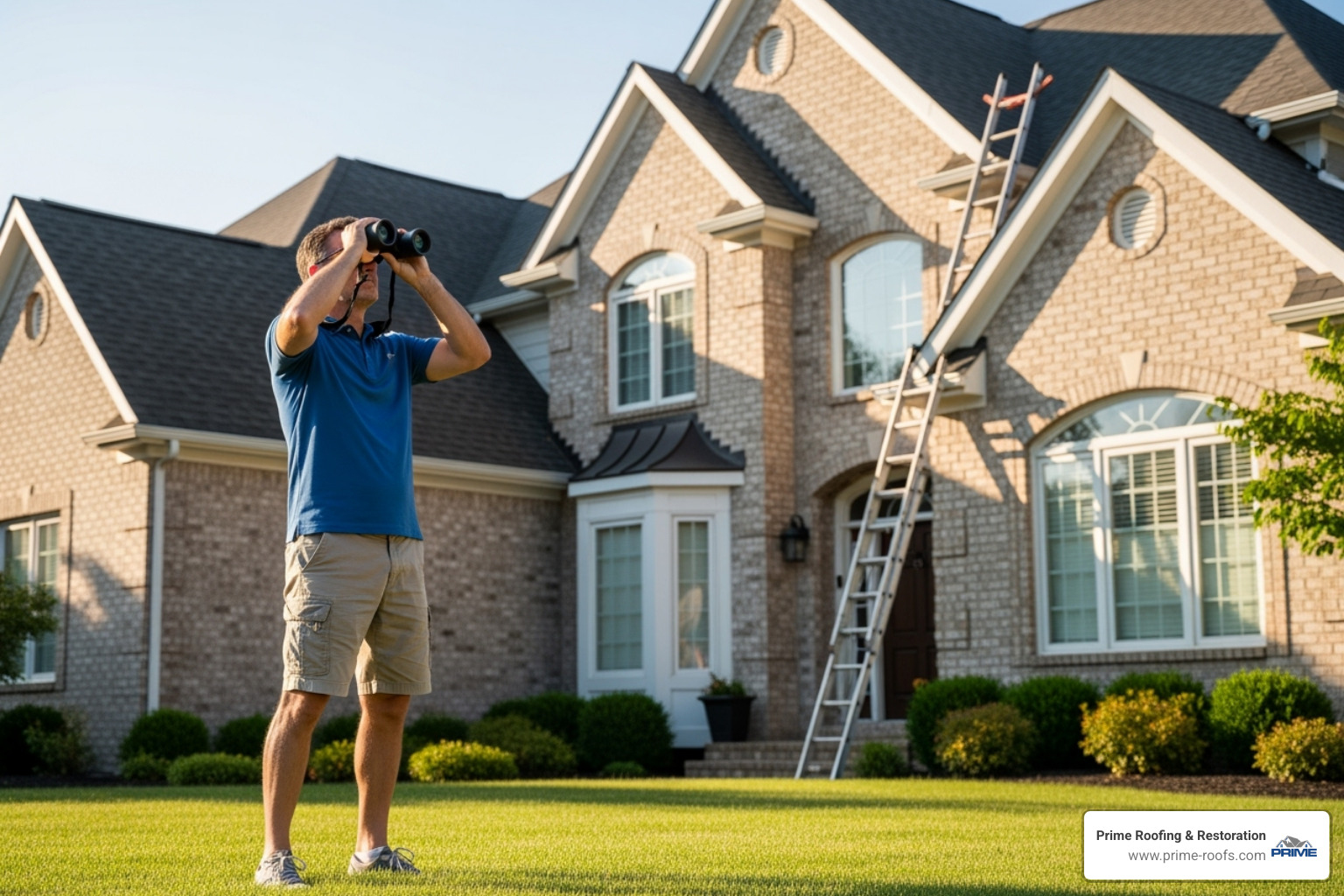
Exterior Roof Inspection: What to Look For
Begin your inspection safely from the ground. Walking on a potentially compromised roof is extremely dangerous. Use a pair of binoculars to get a clear, detailed view of the entire roof surface, paying close attention to these common indicators of storm damage:
- Missing, Cracked, or Damaged Shingles: High winds can easily lift the edges of shingles, causing them to bend, crease, or tear off completely. Look for shingles that are misaligned, lifted, or entirely absent, which exposes the vulnerable underlayment and decking to the elements.
- Damaged Flashing: Flashing consists of metal pieces installed around roof penetrations like chimneys, vents, skylights, and in roof valleys. It’s a critical component for preventing leaks in the most vulnerable areas. Carefully inspect these metal strips for any signs of being bent, dented, torn, or pulled away from the structure. Damaged flashing is a primary cause of roof leaks.
- Excessive Granules in Gutters and Downspouts: Asphalt shingles are coated with sand-like granules that protect them from UV rays and add fire resistance. A significant accumulation of these granules in your gutters is a tell-tale sign of hail damage or an indication that the shingles are reaching the end of their lifespan. This loss of protection makes the shingles brittle and susceptible to further damage.
- Dented Vents, Gutters, or Flashing: Hail that is strong enough to dent metal components on your roof has almost certainly caused significant damage to your shingles. Look for dents on soft metal roof vents, gutter guards, and air conditioning fins. This is often compelling evidence for an insurance adjuster.
- Debris on the Roof: While leaves and small twigs might seem harmless, larger branches can puncture shingles and decking. Even accumulated organic debris can trap moisture against the roof surface, promoting the growth of algae and moss and accelerating the deterioration of the shingles over time.
- Popped-Up Nails: Temperature fluctuations can cause the roof deck to expand and contract, which can slowly push roofing nails up and out of the wood. These raised nail heads can break the seal of the shingle above them, creating a direct pathway for water to enter.
For a more in-depth look at identifying hail-specific issues, our guide on How to Spot Roof Hail Damage provides expert tips and visuals.
Interior Roof Inspection: Key Warning Signs
The most urgent and undeniable signs of a damaged roof often manifest inside your home. A thorough check of your attic and the ceilings on your top floor is a critical part of your post-storm assessment:
- Leaks or Water Stains: This is the most obvious sign of a roof leak. Look for discoloration, typically in shades of yellow or brown, on ceilings and walls. Water can travel along rafters and joists, so the location of the stain may not be directly below the actual roof leak.
- Peeling Paint or Musty Odors: Long before a drip appears, moisture seeping into your walls and ceiling cavities can cause paint to bubble or peel. A persistent damp, musty, or earthy smell, especially in the attic or closets, is a strong indicator of hidden moisture and potential mold growth.
- Visible Mold or Mildew Growth: If you see patches of black, green, or white growth on interior surfaces, you have an active water problem that requires immediate attention. According to the EPA, mold can cause significant health issues, and its presence means there is likely a much larger colony hidden within the walls or insulation.
- Sagging Drywall or Ceilings: If a ceiling or wall feels soft to the touch or appears to be bowing downwards, it means that water has saturated the drywall. This is a serious structural concern, as the material has lost its integrity and could be at risk of collapse.
- Daylight Visible Through Roof Boards: Go into your attic during the day and turn off all the lights. If you can see any slivers of daylight coming through the roof deck, you have a direct hole in your roof. This is a critical issue that needs to be addressed immediately to prevent significant water damage.
- Damp or Compacted Insulation: Check the insulation in your attic. If it appears wet, compressed, or matted down, it has been compromised by moisture. Wet insulation loses its thermal resistance (R-value), leading to higher energy bills, and it becomes a breeding ground for mold and mildew.
Step 2: Found Storm Damage? Here’s What to Do Next
Finding damage to your roof can be a stressful experience, but maintaining a calm and methodical approach is crucial to prevent a minor issue from spiraling into a major, costly disaster. Timely and correct actions are your best defense against subsequent problems like interior water damage, pervasive mold, and long-term structural decay.
1. Prioritize Safety and Carefully Document the Damage
Before you do anything else, your personal safety and the safety of your family must be the top priority.
- Stay Off the Roof: This cannot be overstated. A storm-damaged roof is an unpredictable and hazardous environment. You could be dealing with slippery surfaces, weakened or broken roof decking that could collapse under your weight, or even electrical hazards from downed power lines nearby. Professional roofers have the training and safety equipment (like harnesses and fall protection) to steer these risks. Leave the hands-on inspection to them.
- Take Comprehensive Photos and Videos: Your smartphone is your most powerful tool in the initial moments. From the safety of the ground, document every sign of damage you can see. Take wide-angle shots of each slope of the roof to show the overall condition. Then, take close-up photos of specific problem areas like missing shingles, dented vents, or damaged flashing. Also, photograph any ‘collateral’ damage, such as dented air conditioning units, damaged siding, or debris in the yard. This collection of evidence will be the foundation of your insurance claim.
- Record the Storm’s Date, Time, and Nature: Make a note of the exact date and time the storm occurred. If possible, find a report from a local news source or the National Weather Service that corroborates the event (e.g., reports of high winds or specific hail sizes in your area). This information is vital for establishing that the damage was caused by a single, covered event, which is a key requirement for most insurance policies.
2. Make Temporary Repairs to Prevent Further Issues
After you have thoroughly documented the existing damage, your next step is to mitigate further harm to your home. These temporary fixes are designed to protect your home until a professional can perform a permanent repair.
- Use an Emergency Tarp: For exposed areas of the roof deck or sections with significant shingle loss, covering the area with a heavy-duty waterproof tarp is the most effective temporary solution. The tarp should be large enough to extend at least four feet beyond the damaged area in all directions. To secure it without causing more damage, avoid nailing directly through the tarp into your roof. A better method is to wrap the edges of the tarp around 2×4 boards and then screw those boards to the eaves or fascia of the roof, or use sandbags to weigh down the edges.
- Cover Large Holes with Plywood: If a tree branch or other heavy debris has created a significant puncture in your roof, a tarp alone may not be sufficient. In these cases, you can temporarily place a piece of plywood over the hole to provide a more rigid barrier against the elements before covering the entire area with a tarp.
- Apply Waterproof Sealant or Roofing Cement: For very small cracks, minor tears in a shingle, or around the base of a popped nail head, you can apply a small amount of roofing cement or a high-quality waterproof sealant as a temporary patch. Use a putty knife to apply it, ensuring you cover the entire crack and feather the edges. This is a stop-gap measure, not a permanent fix.
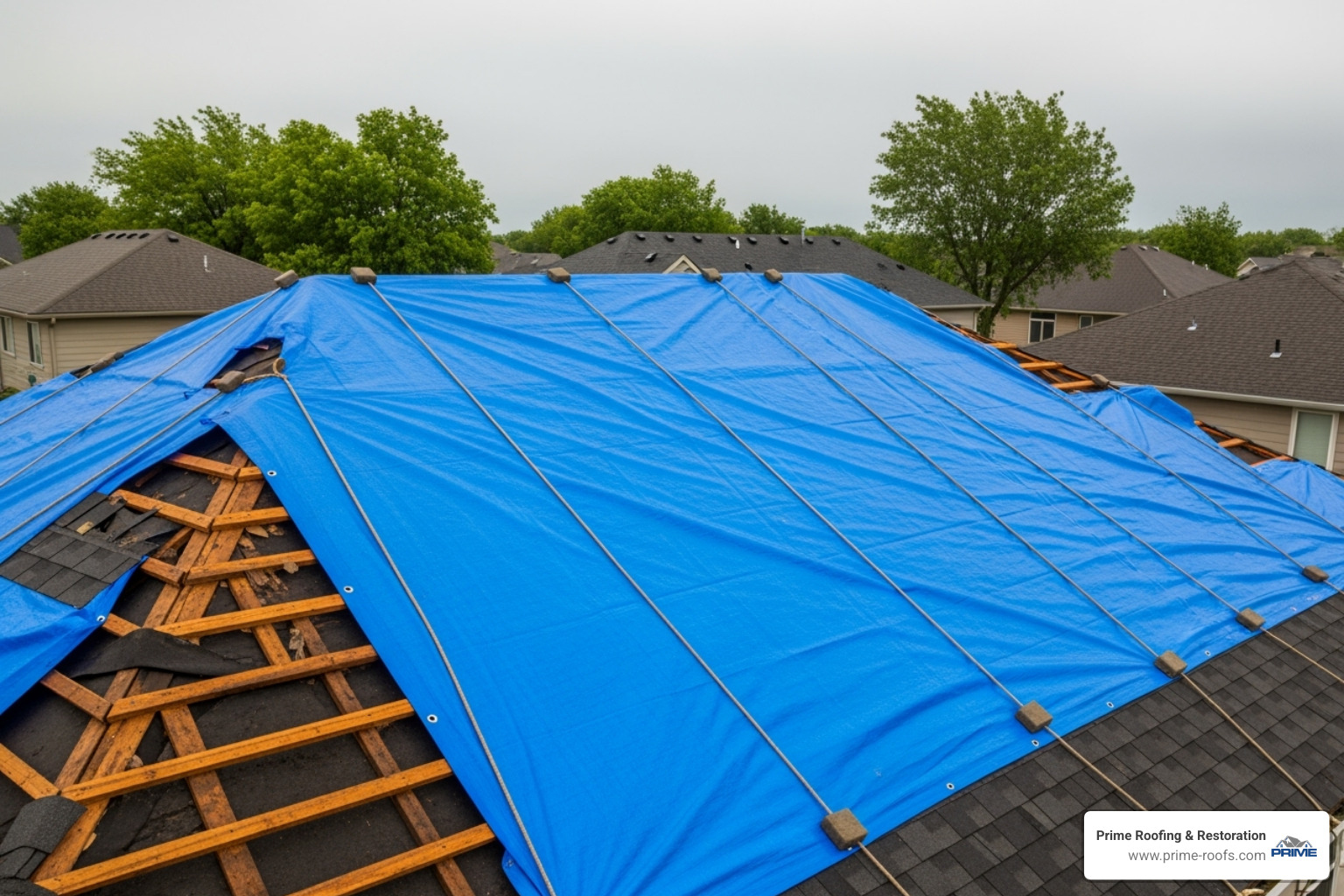
It is critical to understand that these are temporary solutions intended to last for a few days or weeks at most. Professional, permanent repairs should be scheduled as soon as possible to ensure the long-term integrity of your roof.
Step 3: DIY Damaged Roof Repair – Simple Fixes for Minor Issues
For homeowners comfortable with heights and experienced in home improvement, tackling small-scale roof damage can be a cost-effective solution. However, this work comes with inherent risks. Safety must be your absolute priority. Always use a sturdy, properly-angled extension ladder that is secured at the base and top. Maintain three points of contact (two feet and one hand, or two hands and one foot) when climbing. Wear appropriate personal protective equipment (PPE), including heavy-duty gloves, safety glasses, and, most importantly, soft-soled, non-slip footwear. For best results and safety, only work on your roof on a warm, dry day when shingles are more pliable and the surface is not slippery.
How to Replace a Single Damaged Shingle
This is one of the most common DIY damaged roof repair tasks. A single torn or missing shingle can be a gateway for water. You will need a flat pry bar, a hammer, a utility knife, galvanized roofing nails (1 ¼ inch), a replacement shingle that matches in color and style, and a tube of roofing sealant.
- Break the Seal: The shingle you need to replace is sealed to the one below it and nailed under the one above it. On a warm day, you should be able to gently slide your pry bar under the edges of the shingle directly above the damaged one to break the sealant bond. Do this carefully to avoid damaging the good shingles.
- Expose and Remove the Nails: Once the seal is broken, gently lift the edge of the overlapping shingle to expose the row of nails holding the damaged shingle in place. Use the pry bar to carefully pry up these nails.
- Remove the Old Shingle: With the nails removed, the damaged shingle should slide out easily. Inspect the area for any hidden damage to the underlayment.
- Insert the New Shingle: Slide the new shingle into the empty space, making sure it is aligned correctly with the surrounding shingles, both horizontally and vertically.
- Secure and Seal: Secure the new shingle with four galvanized roofing nails, placed according to the manufacturer’s specifications (generally, just below the sealant strip). If you live in a high-wind area, use six nails. Finally, apply dabs of roofing sealant under the tabs of the overlapping shingle and press it down firmly onto the new shingle to create a new, watertight bond.
How to Fix Curled Shingles
Shingles can curl at the edges due to age, excessive attic heat, or poor ventilation. If a shingle is curled but still flexible and not brittle, you may be able to repair it.
- Wait for a Warm Day: As with shingle replacement, warmth is your friend. The sun’s heat will make the shingle pliable and much less likely to crack when you handle it.
- Apply Roofing Sealant: Carefully lift the curled edge of the shingle. Using a caulking gun, apply a generous, thick bead of roofing sealant to the underside.
- Press and Weigh Down: Firmly press the curled edge down flat against the roof. Place a heavy object, like a brick, on top of the shingle to hold it in place for at least 24 hours. This allows the sealant to fully cure and create a strong, lasting bond.
How to Seal a Minor Leak or Crack
For a tiny crack in a shingle or a small gap in flashing, a quality roofing cement can provide a temporary but effective seal, preventing a small problem from growing.
- Clean the Area Thoroughly: The sealant will not adhere properly to a dirty surface. Use a stiff-bristled brush to remove all loose granules, dirt, dust, and any other debris from the area around the crack.
- Apply Cement: Use a putty knife or a caulking gun to apply the roofing cement, forcing it deep into the crack itself. Then, spread a thin layer of cement over the top of the crack, extending it about an inch on all sides.
- Smooth and Blend: Smooth the sealant with your putty knife to create an even, watertight seal. For a better aesthetic match on an asphalt shingle, you can take some loose granules collected from your gutters and sprinkle them over the wet cement to help it blend in with the rest of the roof.
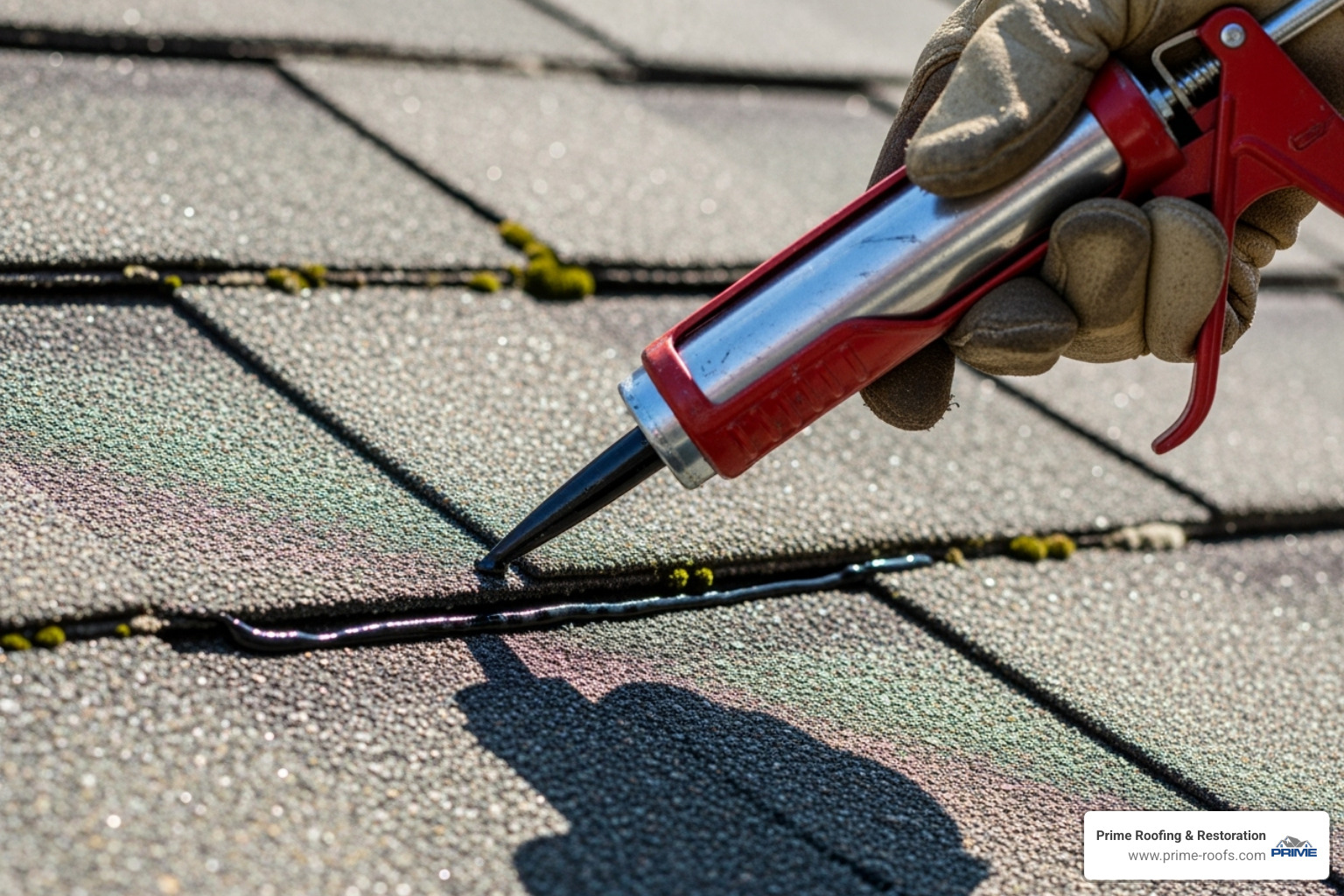
These DIY fixes are only suitable for minor, isolated issues on roofs that are easily and safely accessible. For widespread damage, multiple leaks, or any work on a steep or high roof, calling a professional is the safest and most effective choice.
Step 4: Repair or Replace? Making the Right Choice for Your Roof
One of the most significant decisions a homeowner faces after finding roof damage is whether to repair the affected areas or invest in a full roof replacement. This choice has major implications for your budget, your home’s protection, and its long-term value. The age of your roof is a primary factor in this decision. Most standard asphalt shingle roofs have a lifespan of 20 to 25 years. If your roof is approaching or has surpassed this age, even a seemingly minor repair might be a poor investment, as a full replacement may be the more prudent and cost-effective long-term solution.
| Feature | Roof Repair | Roof Replacement |
|---|---|---|
| Cost | Lower initial cost ($150 – $7,000) | Higher initial investment ($6,700 – $80,000+) |
| Time | Quick, often completed in hours to a few days | Longer process, taking several days to weeks |
| Best For | Localized, specific damage on younger roofs | Widespread damage, systemic issues, or old roofs |
| Long-Term Solution | A short-term fix that addresses an immediate problem | A long-term solution providing decades of protection |
| Warranty | May only cover the patched area; can void system warranty | Provides a new, comprehensive warranty for materials and labor |
| Impact on Home Value | Neutral; prevents value loss from damage | Positive; increases curb appeal and overall property value |
When Roof Repair Is Enough
A professional damaged roof repair is often the most logical and sufficient option for newer roofs that have sustained isolated damage. A repair makes sense under the following circumstances:
- The damage is localized to a specific, small area. For example, if a single tree limb fell and damaged a few shingles in one spot, but the rest of the roof is in excellent condition.
- Your roof is under 15 years old and has been well-maintained. A younger roof has plenty of life left, and a simple repair can restore its integrity without the need for a full replacement.
- You only have a few missing or damaged shingles from a windstorm. Replacing a handful of shingles is a straightforward and cost-effective repair.
- You have a minor leak from a single, easily identifiable source, such as a popped nail or a small crack in the flashing around a vent pipe.
- The majority of your roof’s flashing is intact and in good condition, and the issue is confined to a small, repairable section.
5 Critical Signs You Need a Full Roof Replacement
In many cases, particularly with older roofs or extensive storm damage, a repair is like putting a small bandage on a major wound. A full replacement becomes the necessary and wiser choice. It’s time to start budgeting for a replacement if you observe these signs:
- Widespread Damage or Granule Loss: If 25-30% or more of your roof’s surface is damaged, or if you see large ‘bald’ patches where the protective granules have worn away, the roof’s overall integrity is compromised. At this point, chasing individual repairs is no longer cost-effective.
- Advanced Age: If your asphalt shingle roof is over 20 years old, it is living on borrowed time. Materials degrade, seals break down, and the risk of failure increases dramatically with each passing year. Investing thousands in repairs on a roof that is due for replacement anyway is not a sound financial decision.
- A Sagging Roof Deck: This is a major structural red flag. A sagging roof indicates that the underlying decking (the wood sheathing) is waterlogged, rotted, and has lost its structural integrity. This is a safety hazard that requires a full tear-off and replacement of both the decking and the roofing materials.
- Multiple Leaks or Systemic Failure: If you have leaks appearing in multiple locations throughout your home, it points to a systemic failure of the roofing system. This means the underlayment, flashing, and shingles are all failing together, and patching one leak will only result in another one appearing elsewhere soon after.
- Previous Layer-Over: If your current roof was installed over a previous layer of shingles (a common cost-cutting measure), you cannot add a third layer. Building codes require a complete tear-off down to the decking before a new roof can be installed. This is an opportunity to inspect the decking and ensure a proper installation.
A new roof is a significant investment, but it offers unparalleled peace of mind, improves your home’s curb appeal, increases its value, and often comes with a robust long-term warranty. For more guidance on this critical decision, explore our detailed article on the 5 Signs You Need Roof Replacement.
Step 5: Professional Help – Insurance, Costs, and Hiring a Roofing Expert
When dealing with significant roof damage, the process moves beyond DIY fixes and into the field of professional contractors and insurance claims. Navigating this landscape can be complex, but with the right expert guidance, you can ensure your home is properly repaired and you receive the full compensation you’re entitled to. While average repairs might cost between $300 and $1,000, a full replacement is a major investment, ranging from $6,700 for a basic asphalt roof on a simple home to over $80,000 for high-end materials on a large, complex roof. This makes understanding the process invaluable.
Navigating Your Homeowners Insurance Claim
Your insurance policy is your financial backstop for storm damage, but it’s a contract with specific rules and procedures. Understanding it is crucial for a successful damaged roof repair claim.
- Review Your Policy: Before you even call your insurance company, locate your policy documents. Understand what types of damage are covered (e.g., wind, hail) and, most importantly, what your deductible is. This is the amount you will have to pay out-of-pocket before your coverage kicks in.
- Understand Your Coverage Type: ACV vs. RCV: This is one of the most critical distinctions. An Actual Cash Value (ACV) policy will only pay for the depreciated value of your damaged roof. For example, if your 15-year-old roof with a 25-year lifespan is destroyed, an ACV policy might only pay for 40% of a new roof. A Replacement Cost Value (RCV) policy, which is more common and preferable, covers the full cost of replacing your roof with new, similar-quality materials, minus your deductible.
- File Promptly and Document Everything: Most policies have strict time limits for filing a claim after a storm, so don’t delay. When you call, provide the date of the storm and the documentation you’ve collected. You will be assigned a claim number—keep it handy.
- Meet the Adjuster with Your Roofer: Your insurance company will send an adjuster to inspect the damage. It is highly recommended to have your chosen roofing contractor present for this inspection. A qualified roofer can advocate on your behalf, pointing out damage the adjuster might overlook and ensuring the scope of work is accurate and comprehensive. This single step can significantly impact the outcome of your claim.
When to Call a Professional for Damaged Roof Repair
While a DIY approach can work for the smallest of issues, there are clear situations where calling a professional is not just recommended, but essential.
- Extensive or Structural Damage: If you see widespread shingle loss, sagging, or have multiple active leaks, you need an expert assessment immediately.
- Safety Concerns: Any roof that is steep (a pitch greater than 6/12), high (two or more stories), or has become unstable due to damage should only be accessed by trained and insured professionals with proper safety gear.
- Filing an Insurance Claim: A reputable contractor provides the detailed, itemized estimates and professional documentation required by insurance companies. They speak the same language as adjusters and can streamline the entire claims process for you.
- Warranty Protection: Most roofing material warranties can be voided by improper installation or DIY repairs. Using a certified professional ensures your warranty remains intact.
Choosing the right contractor is paramount. Look for a local, established company with a physical address, like our office in Alabaster. Verify they are fully licensed and insured in the state of Alabama. Check online reviews and ask for local references. A trustworthy contractor will provide a detailed, written estimate without using high-pressure sales tactics. Avoid “storm chasers”—out-of-town companies that flock to disaster areas, perform shoddy work, and disappear when problems arise.
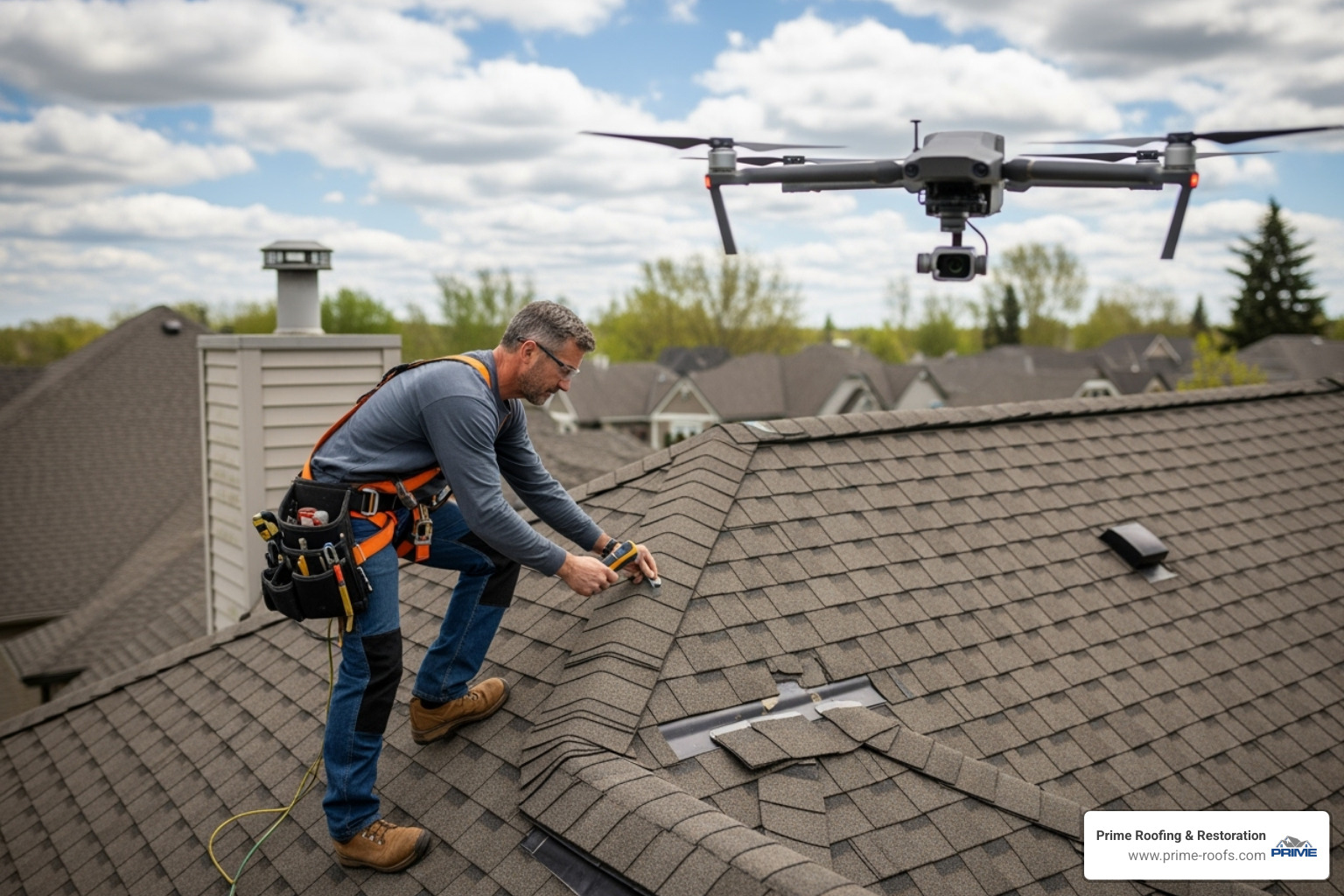
For professional damaged roof repair in Central Alabama, our experienced team is here to provide an honest assessment and guide you through every step of the process.
Prime Roofing & Restoration
Address: 5 Brown Cir, Alabaster, AL 35007
Phone: (205) 661-8190
Step 6: Proactive Protection – Preventing Future Storm Damage
The most effective and least stressful damaged roof repair is the one you never have to make. While you can’t control Alabama’s weather, you can take proactive steps to fortify your roof against it. A consistent preventative maintenance routine is the key to minimizing the risk of future storm damage, maximizing your roof’s intended lifespan, and ensuring it remains a steadfast shield for your home.
The Importance of a Regular Maintenance Schedule
Regular maintenance is your first and best line of defense. By catching and addressing minor issues early, you can prevent them from becoming major, costly failures during a severe storm. Think of it as a seasonal health check-up for your roof.
- Schedule Bi-Annual Inspections: Make it a calendar event to inspect your roof every spring and fall. A spring inspection allows you to assess any damage caused by winter weather and prepare for summer storms. A fall inspection helps you clear debris and ensure your roof is ready for the colder, wetter months. You should also perform an inspection after any major weather event.
- Maintain Clean Gutters and Downspouts: This is one of the most critical maintenance tasks. Clogged gutters cause rainwater to back up and overflow. This water can seep under the edge of your shingles, rot the fascia boards and roof decking, and even cause foundation issues. Clean your gutters thoroughly at least twice a year, in late spring and late fall.
- Remove Debris Promptly from the Roof Surface: Don’t let leaves, pine needles, and branches sit on your roof. This organic matter traps moisture against the shingles, which can lead to the growth of destructive algae and moss, and accelerate the deterioration of the roofing materials.
- Trim Overhanging Trees and Branches: Trees are a beautiful part of your landscape, but overhanging limbs pose a significant threat. They can scrape against shingles, wearing away the protective granules. Worse, they can break off during a high-wind event and fall onto your roof, causing punctures and structural damage. Keep all branches trimmed back at least ten feet from your roofline.
The Escalating Long-Term Consequences of Neglect
Ignoring a seemingly small roof problem is a recipe for financial disaster. The consequences of neglect are not linear; they are exponential, with problems compounding over time.
- Catastrophic Structural Damage: A minor leak that goes unaddressed will saturate the wood decking of your roof, causing it to delaminate and rot. From there, the water travels to the rafters and ceiling joists, compromising their load-bearing capacity. Eventually, it can affect wall studs and your home’s very frame, turning a simple roof issue into a massive structural engineering problem.
- Chronic Leaks and Hazardous Mold: Persistent moisture is an open invitation for mold and mildew. What starts in the attic can quickly spread through your home’s HVAC system, contaminating the air you breathe. Mold remediation is an expensive, specialized process that can often cost more than the initial roof repair itself, and chronic exposure can lead to serious health problems, as noted by the Centers for Disease Control and Prevention (CDC).
- Drastically Reduced Energy Efficiency: Your roof and attic insulation are key components of your home’s thermal envelope. When a roof leak allows moisture into the attic, the insulation becomes wet and compressed, losing nearly all of its insulating R-value. This forces your HVAC system to work much harder to heat and cool your home, leading to significantly higher utility bills month after month.
- Diminished Property Value and Insurability: A damaged or poorly maintained roof is a major red flag for potential home buyers and will significantly decrease your property’s value. It can also make it difficult or more expensive to obtain or renew your homeowner’s insurance policy.
- Exponentially Higher Future Repair Costs: The math is simple but brutal. Delaying a $500 repair to replace a few blown-off shingles can lead to a $5,000 repair to replace a rotted section of decking a year later. If that is ignored, it can easily become a full $15,000+ roof replacement with additional costs for interior repairs and mold remediation.
Investing a small amount of time and money in proactive maintenance and prompt repairs is the single best way to save money, protect your family’s health, and preserve the value of your home.
Conclusion: Protect Your Home with Prompt and Professional Damaged Roof Repair
A damaged roof is not merely a cosmetic issue; it is a direct and immediate threat to the structural integrity, safety, and value of your home. As your property’s primary line of defense against the elements, it demands your full attention the moment its integrity is compromised. Ignoring a problem, no matter how small it may seem, is a gamble that can lead to devastating and costly consequences.
Throughout this guide, we have walked you through the essential steps to take in the aftermath of a storm. From the initial, safe inspection of both the exterior and interior of your home, to making critical temporary fixes to mitigate further damage, and through the crucial decision-making process of repairing versus replacing. The single most important takeaway is that proactive, prompt action is your most powerful strategy. A few missing shingles or a small, contained leak can rapidly escalate into a systemic failure of your entire roofing system if left unaddressed.
While simple DIY fixes can be appropriate for minor, isolated issues on a safely accessible roof, the vast majority of storm damage scenarios—especially those involving an aging roof, widespread problems, or the need to file an insurance claim—require the skill, knowledge, and experience of a professional. Our team of licensed, insured, and local roofing experts possesses a deep understanding of the unique challenges presented by Alabama’s weather. We are committed to providing our neighbors with honest assessments, transparent pricing, and the highest quality craftsmanship.
Your roof protects your family, your belongings, and your most valuable financial asset. Ensuring it is sound through swift and proper damaged roof repair is an investment in your peace of mind. Don’t wait for a small problem to become a catastrophe.
If you have experienced storm damage or have concerns about the state of your roof, contact a trusted local expert. For homeowners in our community, you can find reliable roofers near you in Alabaster, AL to ensure the job is done right, from the initial inspection to the final nail.