
Understanding the True Cost of Your Roof Replacement
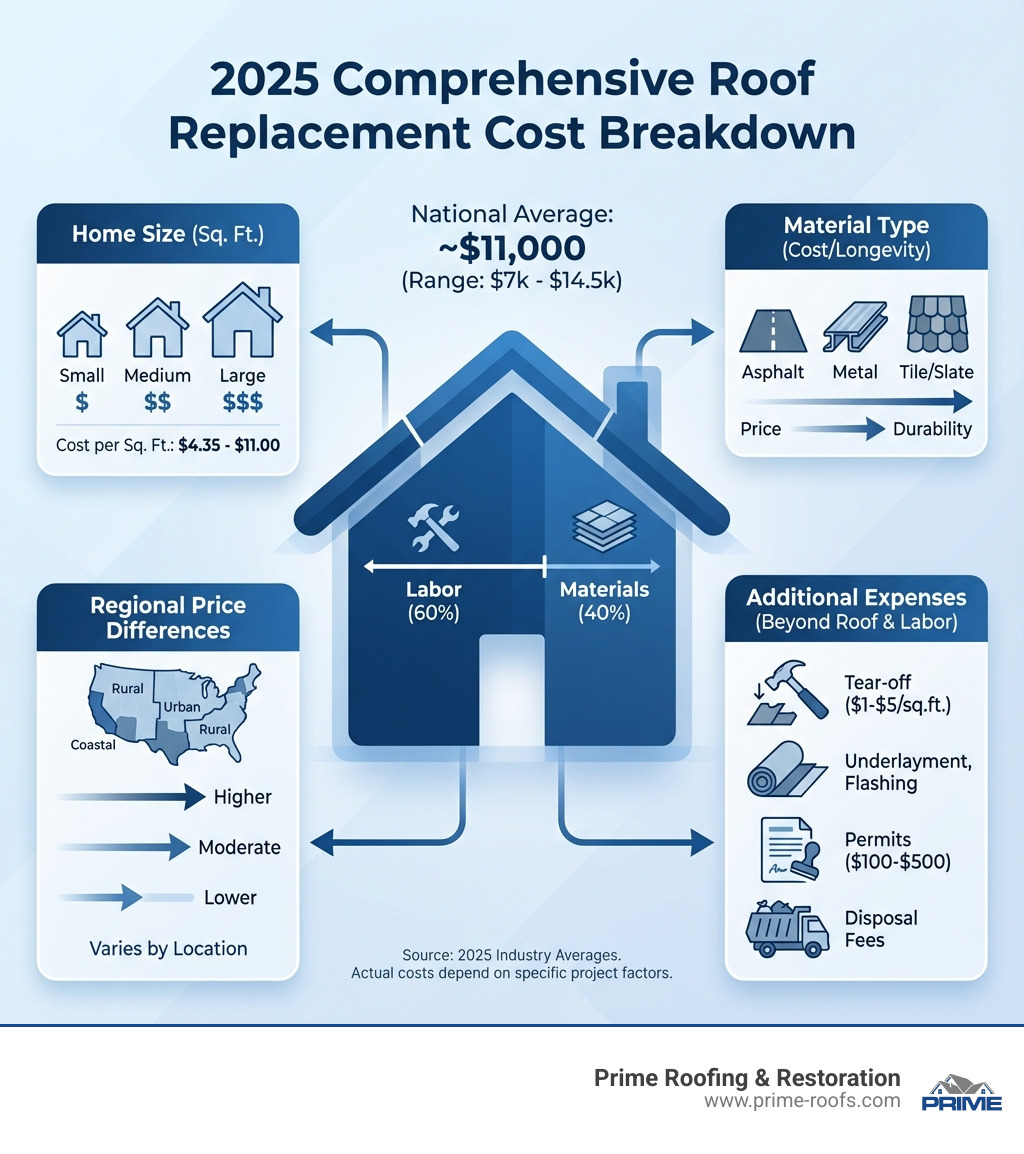
Your home’s roof is its first and most critical line of defense against the elements. It protects your family, your belongings, and the very structure of your house. When it’s time to replace it, the process can feel daunting, primarily due to the significant financial investment involved. The cost to replace roof systems in 2025 typically ranges from $7,000 to $14,500, with a national average hovering around $11,000. However, this is just a baseline. Your final price is a complex calculation influenced by critical factors like your roof’s size and pitch, the materials you select, and regional labor rates. For homeowners in Central Alabama, understanding these variables is the first step toward a successful and stress-free roof replacement project. At Prime Roofing & Restoration, we are committed to providing transparent pricing and unparalleled workmanship to help you confidently navigate this essential home improvement investment.
| Cost Factor | Typical Range | Description |
|---|---|---|
| Average Total Cost | $7,000 – $14,500 | This represents the all-in cost for a standard asphalt shingle roof on an average-sized home, including materials, labor, and disposal. |
| Cost Per Square Foot | $4.35 – $11.00 | The industry-standard metric for pricing. The final cost per square foot depends heavily on the material chosen and the complexity of the job. |
| Labor (60% of total) | $3.00 – $7.00 per sq. ft. | Covers tear-off of the old roof, installation of the new system, cleanup, and contractor overhead like insurance and warranties. |
| Materials (40% of total) | Varies by type | Includes shingles, underlayment, flashing, nails, and other components. This percentage can shift dramatically with premium materials. |
| Old Roof Removal | $1.00 – $5.00 per sq. ft. | The cost to tear off existing layers of roofing and dispose of the debris in a dumpster. More layers mean higher costs. |
| Permits & Inspections | $100 – $500 | Fees required by your local municipality to ensure the new roof meets building codes. The contractor typically handles this process. |
Replacing a roof is undeniably one of the most expensive maintenance projects a homeowner will face. Whether you’re dealing with the aftermath of a severe Alabama storm, addressing gradual wear and tear on an aging system, or simply looking to boost your home’s curb appeal, knowing the full scope of costs empowers you to make informed decisions. From the type of shingles and underlayment to the complexity of your roof’s pitch and the number of skylights, every detail affects the final price tag.
As Bill Spencer, Owner and President of Prime Roofing & Restoration, I’ve dedicated over five years to helping Alabama homeowners navigate the complexities and cost to replace roof systems. My hands-on experience in the field means I can provide realistic expectations, transparent quotes, and honest advice tailored to your specific situation and budget. We believe an educated customer is a satisfied customer.
This comprehensive guide is designed to demystify the roof replacement process. We will break down every element that influences your total cost—from the granular details of material options and labor charges to often-overlooked expenses like permits, decking repairs, and disposal fees. You’ll learn how to determine if a simple repair is sufficient or if a full replacement is the wiser long-term investment, how to spot the critical warning signs of roof failure before they lead to catastrophic damage, and how to manage this significant investment without compromising on the quality that ensures your family’s safety and peace of mind.
What is the Average Cost to Replace a Roof in 2025?
The cost to replace roof systems is almost universally quoted per square foot. For 2025, most homeowners can expect to pay between $4.35 and $11.00 per square foot for a standard asphalt shingle installation. When applied to a typical 1,800 sq. ft. home, this translates to a national average cost between $7,071 and $23,417. The final price you pay will be determined by your home’s specific size, the materials you choose, and the complexity of the installation.
While the national average for a complete roof replacement on an 1,800-square-foot home is often cited as around $9,199, it’s crucial to recognize this figure as a midpoint. Numerous factors can cause this number to fluctuate significantly. For example, a larger 2,000 sq. ft. roof can range from as low as $7,000 for a basic 3-tab shingle on a simple gable roof to upwards of $40,000 for a high-end standing seam metal or slate roof with multiple dormers and steep pitches. This wide variance underscores the importance of getting a detailed, customized quote from a qualified local contractor.
In the roofing industry, measurements are often discussed in “squares.” One roofing square is equivalent to 100 square feet of roof surface area. Therefore, a 2,000-square-foot roof is 20 squares. The cost per square to replace a roof will directly influence your total project expense, and this cost includes both materials and labor. For a more detailed breakdown of how these calculations work, you can explore our cost per sq ft to replace roof guide.
How Roof Size is Calculated
A common misconception is that the square footage of your home is the same as the square footage of your roof. Your roof’s surface area is always larger due to its pitch or slope. A steeper roof will have a significantly larger surface area than a flatter roof on a home with the same footprint. Contractors use a pitch multiplier to accurately calculate the roof’s area. For example, a roof with a standard 6/12 pitch has a multiplier of 1.12, meaning you multiply the footprint area by 1.12 to get the roof’s total square footage. This accurate measurement is the foundation of a fair and precise estimate.
Estimated Costs by Home Size (Asphalt Shingles)
The following table provides a general estimate for roof replacement costs based on the home’s square footage, assuming a standard architectural asphalt shingle and a roof of average complexity. Remember that these are starting points for budgeting purposes.
| Home Square Footage | Estimated Roof Area (sq. ft.) | Low-End Cost Range (Basic Shingles) | High-End Cost Range (Premium Shingles/Complex Roof) |
|---|---|---|---|
| 1,000 | 1,200 | $5,025 – $7,000 | $7,500 – $11,000 |
| 1,500 | 1,800 | $7,442 – $10,000 | $10,500 – $15,000 |
| 1,800 | 2,200 | $9,199 – $12,000 | $12,500 – $18,000 |
| 2,000 | 2,400 | $9,858 – $14,000 | $14,500 – $21,000 |
| 2,500 | 3,000 | $12,275 – $17,500 | $18,000 – $26,000 |
| 3,000 | 3,600 | $14,500 – $21,000 | $22,000 – $32,000 |
It’s vital to reiterate that these figures are general estimates. The unique characteristics of your home, such as its architectural style, the number of stories, local labor rates in your specific part of Alabama, and your final material choices will always result in a customized quote. A home in a coastal area like Gulf Shores may also have higher costs due to requirements for hurricane-rated materials and installation techniques.
Key Factors That Influence the Cost to Replace a Roof
Numerous interconnected variables determine the final price of your roof replacement. A thorough understanding of these factors—from the raw materials to the structural complexity of your roof—will empower you to evaluate estimates accurately and avoid any unexpected costs down the line.
Roofing Materials: Price vs. Lifespan
The material you select is the single most significant driver of your roof replacement cost. While budget-friendly options like standard asphalt shingles are popular for their affordability, premium materials such as standing seam metal or natural slate offer superior longevity, durability, and long-term value that can offset their higher initial investment.
Here’s a detailed look at common roofing materials, their estimated costs for a standard 1,700-1,800 sq. ft. roof, and their typical lifespans:
| Roofing Material | Average Cost (1,700-1,800 sq. ft.) | Average Lifespan (Years) | Cost Per Square Foot |
|---|---|---|---|
| Asphalt Shingles | $7,071 – $10,100 | 15-30 | $3.40 – $16.00 |
| Metal Roofing | $10,245 – $41,640 | 40-70 | $4.00 – $40.00 |
| Wood Shakes/Shingles | $10,230 – $17,243 | 20-30 | $6.00 – $16.00 |
| Clay/Concrete Tiles | $10,665 – $23,301 | 50-100 | $6.30 – $27.50 |
| Slate Tiles | $23,417 – $54,020 | 125-200 | $8.00 – $35.00 |
| Rubber Roofs (EPDM) | $4,235 – $7,095 | 30-50 | $4.00 – $13.00 |
- Asphalt Shingles: The most prevalent roofing material in the U.S., asphalt shingles offer a fantastic balance of cost, performance, and aesthetic variety. They come in three main types: 3-tab (the most basic and affordable), architectural or dimensional (thicker, more durable, with a textured look), and luxury (designed to mimic slate or wood shakes). Architectural shingles are the most popular choice, providing excellent value and a lifespan of 20-30 years.
- Metal Roofing: A higher upfront investment that pays dividends in longevity and performance. Metal roofs are exceptionally durable, fire-resistant, energy-efficient (reflecting solar heat), and ideal for Alabama’s intense weather, from hailstorms to high winds. Options include standing seam (sleek, modern, with hidden fasteners) and screw-down panels. Learn more about the benefits of metal roofing for Alabama homes.
- Tile Roofing (Clay/Concrete): Renowned for their distinctive Mediterranean or Spanish look and incredible longevity (50-100 years), tile roofs are a premium choice. However, they are extremely heavy and may require a structural engineering assessment to ensure your home’s framing can support the weight.
- Slate Tiles: The pinnacle of roofing materials, slate offers unparalleled longevity (often lasting over 100 years), natural beauty, and fireproof qualities. It is also the most expensive material and requires highly specialized, skilled labor for installation.
- Wood Shakes/Shingles: Offering a beautiful, rustic aesthetic, wood roofs are typically made from cedar. They provide good insulation but require regular maintenance to prevent rot, mold, and insect damage. Their lifespan is shorter than many other options and they may be restricted in areas with high fire risk.
- Rubber/EPDM: This is a solution specifically for flat or very low-slope roofs, common on modern homes or porch/patio additions. EPDM (ethylene propylene diene terpolymer) is a durable synthetic rubber membrane that is excellent at preventing leaks on flat surfaces where traditional shingles cannot be used.
For a broader overview of material options and brands, you can consult resources like The Home Depot’s roofing supplies.
Roof Size, Pitch, and Complexity
The physical characteristics of your roof are a major factor in the cost equation. Size is measured in “squares” (100 sq. ft.), and larger roofs naturally require more materials and more labor hours.
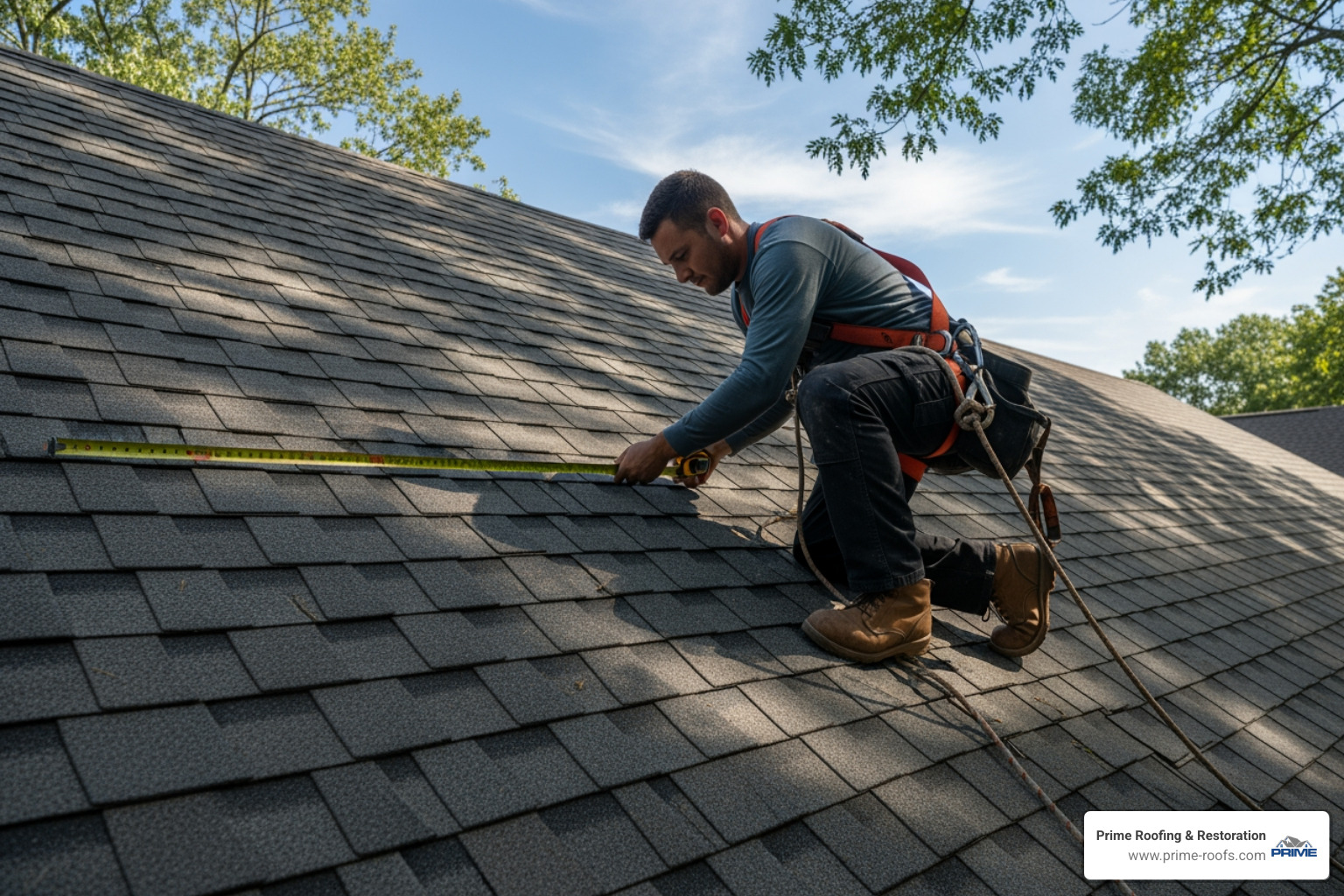
- Roof Pitch: The steepness of your roof, known as its roof pitch, is a critical cost factor. A low-slope, walkable roof is the easiest and safest to work on. As the pitch increases, the job becomes more dangerous and time-consuming. Steep roofs (typically anything over a 6/12 pitch) require special safety equipment like harnesses and roof jacks, slowing down the installation process. A very steep roof can easily add $1,000 to $3,000 to the labor portion of your bill.
- Complexity: A simple, rectangular gable roof is the least expensive to replace. Costs increase with complexity. A roof with multiple intersecting planes, valleys, hips, dormers, skylights, or chimneys is considered complex. Each of these features requires meticulous cutting, fitting, and sealing with flashing, which increases labor hours and material waste. A highly complex roof can add $1,000 to $3,000 or more to the total cost compared to a simple roof of the same square footage.
Labor Costs and Regional Price Differences
Labor is the engine of your roof replacement project and typically accounts for about 60% of the total cost. This percentage can fluctuate based on the material (e.g., slate requires more skilled labor) and job complexity. Labor costs, which can range from $1.50 per square foot for simple jobs to over $7.00 per square foot for complex projects, cover more than just hammering shingles. This includes the wages for the entire crew, the physical tear-off of the old roof, inspection of the roof deck, installation of the complete new system, thorough cleanup, and disposal fees. It also covers the contractor’s essential overhead, such as liability insurance and worker’s compensation, which protect you as the homeowner. Roofing costs are also highly location-dependent due to local economic conditions, cost of living, and demand. For instance, in Alabama, a typical roof replacement cost ranges from $10,000 to $20,000. Our roof replacement guide for Alabama provides more localized insights. You can find general data on labor wages from the US Bureau of Labor Statistics.
Additional Costs: From Tear-Off to Permits
Several other essential components contribute to the final cost. A professional quote will itemize these for full transparency.
- Old Roof Removal (Tear-Off): Removing and disposing of the old roofing material typically costs between $0.40 and $2.00 per square foot. If you have multiple layers of old shingles, the cost will be on the higher end due to the extra labor and disposal weight.
- Roof Decking Repair: The underlying wood sheathing (usually plywood or OSB) is the foundation of your roof. Once the old shingles are removed, the decking must be inspected for water damage, rot, or delamination. Repairing or replacing damaged sections is critical and typically costs about $2.20 to $3.00 per square foot for the affected areas.
- Underlayment: This is a water-resistant barrier installed on the decking before the shingles. Standard felt paper is the basic option, but modern synthetic underlayments offer superior tear resistance and water protection for a slightly higher cost of $1.50 to $2.10 per square foot.
- Ice and Water Shield: In addition to underlayment, a specialized self-adhering membrane is often installed in vulnerable areas like valleys, eaves, and around penetrations to provide extra protection against ice dams and wind-driven rain.
- Fascia and Soffit: These are the boards along the roof’s edge (fascia) and underneath the overhang (soffit). If they have rotted or been damaged, they will need replacement. Replacing fascia costs $4.25 to $8.62 per linear foot, while soffit replacement is $2.80 to $5.28 per linear foot.
- Flashing: These metal strips are installed around chimneys, skylights, dormers, and vents to prevent leaks at these critical junctions. Reusing old flashing is risky; a full replacement should include new flashing, costing between $500 and $2,000 for the entire job.
- Ventilation: Proper attic ventilation (a balanced system of intake and exhaust vents) is crucial for extending your roof’s life and improving your home’s energy efficiency. A roofer may need to add or replace ridge vents, soffit vents, or other ventilators as part of the project.
- Permits and Inspections: Most municipalities require permits for roof replacements to ensure the work complies with local building codes. These can range from $100 to $1,400, depending on your location. Our guide on roofing permits offers more details.
Roof Replacement vs. Repair: Making the Right Financial Choice
One of the most common dilemmas for homeowners is deciding whether to repair a specific problem area or invest in a complete roof replacement. While a minor repair is undoubtedly cheaper in the short term, a full replacement is often the more cost-effective and prudent solution for an aging, worn, or extensively damaged roof. Opting for a new roof system prevents the cycle of recurring repairs and protects your home from the significant water damage that can result from a failing roof.
7 Telltale Signs You Need a Full Replacement
Knowing when your roof has reached the end of its functional life is key to avoiding the costly secondary damage that a major failure can cause. If you observe one or more of the following, it’s time to call a professional for a replacement estimate.
- Age of Roof: An asphalt shingle roof’s lifespan is typically 15-30 years. If your roof is approaching or has surpassed the 20-year mark, it’s living on borrowed time. Even if it looks okay from the ground, the materials have likely become brittle and less effective.
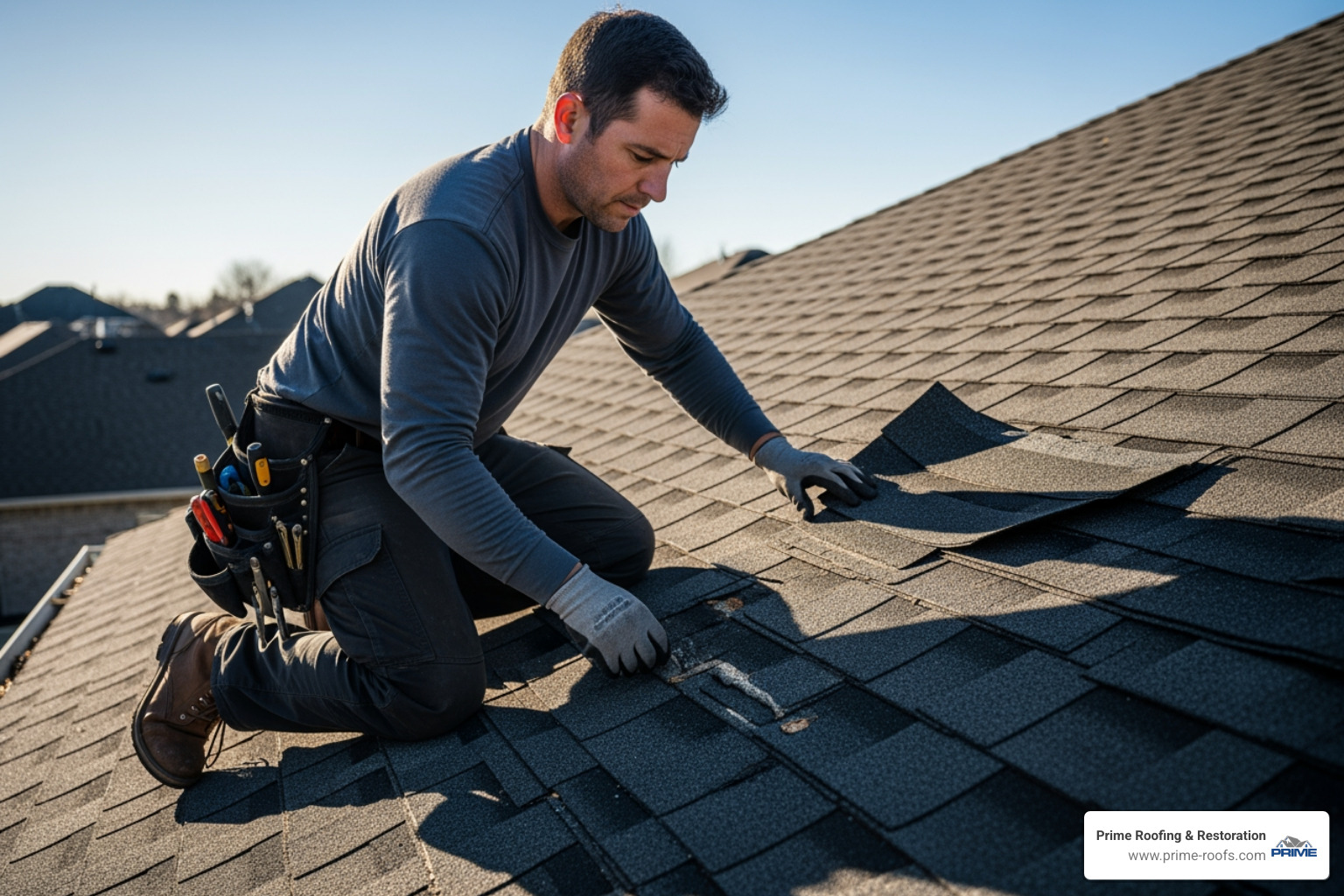
- Widespread Damaged Shingles: Look for shingles that are curling at the edges, cracking, or buckling. A few damaged shingles can be replaced, but if the problem is widespread across different sections of the roof, it indicates systemic failure.
- Missing Shingles: Shingles can be blown off during a storm. If you’re consistently finding shingles in your yard after windy days, it’s a sign that the adhesive seals have failed and the roof is vulnerable.
- Active Leaks and Water Damage: Water stains on your ceilings or walls, peeling paint near the roofline, or musty odors in your attic are undeniable proof that your roof’s integrity is compromised. Ignoring these signs can lead to dangerous mold growth and severe structural damage to your home’s framing.
- Sagging Roofline: A drooping or sagging roof deck is a serious structural emergency. It indicates that the underlying sheathing has been weakened by moisture or that there are issues with the rafters in your attic. This requires immediate professional attention.
- Excessive Granule Loss: For asphalt shingles, the sand-like granules protect the shingle from UV radiation and damage. As the roof ages, these granules flake off. If you find large accumulations of these granules in your gutters and downspouts, it’s a clear sign that the shingles are deteriorating and nearing the end of their life.
- Moss, Algae, or Mold Growth: While dark streaks (algae) are often a cosmetic issue, thick patches of moss or mold can trap moisture against the roof surface, accelerating the deterioration of the shingles and leading to rot.
If you notice these issues, it’s time to act. Learn more about these critical indicators in our detailed guide on the 5 signs you need a roof replacement.
Comparing the Cost of Roof Repair vs. Replacement
The average cost for a professional roof repair ranges from $379 to $1,763. A minor fix, like replacing a handful of blown-off shingles or sealing a leaking vent pipe, can be as low as $150 and is a perfectly viable option for isolated damage on a relatively new roof.
However, if the damage is widespread, if you have multiple leaks, or if the roof is old, the cost of repairs can quickly escalate. For example, repairing a large section of a valley might cost $1,000 or more. At a certain point, continuing to patch an old roof becomes a poor investment. This money is better allocated toward a full replacement, which provides a comprehensive solution, a fresh start with all new components, and the peace of mind that comes with a new manufacturer and workmanship warranty.
When to repair:
- The roof is less than 10-15 years old and otherwise in good condition.
- The damage is isolated to a small area (e.g., less than 10% of the total roof).
- A minor leak is coming from a specific, easily identifiable source like a nail pop or a cracked vent boot.
When replacement is more economical:
- The roof is past 80% of its expected lifespan (e.g., over 20 years old for a 25-year shingle).
- Damage is widespread across multiple slopes of the roof.
- You are facing major leaks or structural damage like a sagging deck.
- The cost of the necessary repairs exceeds 30% of the cost of a full replacement.
- You plan to sell your home soon. A new roof is a major selling point and offers a significant return on investment, with studies like Remodeling Magazine’s Cost vs. Value report showing an ROI of 49-61%.
Budgeting, Financing, and Saving on Your New Roof
A new roof is a major but necessary expense. Fortunately, there are several strategies and resources available to help manage the cost. From strategic project timing and smart material choices to exploring various financing options, homeowners can make this project more affordable without ever sacrificing the quality and safety that a professional installation provides.
How to Save Money on Roof Replacement Costs
While cutting corners on a roof is never a good idea, these smart strategies can help you secure a more affordable roof replacement without compromising on quality:
- Schedule During the Off-Season: Most roofing contractors are busiest from late summer through fall. By scheduling your project during a slower period, like late winter or early spring, you may find contractors have more flexibility in their pricing and scheduling. The main trade-off is less predictable weather, which can cause delays.
- Choose Materials Wisely: You don’t need the most expensive material to get a great roof. A high-quality architectural asphalt shingle offers one of the best combinations of price, durability, and aesthetics on the market. It’s a significant upgrade from basic 3-tab shingles for a modest increase in cost, providing a much longer lifespan and better performance.
- Get Multiple, Detailed Quotes: This is the single most important step in ensuring you get a fair price. Always obtain at least three detailed, itemized quotes from reputable, licensed, and insured local contractors. This allows you to compare not just the bottom-line price, but also the specific materials being proposed, the scope of work, and the warranty terms. Be extremely wary of any bid that is significantly lower than the others, as it may indicate cut corners, inferior materials, or a lack of proper insurance.
- Don’t Be Afraid to Negotiate: While there may not be huge margins in a competitive bid, there can be some flexibility. You can ask if the contractor offers a discount for paying in cash (which saves them credit card processing fees) or if there are any comparable but slightly less expensive material options that would still meet your needs.
- Handle Minor Prep and Cleanup Yourself: While the roofing work itself should be left to the pros, you can save a small amount of labor time by preparing the work site. This could include trimming back tree branches that are close to the roofline, moving patio furniture and potted plants away from the house, and doing a final pass with a magnetic nail sweeper after the crew has finished their cleanup.
Financing Options and Navigating Insurance Claims
If paying for a new roof out-of-pocket isn’t feasible, several options can help ease the financial strain of a sudden roof replacement cost:
- Homeowners Insurance: This is the first place to look if your roof was damaged by a specific event like a hailstorm, hurricane, or fallen tree. Navigating an insurance claim can be complex, but it can cover a significant portion of the cost. Here’s a step-by-step guide:
- Prevent Further Damage: If you have an active leak, have a roofer install a temporary tarp.
- Document Everything: Take clear photos and videos of the damage from both the ground and, if safe, on the roof. Note the date of the storm.
- Call a Reputable Roofer: Get a professional inspection and a detailed estimate before you file the claim. A good roofer can help identify all storm-related damage that an adjuster might miss.
- File Your Claim: Contact your insurance company to start the claims process. Your roofer can often help you with this.
- Meet the Adjuster: Arrange to have your contractor present when the insurance adjuster inspects your roof. Your roofer can advocate on your behalf, pointing out damage and ensuring the scope of work is accurate.
- Understand Your Settlement: You will likely receive a settlement that differentiates between ACV (Actual Cash Value) and RCV (Replacement Cost Value). Your roofer can help you understand the paperwork and ensure you receive all the funds you are entitled to after the work is completed. For more tips, see our guide on what to do after a storm damages your roof.
- Personal Loans: Unsecured personal loans from banks, credit unions, or online lenders offer quick access to funds, often within a few days. The trade-off is typically higher interest rates compared to secured loans.
- Home Equity Loans (HELOCs): If you have built up equity in your home, a home equity loan or a home equity line of credit (HELOC) can be an excellent low-interest financing option. The interest paid may also be tax-deductible (consult a tax advisor). The downside is that it uses your home as collateral.
- Contractor Financing: Many established roofing companies, including Prime Roofing & Restoration, have partnerships with third-party lenders to offer customers flexible financing plans. These can be very convenient and often include attractive options like 0% interest for a promotional period or fixed, low monthly payments.
Hiring a Pro: The Roof Replacement Process from Start to Finish
The long-term success and durability of your roof replacement project depend almost entirely on the quality of the contractor you hire. A reputable, experienced professional will not only perform a high-quality installation but will also guide you through the entire process, from the initial inspection to the final cleanup, ensuring a durable, code-compliant result and providing you with complete peace of mind.
How to Choose a Reputable Roofing Contractor
Choosing the right contractor is the most critical decision you’ll make in this process. A poor choice can lead to costly leaks, premature roof failure, and voided material warranties. When choosing a roofer, vet each candidate for these key qualities:
- Proper License and Insurance: This is non-negotiable. Verify that the contractor holds a current state license and, most importantly, carries both General Liability insurance and Worker’s Compensation insurance. Ask to see the certificates. This protects you from any liability in case of accidents or property damage during the project.
- Strong Local Reputation and Reviews: Look for a contractor with a long-standing presence in your community. Check online reviews on platforms like Google, the Better Business Bureau (BBB), and Angi. Look for consistent positive feedback regarding communication, quality, and cleanup. For example, if you’re in Alabaster, AL, you can find the best local roofers in Alabaster, AL by checking their credentials and local project history.
- Detailed, Itemized Written Estimates: A professional contractor will provide a comprehensive, written proposal that itemizes all costs. This should include the specific type and brand of materials (shingles, underlayment, flashing), the scope of work (tear-off, decking inspection, installation, cleanup), labor costs, and warranty information. Avoid vague, verbal-only quotes or high-pressure sales tactics.
- Manufacturer Certifications: Top-tier contractors often hold special certifications from leading manufacturers (e.g., GAF Master Elite, Owens Corning Platinum Preferred). These certifications mean the contractor has been factory-trained and vetted for quality, and they are authorized to offer enhanced material and workmanship warranties that other roofers cannot.
- Comprehensive Warranties: A new roof should come with two warranties. The first is the material warranty from the manufacturer, which covers defects in the roofing products themselves. The second, and arguably more important, is the workmanship warranty from the contractor, which covers errors in installation. A reputable contractor will stand behind their work with a strong workmanship warranty of at least 5-10 years.
The Typical Project Timeline: What to Expect
A standard roof replacement on an average-sized home usually takes 1 to 3 days of on-site work. However, the entire process from start to finish is longer. Here’s a step-by-step breakdown of what you can expect:
- Initial Contact & Thorough Inspection: The process begins when you contact the roofer. They will schedule a time to conduct a thorough inspection, which involves getting on the roof to assess its condition, checking the attic for signs of leaks and poor ventilation, taking precise measurements, and discussing your needs, material preferences, and budget.
- Proposal & Contract: Based on the inspection, the contractor will provide you with a detailed written estimate. Once you review and approve the estimate, you’ll sign a contract that outlines the full scope of work, payment schedule, and project timeline.
- Permits & Scheduling: With a signed contract, the contractor’s office will handle the administrative tasks of applying for the necessary municipal permits and ordering all materials for your job. They will then schedule your project, keeping you informed of the target start date.
- Material Delivery & Site Prep: A day or two before the work begins, the roofing materials (shingles, underlayment, etc.) will be delivered to your property, often placed on the roof by a boom truck or neatly in your driveway. On the morning of the project, the crew will arrive and begin by protecting your property, laying tarps over landscaping, siding, and windows.
- Tear-Off & Installation: This is the loudest and messiest part of the process. The crew will systematically tear off all old roofing materials down to the wood decking. They will inspect the decking for any rot or damage and replace boards as needed (this is a common and necessary additional cost). Then, they will install the new roof system in layers: drip edge, ice and water shield, underlayment, starter shingles, the main field of shingles, and finally, the ridge cap and ventilation system.
- Meticulous Cleanup: A professional crew takes cleanup seriously. Throughout and after the installation, they will clean up all debris. This includes a final sweep of the entire perimeter of your home with magnetic rollers to pick up stray nails from your lawn and driveway.
- Final Walk-Through & Payment: Once the project is complete, the site supervisor will conduct a final walk-through with you to inspect the finished work, ensure your complete satisfaction, and answer any questions. At this point, the final payment is typically made, and you will be provided with all your warranty documentation.
Protect Your Investment with a Quality Roof Replacement
Understanding the factors that make up the cost to replace roof systems is the foundational step toward protecting your home’s long-term value and structural integrity. While the initial investment is significant, a new, professionally installed roof is not just an expense; it’s a crucial investment in your property that provides decades of security, comfort, and peace of mind. This investment pays tangible dividends in the form of superior protection against storms, enhanced curb appeal, improved energy efficiency, and an increased home value, with a potential return on investment (ROI) of 49-61% when you decide to sell.
At Prime Roofing & Restoration, we are steadfastly committed to providing transparent pricing, using only high-quality materials, and delivering expert installation for homeowners across Alabaster, Orange Beach, Hoover, Gulf Shores, and the surrounding communities in Alabama. We operate on the belief that our job is to protect what matters most—your home and your family. We build every roof as if it were on our own home, ensuring no corners are cut and that every detail is handled with precision.
Don’t wait for a small issue to become a costly disaster. For a detailed, accurate, and no-obligation estimate customized to your home’s specific needs, we invite you to explore our comprehensive roof replacement services and contact our team of licensed experts today. We’re here to answer your questions and ensure your new roof protects your investment for many years to come.
Contact Your Local Roofing Experts
Ready to get started? Reach out to our friendly team for a free inspection and quote.
Prime Roofing & Restoration
- Address: 123 Main Street, Alabaster, AL 35007
- Phone: (205) 555-0199
- Service Areas: Alabaster, Hoover, Birmingham, Orange Beach, Gulf Shores, and greater Central Alabama.