
What Are the Best Roofing Materials? A Quick Answer
Choosing the right roofing materials for your home is one of the most important — and expensive — decisions you’ll make as a homeowner. As of May 2026, the average roof replacement costs $9,515 nationwide, with most projects falling between $5,867 and $13,212. To ensure your investment is protected, it is vital to work with expert roofing solutions in Alabaster that understand the specific needs of Alabama homes. The material you choose drives most of that cost — and determines how long your roof will last.
In the current economic climate, homeowners are increasingly looking for a balance between upfront affordability and long-term durability. The Alabaster and greater Birmingham markets present unique challenges, including high humidity, intense UV exposure, and the threat of severe convective storms. Selecting a material that can withstand these localized stressors is paramount to avoiding premature failure and costly secondary damage to your home’s interior.
Here’s a fast comparison of the most common options:
| Material | Cost per Sq. Ft. | Lifespan |
|---|---|---|
| Rolled Roofing | $1.00 – $1.20 | 5 – 8 years |
| Asphalt Shingles | $1.50 – $4.50 | 12 – 30 years |
| Wood Shakes | $4.50 – $9.00 | 30 – 50 years |
| Metal (Standing Seam) | $10.00 – $16.00 | 30 – 70 years |
| Clay / Concrete Tile | $10.00 – $20.00 | 50 – 100+ years |
| Slate | $10.00 – $30.00 | 75 – 150+ years |
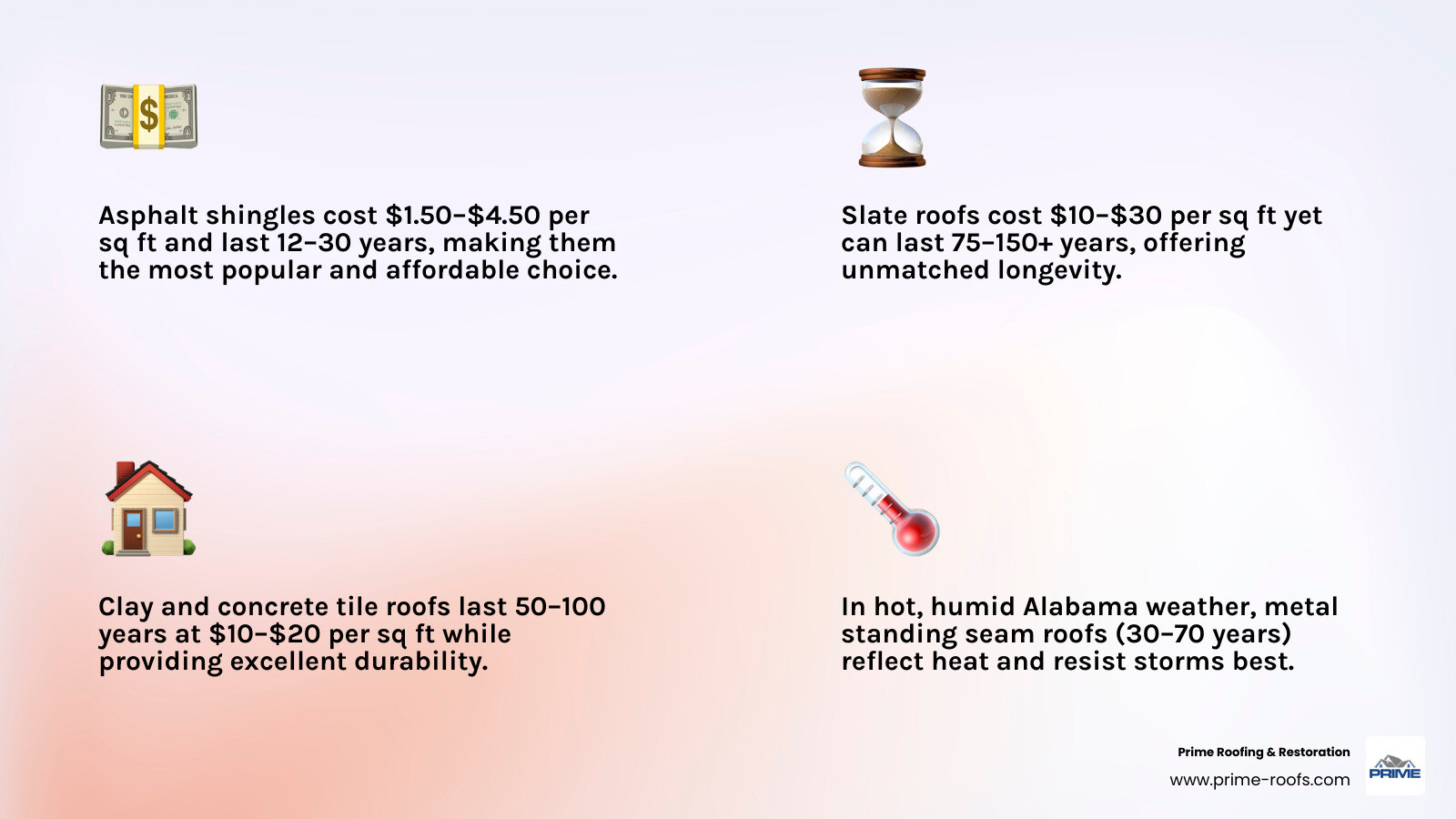
The bottom line: Asphalt shingles are the most popular and affordable choice. Metal and tile offer longer lifespans but cost more upfront. Slate lasts the longest — sometimes over a century — but carries the highest price tag.
Climate, roof structure, local building codes, and long-term maintenance all play a role in your decision. Homeowners in Central Alabama, for example, face heat, humidity, and storm risk — factors that can shorten a roof’s life if the wrong material is chosen. This guide breaks down every major material type — what it costs, how long it lasts, and where it performs best — so you can make a confident, informed decision.
I’m Bill Spencer, Owner and President of Prime Roofing & Restoration, and I’ve spent years helping Alabama homeowners navigate the full range of roofing materials — from standard asphalt shingles to metal and flat roof systems. Whether you’re dealing with storm damage or planning a full replacement, this guide reflects the real-world expertise my team brings to every project. If you have immediate questions, you can reach our team at (205) 518-9555.
Comparing the Best roofing materials for Your Home

Selecting the right roofing materials is more than just an aesthetic choice; it is a structural necessity. Every home is engineered to carry a specific amount of weight. While a heavy slate or clay tile roof looks stunning, your home’s framing must be strong enough to support the added load. According to the National Roofing Contractors Association guidelines, homeowners should also consider local building codes, which may restrict certain materials like wood shakes in wildfire-prone areas or require specific wind ratings in storm zones.
When we sit down with a homeowner to discuss choosing your roof, we look at four main pillars:
- Budget: What is the total cost, including labor, disposal, and long-term maintenance?
- Longevity: How many years do you plan to stay in the home? A 50-year roof makes sense for a forever home but may not provide the ROI for a 5-year starter home.
- Climate: Will the material withstand Alabama’s humidity, high heat, and occasional severe storms? Materials like metal and high-end asphalt are better suited for the Deep South.
- Style: Does the material complement your home’s architecture? A Mediterranean villa needs tile, while a modern farmhouse looks best with standing seam metal.
Asphalt Shingles: The Most Popular roofing materials
Asphalt shingles are the undisputed king of the North American market, covering over 75% of residential roofs. They are affordable, easy to install, and come in a massive variety of colors. Technically, an asphalt shingle consists of a base mat (usually fiberglass) coated with asphalt and topped with ceramic granules that protect the roof from UV rays. Organizations like the Asphalt Roofing Manufacturers Association provide extensive data on the performance and evolution of these products.
There are two primary styles you will encounter:
- Three-Tab Shingles: These are the traditional, flat shingles that have been around for decades. They are the most budget-friendly but generally have shorter lifespans (15–20 years) and lower wind resistance (usually rated up to 60-70 mph). They are increasingly being phased out in favor of more durable options.
- Architectural (Dimensional) Shingles: These are thicker, multi-layered shingles that create a more textured, wood-like appearance. They are significantly more durable, often lasting 25–30 years, and are the standard for most modern residential roofing projects. They offer superior wind resistance, often rated up to 110-130 mph.
For homeowners in humid areas like Alabaster, we often recommend shingles with copper-coated granules. These provide “StreakGuard” or algae resistance, preventing those unsightly black streaks (Gloeocapsa magma) that often plague older roofs in the South.
Metal and Synthetic roofing materials: Modern Alternatives
If you are looking for something beyond the standard shingle, metal and synthetic options are growing rapidly in popularity due to their extreme durability and energy efficiency.
Metal Roofing Metal is no longer just for barns or industrial buildings. Modern residential metal roofs come in two main types:
- Standing Seam: Featuring vertical panels with concealed fasteners, this is the gold standard for durability and leak prevention. Because the fasteners are protected from the elements, the risk of leaks over time is significantly reduced.
- Metal Shingles/Shakes: These are designed to mimic the look of slate or wood but provide the fire resistance and strength of steel. They are an excellent choice for homeowners who want a traditional look with modern performance.
Metal roofing is particularly popular because metal roofs are nearly 100% recyclable and can reflect solar heat, keeping your attic cooler during those 95-degree Alabama afternoons. This can lead to significant savings on cooling costs, as noted by the U.S. Department of Energy.
Synthetic Roofing Synthetic or “composite” materials are engineered to look exactly like natural slate or cedar shakes but are made from recycled rubber and plastics. These are an excellent middle ground for homeowners who want the “luxury” look without the massive weight of real stone or the high maintenance of real wood. They are often Class 4 impact rated, making them nearly impervious to hail damage.
Cost vs. Value: A Breakdown of Material and Installation Prices
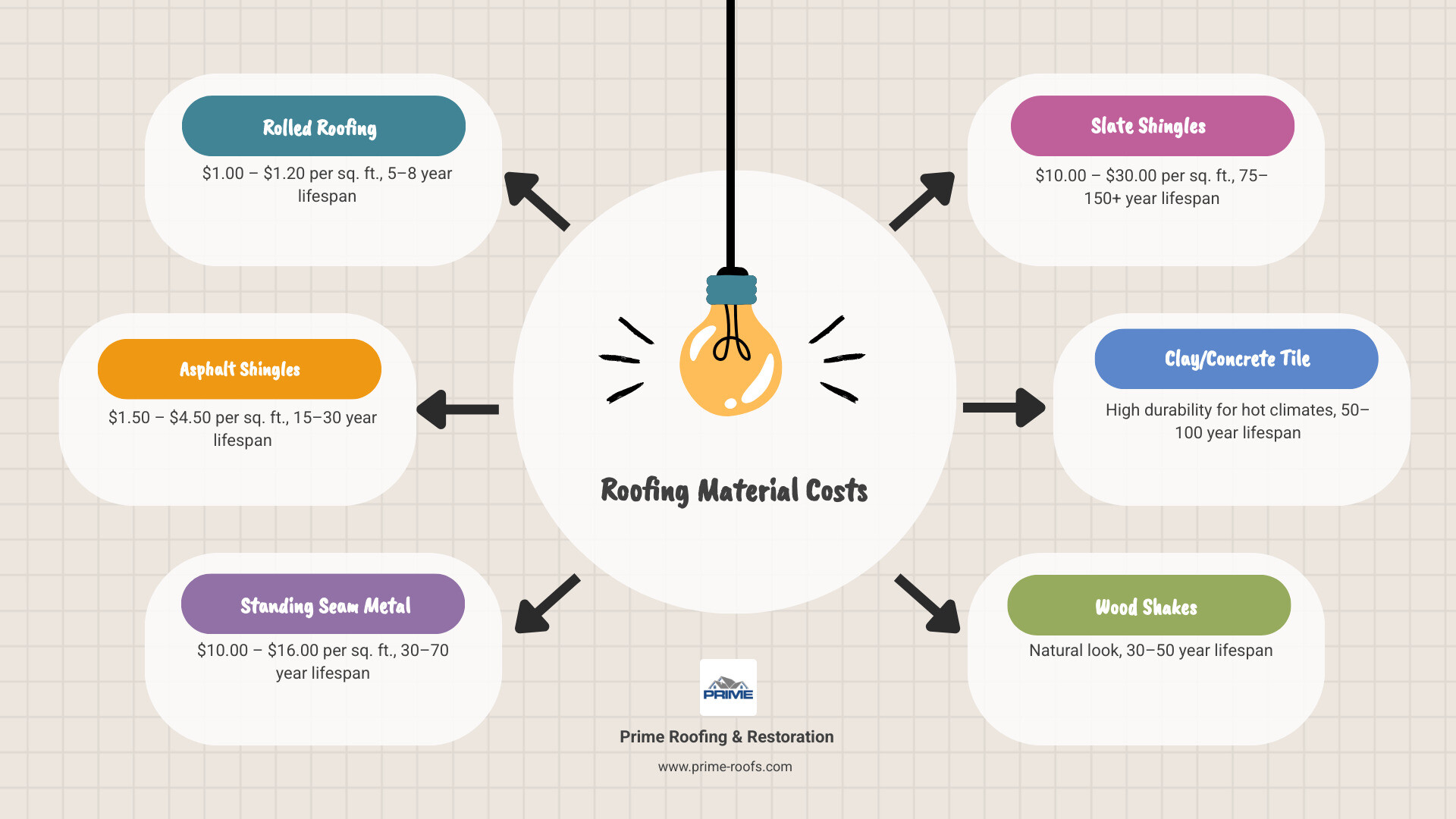
Understanding the cost of roofing materials requires looking at two numbers: the material cost and the labor cost. In the roofing industry, we measure projects in “squares.” One square equals 100 square feet. A typical 2,000-square-foot home will require approximately 20 to 22 squares of material, accounting for waste and overlap.
| Material Type | Material Cost (per sq. ft.) | Estimated Lifespan |
|---|---|---|
| Rolled Roofing | $1.00 – $1.20 | 5 – 8 Years |
| Asphalt Composite | $1.50 – $4.50 | 15 – 30 Years |
| Wood Shingles | $4.50 – $9.00 | 25 – 40 Years |
| Standing Seam Metal | $10.00 – $16.00 | 40 – 70 Years |
| Clay / Concrete Tile | $10.00 – $20.00 | 50 – 100 Years |
| Slate Shingles | $10.00 – $30.00 | 75 – 150+ Years |
The Hidden Costs of Roofing
When budgeting for a new roof, the material is only part of the equation. Homeowners must also account for:
- Tear-off and Disposal: Removing the old layers of roofing and hauling them to a landfill can cost between $1,000 and $3,000 depending on the size and weight of the material.
- Underlayment and Flashing: High-quality synthetic underlayment and new metal flashing around chimneys and valleys are essential for a leak-free roof. These components add to the material and labor total.
- Decking Repair: If your roof has been leaking, the underlying plywood (decking) may be rotted. Replacing these sheets typically costs $75 to $125 per sheet.
- Ventilation Upgrades: Proper attic ventilation is required by most manufacturers to honor their warranties. Installing ridge vents or solar fans is a critical investment.
While rolled roofing is the cheapest option, it is rarely used for primary residences because it lacks aesthetic appeal and durability. For a standard home, asphalt remains the most cost-effective entry point. However, if you plan on living in your home for the next 30 to 50 years, the “value” of a metal or tile roof becomes much clearer, as you likely won’t have to pay for a professional roof replacement ever again. For a detailed quote tailored to your home, call us at (205) 518-9555.
Durability and Lifespan: Which Roof Lasts the Longest?

When it comes to longevity, not all roofing materials are created equal. The lifespan of your roof is dictated by the material’s inherent properties, the quality of the installation, and how well it is maintained over the decades.
- Slate: Often called the “forever roof,” natural slate can easily last over 100 years. It is essentially stone, meaning it won’t rot, burn, or be easily damaged by pests. However, slate is incredibly heavy and requires a reinforced roof structure. It also requires specialized masons for installation, as walking on slate incorrectly can crack the tiles.
- Clay and Concrete Tile: These are staples in hot, coastal, or desert climates. Clay tiles are incredibly durable and can last a century. Concrete tiles are a slightly more affordable alternative that still offers a 50-year lifespan. High-quality tile installations are a great investment for those looking for a Mediterranean or Spanish aesthetic that lasts 50 to 100 years.
- Metal: Most metal roofs will last 40 to 70 years. They are resistant to fire, mildew, and insects, making them one of the most resilient choices available today. In Alabama, metal is particularly prized for its ability to shed heavy rain quickly and resist high winds during hurricane season.
- Wood Shakes: Natural cedar is beautiful but requires more care. In the right climate, a well-maintained wood roof can last 30 to 50 years. We offer specialized expertise in cedar shake shingle installation to ensure these roofs are vented and treated properly to maximize their life. Without proper treatment, wood can succumb to rot, moss, and insect infestation.
Environmental Impact and Sustainability
As homeowners become more eco-conscious, the sustainability of roofing materials has become a major talking point. Metal roofing is often made from 25-95% recycled content and is 100% recyclable at the end of its life. Slate and clay are natural materials that do not off-gas chemicals. Conversely, asphalt shingles contribute billions of pounds of waste to landfills annually, though recycling programs for asphalt are beginning to emerge in certain regions. Choosing a long-lived material like slate or metal is ultimately the most sustainable choice, as it reduces the frequency of replacement and the associated environmental footprint.
Climate-Specific Selection: Choosing Materials for Alabama Weather
In Alabama, our roofs take a beating. From the intense humidity of Hoover to the heavy spring storms in Alabaster, your choice of roofing materials must be tailored to the local environment. A material that works well in the dry heat of Arizona may fail prematurely in the damp, variable climate of the Deep South.
High Heat and Humidity
In the South, heat is the enemy of asphalt. High temperatures can cause shingles to become brittle over time, leading to “thermal shock” where the material expands and contracts rapidly, causing cracks. This is where “Cool Roof” technologies and reflective materials like TPO or metal shine. These materials reflect UV rays rather than absorbing them, which can lower your energy bills significantly. According to FEMA, proper attic ventilation combined with reflective roofing is the best way to protect a home’s structure from heat-related degradation.
Storm and Hail Resistance
We see our fair share of hail and high winds. If you live in an area prone to storms, look for materials with a Class 4 Impact Rating. These materials are tested to withstand the impact of a 2-inch steel ball dropped from 20 feet without cracking. Many insurance companies even offer discounts for homes with Class 4 rated roofs because they are so much less likely to require a claim after a hailstorm.
Fire Resistance
While wildfires are less common here than in the West, fire resistance is still a vital safety feature, especially in wooded suburban areas. Metal, slate, and tile are naturally fireproof (Class A fire rating). If you prefer the look of wood, ensure you choose a product with a factory-applied Class A fire-retardant treatment. There are many benefits of metal roofing for Alabama homes, but fire safety and wind resistance are at the top of the list. For a consultation on storm-resistant materials, call us at (205) 518-9555.
Maintenance and Replacement: Maximizing Your Investment
Even the best roofing materials will fail prematurely if they aren’t cared for. Think of your roof like a car; it needs regular check-ups to stay in top shape. Neglecting minor issues like a loose shingle or a clogged gutter can lead to catastrophic water damage inside your home.
When to Call a Professional
As a homeowner, you should perform a ground-level inspection at least twice a year—ideally in the spring and fall. Look for:
- Curling or Cupping Shingles: This is a sign of age and heat damage. When shingles curl, they no longer shed water effectively.
- Granules in the Gutters: If your gutters look like they are filled with coarse sand, your shingles are losing their protective coating. This is a sign that the asphalt is becoming exposed to UV rays and will soon fail.
- Missing or Cracked Shingles: These are immediate entry points for water. Even one missing shingle can lead to a leak that rots your roof deck.
- Daylight in the Attic: If you can see the sky from inside your attic, you have a major problem that requires immediate attention.
If your roof is over 25 years old, it is likely nearing the end of its functional life. If you’re searching for roofers near me in Alabaster, AL, our team can provide a comprehensive inspection to determine if a repair will suffice or if a full replacement is necessary.
Seasonal Maintenance Checklist
To get the most out of your roofing materials, follow this simple schedule:
- Spring: Inspect for winter storm damage. Check flashing around the chimney and vents. Clear any debris from the winter months.
- Summer: Check for signs of heat damage or algae growth. Ensure your attic fans are functioning to prevent heat buildup.
- Fall: This is the most critical time. Clean all gutters and downspouts. Remove leaves and pine needles from roof valleys, as these trap moisture and cause rot.
- Winter: After any major wind or ice event, do a quick visual check from the ground to ensure no shingles were displaced.
Proper attic ventilation prevents heat from “baking” your shingles from the inside out. If your attic is significantly hotter than the outside air, your ventilation system is likely inadequate.
Frequently Asked Questions about Roofing Materials
What is the most affordable roofing material?
Asphalt shingles are the most affordable and common choice for residential homes in Alabama. While rolled roofing is technically cheaper, it is generally reserved for sheds, garages, or low-slope outbuildings because it has a very short lifespan (5-8 years) and limited aesthetic appeal. For a primary residence, 3-tab or architectural shingles offer the best balance of cost and performance.
Which roofing material is best for energy efficiency?
Metal roofing and TPO (Thermoplastic Polyolefin) membranes are the champions of energy efficiency. Because they are highly reflective, they prevent solar heat gain. In hot climates like Alabama, switching to a reflective roof can reduce home cooling costs by up to 25%. Some high-end asphalt shingles also feature reflective granules designed to meet “Cool Roof” standards.
How do I know if my roof needs a full replacement?
The most obvious signs are consistent leaks, sagging roof decks, or widespread shingle damage (curling, balding, or missing pieces). However, the best way to know for sure is to have a licensed expert perform an inspection. If the cost of repairs exceeds 30-40% of the cost of a new roof, or if the underlying structure is compromised, a replacement is the safer, more cost-effective long-term move.
Can I install a new roof over my old one?
While “re-roofing” or an overlay is legally permitted in many areas (up to two layers), it is generally not recommended. An overlay prevents the roofer from inspecting the decking for rot and adds significant weight to your home’s structure. Furthermore, many manufacturers will not honor their full warranty if the shingles are installed over an existing layer.
How long does a roof replacement take?
For a standard 2,000-square-foot home, a professional crew can usually complete a tear-off and installation of asphalt shingles in 1 to 2 days. More complex materials like metal, tile, or slate can take a week or longer depending on the intricacy of the roof’s design and weather conditions.
Does homeowners insurance cover roof replacement?
Insurance typically covers roof replacement if the damage is caused by a sudden, accidental event like a windstorm, hail, or a fallen tree. It generally does not cover replacement due to age or lack of maintenance. It is vital to have a professional roofer present during the adjuster’s inspection to ensure all damage is documented. If you need help with a claim, call us at (205) 518-9555.
Conclusion
At Prime Roofing & Restoration, we understand that your roof is the first line of defense for your family and your biggest investment. Whether you are interested in the classic look of asphalt, the modern durability of metal, or the timeless elegance of tile, we are here to provide expert guidance. We use only the highest quality roofing materials and our licensed experts are available to help with repairs, full replacements, and even navigating complex insurance claims.
Don’t wait for a small leak to become a major disaster. Protect your home with the quality and care it deserves. Contact us today for a free, no-obligation inspection and estimate.
Prime Roofing & Restoration
1000 Corporate Dr Suite 100, Birmingham, AL 35242
Phone: (205) 518-9555
Website: www.prime-roofs.com