
Why Commercial Roof Replacement is Critical for Your Business
A commercial roof replacement is one of the most significant investments a property owner can make, but it’s essential for protecting your building, inventory, and daily operations. When a commercial roof fails, the consequences extend far beyond simple water damage, leading to business interruptions, inventory loss, and structural problems that can be incredibly costly. As a leading provider of commercial roofing in Alabama, we understand that a quality roof is your first line of defense.
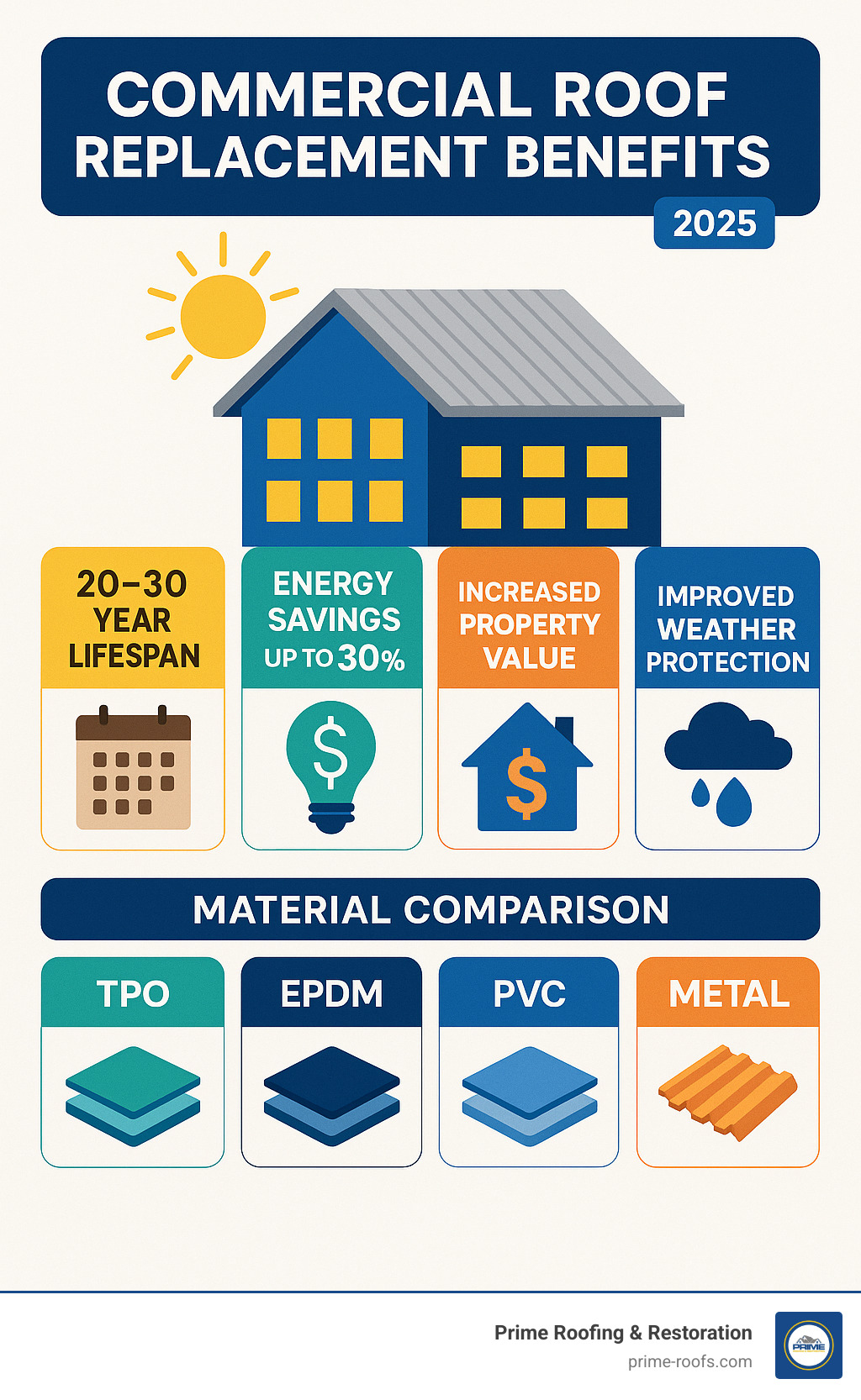
Most commercial roofs are flat or low-slope, requiring specialized systems to handle large surface areas and HVAC equipment while meeting specific building codes. A quality commercial roof replacement not only protects your physical assets but also ensures business continuity. Key factors to consider include:
- Lifespan: 20-30 years with proper installation.
- Cost: $4-$15+ per square foot, depending on materials.
- Materials: TPO, EPDM, PVC, and metal are common choices.
- Timeline: Around 2 weeks for most projects.
This guide covers everything from identifying warning signs to selecting contractors, helping you make an informed decision that protects your investment for decades.
When to Repair vs. Replace Your Commercial Roof
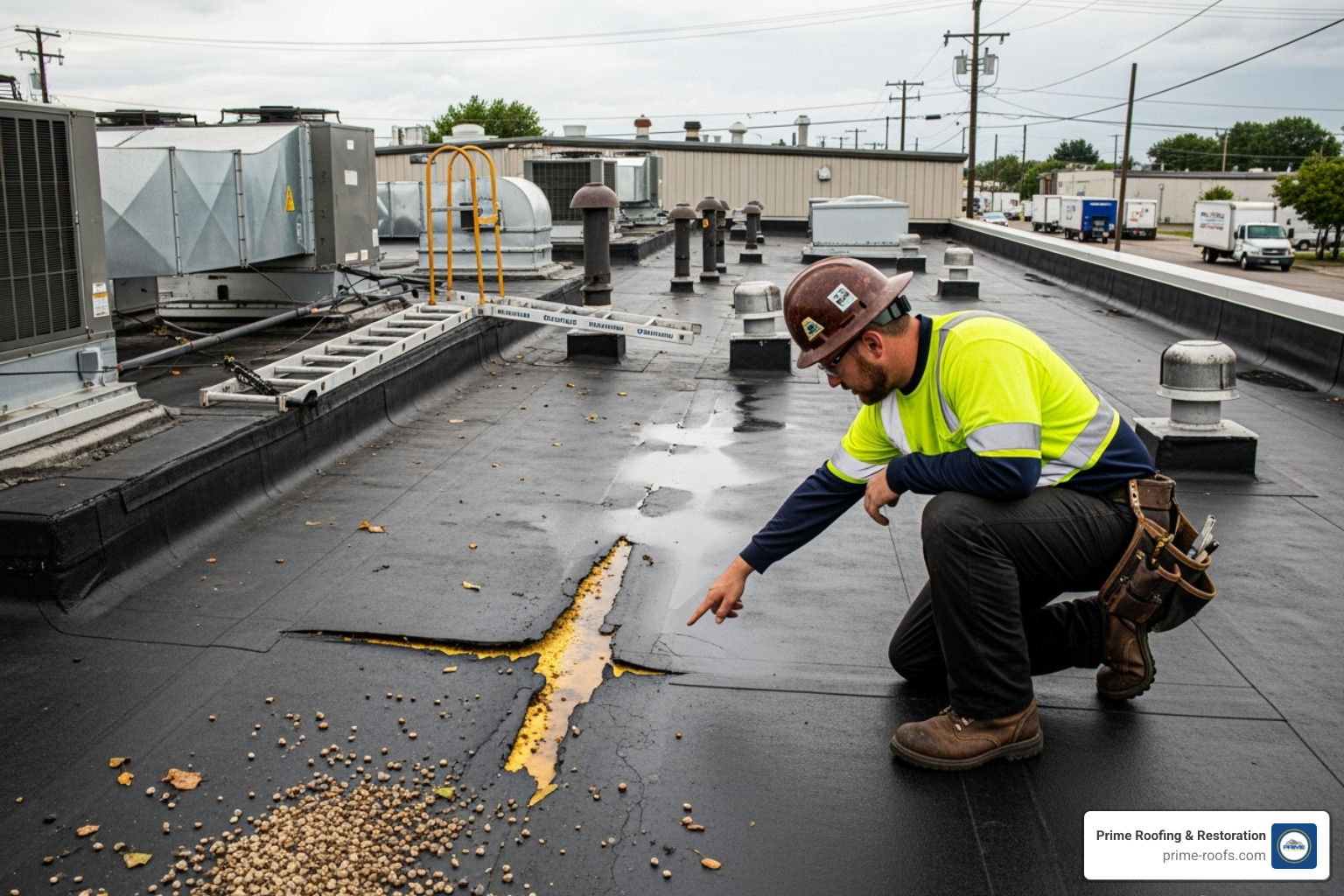
Every commercial property owner eventually faces a critical decision: repair or replace the roof. The choice impacts your budget and business operations for years. Understanding the warning signs and long-term costs helps you make the smartest financial decision for your investment.
Key Signs You Need a Commercial Roof Replacement
Your roof provides clear signals when it’s nearing the end of its life.
- Frequent leaks: If you’re calling for repairs every few months, the entire system is likely failing.
- Water stains: Brown or yellow marks on ceilings and walls indicate ongoing moisture problems, even without active drips.
- Bubbling or blistering: Trapped moisture under the membrane heats up, creating bubbles that weaken the roof.
- Cracked membranes: The material has lost its flexibility and become brittle, allowing water to seep in.
- Sagging roof deck: Low spots where water pools often mean the underlying structure is compromised, posing a safety risk.
- Increased energy bills: Damaged insulation forces your HVAC system to work harder, increasing utility costs.
- Roof age: Most commercial roofs last 20-25 years. If yours is in that range, it’s time to plan for a replacement.
For a deeper dive, see our guide on signs you need roof replacement.
The Repair vs. Replace Calculation
This decision requires looking at current and future expenses. If annual repair costs are high, that money is better invested in a new roof. The extent of the damage is also a key factor; widespread issues usually make replacement more cost-effective than isolated repairs. An older roof is more likely to have recurring problems, making repairs a short-term fix. A new roof is a long-term investment that can boost property value, especially if you plan to sell or install rooftop equipment. The National Roofing Contractors Association offers valuable resources for assessments.
The Hidden Costs of Delaying Replacement
Putting off a necessary commercial roof replacement often leads to more expensive problems.
- Interior water damage: Can destroy inventory, equipment, and interior finishes.
- Damaged insulation: Wet insulation loses its effectiveness, leading to higher energy bills.
- Structural rot: Persistent moisture can attack the building’s framework, leading to costly structural repairs.
- Mold growth: Creates health hazards and potential liability, sometimes requiring business closure for remediation.
- Business interruption: Emergency repairs are more disruptive and costly than a planned replacement.
At Prime Roofing & Restoration, we help Alabama businesses avoid these costly scenarios by providing expert assessments and durable solutions.
A Guide to Commercial Roofing Systems and Materials
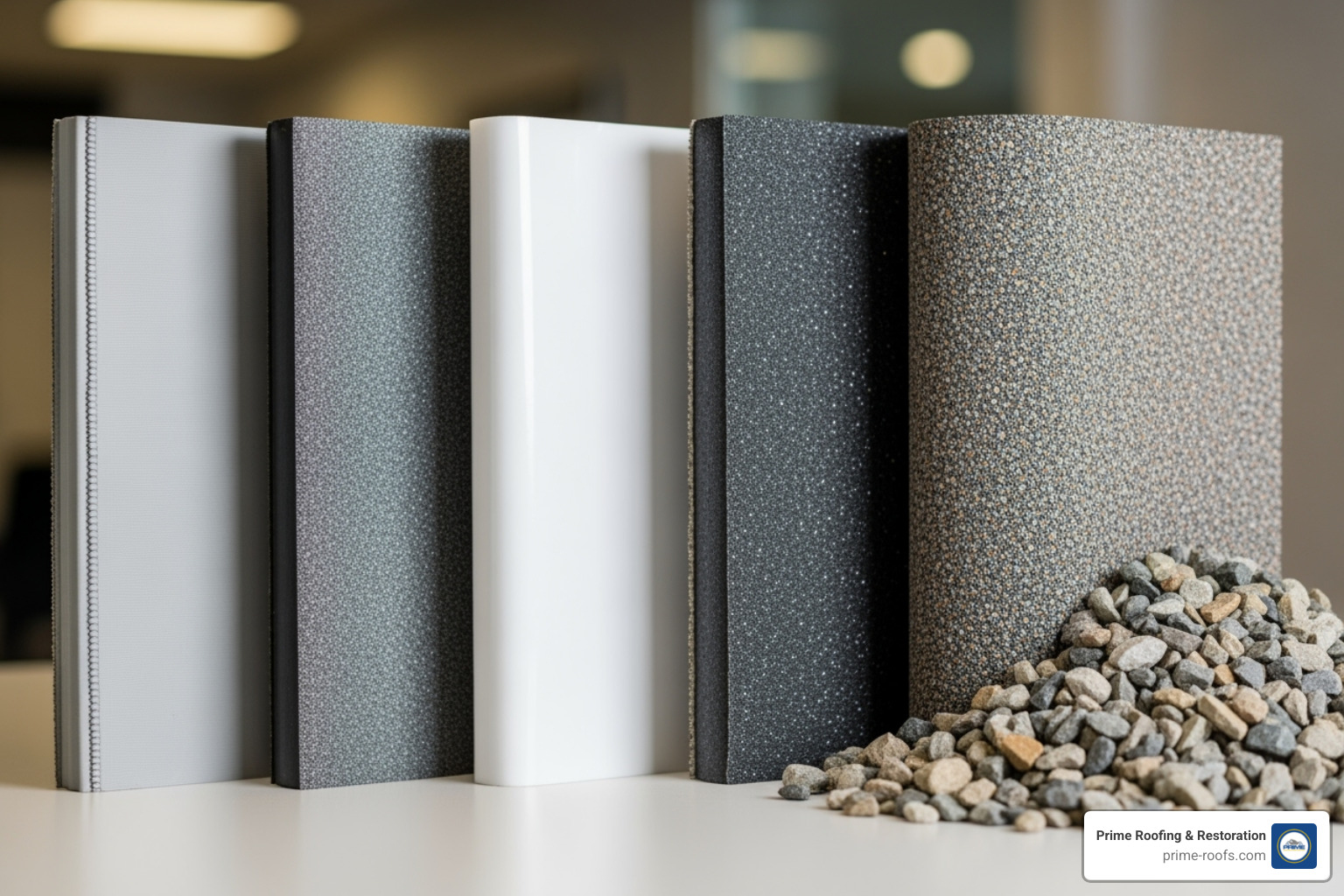
Choosing the right material for your commercial roof replacement impacts its lifespan, performance, and cost. Most commercial buildings have low-slope or flat roofs that require specialized systems to handle water pooling and extreme weather. Understanding your options is about finding the right balance for your building’s needs, budget, and long-term goals in Alabama’s climate.
Common Low-Slope Roofing Materials
Here’s how the most popular materials stack up:
| Material Type | Lifespan (Years) | Average Cost per Sq. Ft. (Installed) | Key Benefits |
|---|---|---|---|
| TPO (Thermoplastic Olefin) | 20-30 | $4.00 – $13.80 | Energy-efficient (reflective), durable, resistant to chemicals/UV, heat-welded seams, lightweight, often most cost-effective. |
| EPDM (Ethylene Propylene Diene Monomer) | 20-25 | $3.50 – $13.80 | Very durable, flexible, long-lasting, resistant to extreme temperatures, easy to repair, “rubber roof”. |
| PVC (Polyvinyl Chloride) | 25-30 | $7.50 – $13.80 | Excellent chemical resistance, strong seams, durable, fire-resistant, reflective, good for restaurants/factories. |
| Metal Roofing | 30-50+ | $5.00 – $23.00 | Exceptional longevity, energy-efficient, fire-resistant, strong against high winds/hail, aesthetically versatile (for sloped roofs). |
| Modified Bitumen | 15-20 | $6.90 – $17.25 | Durable, good waterproofing, multiple installation methods, often used for smaller low-slope roofs. |
| Built-Up Roofing (BUR) | 20-30 | $5.75 – $22.25 | Multi-layer redundancy, robust waterproofing, long-standing proven track record. |
Costs can vary based on location, roof complexity, and market conditions.
Single-Ply Membrane Roofing (TPO, EPDM, PVC)
Single-ply membranes are the workhorses of commercial roofing, using one layer of synthetic material.
- TPO (Thermoplastic Olefin) is the market leader, offering excellent energy efficiency with its reflective surface and strong, heat-welded seams. It provides a great balance of performance and cost-effectiveness.
- EPDM (Ethylene Propylene Diene Monomer), or “rubber roof,” is known for its durability and flexibility in extreme temperatures. It has exceptional longevity and is easy to repair.
- PVC (Polyvinyl Chloride) is a premium choice for buildings requiring high chemical resistance, such as restaurants or manufacturing facilities. Its heat-welded seams are incredibly strong.
For more technical details, The Single Ply Roofing Industry (SPRI) offers more details on industry standards.
Metal Roofing Systems
For exceptional longevity, consider a metal roof. Standing seam metal systems offer superior protection with raised, interlocking seams that keep water out. Metal is highly durable against wind and hail and offers excellent fire resistance. While the initial cost is higher, a metal roof can last 50+ years, often making it the most economical choice over its lifespan.
Built-Up Roofing (BUR) and Modified Bitumen
These traditional systems have a proven track record. BUR uses multiple layers of asphalt and reinforcing fabrics for redundant waterproofing. It’s heavy and labor-intensive but extremely robust. Modified Bitumen improves on traditional asphalt with modern polymers for better flexibility and durability, making it a great choice for smaller commercial roofs.
Understanding the Commercial Roof Replacement Process & Costs
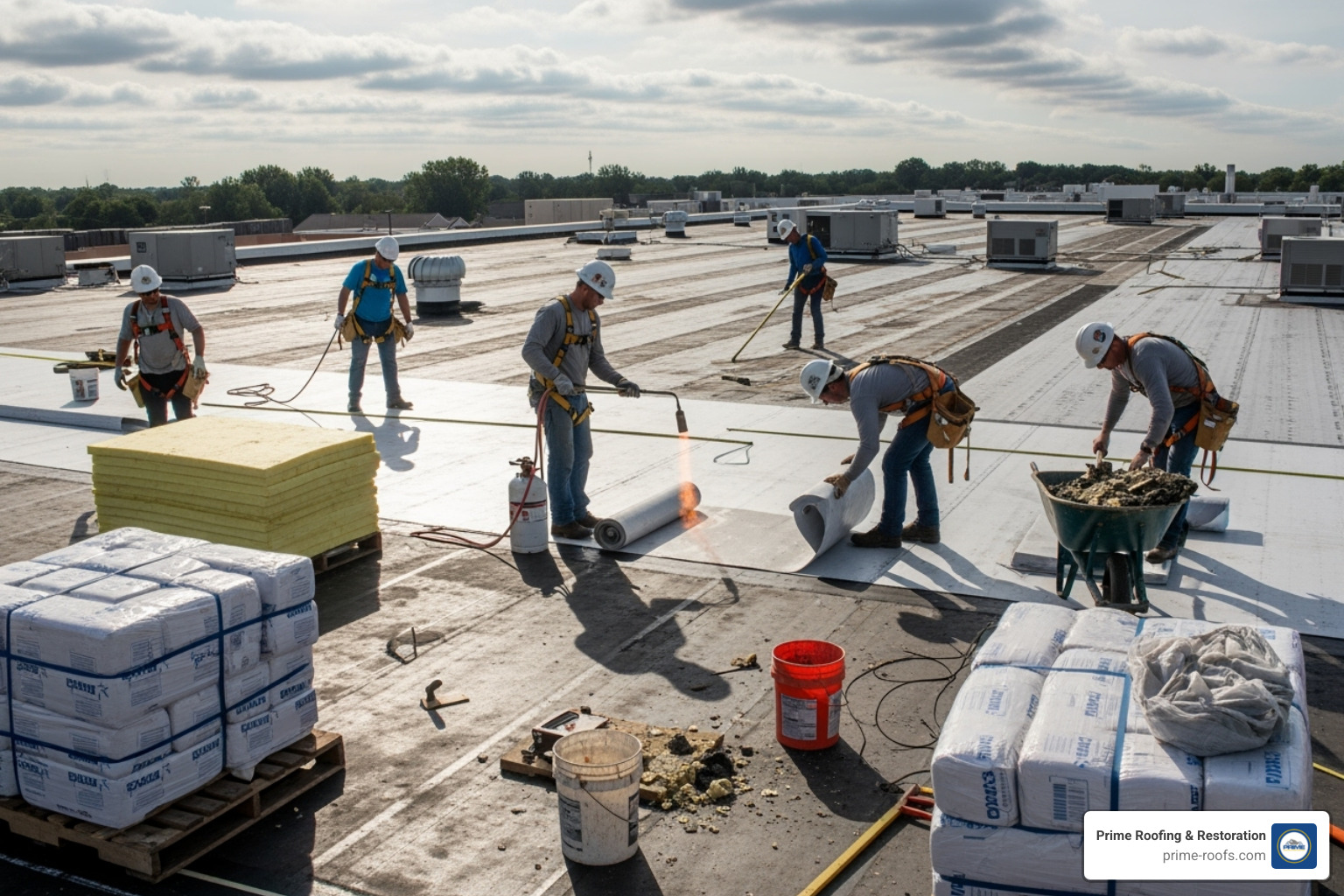
A full commercial roof replacement is a complex project. Understanding the process and cost factors upfront helps you budget effectively and keeps your business running smoothly. We’ve guided hundreds of Alabama business owners through this process and can walk you through every step.
Factors Influencing Commercial Roof Replacement Costs
Costs typically range from $4 to $15+ per square foot, but several factors determine the final price:
- Roof Size: Larger roofs require more materials and labor, though economies of scale can apply.
- Material Choice: A basic EPDM system costs less upfront than a premium metal roof.
- Accessibility: Difficult-to-access roofs require more time and specialized equipment, increasing labor costs.
- Existing Roof Condition: Rotted or damaged decking finded during tear-off will add to the cost.
- Tear-Off vs. Overlay: A full tear-off is more expensive but provides a better foundation than an overlay.
- Labor Costs: These vary by region. We provide competitive pricing for our local roofing services in Alabaster, AL.
- Insulation Upgrades: Adds to the initial cost but provides long-term energy savings.
- Permitting: Fees and inspections add to the timeline and budget. We handle all roofing permits to ensure compliance.
The Step-by-Step Replacement Process
A systematic approach ensures quality and efficiency with minimal disruption.
- Assessment and Planning: We inspect your roof, discuss your needs, and create a detailed project plan, including permits.
- Removal of the Old Roof: The existing roof is removed in sections to minimize weather exposure.
- Deck Inspection and Repair: We inspect the structural deck for damage and make necessary repairs.
- Installation of New Materials: High-quality insulation and your chosen roofing membrane are installed.
- Flashing and Detail Work: Vents, HVAC units, and edges are sealed to prevent leaks.
- Final Inspection and Cleanup: We perform a final quality check and leave the site clean.
Most projects take about two weeks, depending on complexity and weather.
Handling Insurance Claims for Storm Damage
If your roof was damaged in a storm, navigating the insurance claim is a critical step. Start by safely documenting the damage with photos. A professional inspection report from a qualified roofer carries significant weight with insurers. File your claim promptly and be aware of how depreciation and code upgrade coverage may affect your payout. Our team specializes in simplifying the insurance process to ensure you receive fair coverage. Call us at (205) 661-8190 to schedule a free inspection and get a free estimate for your storm damage claim.
Choosing a Contractor and Understanding Warranties
Choosing the right contractor is the most critical step in a successful commercial roof replacement. A quality installation is just as important as quality materials, and understanding the warranties that protect your investment is equally vital.
How to Select the Right Commercial Roofing Contractor
The contractor you hire determines whether your new roof provides decades of protection or becomes a source of headaches. Look for these key qualifications:
- Licensed and Insured: Verify they have full licensing for Alabama, plus liability insurance and worker’s compensation. This protects you from liability.
- Local Experience: A contractor familiar with Alabama’s climate knows which materials and techniques work best against our humidity and severe storms.
- Storm Damage Expertise: In our region, a contractor who can properly assess and document hail or wind damage for insurance claims is invaluable.
- Positive Reviews and References: Check independent review sites and ask for references from recent commercial clients.
- Detailed Estimates: A professional provides a comprehensive written estimate that breaks down all costs, materials, and the project timeline.
For more guidance, see our Tips on Choosing a Roofer. The National Roofing Contractors Association also provides valuable NRCA resources on warranties.
Decoding Roofing Warranties
Warranties are your financial protection. Here’s a simple breakdown:
- Manufacturer’s Warranty: Covers defects in the roofing materials, typically for 10-30 years. It requires installation by a certified contractor to be valid.
- Contractor’s Workmanship Warranty: Covers errors in the installation process, usually for 1-20 years. A long warranty reflects the contractor’s confidence.
- Warranty Duration: Varies by material and installation quality. Premium systems installed by certified professionals often come with extended 20-30 year warranties.
- Transferable Warranties: A warranty that can be transferred to a new owner can be a major selling point and boost property value.
- Exclusions: Most warranties do not cover damage from severe weather (which is for your property insurance), unauthorized modifications, or lack of regular maintenance. Always read the fine print.
Conclusion
A commercial roof replacement is a significant but necessary investment to protect your property and ensure business continuity. By understanding the warning signs of failure, comparing materials like TPO and metal, budgeting for all cost factors, and selecting a reputable contractor, you can ensure your new roof provides decades of reliable protection.
A new roof delivers benefits beyond weather protection, including energy savings, increased property value, and reduced maintenance costs. These advantages safeguard your business operations and your bottom line.
If you’re considering a commercial roof replacement for your property, our team at Prime Roofing & Restoration understands the unique challenges Alabama businesses face. We simplify insurance claims, use quality materials suited for our climate, and manage projects around your operational schedule. From Alabaster to Orange Beach, we are ready to provide a comprehensive evaluation and a detailed plan to secure your investment.
Call us at (205) 661-8190 to schedule a free inspection and receive your free estimate. Your building deserves protection that lasts, and your business deserves the peace of mind that comes with a job done right.