
Why Your Business Needs a Trusted Commercial Roof Repair Company
A professional commercial roof repair company is an essential partner in protecting your business from costly downtime, extensive structural damage, and significant operational disruptions. Your commercial roof is one of your most critical assets, representing up to 30% of your building’s total envelope—the physical barrier between the conditioned interior and the unconditioned exterior environment. Yet, this vital shield is often neglected until a leak makes its unwelcome appearance. At Prime Roofing & Restoration, we understand that even a single, seemingly minor leak can have cascading consequences, damaging sensitive equipment, ruining valuable inventory, creating slip-and-fall hazards for employees and customers, and fostering unhealthy mold growth. Therefore, choosing the right contractor is not merely a maintenance task; it is a critical business decision that directly impacts your financial stability and operational continuity.
When selecting a partner to protect your asset, a thorough vetting process is non-negotiable. Consider these essential factors to ensure you hire a competent and reliable professional:
Key Selection Criteria:
- Valid State Licensing and Comprehensive Insurance: A valid license confirms the contractor meets state-mandated standards for knowledge and business practices. Comprehensive general liability and worker’s compensation insurance are paramount; they protect your business from financial liability in the event of property damage or on-site injuries.
- Proven Experience with Your Specific Roof System: Commercial roofs are not one-size-fits-all. A qualified contractor must have demonstrable experience with your particular system, whether it’s TPO, EPDM, PVC, metal, or modified bitumen. Ask for case studies or references for similar projects.
- 24/7 Emergency Response Capabilities: Roof failures don’t adhere to a 9-to-5 schedule. A partner with around-the-clock emergency services can be the difference between a minor repair and a catastrophic loss, especially after a severe weather event.
- Manufacturer Certifications and Warranty Expertise: Certifications from leading manufacturers like GAF, Carlisle, or Firestone indicate that the contractor is trained to install and repair materials to the highest standards. This expertise is often required to keep your manufacturer’s warranty valid.
- Transparent Pricing and Detailed Inspection Processes: A trustworthy company provides detailed, written proposals that clearly outline the scope of work, materials to be used, and all associated costs. Vague estimates are a red flag. The process should begin with a thorough inspection, not a quick quote from the ground.
Cutting corners with an unqualified contractor can lead to poor workmanship that voids valuable manufacturer warranties. Furthermore, emergency repairs, which are reactive by nature, often cost significantly more than proactive, planned maintenance. According to industry data from sources like the National Roofing Contractors Association (NRCA), a strategic preventive maintenance program can extend a commercial roof’s life by up to 50%. This statistic underscores that your choice of a repair company is a crucial investment in your property’s long-term health and value.
I’m Bill Spencer, owner of Prime Roofing & Restoration. My team and I have dedicated our careers to helping Alabama businesses protect their investments with expert commercial roofing solutions. Our extensive experience has consistently proven that selecting the right commercial roof repair company is just as important as the quality of the repair materials themselves.
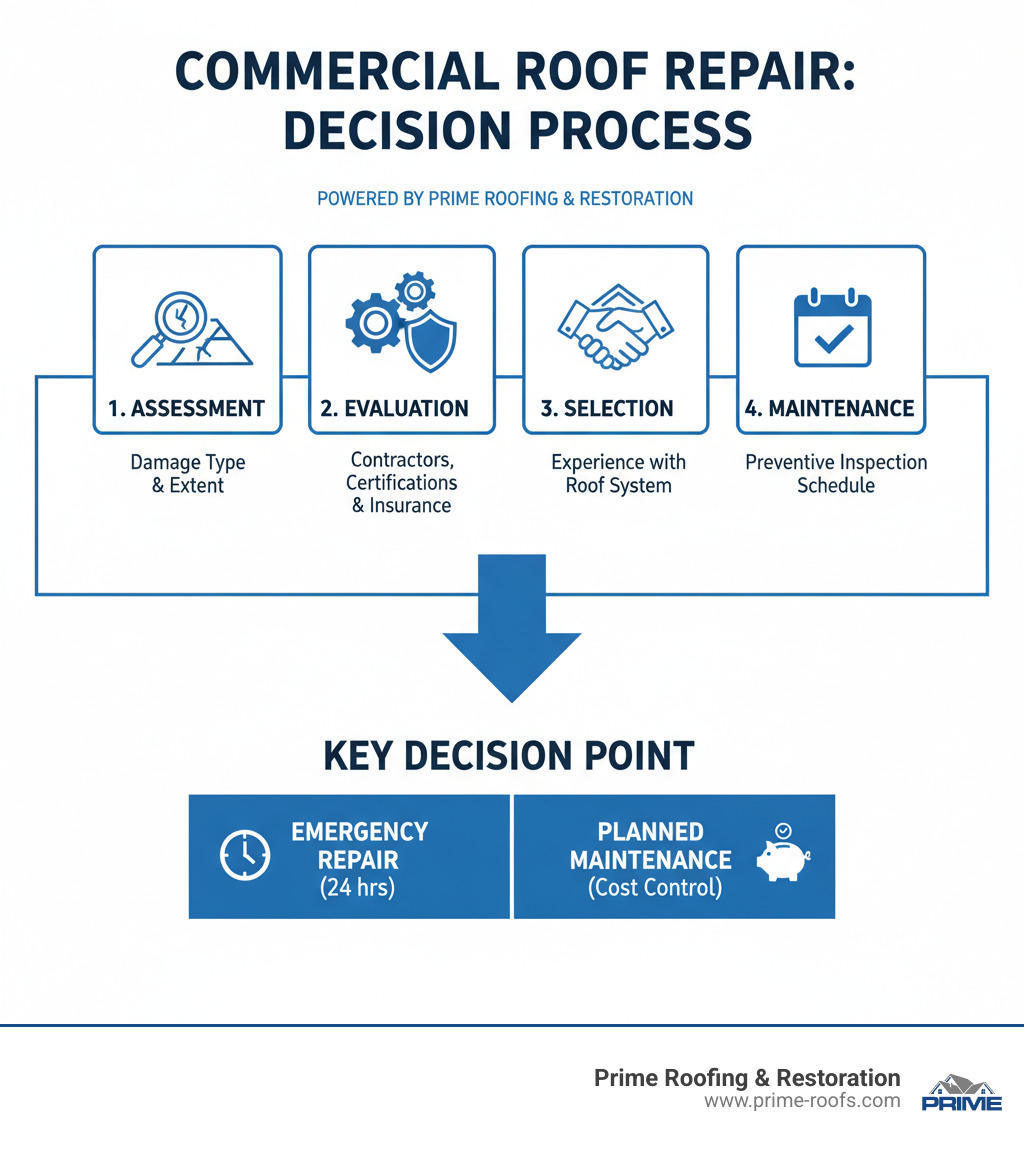
Similar topics to commercial roof repair company:
Why and When Your Commercial Roof Needs Repair
Your commercial roof serves as the silent guardian of your business, a frontline defense protecting your physical assets, critical inventory, and valued personnel from the elements. However, its constant, reliable performance means it’s often overlooked until a failure occurs. The harsh reality is that a single undetected leak can compromise your building’s structural integrity, saturate expensive insulation, and foster widespread mold growth, leading to costly business disruptions and potential health hazards. Water infiltration rarely begins as a deluge. It starts small, often as a hairline crack in the membrane, a loose seam from thermal expansion, or a tiny puncture from debris. From there, it spreads quietly and insidiously. By the time you notice a tell-tale stain on a ceiling tile, the damage to the roof deck, insulation, and underlying structure is often far more extensive and expensive to remediate than the initial entry point.
The good news is that proactive care yields significant returns. According to the National Roofing Contractors Association (NRCA), a program of regular, professional inspections and maintenance can extend a commercial roof’s functional lifespan by as much as 50%. Investing in timely repairs from a trusted commercial roofing expert isn’t just an expense; it’s a strategic business decision that protects your bottom line and preserves your property’s value.
Top 7 Signs Your Commercial Roof Needs Immediate Attention
Recognizing these common warning signs early can save you thousands of dollars in emergency repairs and collateral damage.
- Water Stains on Ceilings or Walls: This is the most obvious red flag that moisture has breached your roof membrane and is migrating through the building structure. The visible stain is often just the tip of the iceberg, as water can travel horizontally along roof decks and beams before finding a place to drip down.
- Bubbling, Blistering, or Ridges: These deformities on the roof surface are typically caused by trapped moisture or air between the membrane and the substrate. As the sun heats the roof, this trapped moisture vaporizes, creating pressure that pushes the membrane up. These raised areas are weak points that are highly susceptible to punctures and splitting.
- Cracked or Split Seams: Seams, where sections of roofing material are joined, are a common failure point. Constant thermal shock—the expansion and contraction caused by daily and seasonal temperature fluctuations—stresses these seams, leading to cracks that allow water to intrude directly into the system.
- Ponding Water: Any water that remains on your roof for more than 48 hours after rainfall is a serious concern. This “ponding” water accelerates the degradation of roofing materials, adds significant weight load to the structure, and can magnify the sun’s UV rays, further damaging the membrane.
- Damaged or Deteriorated Flashing: Flashing consists of metal or membrane strips that seal the joints around roof penetrations like vents, pipes, skylights, and HVAC units. When flashing cracks, corrodes, or pulls away from the structure, it creates a direct and often significant entry point for water.
- Sudden Increase in Energy Bills: A sudden, unexplained spike in your heating or cooling costs can indicate that water has saturated your roof’s insulation. Wet insulation loses its thermal resistance (R-value), forcing your HVAC system to work harder to maintain a consistent indoor temperature.
- Visible Punctures, Tears, or Abrasions: Any obvious opening in the roof membrane is an open invitation for water damage and must be addressed immediately. These can be caused by falling tree limbs, wind-blown debris, dropped tools during maintenance, or even animal activity.
Primary Causes of Commercial Roof Damage
Understanding the primary threats to your roof empowers you to take preventative action and make informed maintenance decisions.
- Age and Weathering: No roof lasts forever. Constant exposure to UV radiation, extreme temperature swings, rain, hail, and wind gradually breaks down roofing materials. TPO and EPDM membranes, for example, typically last 20-30 years, but harsh climates like Alabama’s can shorten this lifespan without proper care.
- Poor Initial Installation or Repairs: Substandard workmanship is a leading cause of premature roof failure. Errors like improper fastener patterns, incorrect seam welding temperatures, or inadequate flashing details can create vulnerabilities from day one. This highlights the importance of hiring a qualified commercial roof repair company for all roofing work.
- Lack of Maintenance: Neglecting regular inspections is one of the costliest mistakes a building owner can make. It allows minor, easily fixable issues—like clogged drains, debris buildup, or small cracks—to escalate into major, expensive problems that require extensive repairs or even full replacement.
- Severe Storm Damage: High winds can create uplift that tears off sections of the membrane, while hail can create hundreds of punctures or fractures. The immense weight of heavy snow or ice can also cause structural stress or collapse, a risk that requires professional assessment after a major winter storm.
- Foot Traffic: Unrestricted foot traffic from maintenance crews servicing rooftop equipment can cause significant damage. Without designated walkways, technicians can inadvertently cause punctures, scuffs, and abrasions that compromise the roof membrane over time.
- Punctures from Debris: Beyond major storm events, everyday debris can pose a threat. Falling tree branches, construction materials from adjacent buildings, or even small, sharp objects blown by the wind can create immediate leak risks that require prompt attention.
What to Look for in a Top-Tier Commercial Roof Repair Company
The contractor you entrust with your commercial roof matters as much as, if not more than, the repair work itself. The best companies don’t just patch leaks; they provide deep diagnostic expertise, unwavering reliability, and a long-term commitment to protecting your investment. They function as strategic partners in safeguarding your business operations and asset value, not just as temporary vendors. A subpar contractor can lead to recurring problems, voided warranties, and even greater expense down the road.
Let’s review the essential, non-negotiable criteria that separate an exceptional commercial roof repair company from the rest of the field.
Criterion 1: Licensing, Insurance, and Certifications
Before you even discuss the scope of work, you must verify the contractor’s credentials. This is your first and most important line of defense against liability, shoddy workmanship, and potential legal complications.
- Verifiable Licenses: Ensure the contractor holds all required state and local licenses. In Alabama, this demonstrates they have met the regulatory standards for practice. You can typically verify this through the state’s licensing board website.
- Comprehensive General Liability Insurance: This is crucial. It protects your property from any accidental damage caused by the roofing company during the repair process. Ask for a certificate of insurance and verify that the coverage is current and adequate for the value of your property.
- Worker’s Compensation Insurance: This policy covers injuries to the contractor’s employees while they are working on your property. Without it, you could be held liable for medical bills and lost wages in the event of an accident, a risk no business should ever take.
- Manufacturer Certifications: Top-tier contractors are certified by leading roofing material manufacturers (e.g., GAF, Carlisle, Firestone). This certification proves they have been professionally trained to install and repair specific products according to the manufacturer’s strict specifications, which is often a prerequisite for obtaining and maintaining the best long-term warranties.
A transparent, professional company will readily provide all this documentation. At Prime Roofing & Restoration, we know our credentials must stand up to scrutiny because we believe trust is the foundation of every successful project.
Criterion 2: Proven Experience and Specialization
A contractor’s track record and portfolio reveal more than any sales pitch. Look for deep, verifiable experience in solving a wide range of commercial roofing challenges, especially those relevant to your building and location.
- Years in Business and Local Reputation: Longevity in the highly competitive roofing industry is a strong indicator of reliability, financial stability, and consistent quality. A company with deep roots in the community is more likely to stand behind its work.
- Portfolio of Commercial Projects: Don’t hesitate to ask for a list of completed projects, particularly those similar to yours in size, scope, and roof type. A reputable contractor will be proud to share their work and provide references you can contact.
- Expertise Across Diverse Roof Systems: A truly versatile contractor should be proficient with all major commercial roofing systems, including single-ply membranes (TPO, PVC, EPDM), metal roofing, built-up roofing (BUR), and roof coatings. This broad expertise ensures they will recommend the best solution for your specific needs and budget, not just the one system they happen to know best.
- Local Climate Experience: A company intimately familiar with Alabama’s unique climate understands the specific challenges our roofs face—from intense summer UV radiation and high humidity to the threat of hurricane-force winds and torrential rain. This local knowledge informs more accurate damage assessments, better material recommendations, and more effective, long-lasting repairs.
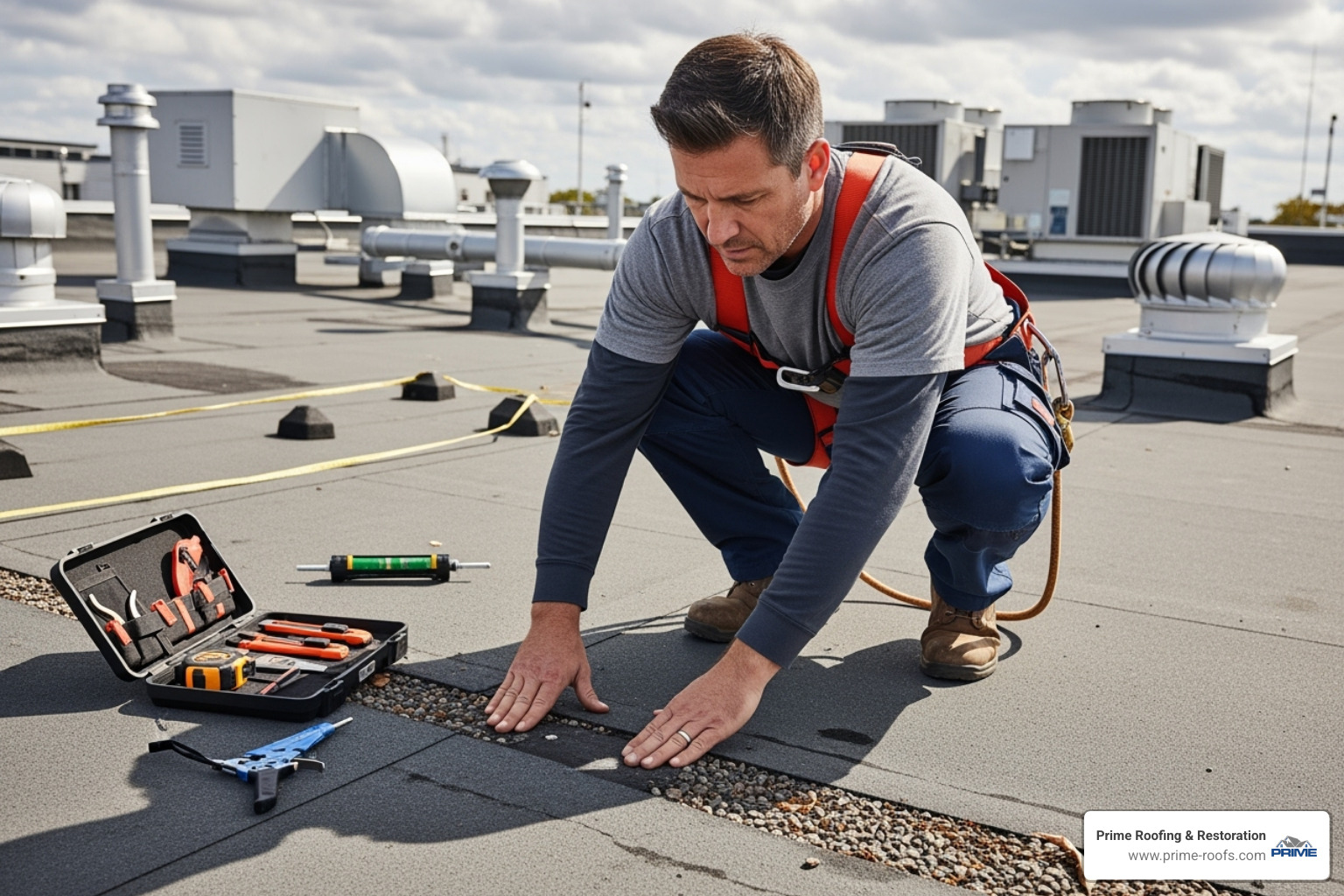
Criterion 3: Comprehensive Service Offerings
The most valuable roofing partners offer a full spectrum of services, ensuring you have one trusted, accountable team for all your roofing needs, from minor repairs to major capital projects.
- 24/7 Emergency Services: Roof emergencies demand immediate action. A company that offers a genuine 24/7 emergency response can quickly mitigate damage, preventing a small leak from turning into a catastrophic failure that shuts down your business.
- Preventative Maintenance Plans: Regular, proactive inspections are the single smartest investment you can make in your roof’s longevity. These plans catch small problems early, extend your roof’s lifespan, help you budget for maintenance costs, and fulfill warranty requirements.
- Detailed Roof Inspections and Diagnostics: A thorough assessment should go beyond a simple visual check. Top contractors use tools like infrared thermography to detect subsurface moisture invisible to the naked eye and may perform core sampling to analyze the condition of all roof layers. This data-driven approach leads to precise, effective repair strategies.
- Roof Restoration and Replacement: A good contractor will provide honest advice on whether a cost-effective restoration (like a fluid-applied coating) can extend your roof’s life or if a full replacement is the more prudent long-term investment. They should be able to manage the entire replacement process, from tear-off to final installation, ensuring decades of reliable protection.
Understanding the Commercial Roof Repair Process
When you hire a professional commercial roof repair company, you should expect a clear, transparent, and predictable process from start to finish. A systematic approach is the hallmark of a true professional. It not only ensures the immediate problem is fixed correctly but also protects your long-term investment, minimizes disruption to your business operations, and ensures all work complies with stringent manufacturer warranty requirements. Understanding these steps empowers you as a property owner to ask the right questions and hold your contractor accountable for quality results.
The Typical Process of a Commercial Roof Repair Company
Every successful repair project, whether a small patch or a major restoration, follows a logical and well-documented sequence. Here’s what you should expect from a reputable contractor like Prime Roofing & Restoration:

- Initial Contact and Rapid Scheduling: The process begins when you reach out with a concern. For emergencies, such as an active leak during a storm, we prioritize immediate dispatch to mitigate damage. For non-urgent, planned repairs, we work closely with you to schedule the inspection and subsequent work at a time that minimizes disruption to your daily operations.
- Thorough On-Site Inspection and Diagnosis: This is the most critical phase. Our certified technicians don’t just look at the leak; they investigate the entire roofing system. This includes a detailed examination of the membrane, seams, flashing around all penetrations, drainage systems (drains, scuppers, gutters), and the roof perimeter. We may use diagnostic tools like infrared scanners or moisture meters to identify the root cause of the problem, not just its symptoms.
- Detailed Proposal and Transparent Estimate: Following the inspection, you will receive a comprehensive, written proposal. This document should clearly outline the diagnosed issues, the recommended scope of work, the specific materials to be used, a projected timeline, and a clear, itemized cost breakdown. This is your opportunity to ask questions about your commercial roofing options and ensure you understand every aspect of the project.
- Site Preparation, Safety, and Removal: Before work begins, our crew establishes a safe work area in compliance with OSHA standards. This includes securing the perimeter and protecting your property. All compromised materials, such as damaged membrane, water-saturated insulation, and deteriorated decking, are carefully removed and disposed of. This step is critical for a lasting, durable repair.
- Professional Installation of New Materials: Our highly skilled crews install new, high-quality, commercial-grade materials strictly according to manufacturer specifications and industry best practices. This meticulous attention to detail—from fastener patterns to seam welding temperatures—is essential for ensuring a durable, weather-tight seal and preserving your warranty.
- Final Inspection, Cleanup, and Walkthrough: After the repair is complete, we conduct a final quality assurance inspection to verify the integrity of our work. The entire site is then thoroughly cleaned, removing all debris and materials. We conclude with a final walkthrough with you or your facility manager to ensure your complete satisfaction and provide any necessary documentation.
Emergency Repairs vs. Planned Maintenance
Understanding the fundamental difference between reactive emergency repairs and proactive planned maintenance is the key to effective, cost-efficient property management.
Emergency repairs are an urgent, unscheduled response to a sudden roof failure, such as a severe leak caused by storm damage. The primary goal is immediate damage control—to stop the water intrusion, protect your interior assets, and keep your business operational. This work is often more expensive due to its time-sensitive nature, potential for overtime labor, and the need for rush-ordered materials.
Planned maintenance is a proactive, strategic approach to roof care. It involves regularly scheduled inspections and minor, preventative repairs to address issues before they can escalate into failures. This approach dramatically lowers your total long-term cost of ownership, maximizes your roof’s intended lifespan, and keeps your maintenance budget stable and predictable.
| Feature | Emergency Repairs | Planned Maintenance |
|---|---|---|
| Response Time | 24/7 immediate response to mitigate active leaks or critical structural damage. | Scheduled inspections and repairs, typically performed biannually (spring and fall). |
| Scope | Focused on immediate leak mitigation, temporary patching, or urgent permanent fixes to restore safety. | Comprehensive care: proactive repairs of minor issues, debris removal, drain cleaning, detailed assessments. |
| Cost | Higher potential cost due to urgency, overtime resources, and potential for extensive collateral damage. | Lower long-term cost; prevents major issues, maximizes roof lifespan, and allows for predictable budgeting. |
| Primary Goal | Stop active damage, protect assets, ensure personnel safety, and restore business functionality as quickly as possible. | Extend roof life, optimize performance, stabilize costs, maintain warranty compliance, and prevent emergencies. |
| Disruption | High potential for significant disruption to business operations due to unforeseen timing and urgency. | Minimal disruption, as work is scheduled in advance during times that are convenient for your business. |
While a robust maintenance program is the best defense, emergencies can still happen. The optimal strategy is to combine a regular planned maintenance schedule with a trusted roofing partner who is capable of a rapid, effective emergency response when the unexpected occurs.
The Long-Term Value of Quality Repairs and Maintenance
Your commercial roof is a critical business asset, and how you manage it is a strategic financial decision with long-term consequences. Partnering with a professional commercial roof repair company for both proactive maintenance and high-quality repairs delivers measurable, compounding benefits that far exceed the upfront cost. This strategic approach transforms unpredictable, often catastrophic roofing expenses into a manageable, planned investment that actively safeguards your property’s value and operational stability.
At Prime Roofing & Restoration, we have consistently seen how this forward-thinking strategy protects Alabama businesses from the costly interruptions and hidden expenses associated with roof neglect, ultimately extending the life of their most important structural asset.
Budgeting for Roof Maintenance and Repairs
Smart, proactive budgeting turns roof care from a reactive headache into a predictable component of your annual operational plan. This prevents the financial shock of a sudden, large-scale failure.
- Allocate Funds Annually: A widely accepted best practice is to set aside 1-3% of your roof’s total replacement cost each year for maintenance and repairs. For example, if your 50,000 sq. ft. roof would cost $500,000 to replace, you should budget between $5,000 and $15,000 annually for its upkeep. This creates a reliable financial cushion for both routine work and unforeseen issues.
- Implement a Professional Maintenance Plan: The most effective way to control costs is to invest in a proactive maintenance plan. Regular inspections and minor repairs stabilize your spending by catching problems when they are small, localized, and inexpensive to fix, preventing them from becoming major capital expenditures.
- Schedule Biannual Professional Inspections: At a minimum, your roof should be professionally inspected in the spring (to assess any winter damage) and fall (to prepare for the coming winter). These inspections are essential for identifying wear and tear, clearing debris from drainage systems, and documenting the roof’s condition before it leads to major damage.
- Plan for Eventual Replacement: Even the best-maintained roofs have a finite lifespan. By understanding your roof’s age and condition, you can work with your contractor to forecast its remaining service life and establish a dedicated capital expense fund. This ensures you are financially prepared for a future replacement without resorting to emergency spending or high-interest loans.
Why Hire a Specialized Commercial Roof Repair Company?
A specialist in commercial roofing delivers tangible outcomes that directly and positively impact your bottom line in ways a general contractor cannot.
- Protects Overall Asset Value: Professional repairs and maintenance do more than just stop leaks. They maintain your building’s structural integrity and protect the valuable equipment, inventory, and infrastructure inside, thereby preserving or even increasing your property’s market value and appeal to potential tenants or buyers.
- Ensures Safety, Compliance, and Satisfaction: A secure, leak-free roof is fundamental to the safety of your tenants and employees. It prevents slip hazards, mold growth, and potential structural risks. This contributes directly to higher satisfaction, better retention, and compliance with OSHA safety standards.
- Prevents Costly Business Interruptions: Quality repairs and proactive maintenance are your best insurance against leaks that can damage equipment, ruin inventory, and shut down your operations. The cost of this downtime often far exceeds the cost of the repair itself.
- Reduces Total Cost of Ownership: While professional service has an upfront cost, it significantly lowers your total cost of ownership over the roof’s life. By maximizing its lifespan, preventing expensive emergency repairs, and improving energy efficiency, quality work delivers a strong return on investment.
- Maintains Critical Warranty Compliance: Most commercial roofing manufacturer warranties are not unconditional. They often require documented proof of regular professional inspections and maintenance. A specialized contractor understands these requirements and performs work that keeps your valuable warranty fully intact.
Investing in quality commercial roofing services today is a proven strategy for preventing exponentially larger expenses and disruptions tomorrow. It’s a simple calculation that makes sound business sense.
Frequently Asked Questions about Commercial Roof Repair
Property owners, business owners, and facility managers often have important questions about roof maintenance, the repair vs. replacement dilemma, and how to best protect their significant investment. Here are clear, direct answers to some of the most common inquiries we receive at Prime Roofing & Restoration.
How often should a commercial roof be inspected?
A commercial roof should undergo a professional inspection at least twice a year, ideally in the spring and fall. These biannual checkups function as essential preventative care, allowing a trained technician to identify and address minor issues like clogged drains, debris accumulation, small punctures, or failing sealant before they escalate into major, costly problems. Furthermore, regular, documented inspections are often a mandatory requirement for keeping your manufacturer’s warranty in good standing.
In addition to scheduled inspections, an immediate inspection is critical after any severe weather event, such as a hailstorm, tornado, or hurricane with high winds. Storm damage is not always visible from the ground, and a professional assessment can identify hidden vulnerabilities like hail-induced fractures or wind-lifted seams before they result in damaging interior leaks.
Can my commercial roof be repaired, or does it need to be replaced?
The decision to repair or replace is one of the most critical you’ll face and depends on a careful analysis of the roof’s age, the type and extent of the damage, and your long-term financial goals.
- Repair is often the best option for: Localized issues on a roof that is otherwise in good condition. This includes problems like small punctures, isolated seam failures, or damaged flashing around a single penetration. Targeted, high-quality repairs can cost-effectively add years to your roof’s service life.
- Replacement is likely necessary if: The roof is at or beyond its expected service lifespan (typically 20-30 years for most systems), the damage is widespread across more than 25-30% of the roof surface, or you are experiencing multiple, persistent leaks that suggest systemic failure. In these cases, a full replacement is a smarter long-term investment than continuing to spend money on frequent, stop-gap repairs.
An intermediate option, roof restoration, may also be possible. This involves applying a fluid-applied membrane or coating over the existing roof to seal leaks and extend its life for 10-15 years at a fraction of the cost of a full replacement. A thorough assessment from a qualified roofing specialist is essential to determine which option—repair, restore, or replace—is the most financially sound decision for your specific situation.
What is a commercial roof maintenance plan?
A commercial roof maintenance plan is a proactive service agreement with your chosen commercial roof repair company. It is specifically designed to prevent premature roof failure, avoid costly emergencies, and make your maintenance budget predictable. A typical plan is customized to your roof’s type, age, and environment, but generally includes:
- Regularly scheduled inspections (biannually) to check for wear, tear, debris, and potential vulnerabilities.
- Thorough cleaning of drains, gutters, scuppers, and the overall roof surface to ensure proper drainage and prevent ponding water.
- Minor, proactive repairs, such as sealing small cracks, re-caulking terminations, and securing loose flashing.
- Detailed documentation and reporting, providing you with a complete history of the roof’s condition, the work performed, and any recommendations for future action. This documentation is invaluable for warranty claims and capital planning.
The primary goal is to shift your roofing expenses from a reactive, emergency-based model to a proactive, manageable one. This approach stabilizes your budget, maximizes your roof’s lifespan, and provides invaluable peace of mind.
What impact will roof repairs have on my business operations?
This is a critical concern for any business owner. A professional commercial roofing contractor’s primary goal, after safety and quality, is to minimize disruption. The process should be managed to keep your business running smoothly. This is achieved through:
- Strategic Scheduling: Non-emergency work can be scheduled during off-hours, weekends, or slower periods for your business.
- Clear Communication: You should be informed daily of the work plan, which areas of the property will be affected, and any necessary precautions for employees or customers.
- Site Containment: Work areas are clearly marked and secured to ensure safety. Entrances and high-traffic zones are kept clear whenever possible. Noise and debris are managed to the greatest extent possible.
While some minor noise or logistical adjustments may be unavoidable, a top-tier company works as your partner to create a plan that ensures the repair process is as seamless and non-intrusive as possible.
Conclusion: Your Partner in Protecting Your Investment
Choosing the right commercial roof repair company is a critical business decision that directly safeguards your property, prevents expensive operational downtime, and ensures the safety of everyone in your building. Your roof is too important to be an afterthought. By prioritizing licensed, insured, and experienced professionals who offer comprehensive services, transparent processes, and a commitment to proactive care, you transform a potential liability into a well-managed asset. A strategic partnership with a roofing expert is an investment in continuity, stability, and long-term value.
For business owners in Alabaster, AL, and the surrounding Alabama communities, Prime Roofing & Restoration is dedicated to being that trusted partner. We deliver complete, end-to-end solutions—from 24/7 emergency repairs that mitigate damage instantly to proactive maintenance plans that extend roof life and stabilize budgets. Our work is backed by an unwavering commitment to quality, safety, and customer satisfaction. We don’t just fix roofs; we build lasting relationships to protect your business for years to come.
Take the first step toward securing your most critical asset. Contact us today to schedule a comprehensive, no-obligation roof assessment.
Prime Roofing & Restoration
Address:
123 Business Park Drive
Alabaster, AL 35007
Phone:
tel:(205) 555-7663
Hours:
Open 24/7 for Emergency Services