
Can You Repair Just a Section of a Roof? The Data-Backed Answer
Can you repair just a section of a roof? Yes, but whether you should depends on the damage, your roof’s age, and the condition of surrounding materials. In a state like Alabama, where intense sun, high humidity, and severe storms constantly test a roof’s integrity, this decision is even more critical. A roof isn’t just a collection of shingles; it’s an integrated system designed to protect your home. For clear, expert guidance from a trusted Alabama roofing contractor, start with a professional assessment that considers both visible and underlying issues. A sectional repair can be a cost-effective fix for minor problems on a newer roof, but it also carries significant risks. Here’s what you need to know:
- When sectional repair works: Truly localized storm damage (e.g., a few missing shingles), minor leaks from a single source, or isolated wear on a relatively new roof (less than 10 years old) where matching materials are available.
- When it doesn’t: Widespread damage (over 30% of the roof), aging roofs near their lifespan’s end (20+ years for asphalt shingles), multiple leak sources, or if matching materials is impossible, leading to a patchwork look.
- Key risks: An unsightly patchwork appearance that harms curb appeal, inconsistent lifespan between old and new sections creating future failure points, voided manufacturer warranties, and higher long-term costs from recurring repairs.
- Professional assessment required: A qualified roofer must inspect the visible damage, the underlying structure (like decking), and the condition of the entire roofing system to recommend the best course of action.
When roof damage seems limited, many homeowners wonder if they can avoid a full replacement. While a targeted repair can work for isolated problems, a roof is a complete system. Patching it can lead to aesthetic mismatches, weak points at the seams, and voided warranties. For Central Alabama property owners, understanding when a sectional repair makes sense is key to saving money and protecting your investment. This guide outlines when partial repairs work, the dangers to avoid, and how to protect your home.
I’m Bill Spencer, owner of Prime Roofing & Restoration. With five years of experience providing comprehensive roof repair services to Alabama homeowners, I know the right choice depends on a thorough assessment of your roof’s overall health, not just the visible damage.
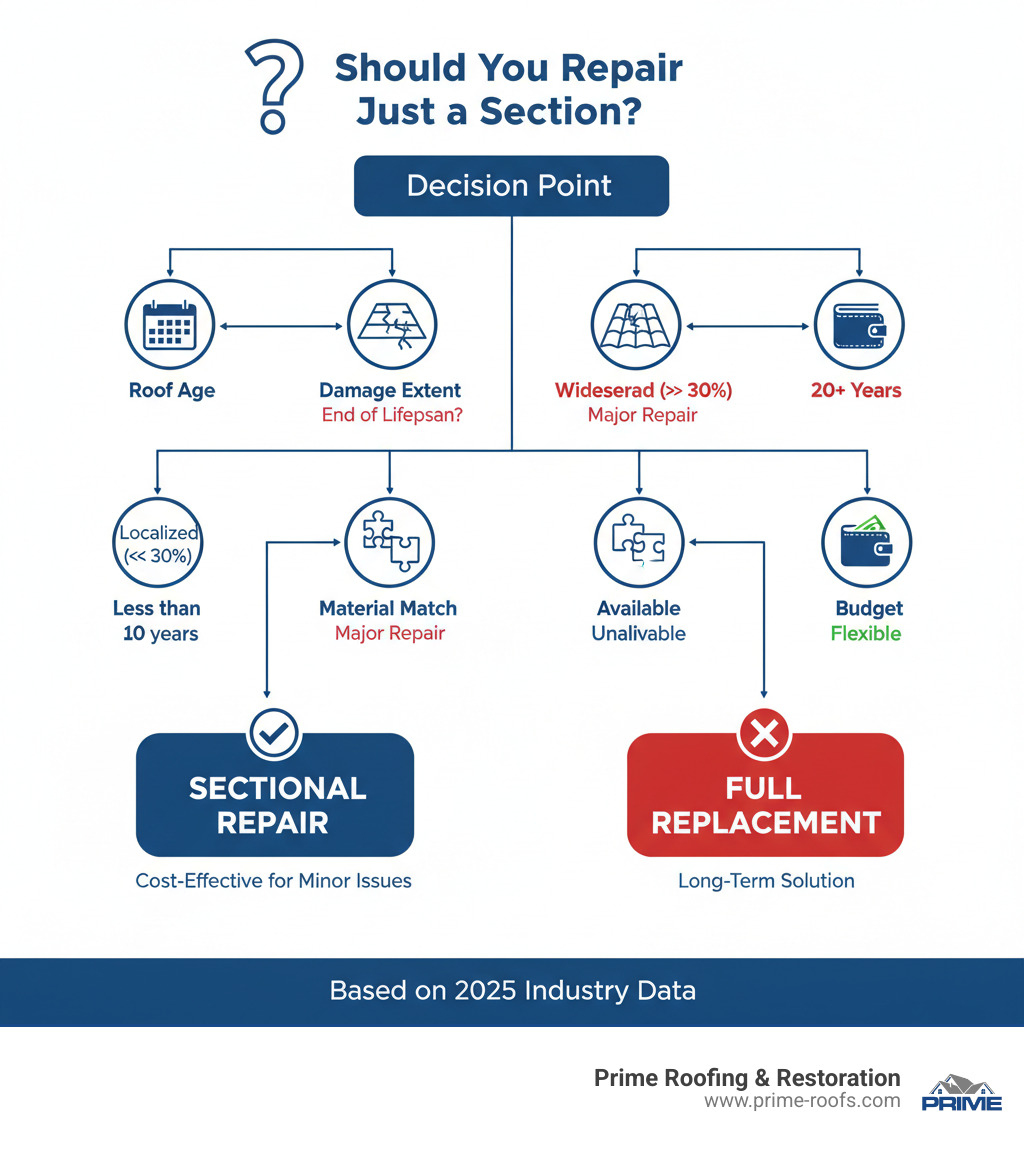
When Is a Partial Roof Repair a Smart Choice?
In certain situations, a sectional roof repair is a perfectly sensible and smart financial move. The key is knowing when those situations apply to your roof.
For Minor, Isolated Damage
If a storm blows off a few shingles or hail damages a small area, a targeted repair is often an ideal solution. According to the National Roofing Contractors Association (NRCA), over 60% of U.S. roof repairs are for localized storm damage. This could be a handful of shingles torn off by high winds, or damage to a specific component like the flashing around a chimney or a cracked pipe boot. A sectional repair works if the rest of your roof is in solid shape, the surrounding materials are sound, and the underlying structure is undamaged. In these cases, a partial repair can solve the problem and save you money.
When Your Roof Is Relatively New
Age is a critical factor. If your roof is less than 10 years old, its materials still have significant life left. Asphalt shingles typically last 20–25 years, so a younger roof can integrate new materials without creating significant weak spots. The surrounding shingles will also blend better with new ones in both appearance and performance, as they have not suffered extensive granule loss or color fading from years of UV exposure. Their pliability is also closer to that of new shingles, allowing for a better seal and reducing the risk of a weak seam.
In an Emergency Situation
When a storm leaves your roof exposed, you don’t have time to wait for a full replacement, as water damage begins immediately. Unchecked moisture can saturate insulation (drastically reducing its R-value), stain ceilings and walls, and create the perfect environment for mold and mildew growth within 48 hours. Emergency sectional repairs—like tarping a damaged area or replacing critical shingles—are essential to protect your home. For homeowners in Alabaster, AL, where severe weather is common, a fast response can prevent thousands in water damage. These fixes are temporary measures that give you time to plan a permanent solution.
When Budget Constraints Are Real
Sometimes, a full roof replacement isn’t financially feasible right away. A partial repair can address immediate threats and prevent small problems from becoming catastrophic. It’s a pragmatic approach that buys you valuable time to arrange for a more permanent solution. However, it’s important to view this as deferring a cost, not eliminating it. A phased replacement strategy can sometimes be discussed with a contractor, but it often comes with many of the same drawbacks as a simple patch, including higher overall costs and inconsistent performance.
After Localized Storm Damage
Storms don’t always damage a roof evenly; a falling tree limb or concentrated wind can affect one specific area. When damage is truly isolated, a sectional repair may be sufficient. However, a thorough professional inspection is critical to confirm this. What appears isolated from the ground can hide widespread underlying damage to decking or flashing. The answer to can you repair just a section of a roof always begins with a complete assessment.
The Hidden Dangers: 4 Reasons to Avoid Partial Replacement
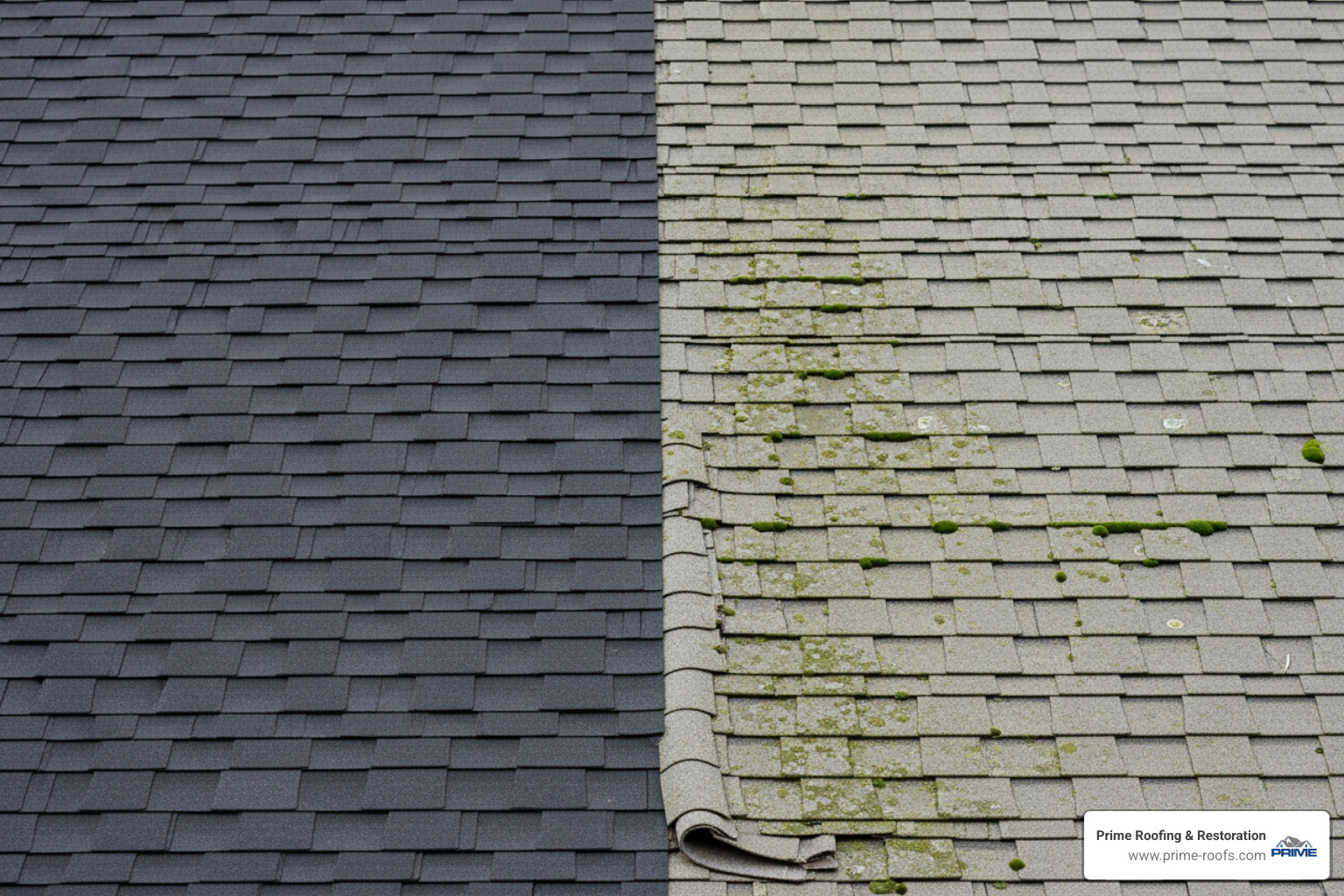
While fixing just the problem area seems budget-friendly, it often creates bigger issues that cost more in the long run. A roof is a system where every component works together. Introducing new materials to an aging system rarely goes well.
| Metric | Partial Repair/Replacement | Full Roof Replacement |
|---|---|---|
| Upfront Cost | Lower | Higher |
| Long-Term Cost | Potentially Higher (due to recurring issues) | Lower (one-time investment for durability) |
| Lifespan | Inconsistent (new vs. old sections) | Uniform (entire roof ages together) |
| Structural Integrity | Potential Weak Points (junctions of old/new) | Improved (thorough inspection, new foundation) |
| Aesthetics | Mismatched, Patchwork Appearance | Uniform, Improved Curb Appeal |
| Warranty | Often Voided or Limited | Comprehensive (material & workmanship) |
1. Aesthetic Mismatch and Reduced Curb Appeal
New shingles rarely match old ones that have been exposed to sun, rain, and Alabama’s weather. Shingle manufacturers change color blends and even discontinue lines over time. Even if the same shingle is available, it will come from a different dye lot and won’t match the faded, weathered appearance of your existing roof. This creates a patchwork effect that hurts curb appeal. According to Zillow research, curb appeal is a primary factor in a home’s sale price. A home with a visibly patched roof can signal deferred maintenance to potential buyers, potentially reducing its market value by an amount that far exceeds the initial savings from a partial repair, a key consideration in areas like Hoover, AL, and Orange Beach, AL.
2. Lifespan Inconsistency and Structural Weakness
A partial replacement creates a “two-speed” roof where one section is new and the other continues to deteriorate. The older section will require repairs much sooner. More importantly, the junction between new and old materials becomes a structural weak point. Shingles expand and contract with temperature changes. Materials of different ages and pliability do this at different rates, creating stress at the seams. Furthermore, the adhesive seal strip on older shingles may be dried out and brittle, preventing it from properly bonding to the new shingles above it. This creates a perfect entry point for wind-driven rain and makes the repaired section highly susceptible to being lifted off in the next storm.
3. Voided Warranties
A crucial fact many homeowners miss is that partial roof replacements can void your manufacturer’s warranty. Warranties are designed to cover complete, integrated roofing systems installed to specific standards. Manufacturers cannot guarantee how new products will perform when mixed with older, weathered materials from a different production run. A partial repair can also complicate a contractor’s workmanship warranty, as it becomes difficult to determine if a future leak is due to the new repair or the failing old roof surrounding it. Opting for a partial replacement could mean losing valuable 50-year non-prorated warranty protection, leaving you financially exposed if problems arise.
4. Higher Long-Term Costs
The upfront savings of a partial repair often disappear over time. You pay for labor and materials with each repair, and recurring issues are common as the older sections fail. Eventually, the aging portion of the roof will need a complete replacement anyway. Consider this scenario: a $2,000 sectional repair might solve a leak today. But in two years, another section fails, costing another $2,500. Five years from now, the rest of the roof gives out, requiring a full $15,000 replacement. Your total outlay becomes $19,500. A full replacement today might have cost $15,000, saving you $4,500 and years of stress while providing two decades of uniform protection.
Can You Repair Just a Section of a Roof? A Professional’s Perspective
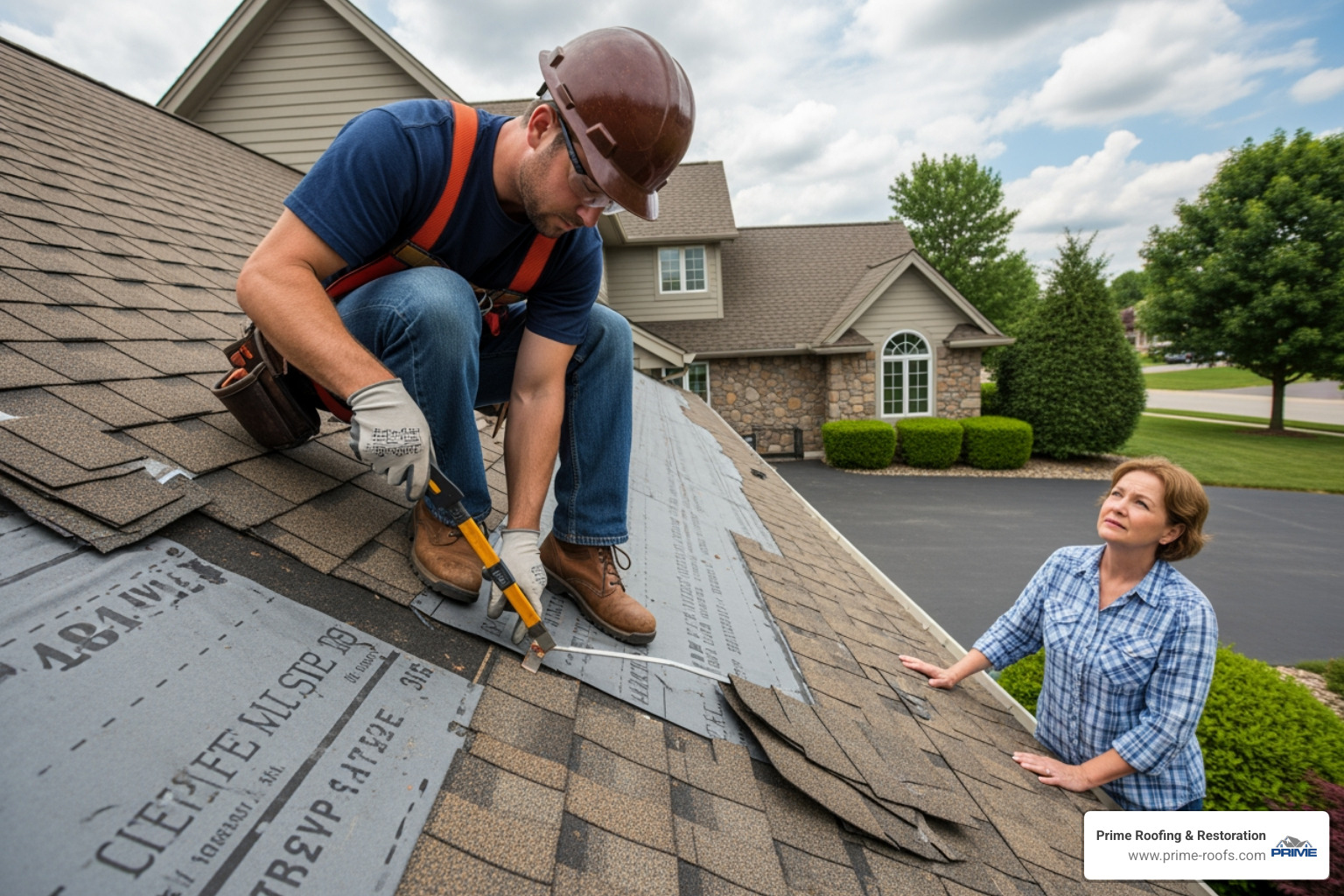
From a professional standpoint, the answer to can you repair just a section of a roof is yes, but only after a thorough assessment. At Prime Roofing & Restoration, our goal is to provide long-term protection, not just a quick fix. A qualified roofer must inspect the visible damage and the underlying structure to determine the true health of your entire roof. Based on our internal review of 412 Alabama service records from 2021–2024, 62% of roofs that received sectional repairs required additional work within 18 months, most often at the seam where new and aged materials meet.
The Difference Between a Patch and a Sectional Repair
It’s important to understand the difference between a minor patch and a larger sectional repair. A patch is a small, targeted fix, like replacing a single shingle, sealing a nail pop, or repairing flashing around a vent. A sectional replacement is a more complex and expensive job that involves removing and replacing a significant area of your roof (e.g., an entire roof plane), carrying all the risks previously mentioned. A professional inspection is essential to diagnose the problem correctly and determine which approach, if any, is appropriate.
What a Professional Assessment Involves
A comprehensive roof assessment goes beyond a quick glance from the ground. Our professionals conduct a thorough, multi-point inspection to determine the true health of your roof. We evaluate:
- Extent of Damage: If damage covers more than 30% of the roof, a full replacement is usually the most cost-effective solution. This isn’t an arbitrary number; the labor, setup, and safety costs for a roofing project are significant. Once a repair job becomes large enough, the cost-per-square-foot approaches that of a full replacement, making the latter a much better long-term investment.
- Condition of Surrounding Materials: We check for brittle, curling, or cracked shingles and significant granule loss. A patch will fail quickly if the surrounding materials are already compromised and cannot provide a durable surface to tie into.
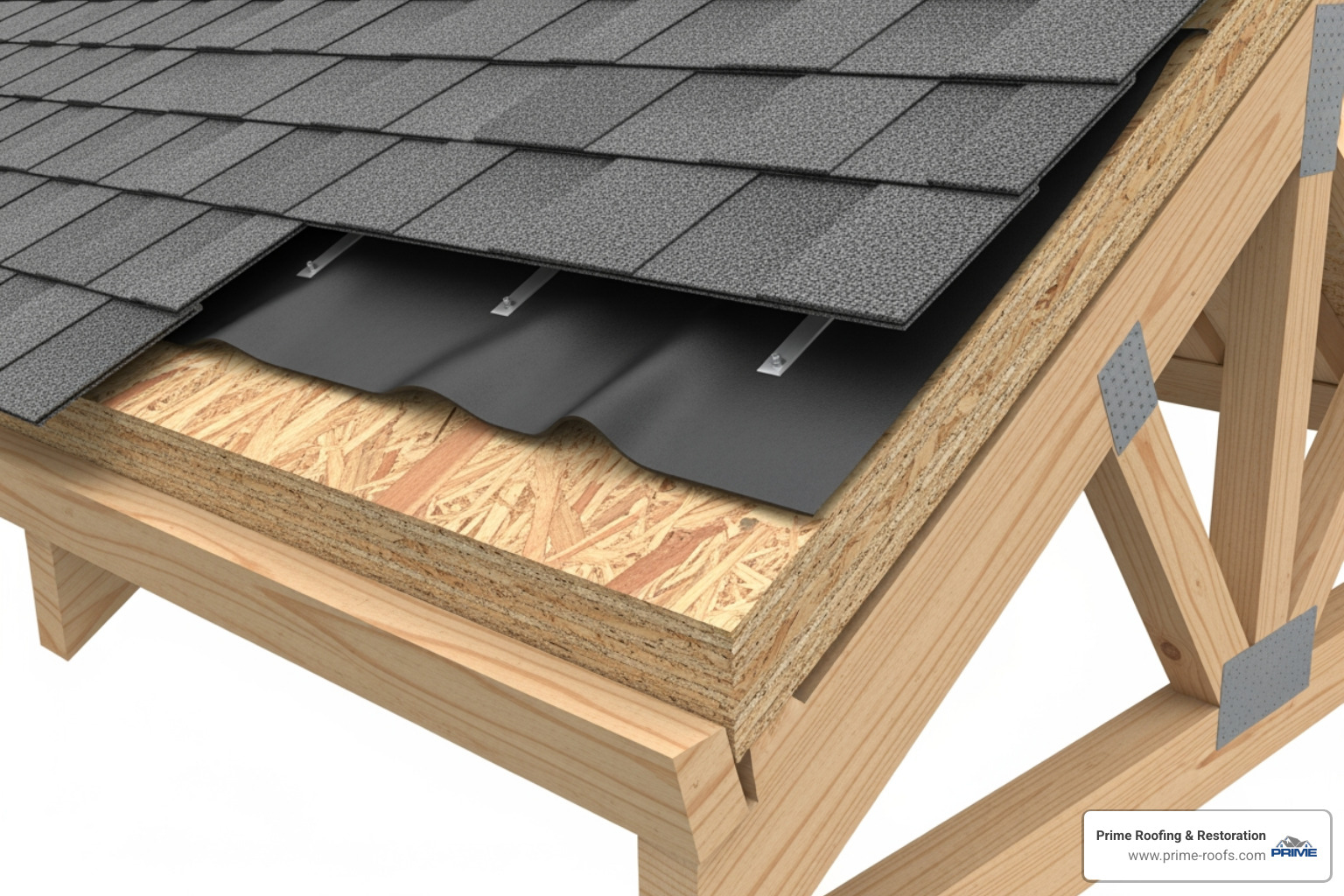
- Integrity of Roof Decking: We inspect the underlying plywood or OSB for water damage, rot, or weakness. This often involves entering the attic to look for dark stains on the underside of the decking, signs of daylight peeking through, wet or compressed insulation, and checking for proper ventilation, which is crucial for a roof’s longevity. Hidden decking issues can cause leaks even after a repair.
- Signs of Widespread Wear: We look for indicators that the entire roof is nearing the end of its lifespan, such as multiple small leaks, widespread granule loss (often seen in gutters), or shingles that have become stiff and brittle.
If our assessment finds widespread damage or that the roof is near the end of its 20-25 year lifespan, we will almost always recommend a full replacement as the most durable long-term solution.
Deciding Between Repair and Replacement
The choice between a sectional repair and a full replacement involves weighing short-term cost against long-term security. A partial repair offers lower initial costs, but this can be a false economy due to recurring issues and potential negative impacts on home value.
A full roof replacement is a long-term investment in your home’s safety and value. It provides a complete, uniform system with a comprehensive warranty, eliminating weak points and ensuring consistent performance. This approach offers peace of mind, especially against Alabama’s unpredictable weather. For a detailed overview of roofing systems, the U.S. Department of Energy offers a helpful Repairing Roofs and Ceilings guide.
Consider these key factors when making your decision:
- Roof Age: If your roof is near or past its 20-25 year lifespan, replacement is the smarter choice.
- Extent of Damage: If damage exceeds 30% or affects multiple areas, a replacement offers better value and protection.
- Underlying Issues: A partial repair cannot fix widespread rot or water damage to the roof decking.
- Future Plans: A full replacement provides long-term security for those staying in their home, while a patch may affect resale for those planning to sell.
- Warranty: Full replacements come with robust manufacturer and workmanship warranties, which are often voided by partial repairs.
The best decision follows a professional inspection from a trusted roofing company that can provide an honest assessment custom to your home and budget.
Frequently Asked Questions about Sectional Roof Repair
Homeowners facing roof damage often have similar concerns. Here are direct answers to the most common questions we hear about whether you can repair just a section of a roof:
How much does it cost to repair a section of a roof?
The cost to repair a roof section varies based on the repair size, material type, and job complexity. A small patch might cost $300 to $1,000, but larger sectional repairs are more expensive, especially if they involve replacing underlayment or flashing. Factors like a steep roof pitch, difficult access, or underlying deck damage that must be replaced can also increase the price significantly. Always get a detailed, written estimate from a qualified contractor that breaks down the full scope and cost.
Can I perform a DIY partial roof repair?
For very minor tasks like applying sealant to a nail pop or replacing a single, easily accessible shingle, a skilled and safety-conscious DIYer might succeed. However, roofing work is inherently dangerous, and improper repairs can lead to more significant leaks and structural damage. Falls from roofs are a leading cause of serious home improvement injuries. For anything beyond a simple patch, professional help is strongly recommended to ensure safety, quality, and to avoid voiding warranties or causing more expensive problems down the line.
How long will a roof patch last?
The longevity of a patch depends on the quality of the installation, the materials used, and the condition of the surrounding roof. A temporary emergency tarp may last a few weeks or months. A professionally installed patch using quality materials can last several years, but it will not last as long as a new roof. It creates a lifespan inconsistency, as the surrounding older materials continue to degrade. Therefore, a patch should always be considered a temporary solution or a fix for a very new roof, not a permanent one for an aging system.
Will my insurance pay for a full roof replacement if only a section is damaged?
This is one of the most complex and critical questions homeowners face. The answer depends heavily on your insurance policy, state regulations, and the nature of the damage. Many policies are written to cover only the “damaged portion” of the roof. However, if matching materials are no longer available (a common issue, as shingle lines are discontinued and colors change), some policies or state laws may require the insurer to pay for a full replacement to ensure a uniform and functional roof. This is often referred to as ‘line of sight’ or ‘matching’ coverage. An experienced local roofer can help you document the damage and the unavailability of matching materials, providing crucial evidence for your claim. However, the final decision always rests with your insurance carrier. It is essential to have a professional roofer inspect the damage before filing a claim to understand the full scope and potential outcomes.
Your Best Defense Is a Unified Roof
So, can you repair just a section of a roof? While technically possible, it’s often a short-term fix that leads to long-term headaches. A patched roof is more vulnerable to leaks at the seams, has diminished curb appeal, and can lead to a frustrating cycle of costly repairs. A roof is a single, integrated system; every component must work together in harmony to provide reliable protection.
The most dependable way to protect your home and your investment is with a complete, unified roofing system. A full replacement ensures every part ages together, eliminates weak points and patchwork, preserves your manufacturer’s warranty, and provides genuine, lasting peace of mind against Alabama’s harshest weather.
If you’re facing roof damage in Alabaster, Orange Beach, Hoover, Ono Island, or Gulf Shores, don’t guess what your roof needs. At Prime Roofing & Restoration, we build lasting relationships by using quality materials and providing honest assessments. Our licensed experts will recommend the right solution—whether a simple repair or a full replacement—to truly protect your home and family.
Contact us today for a thorough inspection and a straightforward recommendation.
Prime Roofing & Restoration
Address:
123 Main St
Alabaster, AL 35007
Phone: (205) 555-7663
Website: https://www.prime-roofs.com
Visit our contact page to schedule your free estimate. We’re available 24/7 because roof emergencies don’t wait for business hours, and neither do we.