
Best Roofing Contractor: The Choice That Protects Your Home and Wallet in Alabama
Your roof is your home’s most critical line of defense, a silent guardian against Alabama’s notoriously unpredictable and often harsh weather. Finding a trustworthy professional to install, repair, or replace that shield can feel like a monumental task. With countless companies all claiming to be the best, how do you separate the true experts from the opportunistic storm chasers? This comprehensive guide is your ultimate checklist, meticulously designed to empower you to choose a trusted Alabama roofing contractor who will not only protect your home but also secure your investment for decades to come.
Alabama’s climate is a formidable adversary for any roofing system. The state experiences roughly 50–60 thunderstorm days annually, according to the National Weather Service, bringing with them high winds, torrential rain, and the constant threat of hail—all of which accelerate the wear and tear on your roof. Beyond storms, the intense summer sun and high humidity create a demanding environment where only properly installed, high-quality materials can thrive. The stakes are incredibly high. A well-installed roof is more than just shingles; it’s a complex system that protects your family, preserves your home’s structural integrity, and provides invaluable peace of mind. A poor choice, on the other hand, can quickly lead to a cascade of problems: persistent leaks, hidden mold growth, compromised insulation, soaring energy bills, and thousands of dollars in unforeseen repair costs.
Furthermore, a new roof is a significant financial investment, but it’s one that pays dividends. According to Remodeling’s 2024 Cost vs. Value Report, a new asphalt-shingle roof in our region can recoup approximately 56–60% of its cost at resale. This return on investment (ROI) is heavily dependent on the quality of the installation and the materials used. The contractor you select for your roof replacement is the single most important factor in determining whether your investment appreciates your home’s value for the next 20-30 years or becomes a recurring, costly nightmare. This guide will walk you through every essential step—from verifying credentials to deciphering warranties—to ensure you make a confident, informed, and secure decision.
What Are the Essential Qualities of the Best Roofing Contractor?
Finding the best roofing contractor isn’t about identifying who can nail down shingles the fastest or offer the lowest price. A truly exceptional roofer acts as a long-term partner in protecting your home. They combine technical mastery with a commitment to customer protection and service. The significant difference between an average roofing job and lasting, worry-free peace of mind comes down to three non-negotiable qualities. These pillars of professionalism are your primary defense against the common roofing horror stories of shoddy workmanship, financial scams, and legal liabilities.
Licensed, Insured, and Certified: The Non-Negotiables
Proper credentials are a contractor’s professional identity card; without them, you are essentially allowing an unvetted stranger to perform complex work on your most valuable asset. Licensing, insurance, and certifications are not just pieces of paper; they are your fundamental protection against financial disaster, subpar work, and legal entanglements.
- State License: In Alabama, any residential roofing project costing over $2,500 requires the contractor to hold a valid license from the Alabama Home Builders Licensure Board. This license proves they have met the state’s minimum requirements, which may include passing business and law exams and demonstrating financial solvency. It confirms they understand local building codes and regulations. Always ask for their license number and verify it on the official state board website. A licensed roof contractor is the bare minimum; a great one is proud to show their credentials.
- Full Insurance: This is arguably the most critical protection for you as a homeowner. The contractor must carry two distinct types of coverage. General Liability Insurance protects your property from accidental damage during the project. For example, if a ladder falls and breaks a window or a bundle of shingles damages your driveway, their liability policy covers the repairs. Workers’ Compensation Insurance is equally vital. It covers medical expenses and lost wages for any of their employees injured while working on your property. Without it, you could be held personally liable for their injuries, a risk that could lead to devastating financial consequences. Always request current certificates of insurance for both policies directly from the insurer, not just a copy from the contractor, to ensure they are active.
- Manufacturer Certifications: These credentials separate the true professionals from the average roofer. Certifications from leading manufacturers like GAF or Owens Corning indicate that the contractor has invested heavily in specialized training and has a proven track record of high-quality installations. For instance, achieving GAF Master Elite® status is a distinction held by only the top 2% of roofing contractors nationwide. This elite status requires contractors to be fully licensed, adequately insured, have a proven reputation, and be committed to ongoing professional training. These certifications often grant the contractor access to offer enhanced manufacturer warranties—like the GAF Golden Pledge® warranty—that provide more comprehensive, long-term coverage for both materials and workmanship.
Why Local Experience is a Mark of the Best Roofing Contractor
Alabama’s unique climate—from scorching summer heat and oppressive humidity to the potential for hurricanes and tornadoes—demands a contractor who possesses deep, localized knowledge. Local experience is essential for building a roof that is engineered to last in our specific environment. A contractor with established roots in Alabama understands how the intense UV rays degrade certain materials, how high humidity affects shingle adhesion and promotes algae growth, and which installation techniques are critical to withstand high winds. They know the precise ventilation strategies needed to combat attic heat and moisture buildup, which can destroy a roof system from the inside out. This battle-tested, regional knowledge simply cannot be replicated by an out-of-town contractor or a “storm chaser.”
Furthermore, local contractors are intimately familiar with the specific building codes and permitting processes in your municipality, whether it’s Alabaster, Hoover, or Pelham. This prevents costly delays and ensures your roof is fully compliant, which is crucial for insurance purposes and future home sales. Most importantly, a local business has a community reputation to uphold. They are your neighbors, and their success depends on the satisfaction of the people they serve. They are accessible for follow-up questions, future maintenance, and emergency repairs, providing a level of accountability and service that transient companies can’t match. When you search for roofers near you in Alabaster and the surrounding communities, you are looking for a team that has proven its reliability to your neighbors year after year.
Communication and Customer Service: The Hallmarks of a True Professional
Even the most technically perfect roof installation can become a nightmare if the process is plagued by poor communication and disrespect for your property. The best roofing contractor understands that your peace of mind is just as important as the performance of your new roof. They prioritize clear, consistent, and proactive communication from the very first interaction. When you first call, look for a professional and responsive demeanor. Are they patient and willing to answer all your questions, no matter how basic? A true professional will take the time to explain complex roofing concepts, material options, and the installation process in a way you can understand, without resorting to high-pressure sales tactics.
Top-tier companies often enhance the customer experience by assigning a dedicated project manager to your job. This individual serves as your single, reliable point of contact, eliminating the frustration of being passed from person to person. They should provide regular updates on progress, notify you of any unexpected findings (like rotted decking), and be readily available to address your concerns. Excellent customer service also extends to the job site itself. A professional crew will take meticulous care to protect your landscaping, siding, and driveway. They will maintain a clean, organized work area and perform a thorough cleanup at the end of each day, culminating in a final magnetic sweep to collect stray nails. When you’re choosing a roofer, pay close attention to their communication style and their commitment to service during the estimate process—it’s a reliable predictor of the overall experience you will have throughout the project.
Your Step-by-Step Guide to Vetting a Roofing Company
Once you have compiled a shortlist of credentialed, local contractors who appear to meet the initial criteria, it’s time to begin the critical due diligence phase. This is where you move beyond their sales pitch and verify their track record, work quality, and business practices. This investigative process is your best tool for ensuring they are the right fit for your specific project, helping you avoid costly surprises and future headaches.
Step 1: Research Their Reputation and Past Work
Transform yourself into a roofing detective. Your investigation should start with a deep dive into their public reputation. Explore online reviews on multiple platforms, including Google, Yelp, and the Better Business Bureau (BBB). Don’t just look at the star rating; read the content of the reviews. Look for consistent patterns in customer feedback, both positive and negative. Pay special attention to how the company responds to negative reviews. A professional, constructive response that seeks to resolve the issue is a sign of a company that values customer satisfaction, while defensive or dismissive replies are a major red flag. As roofing experts at authoritative sites like AskARoofer often advise, a broad spectrum of reviews provides a more honest and complete picture of a company’s performance.
Beyond third-party review sites, look for testimonials on the company’s own website. While curated, pages like our Testimonials page can offer deeper insights into specific customer experiences. The next crucial step is to ask to see a portfolio of past work. A robust Project Gallery with high-quality before-and-after photos of local projects is a powerful testament to their craftsmanship. It allows you to visually assess the quality of their work, from the straightness of the shingle lines to the neatness of the flashing details. Finally, don’t underestimate the power of personal referrals. Ask the contractor for a list of recent local customers you can contact. Speaking directly with a past client provides an unfiltered perspective on the entire process, from initial consultation to final cleanup.
Step 2: Get at Least Three Detailed, Written Estimates
Obtaining multiple detailed, written estimates is a fundamental step in the vetting process. This practice helps you gauge fair market pricing for your project, but its most important function is to serve as a tool for comparing the thoroughness and professionalism of each contractor. It is not simply about finding the lowest bid. A quality estimate is a comprehensive, multi-page document that provides a complete breakdown of itemized costs. It should list specific materials by brand and product name (e.g., “GAF Timberline HDZ shingles in Charcoal”), separate labor costs for tear-off and installation, and line items for components like underlayment, flashing, ventilation, and debris removal. It must also include a clear project timeline and payment schedule.
Be extremely wary of quotes that are significantly lower than the others. An unusually low bid is a flashing red light, often signaling the use of subpar materials, an uninsured workforce, cutting corners on critical steps like flashing or underlayment, or a desperate, unstable business. While everyone wants an Affordable Roof Replacement, the ultimate goal is to find the best long-term value, which is the intersection of quality materials, expert workmanship, and fair, transparent pricing. When comparing estimates, ensure you are truly comparing apples to apples. Verify that each quote includes the same scope of work, the same quality of materials, and the same warranty provisions.
Step 3: Ask the Right Questions
During your final meetings with potential contractors, treat it as an interview. You are the hiring manager for a major project. Their answers—and their willingness to answer—will reveal a great deal about their professionalism, expertise, and transparency.
- How long have you been in business under this name in this area? (This confirms local experience and stability, and helps identify companies that may have reformed under a new name after a poor history.)
- Can you provide proof of your Alabama license and both general liability and workers’ compensation insurance? (The answer should be an immediate “yes,” followed by providing you with documentation you can verify.)
- Do you use your own employees or subcontractors? (Direct employees often mean more accountability and consistent training. If they use subs, ask if those subs are also fully insured.)
- Who will be the on-site project manager and my main point of contact? (This ensures a clear line of communication and a single person responsible for your project’s success.)
- How will you protect my property, including my driveway, siding, and landscaping, during construction? (A professional will detail their use of tarps, plywood, and other protective measures.)
- What is your process for handling unexpected issues, such as rotted decking found after the old roof is removed? (Their answer should include a clear, pre-defined cost for such repairs, e.g., a per-sheet price for plywood replacement.)
- What specific warranties do you offer on your workmanship, and what does the manufacturer’s warranty cover? (A confident, quality contractor will offer a substantial workmanship warranty and be able to explain the material warranty in detail.)
- What is your daily cleanup process, and how do you ensure all debris, especially nails, is removed? (Look for mentions of magnetic sweepers and a commitment to leaving your property cleaner than they found it.)
How to Compare Estimates and Understand Roofing Warranties
A roofing estimate is far more than just a price tag—it’s the architectural blueprint for your entire roofing project. Understanding how to dissect and compare these documents is a crucial skill for any homeowner, as a deceptively low bid can easily hide inferior materials, a reduced scope of work, or significant future costs. Similarly, a strong, clear warranty is not just a piece of paper; it’s a direct reflection of a contractor’s confidence in their materials and their craftsmanship. It is your ultimate safety net against defects and installation errors.
Decoding the Estimate: What to Look For Beyond the Bottom Line
The best roofing contractor will always provide a transparent, comprehensive, and itemized estimate. When you lay out multiple quotes side-by-side, your goal is to compare specifics, not just the final number. A professional estimate should clearly itemize all materials by brand, product line, and color. It should detail the full scope of work, including the tear-off of old roofing layers, inspection and replacement protocol for roof decking, installation of new underlayment, ice and water shield, flashing, shingles, ridge caps, and ventilation. It should also explicitly mention costs for permits and debris disposal. The payment schedule should be clearly outlined; a small deposit (typically 10-30% to cover initial material orders) is standard practice. Demands for large upfront payments or the full amount in cash are major red flags indicating financial instability or a potential scam.
Use this detailed table to spot the critical differences between a professional estimate and a questionable one:
| Component | What to Look For (Professional Estimate) | Red Flag (Questionable Estimate) |
|---|---|---|
| Materials | Specifics: e.g., GAF Timberline HDZ Architectural Shingles, GAF FeltBuster Synthetic Underlayment, Cobra Ridge Vent. | Vague terms like “quality shingles” or “new felt paper.” |
| Labor | Clear breakdown of costs for tear-off, installation, and cleanup. | A single lump-sum price with no detail on what labor is included. |
| Scope of Work | Includes tear-off of all existing layers, decking inspection, new flashing, proper ventilation, and site cleanup. | Excludes critical items like flashing replacement, cleanup, or permit fees, which become surprise add-on costs later. |
| Decking Replacement | A stated price per sheet (e.g., $XX per sheet of CDX plywood) for replacing any rotten wood found. | No mention of how unforeseen decking damage will be handled, leaving you vulnerable to inflated charges. |
| Warranty | Separate, clear details for both the manufacturer’s material warranty and the contractor’s workmanship warranty. | No mention of a workmanship warranty, or a warranty of less than 5 years. |
| Payment Schedule | A reasonable deposit (10-30%) with the final balance due upon project completion and your satisfaction. | Demand for 50% or more upfront, or pressure to pay in cash. |
Always ensure you are making a fair, apples-to-apples comparison. If one estimate seems to be missing a key component like new flashing or a specific type of underlayment, ask the contractor why. It’s often in these details that corners are cut.
Understanding Your Warranty Options: Your Long-Term Protection
A roofing warranty is your long-term protection and peace of mind. It’s crucial to understand that there are typically two separate warranties involved in a roof replacement, and they cover very different things:
- Manufacturer Warranty: This warranty is provided by the company that made the roofing materials (e.g., GAF, Owens Corning). It covers defects in the materials themselves. Basic warranties might be prorated, meaning the coverage value decreases over time. However, premium brands often offer extensive, non-prorated coverage for up to 50 years on materials. It’s critical to know that this warranty typically does not cover the labor cost to remove the defective shingles and install new ones. Furthermore, improper installation by an uncertified contractor can void this warranty entirely.
- Workmanship Warranty: This is the contractor’s direct guarantee on the quality of their installation. This is arguably the most important warranty, as the vast majority of premature roof failures are due to installation errors, not material defects. A reputable, confident roofer will offer a substantial workmanship warranty of 5, 10, or even 25 years or more. This warranty protects you from leaks, blow-offs, and other issues resulting from improper installation techniques. A contractor offering only a 1- or 2-year warranty may lack confidence in their own work.
Ask about enhanced or system warranties. These are the gold standard of roofing protection. Offered only by manufacturer-certified contractors (like GAF Master Elite® contractors), these warranties bundle the material and workmanship coverage together, and they are backed by the manufacturer. This means that if an issue arises from either a material defect or an installation error, you have one point of contact, and the manufacturer guarantees the repair. It also means you are protected even if the roofing contractor who installed your roof goes out of business. When Getting a Roof Replaced on Insurance, having a strong, transferable warranty can be a significant value-add and simplify any future claims.
Red Flags: 7 Signs of a Predatory or Unreliable Roofing Company
While most roofing contractors are honest professionals, the industry does have its share of predatory players. Knowing how to spot the warning signs of a questionable or unreliable company is one of the most important skills you can have as a homeowner. This knowledge can save you from immense financial loss, legal trouble, and the stress of a failed roofing project. If a deal seems too good to be true, it almost certainly is. Trust your instincts and be prepared to walk away if you encounter any of these common red flags.
The “Storm Chaser” and High-Pressure Sales Tactics
Immediately following a major hail or wind storm, your neighborhood may be flooded with contractors. Be extremely cautious of the “storm chasers”—out-of-town companies that travel the country, following bad weather to prey on anxious and vulnerable homeowners. Their tactics are predictable and are major red flags:
- Aggressive Door-to-Door Sales: They appear unannounced, often in unmarked trucks, claiming they were “just in the neighborhood” and noticed damage on your roof. A reputable local contractor will typically wait for you to contact them.
- High-Pressure Demands: They create a false sense of urgency, pressuring you to “sign today” to lock in a special price. They might claim material prices are about to skyrocket or that their schedule is filling up fast. This is a tactic to prevent you from getting other bids and doing your research.
- Promises of a “Free Roof”: This is one of the most dangerous red flags. The contractor may offer to waive or absorb your insurance deductible. While it sounds tempting, this practice is a form of insurance fraud. The National Insurance Crime Bureau (NICB) explicitly warns against this, as it can have serious consequences for you, including the potential for your insurer to drop your policy. The contractor often makes up the difference by using inferior materials or billing the insurance company for work that was never done.
A legitimate contractor who specializes in storm damage will offer a thorough, honest evaluation of your roof without any pressure. They understand that a roof replacement is a major decision and will encourage you to take your time, get multiple opinions, and review all paperwork carefully. The FTC also provides warnings about home improvement scams that proliferate after natural disasters.
Financial and Contractual Warning Signs
How a contractor handles money and contracts is a direct reflection of their stability and professionalism. Financial and contractual discrepancies are often the clearest indicators of a company you should avoid.
- Large Upfront Cash Demands: A reasonable deposit of 10-30% to cover material acquisition is normal. However, if a contractor demands 50% or more of the total cost upfront, especially in cash, it’s a massive red flag. This could mean they are financially unstable and need your money to pay for other jobs, or they may intend to take your money and disappear.
- Pressure to Sign a Contingency Agreement: After a storm, a common tactic is to have you sign a “contingency agreement” or “authorization form” on the spot. They may present it as a simple form to allow them to speak with your insurer. In reality, these can be legally binding contracts that lock you into using their services if your insurance claim is approved, stripping you of your right to get competing bids. Never sign any document without reading it thoroughly and preferably having it reviewed.
- Vague or Incomplete Contracts: A legitimate contract is detailed and specific. A red flag is a contract that is vague, has blank spaces, or lacks critical details on materials, timelines, scope of work, and total cost. If it’s not in writing, it’s not part of the deal. A lack of a physical office address (using only a P.O. Box or cell phone number) is another major warning sign of a transient or fly-by-night operation. For clarity on the proper insurance process, review our step-by-step guide to Getting a Roof Replaced on Insurance.
- No Proof of License or Insurance: If a contractor hesitates, makes excuses, or refuses to provide you with their license number and certificates of insurance, end the conversation immediately. This is non-negotiable.
Your Local Roofing Experts in Alabaster: Stability, Accountability, and Peace of Mind
When your search for the best roofing contractor leads you to evaluate local companies, a permanent, physical office is one of the most powerful indicators of stability, professionalism, and long-term commitment. A brick-and-mortar location is a tangible sign of a business that is invested in the community. It provides accountability and accessibility, giving you the confidence that your contractor will be there to stand behind their work long after the final nail is driven.
At Prime Roofing & Restoration, we have proudly made Alabaster our home. We are not just a company that works in the area; we are an active part of the community we serve. Our deep roots in the region mean we possess an intimate understanding of Alabama’s unique weather challenges, the specific nuances of local building codes from Shelby County to Jefferson County, and the diverse needs of homeowners throughout the greater Birmingham area. When you choose a truly local contractor, you’re not just hiring a service for a one-time project; you’re gaining a dedicated neighbor committed to protecting your home and family.
Our local expertise extends beyond just roofing. We understand the regional challenges, from ensuring proper attic ventilation to combat the oppressive summer humidity to using materials and techniques that can withstand the high winds common in spring and fall storms. This localized knowledge ensures your roof is not just built, but engineered for longevity in our specific climate. Our established presence means we are deeply invested in our reputation every single day. We offer comprehensive services including roof repair, full roof replacements, detailed storm damage assessments, and expert assistance with the insurance claims process. We also provide services for gutters, siding, and more, making us your all-in-one exterior restoration partner.
This commitment to our community is why we offer 24/7 emergency service. We know that a tree falling on your roof or a major leak doesn’t wait for convenient business hours. That’s the level of reliability and peace of mind you get when you partner with a true local expert who is always just a phone call away.
Prime Roofing & Restoration
Address: 5 Brown Cir, Alabaster, AL 35007
Phone: (205) 661-8190
Conclusion: Making the Right Choice for Your Home’s Future
Choosing a roofing contractor is one of the most significant decisions you will make as a homeowner. It’s an investment not only in the physical structure of your house but also in your family’s safety, your financial security, and your long-term peace of mind. While the process can seem daunting, it doesn’t have to be stressful. By arming yourself with knowledge and following a clear, methodical process, you can confidently select a professional partner who values quality, practices transparent communication, and proudly stands behind their work. The ultimate goal is to find more than just an installer; it’s to find a trusted advisor for one of your home’s most critical defense systems.
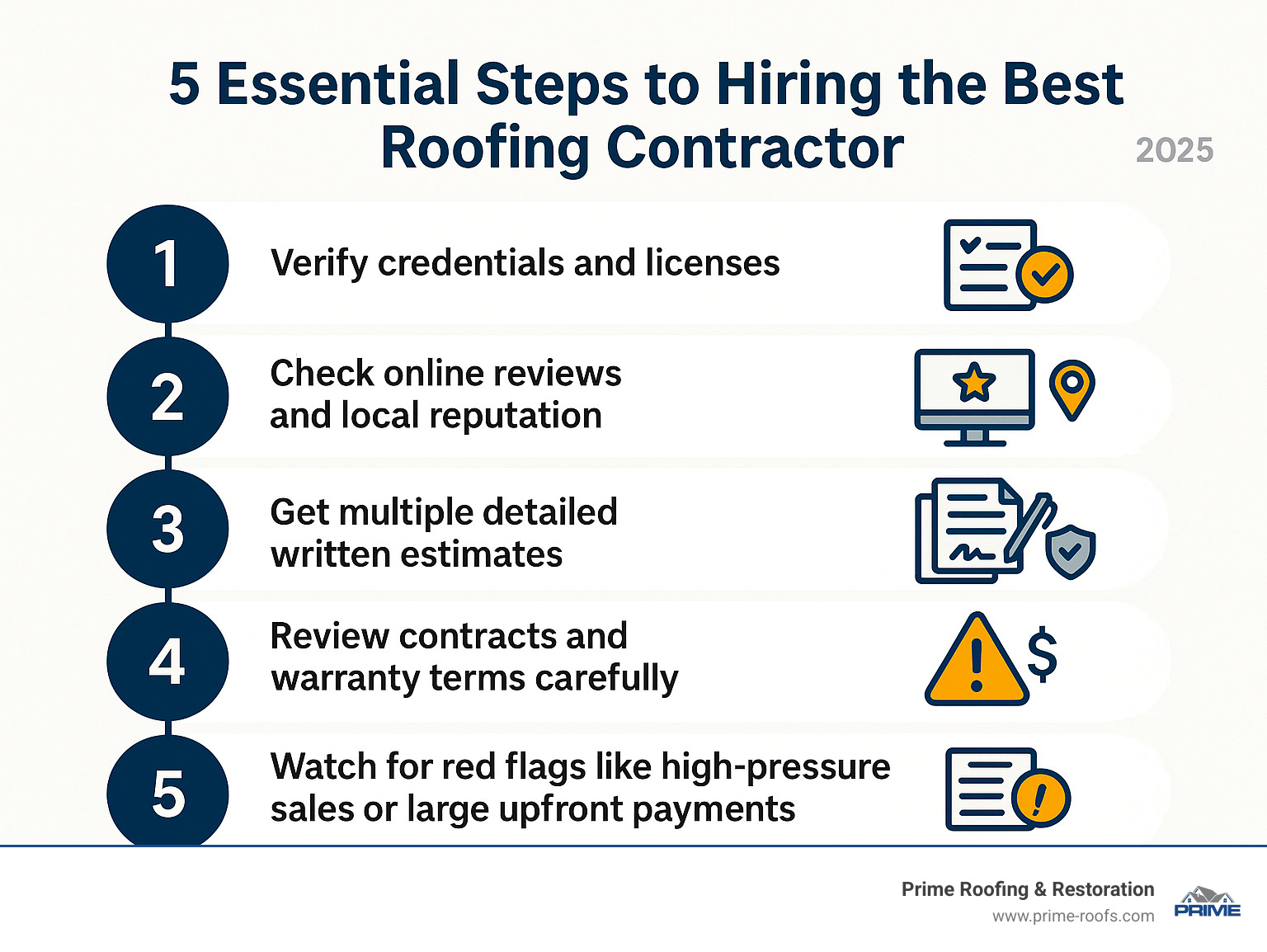
To ensure you hire the best roofing contractor for your needs, follow this summary checklist:
- Verify Credentials: Always start by confirming their Alabama state license, general liability insurance, and workers’ compensation coverage. Look for elite manufacturer certifications (e.g., GAF Master Elite®) as a sign of superior expertise.
- Investigate Reputation: Dive deep into online reviews, ask for a portfolio of local work, and, most importantly, request and contact recent customer references.
- Compare Detailed Quotes: Obtain at least three itemized, written estimates. Compare them line by line, focusing on the quality of materials and the full scope of work, not just the bottom-line price. Remember, the cheapest option is rarely the best value.
- Understand the Warranties: Clarify the details of both the manufacturer’s material warranty and the contractor’s workmanship warranty. A long workmanship warranty is a sign of a contractor’s confidence.
- Watch for Red Flags: Trust your gut. If a contractor uses high-pressure sales tactics, demands a large cash deposit, or is vague in their contract, walk away immediately.
The right contractor treats your home with the same care and respect as they would their own. They are a local partner committed to excellence and to the community they serve. If you’re in the Alabaster, AL area and are ready to work with a team that checks every one of these boxes, we are here to help. Contact us today for a transparent, no-pressure, no-obligation consultation. Experience the confidence and peace of mind that comes from partnering with true, dedicated professionals who are invested in protecting your home for years to come.