
Identifying a Critical Industrial Roofing Emergency
Industrial roofing emergency repair is the process of rapidly stabilizing, waterproofing, and restoring a damaged industrial roof to protect equipment, inventory, and personnel from further harm. When a roof fails at a warehouse, manufacturing plant, or distribution facility, every minute of delay multiplies the damage. For facility managers facing unexpected structural damage or critical leaks, Prime Roofing & Restoration provides comprehensive roofing solutions to mitigate risks and ensure operational continuity.
In the industrial sector, a roof is more than just a shelter; it is a critical component of the facility’s infrastructure that supports HVAC systems, ventilation, and often heavy machinery. A failure in this system can lead to a domino effect of operational shutdowns. According to the National Roofing Contractors Association (NRCA), proactive response to roof damage can reduce long-term repair costs by up to 50% compared to reactive, delayed maintenance.
Here’s what to do right now if you’re facing an industrial roof emergency:
- Evacuate and isolate the affected area immediately. Ensure all personnel are accounted for and moved to a safe zone.
- Shut off electrical systems beneath the damaged zone. Water intrusion near high-voltage industrial equipment is a primary fire and electrocution hazard.
- Document the damage with high-resolution photos and video. This is vital for insurance adjusters and structural engineers.
- Protect assets using heavy-duty plastic sheeting or industrial tarps over equipment, CNC machines, and inventory.
- Call a licensed 24/7 emergency roofing contractor like Prime Roofing & Restoration at 205-901-0401 — response times as fast as 1-4 hours are standard for critical failures.
- Notify your insurance provider and begin an incident report to establish a timeline for the claim.
Industrial roof failures don’t follow business hours. A severe storm, sudden membrane blow-off, or structural sag can halt production, destroy hundreds of thousands of dollars in equipment, and put workers at risk — all before sunrise. In Alabama, where humidity and rapid temperature shifts are common, the expansion and contraction of roofing materials can lead to sudden seam failures that go unnoticed until a major rain event occurs.
The difference between a contained incident and a catastrophic loss often comes down to how fast you act and who you call. As the owner of Prime Roofing & Restoration, I’m Bill Spencer — a licensed roofing contractor with decades of hands-on experience managing industrial roofing emergency repair across Alabama’s Gulf Coast region. My team specializes in storm response, TPO and flat roof stabilization, and complex insurance claim coordination for large-scale commercial properties.

Industrial roofing emergency repair terms to remember:
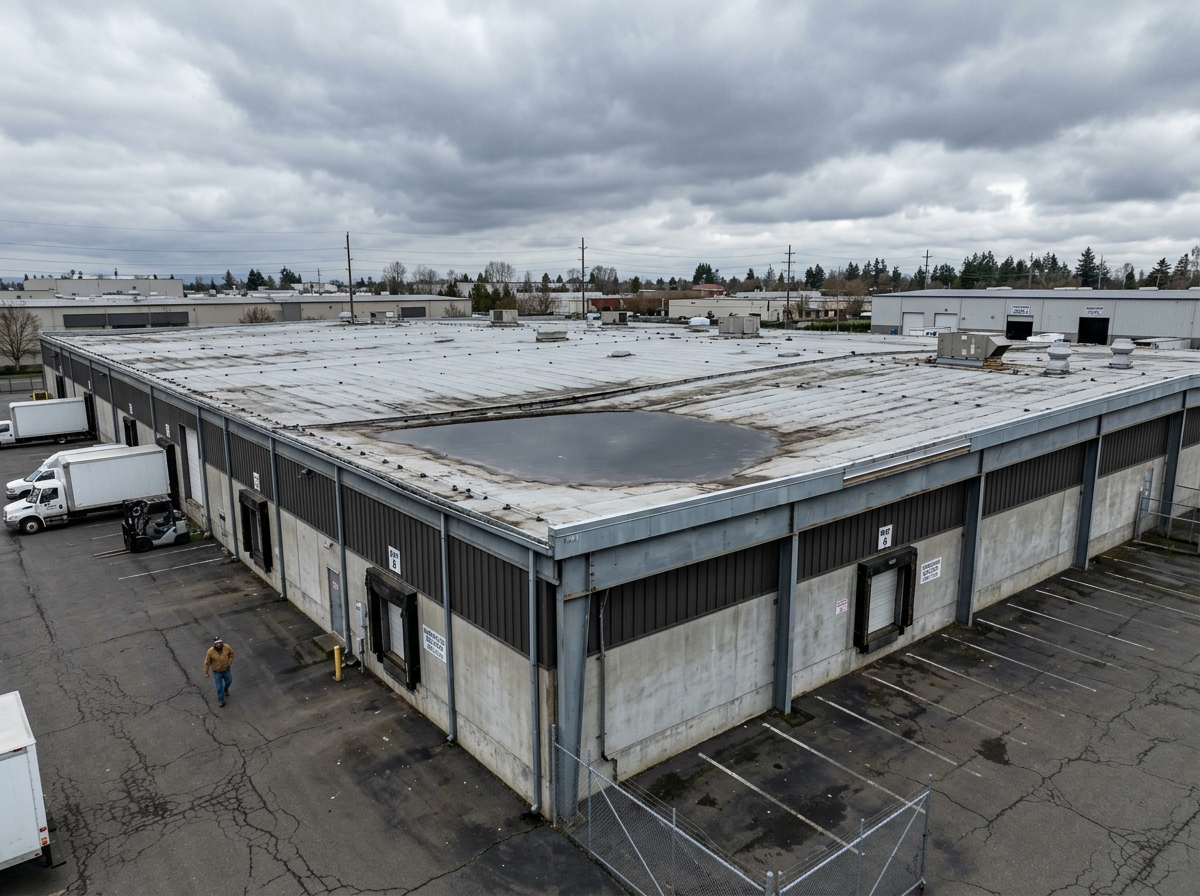
Not every drip in a bucket is an emergency, but in an industrial setting, the line between “maintenance issue” and “crisis” is thin. We define a true industrial roofing emergency as any situation where the building’s structural integrity is threatened, safety is compromised, or high-value operations are at risk of a shutdown. This includes large-scale water intrusion that threatens electrical panels or chemical storage areas where water reactivity could lead to hazardous material spills.
Immediate Steps for Facility Managers During a Roof Crisis
When the sky starts falling (literally), your first job is “Command and Control.” You aren’t just managing a roof; you’re managing a crisis that involves personnel safety, environmental compliance, and financial stability.
Safety First: Area Isolation and OSHA Compliance
The moment a leak or structural issue is identified, evacuate the immediate zone. Use caution tape or physical barriers to prevent employees from walking under a sagging deck. According to OSHA guidelines, any area with a compromised ceiling or roof must be strictly off-limits until a qualified person deems it safe. If water is entering near machinery, shut off the power to that sector using proper lockout/tagout procedures. Water and industrial-grade electricity are a lethal combination, and the risk of arc flash increases significantly in damp environments.
Internal Asset Protection and Mitigation
Industrial facilities house millions of dollars in specialized equipment. While waiting for the industrial roofing emergency repair team, take these mitigation steps:
- Equipment Shielding: Use heavy-duty, fire-retardant plastic sheeting to “tent” sensitive electronics, CNC machines, or laboratory equipment. Ensure the plastic is angled to allow water to run off away from the machine base.
- Inventory Relocation: If you have a warehouse full of hygroscopic materials (like paper products) or finished goods, move them to a dry bay immediately. Even high humidity from a nearby leak can damage sensitive inventory.
- Containment and Diversion: Use large bins or “leak diverters.” Leak diverters are specialized tarps that hang from the ceiling and funnel water into a hose, which can then be directed into a floor drain or external outlet. This prevents water from spreading across the floor and creating slip-and-fall hazards.
Documentation for Insurance and Liability
Before the repair crew starts throwing tarps, take 5 to 10 minutes to document everything. Take wide-angle photos of the roof damage from the ground (if safe) and close-ups of the affected interior assets. Document the exact time the leak was discovered and the weather conditions at the time. This documentation is the “gold” your insurance adjuster will need to distinguish between a sudden covered peril and long-term wear and tear. For more tips on handling the immediate aftermath, read When Disaster Strikes: A Guide to Emergency Roof Repair Services.
Professional Industrial Roofing Emergency Repair Protocols
When you call us for an industrial roofing emergency repair, we don’t just show up with a ladder and a bucket of tar. We follow a strict protocol designed for speed, safety, and long-term viability. Industrial roofs require a different approach than residential ones due to their scale and the materials involved, such as TPO (Thermoplastic Polyolefin) or EPDM (Ethylene Propylene Diene Terpolymer).
Rapid Response for Industrial Roofing Emergency Repair
In industrial settings, time is money. A single hour of downtime for a manufacturing plant can cost tens of thousands of dollars. We aim for a 4-hour arrival window in areas like Hoover and Alabaster.
- Satellite Communication: In severe storms where cell towers are down, our teams use satellite tech to stay coordinated with the home office and the facility manager.
- Two-Man Minimum: For safety and efficiency, we always deploy at least two expert roofers. One person focuses on the repair while the other monitors for secondary hazards like structural shifts, electrical risks, or changing weather patterns.
- Triage Assessment: Upon arrival, our lead technician performs a “triage” assessment to identify the most critical failure points. We prioritize stopping the largest volume of water first before moving to secondary leaks.
Learn more about our 24-7 Emergency Roofing capabilities.
Temporary Protection Measures
The goal of an emergency visit is to make the building watertight as quickly as possible. These are not permanent fixes but are designed to withstand the elements until a full repair can be executed.
- Industrial Tarping: We use heavy-duty, UV-resistant tarps (often 12-mil or thicker) secured with non-penetrating weights like sandbags or specialized ballast. We avoid using nails or screws into the roof deck whenever possible to prevent further damage.
- EPDM Mechanical Fasteners: For large membrane failures or “blow-offs,” we often use EPDM sections secured with batten bars. This is much more durable than a standard tarp and can withstand high winds (up to 60-70 mph) until a permanent fix is scheduled.
- Liquid-Applied Membranes: In areas with complex penetrations, such as HVAC curbs, vent pipes, or skylights, we apply specialized PMMA or silicone sealants that cure instantly, even in damp or cold conditions. These “wet-patch” materials are engineered to bond to surfaces that are not perfectly dry.
Check out our Services Emergency Roofing page for a full list of our rapid-response tools and techniques.
Specialized Equipment and Materials for Large-Scale Repairs
Industrial roofs are vast, often covering several acres. Finding a leak on a 100,000-square-foot flat roof is like finding a needle in a haystack—unless you have the right technology. At Prime Roofing & Restoration, we invest in advanced diagnostic tools to ensure our industrial roofing emergency repair is precise and effective.
Advanced Diagnostics: Infrared and Drones
We utilize infrared thermography (thermal imaging) to find “hidden” water. Wet insulation holds heat differently than dry insulation. By flying a drone equipped with a thermal camera over your facility at dusk, we can see exactly where water has trapped itself under the membrane. This allows us to target the repair to the exact failure point rather than guessing and replacing large sections of perfectly good roof.
Furthermore, drone surveys allow us to inspect high-risk areas, such as steep slopes or fragile roof decks, without putting a technician at risk. This data is compiled into a digital map that we share with the facility manager to justify the repair scope.
Industrial-Grade Repair Materials
We don’t use residential-grade materials for industrial jobs. Our service trucks are stocked with:
- Reinforced PVC and TPO: High-strength membranes that resist chemicals, grease, and punctures. These are essential for food processing plants or automotive facilities where chemical exhaust is common.
- High-Performance Sealants: Industrial-grade polyurethanes and silicones that bond to metal, concrete, and single-ply membranes. These sealants are designed to handle the extreme thermal expansion found on large metal roofs.
- Reinforced Scrim: To bridge large cracks or tears in built-up roofing (BUR) or modified bitumen systems, providing structural reinforcement to the patch.
Safety and Compliance Tools
Safety is non-negotiable on an industrial site. Our teams utilize horizontal lifelines and temporary tie-off anchors to remain OSHA-compliant while working on wet, slippery surfaces. We also use guardrails around roof hatches and skylights—common “death traps” on industrial roofs during emergencies. Every technician is trained in fall protection and hazardous material awareness. For a comprehensive look at the materials and safety standards we use, see our Commercial Roof Repair Company Ultimate Guide.
Managing Costs and Insurance Claims for Industrial Roof Failures
The “emergency” tag usually comes with a higher price tag, but understanding the variables can help you manage your facility’s budget and maximize your insurance recovery. Industrial roofing emergency repair is an investment in asset protection.
Factors Influencing Emergency Pricing
Several variables dictate the cost of an emergency response:
- Mobilization Speed: Getting a crew, specialized equipment (like a crane or man-lift), and materials on-site at 2:00 AM on a Sunday requires premium labor rates and logistics.
- Facility Height and Access: A 50-foot tall warehouse requires different safety gear, longer ladders, and potentially specialized lifts compared to a single-story shop. If the roof is difficult to access, labor hours increase.
- Material Scarcity: During a regional disaster, such as a hurricane or a major tornado outbreak in Alabama, material costs can spike due to high demand and supply chain disruptions.
- Extent of Saturation: If the water has already saturated the insulation (polyiso boards), the cost increases because those boards must be removed and replaced to prevent mold and structural rot.
Maximizing Insurance Recovery
Most industrial roof emergencies are covered by insurance if they are caused by “sudden and accidental” events like wind, hail, or fire. However, insurance will not pay for damage caused by “neglect” or “lack of maintenance.” To ensure your claim is approved:
- Maintain an Inspection Log: Keep a log of all bi-annual inspections and minor repairs. This proves the roof was in good condition prior to the emergency.
- Provide Evidence: Share the “before and after” photos and the thermal imaging reports our team provides. This technical data is hard for adjusters to dispute.
- Business Interruption Claims: Work with your insurance agent to see if your policy covers “Business Interruption.” If a roof leak shuts down your production line, you may be able to recover lost revenue in addition to repair costs.
- Direct Coordination: We often meet with adjusters on-site to explain the technical nature of the failure, ensuring they understand why specific (and often expensive) industrial materials are required for the fix.
Read more about Understanding Roof Repair Costs to stay prepared for your next budget cycle.
Preventing Future Industrial Roofing Emergency Repair Needs
The best emergency is the one that never happens. Once we’ve stabilized your roof and the immediate crisis has passed, we shift our focus to long-term prevention and extending the life of your roofing asset.
Proactive Industrial Roof Maintenance
We recommend a bi-annual “Roof Health Audit” every spring and fall. This is especially critical in Alabama to prepare for the spring storm season and the winter freeze-thaw cycles. Our audits include:
- Debris Removal: Clogged drains are the #1 cause of industrial roof collapses. We clear leaves, industrial dust, and trash from all drainage points.
- Drainage Clearing: We ensure scuppers, internal drains, and downspouts are free-flowing. We also check for “ponding water” which indicates a drainage slope issue.
- Seam Testing: We manually check the heat-welded seams of TPO and PVC roofs using a seam probe to catch minor separations before they become major blow-offs during high winds.
- Flashings and Penetrations: We inspect the seals around HVAC units, pipes, and pitch pockets, as these are the most common points of failure.
Transitioning to Permanent Restoration
An emergency patch is a “band-aid.” To fully restore your warranty and structural integrity, you’ll eventually need a permanent fix. This might involve:
- Core Sampling: Taking a “slice” of the roof to see how many layers of wet insulation need to be replaced. This is a requirement by building codes in many jurisdictions before a reroof can occur.
- Flashing Upgrades: Replacing old metal flashing with modern, reinforced materials that offer better expansion and contraction capabilities.
- Roof Coating Systems: If the structural deck is sound, applying a silicone or acrylic coating can extend the life of the roof by 10-20 years at a fraction of the cost of a full replacement. These coatings also provide “Cool Roof” benefits, reducing energy costs by reflecting UV rays.
If your roof is nearing the end of its life, explore our Industrial Roof Replacement Considerations to plan your next steps.
Frequently Asked Questions about Industrial Roof Emergencies
How quickly can an emergency roofing team arrive on-site?
In most cases, we can have a specialized crew on-site within 1 to 4 hours. For facilities in Alabaster, Hoover, or Pelham, our local presence allows for rapid deployment. During major regional weather events, we prioritize facilities based on the severity of the risk to life and high-value assets.
Can industrial operations continue during emergency repairs?
Yes! We understand that shutting down a production line can cost thousands per hour. We use strategic area isolation—shielding your equipment and creating “safe zones”—so your team can keep working while we stabilize the roof above. We also schedule the loudest parts of the repair during shift changes or off-hours whenever possible.
What is the typical cost of an emergency industrial repair?
Emergency services typically cost 1.5 to 2 times the standard hourly rate due to the immediate mobilization and after-hours labor. A minor leak containment might start around $500 to $2,500, while major structural stabilization or large-scale tarping for a 50,000+ sq. ft. warehouse can exceed $20,000.
How do I know if I need a repair or a full replacement?
If the damage covers more than 25-30% of the roof surface, or if the underlying insulation is completely saturated across multiple bays, a replacement is usually more cost-effective. We provide detailed moisture maps and cost-benefit analyses to help you make this decision. Check out our Best Industrial Roofing Companies Near Me guide for more on selecting a partner for large projects.
Does insurance cover temporary emergency repairs?
Yes, most commercial policies include a “Duty to Mitigate” clause. This means the policyholder is required to take immediate steps to prevent further damage (like hiring an emergency roofer to tarp the roof). Insurance companies typically reimburse these costs as part of the overall claim.
What are the signs that my industrial roof might collapse?
Signs of imminent collapse include severe deck deflection (sagging), loud popping or cracking sounds from the support joists, doors that suddenly won’t close or open (indicating a shifting frame), and large areas of ponding water that are not draining. If you see these signs, evacuate the building immediately and call a structural engineer and an emergency roofer.
Conclusion
At Prime Roofing & Restoration, we know that an industrial roof failure is more than just a leak—it’s a threat to your livelihood, your employees’ safety, and your company’s reputation. Based in Alabaster, AL, we pride ourselves on being the first call for local businesses in their hour of need.
We don’t just “fix roofs”; we build lasting relationships through transparency, quality materials, and 24/7 dedication. Whether you’re dealing with a storm-damaged warehouse in Hoover or a leaking manufacturing plant in Alabaster, our licensed experts are ready to protect your assets and your people.
Don’t wait for the damage to double. Every minute of delay allows water to seep deeper into your building’s structure, increasing the risk of mold, rot, and electrical failure. Whether it’s 2:00 PM or 2:00 AM, our teams are ready to deploy to your facility.
Contact Information
Prime Roofing & Restoration
Address: 1000 Corporate Dr Suite 100, Alabaster, AL 35007
Phone: 205-901-0401
Website: www.prime-roofs.com
Service Area: Alabaster, Hoover, Pelham, Birmingham, and surrounding Alabama regions.
For non-emergencies, visit our Alabaster location page to schedule a preventative inspection and keep your facility high and dry. You can also view our location on Google Maps to see our proximity to your facility.