
The Homeowner’s Definitive Guide to Insurance Claim Roofing: Maximizing Your Settlement
Insurance claim roofing is the formal process of requesting financial reimbursement from an insurance provider for roof repairs or replacement necessitated by a covered peril. To ensure a successful outcome, homeowners must prioritize immediate documentation and professional verification. Engaging expert roofing services in Alabama before contacting your insurer is the most effective way to prevent claim undervaluation. Data from the Insurance Information Institute indicates that wind and hail damage account for approximately 39.4% of all homeowners insurance claims. Furthermore, homeowners who utilize a professional contractor to assist with an insurance roof replacement claim often secure settlements that are 20% to 35% higher than those who file independently, as contractors identify “hidden” damages like fractured fiberglass mats and compromised seals.
In the context of Alabama’s volatile climate, the insurance claim roofing process is not merely a administrative task; it is a critical financial recovery operation. From the tornado-prone corridors of Alabaster to the hurricane-battered shores of Orange Beach, the structural integrity of your roof is constantly under siege. When a storm passes, the clock begins ticking on your ability to recover funds. Most policyholders are unaware that insurance companies operate on a principle of “indemnity,” which theoretically means returning you to the state you were in before the loss. However, the interpretation of that “state” is where the conflict often arises.
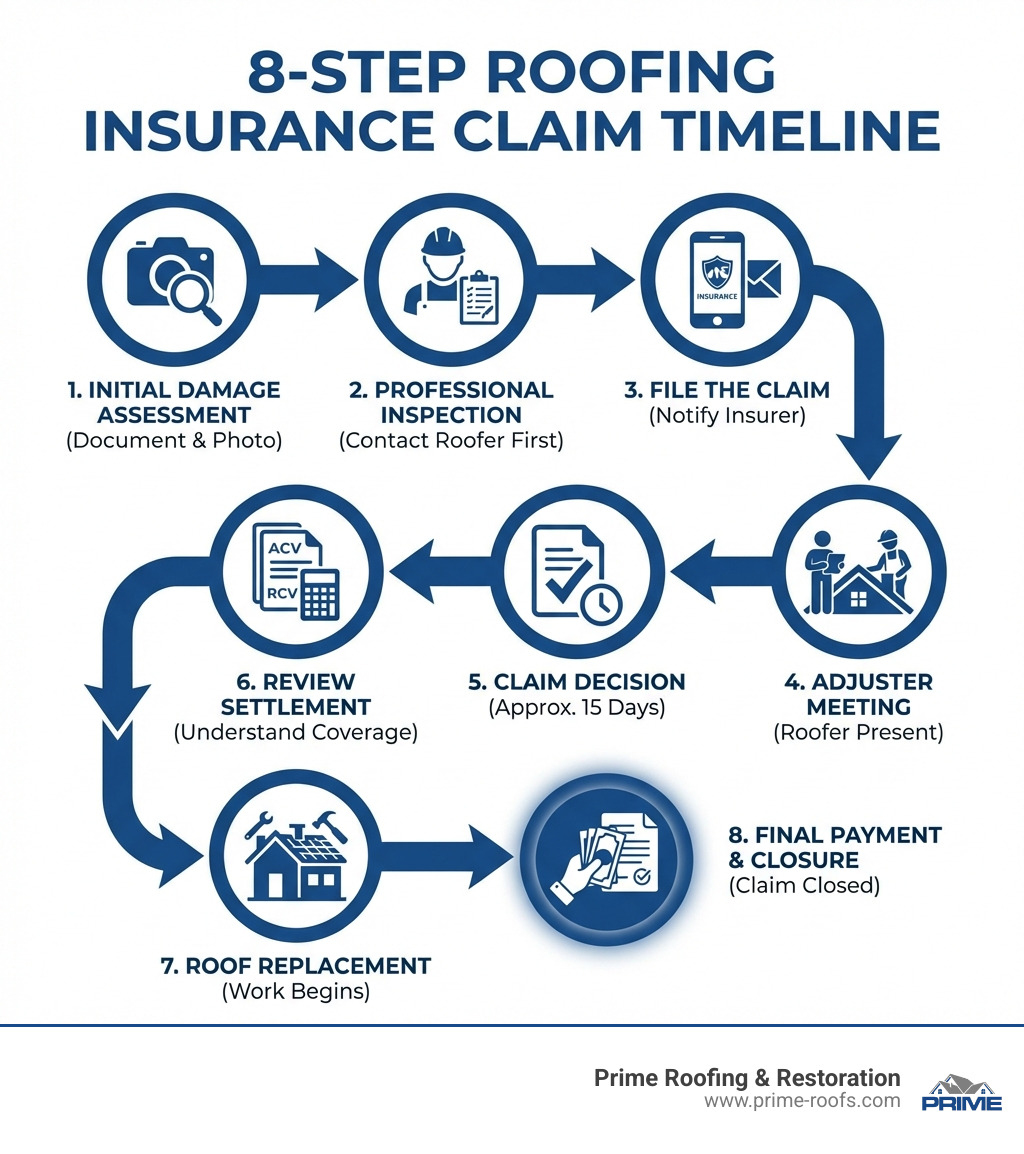
Here’s what you need to know about navigating a roof insurance claim:
- Document everything immediately – Take high-resolution photos and videos of all damage, including interior leaks and exterior debris, before any temporary repairs are made.
- Contact a professional roofer first – An independent inspection provides a baseline of damage that isn’t influenced by the insurance company’s internal quotas.
- Understand your coverage type – Replacement Cost Value (RCV) pays full replacement costs at current market rates; Actual Cash Value (ACV) deducts depreciation based on the roof’s age.
- Know your deductible – This is your financial responsibility, typically ranging from $500 to $2,000, or 1-2% of your home’s total insured value.
- File within the window – While some policies allow up to a year, filing within 30-60 days of the event is optimal for proving the damage was caused by a specific storm.
- Expect 15 days for a decision – Once the adjuster completes their inspection, the initial approval or denial letter typically arrives within 7 to 14 business days.
- Plan for 30-60 days to receive payment – The financial lifecycle of a claim involves multiple checks, often requiring signatures from your mortgage company.
The reality is simple: insurance companies protect their bottom line, not yours. They employ adjusters trained to minimize payouts through “partial repair” recommendations rather than full replacements. According to industry data, homeowners who involve a professional roofing contractor from the start report significantly better claim outcomes. This is because a contractor acts as a technical advocate, ensuring that every damaged shingle, flashing, and vent is accounted for in the final estimate.
Your roof is your home’s first defense against Alabama’s severe weather—from damaging hailstorms to high winds and heavy rain. When storm damage strikes, acting fast with the right information protects both your property and your wallet. Missing shingles, granule loss, and water stains are obvious signs, but hidden damage like compromised flashing or attic mold can go unnoticed without a professional eye.
I’m Bill Spencer, owner of Prime Roofing & Restoration, and over the past five years I’ve guided hundreds of Central Alabama homeowners through successful insurance claim roofing processes, securing full coverage for storm-damaged roofs across Alabaster and Orange Beach. My team has learned exactly what adjusters look for—and more importantly, what they tend to overlook—so we can advocate for the coverage you’ve been paying for all along. We understand the nuances of Alabama insurance law and the specific requirements of major carriers like State Farm, Allstate, and Liberty Mutual.
RCV vs. ACV: How Policy Language Determines Your Out-of-Pocket Costs
Before you pick up the phone to call your agent, you need to understand the “language” of your policy. Many homeowners assume that having insurance means they are automatically covered for a brand-new roof. Unfortunately, that isn’t always the case. Your payout depends entirely on whether you have Replacement Cost Value (RCV) or Actual Cash Value (ACV) coverage. This distinction is the single most important factor in determining your final out-of-pocket expense.

Replacement Cost Value (RCV) vs. Actual Cash Value (ACV)
The difference between these two can be staggering. RCV is the “gold standard” of coverage. It pays the full cost to replace your roof at today’s prices, minus your deductible. ACV, on the other hand, factors in depreciation. If your roof is 15 years old, the insurance company will calculate how much “life” is left in it and only pay you for that remaining value. This is often referred to as “market value” at the time of loss.
Statistics show that ACV insurance policies are often calculated at approximately 20 to 25% less than a replacement cost policy. For a $15,000 roof replacement, an ACV policy might leave you footing a $5,000 to $7,000 bill out of pocket, whereas an RCV policy would cover everything but your deductible. In Alabama, many older policies are being converted to ACV via “endorsements” without the homeowner fully realizing the impact until a storm hits.
| Feature | Replacement Cost Value (RCV) | Actual Cash Value (ACV) |
|---|---|---|
| Payout Basis | Today’s cost to replace | Depreciated value based on age |
| Out-of-Pocket | Only your deductible | Deductible + depreciation gap |
| Best For | Total financial protection | Lower monthly premiums |
| Typical Gap | $0 | 20% – 50% of total cost |
For more details on what is typically covered, check out our guide on Does Home Insurance Cover Roof. You can also find official consumer tips on the Texas Department of Insurance website, which provides excellent general advice on policy types that applies to most Southern states.
The “Matching” Dilemma and Code Upgrades
One of the most contentious areas of insurance claim roofing is the “matching” rule. If your roof has discontinued shingles and only one slope is damaged, does the insurance company have to replace the whole roof so it matches? In Alabama, there is no strict “matching law” like in some other states, but many policies include “Line of Sight” clauses. If a repair would result in a significant aesthetic mismatch that affects the home’s value, a skilled contractor can often negotiate a full replacement.
Furthermore, you must consider Ordinance and Law coverage. Building codes in Alabaster and Orange Beach change frequently. If your current roof was installed 20 years ago, it likely doesn’t meet today’s wind resistance or flashing codes. Without Ordinance and Law coverage, you may have to pay the difference to bring the new roof up to code out of your own pocket.
Covered Perils vs. Common Exclusions
In insurance claim roofing, a “peril” is the event that caused the damage. Most standard homeowners policies in Alabaster and Orange Beach cover:
- Wind Damage: High winds (often 50+ mph) tearing off shingles or lifting the roof deck (known as “uplift”).
- Hail Impact: Large hail stones cracking the fiberglass mat or bruising the asphalt, leading to premature failure.
- Fallen Trees: Direct structural damage caused by a tree or heavy limb falling during a storm.
- Fire: Direct damage from flames or intense heat, as well as smoke damage to the underlayment.
However, insurance is not a maintenance plan. Common exclusions include:
- Wear and Tear: If your roof is simply old and leaking because the shingles have reached the end of their life, insurance won’t pay. This is the most common reason for claim denial.
- Maintenance Neglect: If you haven’t cleaned your gutters or removed moss, and that causes a leak, your claim may be denied under the “failure to mitigate” clause.
- Rodent and Bird Damage: Most insurers consider pest control a homeowner responsibility. You can learn more about identifying these issues at ICWDM.org.
Forensic Damage Assessment: Identifying Visible and Hidden Roof Failures
You don’t always need to climb a ladder to know you have a problem. In fact, we recommend staying on the ground and using a pair of binoculars for safety. Assessing damage immediately after a storm is the most critical step in the process. However, a professional forensic assessment goes much deeper than a simple visual check.
Visible Signs of Damage
Look for these red flags from the ground:
- Missing Shingles: Gaps in the roof where shingles have been blown away, exposing the black underlayment or wood decking.
- Circular Bruising: Dark spots on shingles caused by hail impact. These look like “dimples” where the granules have been knocked off.
- Granule Loss: Large amounts of “sand” in your gutters or at the bottom of downspouts. This indicates the protective layer of the shingle is gone.
- Curling or Buckling: Shingles that are no longer laying flat, often caused by high winds catching the edges.
- Interior Water Stains: Yellow or brown spots on your ceilings or walls, or bubbling paint near window frames.
If you notice any of these, it’s time for a professional Roof Inspection for Insurance to document the extent of the damage. We use high-resolution drone photography and moisture meters to provide a comprehensive report.
Hidden Signs of Structural Compromise
Some of the most dangerous damage isn’t visible on the surface. We often find “hidden” issues during our 24/7 emergency inspections that an insurance adjuster might overlook:
- Fractured Fiberglass Mats: Hail can crack the internal structure of a shingle without leaving a massive mark on the surface. This leads to leaks 12-24 months later.
- Seal Failure: High winds can lift shingles just enough to break the adhesive seal. Once the seal is broken, the shingle will never re-adhere, making it vulnerable to the next minor wind event.
- Sagging Rooflines: This can indicate that moisture has warped the subroofing (OSB or plywood) or rafters, suggesting a long-term leak triggered by a recent storm.
- Mold in the Attic: Small, undetected leaks can lead to mold growth long before you see a stain on your ceiling. We check attic insulation for “matting” which indicates water entry.
- Compromised Flashing: Metal around chimneys and vents can pull away due to thermal expansion or wind, creating “invisible” entry points for water.
When hiring an inspector, ensure they are reputable to avoid fraud. Forbes provides a great guide on how to hire a qualified roof inspector. In Alabama, it is vital to work with a contractor who understands the specific wind-load requirements for coastal zones versus inland areas.
The 4-Step Protocol for a Successful Insurance Claim Roofing Settlement
Navigating a claim is a marathon, not a sprint. Following these steps in order will significantly increase your chances of a full approval and ensure you don’t leave money on the table. The goal is to provide the insurance company with an undeniable “burden of proof.”
Step 1: Document Everything
Before you touch anything or move debris, take photos. Document the date of the storm and save any local news reports or weather app screenshots about weather events in Alabaster or Orange Beach. This provides the “proof of loss” the insurance company requires. If you have “before” photos of your roof from a previous inspection or real estate listing, keep those handy to show the contrast.
Step 2: Call Us First
We strongly suggest contacting a professional roofer for an inspection before you call the insurance company. Why? Because if we find that the damage is less than your deductible, it’s often better to pay for the repair out-of-pocket. Opening a claim that results in a $0 payout can still cause your premiums to rise or affect your “CLUE” report (Comprehensive Loss Underwriting Exchange), which insurers use to determine your risk level.
Step 3: File the Claim
Once we’ve confirmed significant damage, contact your insurer’s claims department. Provide them with our inspection report, the date of loss, and your photos. Be prepared to provide your policy number and a brief description of the event (e.g., “High winds and hail during the storm on Tuesday night”). For a deeper dive into this process, see our Insurance Claims Assistance Complete Guide. You can also review GAF’s best practices for filing a claim.
Step 4: Preparing for the Adjuster Inspection
The insurance company will send an adjuster to verify the damage. This is the most important meeting in the process. We always recommend having your contractor present during this inspection. Adjusters are often overworked and may spend only 15 minutes on your roof. Having a professional advocate ensures they don’t miss the subtle signs of damage.
As your advocate, we can:
- Point out damage the adjuster might miss, such as “soft metal” damage on vents or gutters.
- Speak the technical “insurance language” (using software like Xactimate) to justify repairs.
- Provide a detailed damage map and repair estimate on the spot.
- Discuss “The Appraisal Clause” if the adjuster’s estimate is significantly lower than the actual cost of repairs.
Professional training, such as the storm restoration training provided by GAF, allows us to handle these negotiations with authority and precision. We ensure that the scope of work includes everything from debris removal to the final ridge cap installation.
Financial Management: Understanding Deductibles, Recoverable Depreciation, and Supplements
Understanding the financial timeline of an insurance claim roofing project will help you manage your expectations and avoid common pitfalls. The way money flows in a claim is often confusing for first-time filers.
The Deductible
Your deductible is the amount you pay before insurance kicks in. These are typically fixed dollar amounts (usually $500 to $2,000) or a percentage of your home’s value (1-2%). In coastal areas like Orange Beach, you may have a separate, higher “Hurricane Deductible.” Beware of any contractor who offers to “waive” your deductible—in many states, including Alabama, this is considered insurance fraud. A reputable contractor will always require the deductible to be paid as part of the contract.
The Timeline of Payments
- Claim Decision: Usually within 15 days of the adjuster’s visit.
- First Check (ACV): Expect an approval or denial within a week to ten days after the inspection. If approved, you will receive a check for the Actual Cash Value (the depreciated value).
- Mortgage Endorsement: If you have a mortgage, the check will likely be made out to both you and your lender. You will need to send the check to them for endorsement, which can add 7-14 days to the process.
- Reimbursement (RCV): Typically 30 to 60 days to receive the final check after the work is completed.
Our guide on Getting a Roof Replaced on Insurance breaks down these phases in even more detail.
Recoverable Depreciation and Supplements
Most RCV policies pay out in two checks. The first check is the ACV value. Once the work is completed and we submit a final invoice and “Certificate of Completion,” the insurance company releases the “recoverable depreciation”—the second check that covers the remaining balance. This ensures the work was actually performed.
Sometimes, we find additional damage once we tear off the old shingles, such as rotted decking or improper ventilation that wasn’t visible during the inspection. In these cases, we file a supplement. This is an additional claim for unforeseen repairs. We handle the documentation and photos required to get these extra costs approved so you aren’t left with an unexpected bill.
Additionally, check if you have Ordinance and Law coverage. This covers the cost of bringing your roof up to current building codes, which is often required by law in coastal areas like Orange Beach. You can learn more about these endorsements from the Louisiana Department of Insurance. If you are looking to upgrade your roof for better protection, check out FORTIFIED home incentives for potential discounts on your premiums.
Expert FAQ: Overcoming Denials and Managing Policy Limitations
What should I do if my insurance claim is denied?
Don’t panic. Denials happen, but they aren’t always final. First, read the denial letter carefully to understand the reasoning (e.g., “wear and tear” vs. “storm damage”). You have the right to request a second inspection with a different adjuster or hire a public adjuster to represent you. We often help clients navigate insurance roof replacement even after an initial denial by providing more exhaustive evidence, such as weather reports and forensic photos.
How does roof age affect my insurance coverage?
If your roof is over 15-20 years old, your insurance company may have already switched your policy to ACV coverage through an endorsement. As roofs age, the risk to the insurer increases, so they lower their payout limit. Some insurers will even refuse to renew a policy if the roof is over 20 years old unless it is replaced. Keeping up with your policy details annually is the best way to avoid surprises.
Can my insurance premiums increase after filing a claim?
In Alabama, insurance companies generally cannot raise your individual rates solely because you filed a claim for an “Act of Nature” (like a hailstorm). However, they can raise rates for an entire zip code if a major storm causes widespread damage. It is always better to have a safe, new roof than to risk a total loss by avoiding a claim.
What is a “Proof of Loss” form?
This is a formal document provided by the insurer that you must sign and notarize. It states the amount of money you are claiming and the details of the loss. It is a legal document, so ensure your contractor has reviewed the numbers for accuracy before you sign it.
Can I choose my own roofing contractor?
Yes. You have the absolute right to choose any licensed and insured contractor. You are not required to use the “preferred providers” suggested by your insurance company. In fact, hiring an independent contractor like Prime Roofing & Restoration ensures that your interests are the priority, not the insurance company’s cost-saving goals.
What if the insurance check is less than the contractor’s estimate?
This is common. It usually happens because the adjuster missed certain line items or used outdated pricing. We resolve this through the supplementation process, providing the insurer with the necessary documentation to bridge the gap.
Does insurance cover interior damage from a roof leak?
Yes, most “All-Perils” policies cover interior damage (drywall, paint, flooring) if the leak was caused by a covered storm event. This is usually handled as a separate line item within the same claim.
How long do I have to complete the repairs?
Most policies give you 12 to 24 months from the date of the loss to complete the repairs and claim the recoverable depreciation. If you wait too long, you may lose the right to the second check.
What is the “Appraisal Process”?
If you and the insurance company cannot agree on the cost of the damage, you can invoke the Appraisal Clause. Both parties hire an independent appraiser, and they choose an “umpire.” A decision by any two of the three is binding. This is a faster alternative to litigation.
Should I file a claim for a small leak?
Not necessarily. If the repair cost is $600 and your deductible is $1,000, filing a claim provides no financial benefit and adds a “loss” to your insurance history. Always get a professional inspection first to determine the total scope of damage.
Your Local Advocate for Insurance Claim Roofing in Alabaster and Orange Beach
Filing an insurance claim roofing doesn’t have to be a nightmare. At Prime Roofing & Restoration, we pride ourselves on being more than just roofers—we are your advocates. Whether you are dealing with a sudden leak in Alabaster or hurricane damage in Orange Beach, our licensed experts are ready to protect your home and family. We understand the stress of storm damage, and our goal is to make the restoration process as seamless as possible.
We offer end-to-end solutions, from the initial 24/7 emergency tarping to prevent further damage, to the final inspection and warranty registration. Our mission is to build lasting relationships through quality materials, honest service, and expert craftsmanship. Don’t let the insurance company dictate the quality of your home’s protection.
If you suspect your roof has storm damage, don’t wait. The statute of limitations for filing a claim can be as short as one year, and hidden leaks can cause thousands of dollars in secondary damage to your attic and structure. Contact the premier roofers near me in Alabaster AL today for a free, no-obligation inspection.
Contact Information & Locations
Prime Roofing & Restoration
Alabaster Office: 1000 Corporate Dr Suite 100, Alabaster, AL 35007
Orange Beach Office: 25241 Perdido Beach Blvd Unit 101, Orange Beach, AL 36561
Phone (Click to Call): 205-901-0401 Available 24/7 for Emergency Services
Find Us on the Map:
Ready to start your claim? Call us 24/7 at 205-901-0401 or visit us at our Alabaster or Orange Beach offices to speak with a claims specialist today.