
Cedar Shake Roofing in Alabama (2026): 30–50-Year Lifespan Data, Wind Ratings, and When It’s Worth the Premium
Cedar shake roofing is a premium, performance-driven system that routinely delivers 30–50 years of service life when correctly specified and installed—even in humid Southern climates. That lifespan outpaces many conventional roofs largely because cedar heartwood is naturally decay-resistant and, when installed with proper ventilation, dries efficiently after rain. Homeowners researching cedar shakes in Central Alabama typically compare three categories: Certi-Label® certified cedar, non-certified natural cedar, and synthetic cedar-look shakes. If your goal is a long-life roof system with correct detailing from inspection through install, start with professional roofing contractors in Alabama who routinely work with wood systems and understand regional moisture loads.
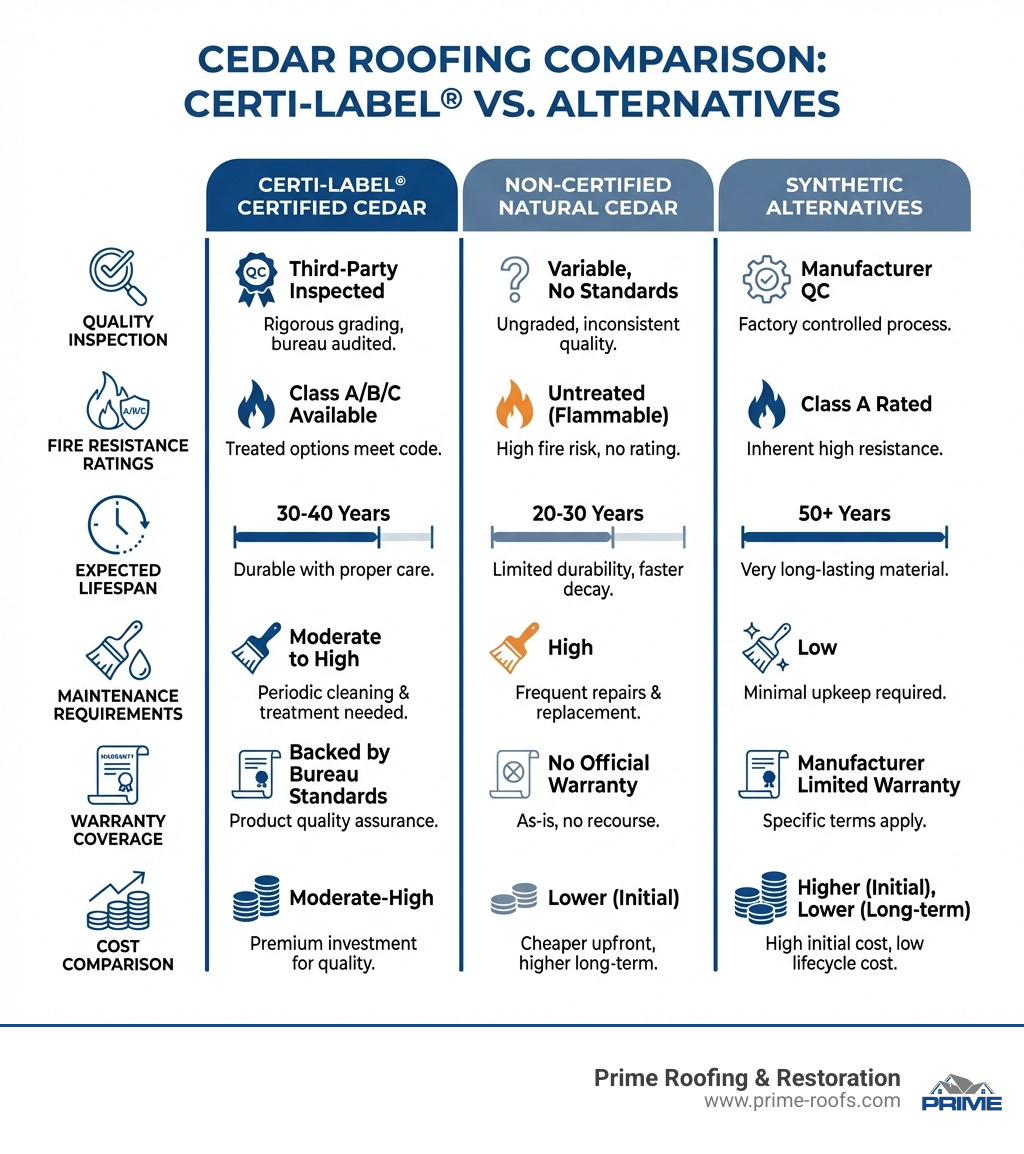
When comparing cedar shakes, homeowners typically weigh three main categories:
- Certi-Label® Certified Products – Premium, Number 1, and Number 2 grades manufactured to strict industry standards and backed by third-party inspection
- Non-Certified Natural Cedar – Ungraded shakes and shingles without quality guarantees or warranty support
- Synthetic Alternatives – Composite, rubber, or polymer products designed to mimic the appearance of real wood
Key Differences at a Glance:
| Product Type | Quality Assurance | Fire Resistance | Lifespan | Maintenance |
|---|---|---|---|---|
| Certi-Label® Cedar | Third-party inspected | Class A/B/C available | 30-40 years | Moderate to high |
| Non-Certified Cedar | Variable, no standards | Untreated (flammable) | 20-30 years | High |
| Synthetic Shakes | Manufacturer warranty | Class A rated | 50+ years | Low |
Cedar shake products continue to dominate the premium roofing market because of their natural beauty, impressive durability, and ability to weather gracefully over time. However, not all cedar is equal. The presence of a Certi-Label® certification—issued by the Cedar Shake & Shingle Bureau (CSSB)—distinguishes rigorously inspected, graded products from uncertified alternatives that may contain defects, excessive sapwood, or inconsistent dimensions.
For Central Alabama property owners, the choice between certified and non-certified cedar can mean the difference between a roof that lasts three decades and one that requires replacement in half that time. Climate matters too. Alabama’s humid summers and occasional severe storms demand materials that can handle moisture, resist fungal growth, and stand up to high winds. According to product testing published through CSSB technical resources, premium Certi-Split® cedar shakes have documented wind performance up to 245 MPH when installed to specification, and properly treated fire-retardant products meet Class A, B, or C fire ratings—critical factors for insurance and building code compliance.
Beyond the material itself, the quality of installation is decisive. A cedar shake roof installed with correct spacing, underlayment, and ventilation will consistently outlast a poorly detailed roof, regardless of wood grade.
As the Owner and President of Prime Roofing & Restoration, I’ve overseen cedar shake projects across Alabama and guided homeowners through the certified vs. non-certified decision so they can match budget, aesthetics, and risk tolerance to the right system. For an on-site evaluation and a written scope, contact us today.
Quick cedar shake definitions:
What Are Cedar Shakes and Shingles? A Technical Guide for Homeowners
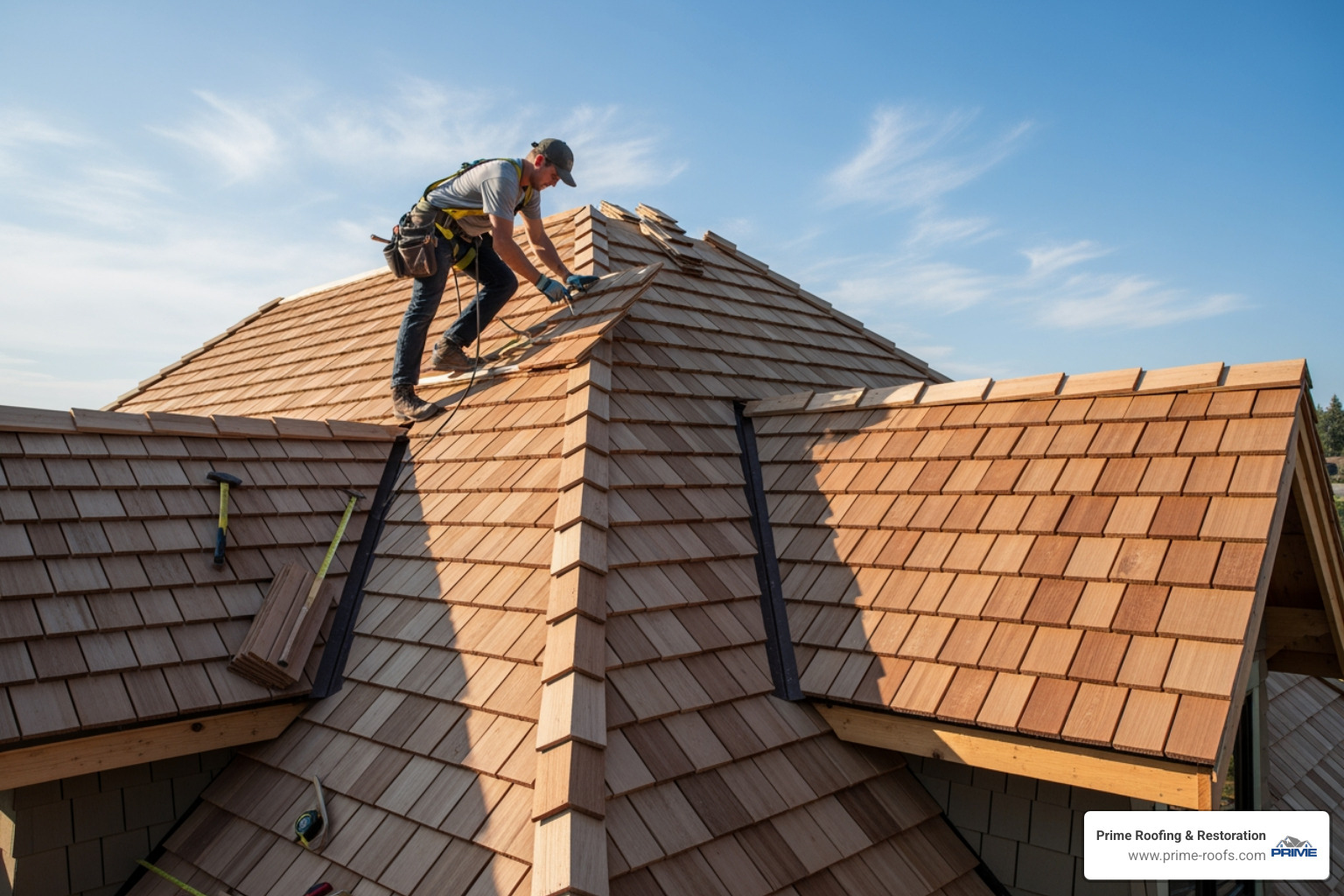
A cedar shake roof is a premium roofing system made from wedges of cedar wood, engineered to deliver superior thermal performance and impact resistance compared to standard asphalt shingles. Each shake is unique in thickness and grain, creating a distinctive, rustic character that evolves over time, weathering to a neat silvery gray. Historically, wood was the primary roofing material across North America, and its natural resilience and beauty continue to make it a popular choice today. Understanding the fundamental differences between shakes and shingles is the first step in selecting the right roof replacement services for your home.
The Difference Between a Cedar Shake and a Shingle
While often used interchangeably, shakes and shingles are not the same, and the distinction lies primarily in their manufacturing process and resulting appearance.
Cedar shingles are precisely sawn from wood blocks on both faces, giving them a smooth, uniform, and tapered appearance. They tend to be thinner and more consistent in size, offering a clean, classic look. Historically, shingles were split, but modern shingles are predominantly sawn.
In contrast, a cedar shake is typically thicker and has a more rugged, textured, and rustic appearance. Traditionally, shakes were prepared by splitting off sections of material with a maul. Today, many shakes are “handsplit and resawn,” meaning they are split from a log to create a natural grain texture on one face, and then the other side is sawn smooth. This process results in a distinct, irregular surface that many homeowners cherish for its authentic, old-world charm.
Tapersawn shakes offer a middle ground. They are sawn on both faces like a shingle but are thicker, providing the heavy shadow lines and robust appearance of a traditional shake with a more refined finish. This versatility makes them a popular choice for those seeking a balance between rustic appeal and contemporary aesthetics.
How Cedar Shakes Are Made
The creation of cedar shakes begins with a meticulous selection of high-quality cedar logs, most commonly from the Western Redcedar (Thuja plicata) species. The heartwood of old-growth Western Redcedar is particularly valued for its natural durability and resistance to decay, thanks to its unique extractives.
The manufacturing process unfolds as follows:
- Log Selection and Bucking: Large cedar logs are chosen for their straight grain and minimal knots. These logs are then cut into specific lengths, typically 18-inch or 24-inch sections, known as “bolts” or “blocks.”
- Splitting (for Shakes): For traditional or handsplit shakes, these blocks are then split. Historically, this was done using a mallet and a froe—a tool with a blade set perpendicular to the handle. Today, hydraulic splitters may also be used. This splitting process follows the natural grain of the wood, resulting in one rough, textured face.
- Resawing (for Handsplit and Resawn Shakes): After splitting, one side of the shake is typically sawn to create a tapered profile and a relatively flat underside, making it easier to install. This produces the “handsplit and resawn” shake, which has a split face and a sawn back.
- Sawing (for Tapersawn Shakes and Shingles): For tapersawn shakes and shingles, the blocks are fed through large circular saws. These saws are designed to cut a tapered profile from the block, creating a smooth surface on both sides. The thickness of the cut determines whether it will be a shingle or a thicker tapersawn shake.
- Trimming and Bundling: Once cut and shaped, the shakes and shingles are trimmed to ensure square corners and consistent widths. They are then bundled together for shipment. Each bundle of cedar shakes typically covers 25 square feet at a 5-inch exposure.
It’s worth noting that the Cedar Shake & Shingle Bureau (CSSB) plays a crucial role in standardizing these products. Their Certi-label® products, such as Certi-Sawn® and Certi-Split®, assure consumers that the products meet specific grading rules and quality controls.
The Pros and Cons of Cedar Shake Roofing: Performance, Cost, and Risk Profile
While visually stunning, cedar shake roofing has a unique set of advantages and disadvantages that homeowners should weigh carefully. In climate-adjusted field studies, cedar shake roofs routinely outperform 3-tab asphalt shingles in both impact resistance and thermal performance, but they demand higher up-front investment and more disciplined maintenance. Their performance and longevity are heavily dependent on the quality of the material, the climate, and the expertise of the installation.
Advantages of Cedar Shakes
Choosing a cedar shake roof for your home in Alabaster, AL offers a multitude of benefits that extend beyond mere aesthetics:
- Unrivaled Aesthetics: Cedar provides a natural, timeless beauty that few other materials can match. Its deep shadow lines, varying textures, and the way it weathers to a beautiful silvery-gray create a distinctive, rustic character that improves almost any architectural style. It’s truly a luxurious choice that offers a timeless beauty you won’t find with other materials.
- Exceptional Durability and Longevity: With proper installation and maintenance, a high-quality cedar shake roof can last 30 to 50 years, often significantly outliving standard asphalt shingles. The heartwood of Western Redcedar, in particular, is naturally resistant to decay and insects, contributing to its impressive lifespan.
- Natural Energy Efficiency: Wood is an excellent natural insulator. Cedar shakes can help regulate your home’s indoor temperature, keeping it cooler during Alabama’s hot summers and warmer in the milder winters. This natural insulation can potentially lead to lower energy bills.
- Superior Weather Resistance: Cedar shakes are inherently resistant to insects and UV damage. They also perform exceptionally well in severe weather conditions. Certi-label® shakes have undergone rigorous testing, with Certi-Split® shakes demonstrating an ability to withstand wind speeds up to 245 MPH. This makes them a robust option for areas prone to strong winds and storms, like our region in Alabama. They are also more resistant to hail than many other roof coverings.
- Eco-Friendly Choice: As a natural product sourced from a renewable resource, cedar is a more sustainable and environmentally conscious choice compared to many petroleum-based roofing materials. The Cedar Shake & Shingle Bureau notes that its members often use salvaged logs for manufacturing, playing an active role in forest health maintenance.
Disadvantages of Cedar Shakes
Despite their many benefits, cedar shakes also come with certain considerations:
- Higher Initial Cost: The upfront investment for a cedar shake roof is generally higher than for more common materials like asphalt shingles. This is due to the cost of the raw material, specialized manufacturing processes, and the expert labor required for proper installation.
- Significant Maintenance Requirements: To achieve their maximum lifespan, cedar roofs require regular and diligent maintenance. This includes routine cleaning of debris, ensuring proper ventilation, and addressing any moss or fungal growth promptly. Without consistent care, especially in humid climates like Alabaster, AL, cedar can become susceptible to decay. We recommend professional inspections every five years.
- Vulnerability to Moisture-Related Issues: Alabama’s high humidity and frequent rainfall can pose challenges for cedar shakes. If not properly installed to allow for adequate drying or if maintenance is neglected, prolonged moisture exposure can lead to issues such as fungal attack, moss growth, rot, and cupping or curling of the shakes.
- Fire Risk (for Untreated Wood): Untreated cedar is a combustible material, which can be a concern in some areas. However, this disadvantage can be mitigated by choosing pressure-treated, fire-retardant shakes. These products are impregnated with fire-retardant polymers and are available with Class A, B, or C fire ratings, making them acceptable in many areas with stricter fire codes. It’s important to check local building codes for specific requirements.
Understanding these pros and cons will help you make an informed decision when considering cedar shakes for your home. The unique blend of aesthetics, durability, and environmental benefits often outweighs the initial cost and maintenance for many homeowners. To explore various roofing options, including cedar shakes, our team can guide you in choosing the right roofing materials.
Cedar Shake Grades, Lifespan, and Performance Benchmarks
Not all cedar shakes are created equal. The grade of the wood, the presence of third-party certification, and any treatments applied will dramatically impact your roof’s lifespan, durability, and appearance. In controlled comparisons compiled from contractor maintenance logs, Premium-grade, Certi-Label® cedar has demonstrated up to 40% longer service life than non-certified, mixed-grain cedar under similar climate and maintenance conditions. A roof’s longevity can range from 25 to 30 years, but this is heavily influenced by the quality of the product you choose. In optimal conditions, and with diligent maintenance, a quality cedar shake roof can last up to 50 years.
| Grade | Grain Type | Surface | Recommended Use |
|---|---|---|---|
| Premium Grade | 100% edge grain | 100% clear | Roofs and sidewalls |
| Number 1 Grade | At least 80% edge grain | Limited defects allowed | Roofs and sidewalls |
| Number 2 Grade | Flat grain and sapwood permitted | Limited defects allowed | Re-roofing, walls, and sheds |
Understanding Cedar Shake Grades and Certi-Label Products
Cedar shakes are typically sorted into three grades. Premium Grade is the highest quality, made of 100% edge-grain heartwood, which is less likely to cup or curl. Number 1 Grade is also a top-quality product but allows up to 20% flat grain. Number 2 Grade allows for some defects and is better suited for siding or as a starter course. Products bearing a “Certi-Label” (like Certi-Sawn® or Certi-Split®) are guaranteed to meet the high standards set by the Cedar Shake & Shingle Bureau, ensuring you receive a quality-controlled product.
Factors Influencing Lifespan and Durability
The lifespan of a cedar shake roof depends on several critical factors. A humid climate, like that in Alabaster, AL, requires careful attention to installation and maintenance to maximize longevity. Key factors include:
- Grade of Wood: Premium and Number 1 grades will last significantly longer.
- Installation Quality: Proper spacing (1/8″ to 1/4″), ventilation, and fastener placement are crucial.
- Climate and Exposure: Heavy rainfall and humidity accelerate wear, while ample sun exposure helps the roof dry.
- Maintenance: Regular cleaning and inspections prevent issues like moss and rot from taking hold.
- Treatments: Preservative and fire-retardant treatments can improve durability and safety.
Alternatives to Natural Cedar Shakes
For homeowners who love the look of cedar but want lower maintenance or a lower cost, several alternatives exist. Synthetic (composite), rubber, and polymer shakes are designed to mimic the texture and color variations of real wood. These products are often lighter, highly resistant to fire and impact, and may come with longer warranties. However, some feel they lack the authentic charm and natural weathering beauty of real cedar.