
Wood Shake Roof Repair: The Data-Driven Guide to Fixing Leaks, Stopping Rot, and Extending Roof Life
Wood shake roof repair preserves both the watertight performance and the curb appeal of one of roofing’s longest-lived natural systems. Properly installed and maintained wood shake roofs routinely last 20–60 years, but that lifespan is only realistic when repairs are done early and correctly. Wood shakes, unlike their sawn shingle counterparts, are hand-split to reveal a rugged, natural texture that provides superior thickness and insulation. However, this organic nature means they are constantly interacting with the environment, requiring a specialized approach to maintenance that differs significantly from asphalt or metal systems.
If you’re comparing options or planning next steps, start with a quick conversation with our team at Prime Roofing & Restoration—visit our local roof repair specialists for guidance on inspections, leak diagnosis, and repair planning. We serve homeowners throughout Central and Coastal Alabama, ensuring that whether you are facing the high humidity of Alabaster or the salt-spray environment of Orange Beach, your roof remains a fortress against the elements.
Key facts homeowners use to decide repair vs. replacement:
- Repair threshold (field rule): When 10–20% of shakes in a given area need repair (about 20–40 shakes per 100 sq ft), replacement often becomes necessary within a few years. This is because the labor cost of individual replacement begins to exceed the value of the remaining service life.
- Typical localized repair cost: Many contractors charge around $750 for basic spot repairs, which usually covers the replacement of 10-15 shakes and a general inspection of the surrounding flashing.
- Professional cleaning cost: $0.21–$0.34 per sq ft is a common range for roof cleaning, which is essential for removing the biological growth that accelerates rot.
- Maintenance cadence: Debris removal, branch trimming, and preservative treatments every 1–3 years are the industry standard for maximizing ROI.
- Replacement indicators: Widespread curling, rotting butts, exposed underlayment, or 20–30% damaged shakes across the entire roof surface.
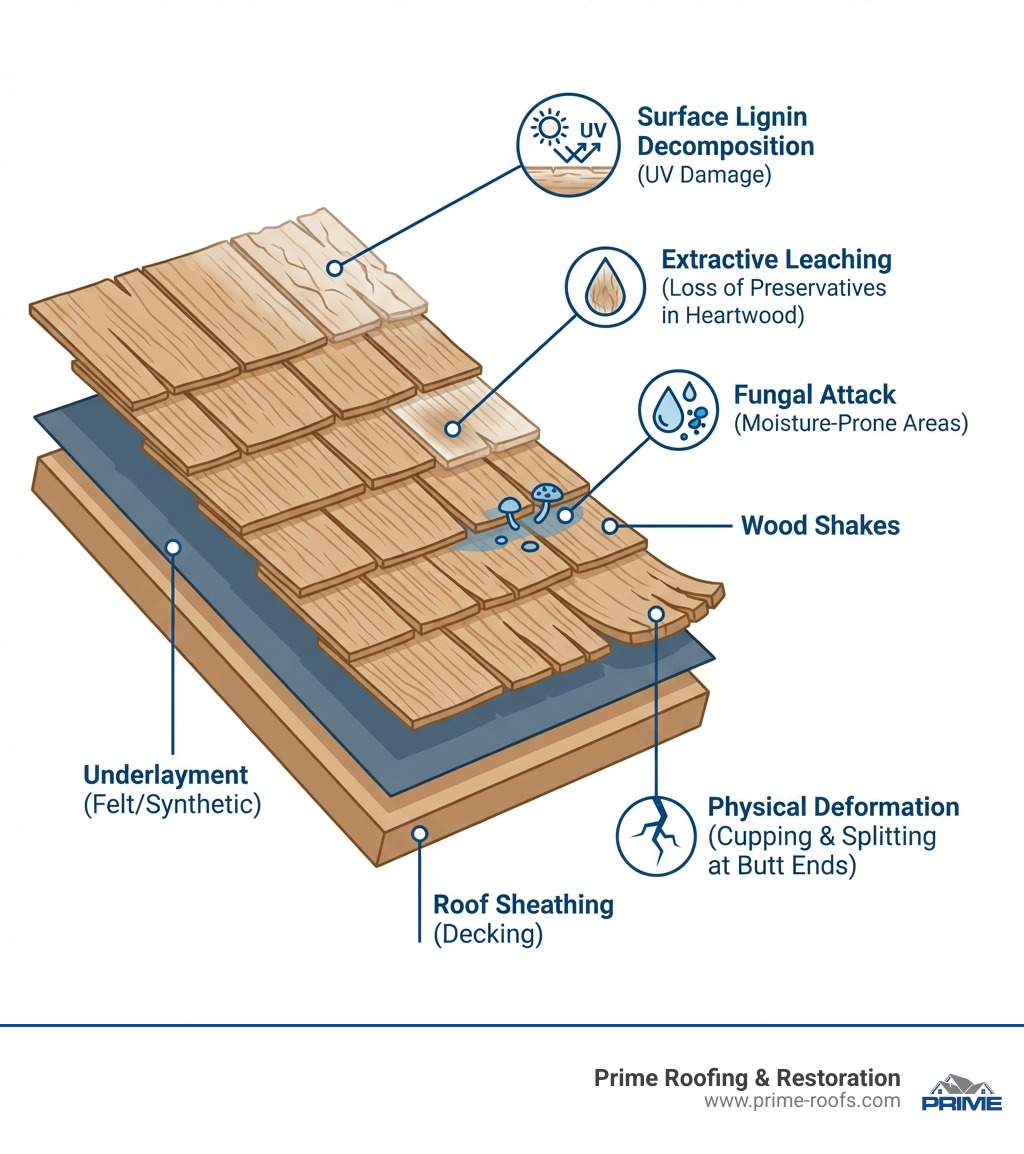
Wood shake roofs degrade through three primary mechanisms: UV-driven photodegradation, moisture-driven swelling/shrinking, and fungal decay after extractives leach out. A humid climate, like that found in the Deep South, accelerates all three. UV rays break down the lignin that holds wood fibers together, while the constant cycle of rain and sun causes the wood to expand and contract, eventually leading to structural splits.
The single biggest predictor of longevity is installation quality. Premium shakes—100% vertical-grain heartwood from western redcedar, coastal redwood, or bald cypress—contain natural extractives that resist moisture, fungi, and insects. Lower-grade or flat-grain shakes are dimensionally unstable and crack, cup, and warp sooner. According to the Cedar Shake & Shingle Bureau, using the correct grade of material is the difference between a 15-year roof and a 50-year roof.
Regular maintenance can double or triple service life versus neglect by keeping the roof dry and ventilated and by replacing failures before they cascade into underlayment damage. I’m Bill Spencer, owner of Prime Roofing & Restoration, and I’ve spent over five years helping homeowners across Alabaster and Orange Beach, Alabama, navigate wood shake repair decisions and storm/insurance documentation. The consistent pattern is simple: proactive care plus correct, small repairs prevents expensive tear-offs.
Handy wood shake roof repair terms:
- can you repair just a section of a roof
- repair kickout flashing roof
- residential roof repair
- storm damage repair
Identifying Common Wood Shake Roof Problems
Wood shake roofs, while beautiful, are not immune to the relentless forces of nature, especially in the humid climate of Alabama. Over time, these roofs can develop a range of issues that compromise their integrity and appearance. Understanding these common problems is the first step in effective wood shake roof repair. Because wood is a biological material, it undergoes a predictable cycle of decay if left unprotected.
One of the most significant challenges for wood shake roofs is weathering. This is a combination of factors including sunlight, rain, and wind. The sun’s ultraviolet (UV) light causes photodegradation, breaking down lignin, a natural component of wood that binds its cells together. This process makes the surface cells lose strength and leads to the characteristic graying of wood. While some homeowners enjoy the “weathered gray” look, it is actually a sign that the protective surface layer is eroding. Moisture, from rain and humidity, causes the wood to swell and shrink repeatedly, creating internal stresses that result in cracks and splits. In Alabama, where afternoon thunderstorms are followed by intense sun, this “thermal shock” and moisture cycling happen almost daily.
Another major culprit is fungal attack. When the natural preservatives in the wood, such as thujaplicins and phenolic compounds found in western redcedar, leach out over time, the wood becomes susceptible to wood-destroying fungi. These fungi can cause decay, making the wood soft, spongy, or crumbly. In Alabama’s warm, humid environment, this process can accelerate significantly. The presence of moss growth and lichens further exacerbates this, as they trap moisture against the wood surface, creating an ideal environment for fungal proliferation. Pests like termites, carpenter ants, and wood-boring beetles can also infest wood shake roofs, especially in areas already compromised by moisture or decay. For more technical data on wood decay, the USDA Forest Products Laboratory offers extensive research on cedar durability.
For a comprehensive understanding of what to look for, we often refer to resources like Mastering Roof Inspections: Wood Shakes and Shingles. If you suspect your wood shake roof has problems, a professional roof inspection is crucial.
Signs of Structural Decay
When inspecting your wood shake roof, several signs point towards potential structural decay that requires immediate attention:
- Rotting butts: The butt ends of shakes, being the thickest and most exposed, are often the first to show signs of rot. This can lead to significant water intrusion because the butt is where water hangs before dripping off. If the butt is soft to the touch, the shake is no longer shedding water effectively.
- Washboard appearance: This occurs when the softer earlywood weathers away faster than the denser latewood, creating an uneven, rippled surface. While often aesthetic, it indicates significant material loss and a reduction in the roof’s overall R-value and strength.
- Extractive leaching: You might notice dark brown or reddish stains below shakes or on the siding. This indicates that the natural, protective extractives are washing out, leaving the wood more vulnerable to rot and UV damage.
- Dark-pigmented fungi: These fungi can cause unsightly discoloration, but more importantly, they are a precursor to more severe decay. If you see black or dark green spots that don’t wash away with rain, the fungal hyphae have likely penetrated the wood grain.
If you observe these signs, consider a thorough water damage inspection to assess the extent of the problem and prevent further deterioration of your home’s underlying structure. Structural decay in the shakes often leads to rot in the roof decking (sheathing) if not addressed.
Physical Deformation
Beyond decay, wood shakes can suffer from various physical deformations due to environmental stress and improper installation:
- Curling: Shakes can curl upwards or downwards, often due to uneven moisture absorption between the top and bottom of the shake. This exposes the underlayment (usually felt paper) to UV rays, which it is not designed to withstand, leading to rapid leaks.
- Cupping: Similar to curling, cupping is when the shake forms a concave or convex shape across its width. This can disrupt water flow, causing water to move sideways into the side-laps rather than straight down the roof.
- Splitting: As wood repeatedly expands and contracts, it can crack and split. A “check” is a surface crack, but a “split” goes all the way through the shake. This creates direct pathways for water to penetrate the roof system. While wood shake roofs are known for their durability and can withstand winds exceeding 120 miles per hour, severe storms can exacerbate existing splits or cause new ones.
In Alabama, where we experience significant humidity and occasional severe weather, these issues are particularly prevalent. Addressing them promptly with expert wood shake roof repair can prevent more extensive damage, including wind damage to roof shingles and the underlying structure. For those in coastal areas, the National Roofing Contractors Association (NRCA) provides guidelines on high-wind wood roof performance.
How to Repair a Wood Shake Roof (Contractor Method, Step-by-Step)
Repairing a wood shake roof is straightforward when the damage is localized and the underlayment is still intact. The goal is simple: remove only the failed shake, install a correctly sized replacement, and fasten it so water sheds naturally without exposed nails. For larger issues or repeated leaks, schedule professional help through our main service page for residential roofing.
Removing Damaged Shakes
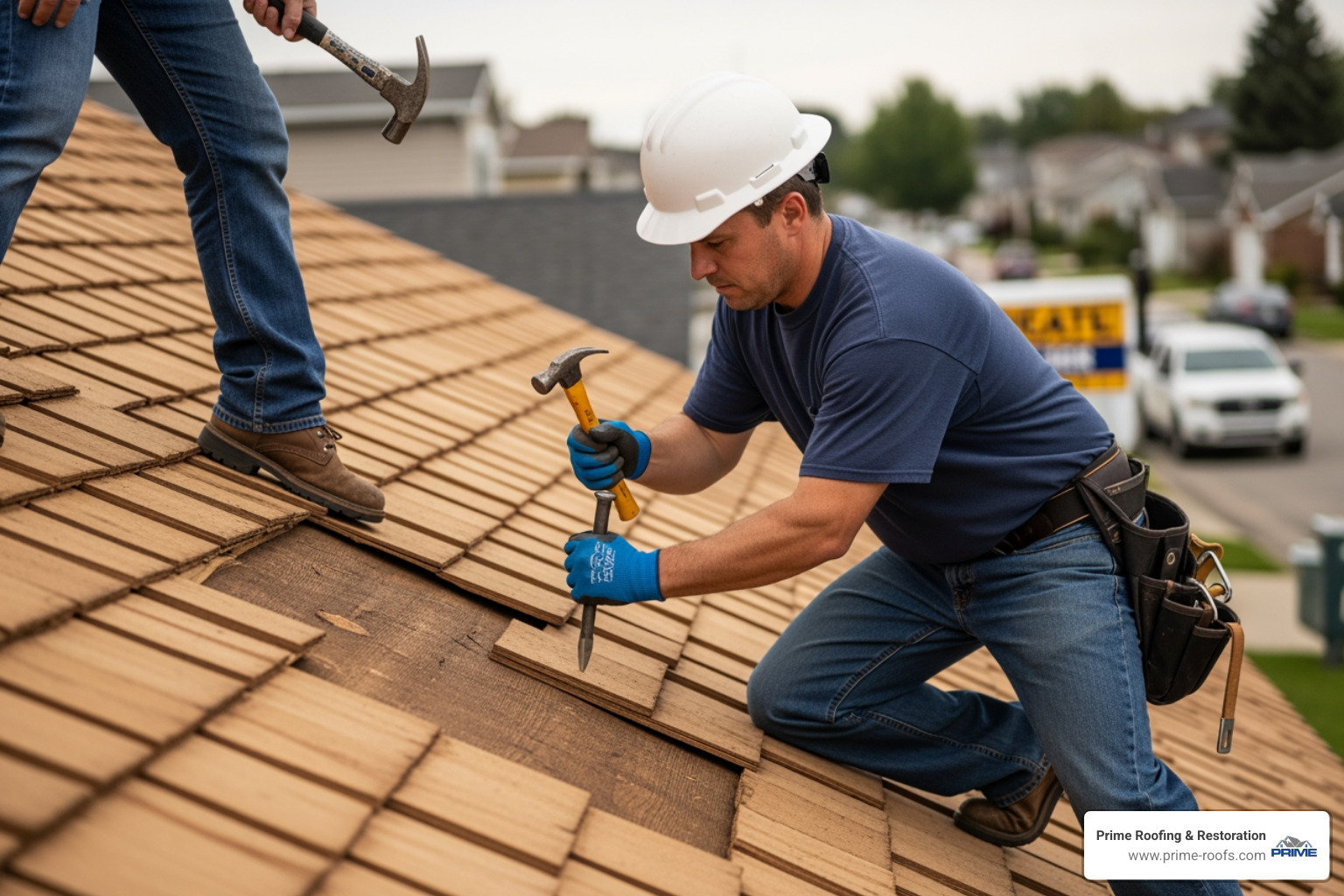
- Split the damaged shake: Use a hammer and sharp chisel to split the shake along the grain. Match the chisel angle to the roof pitch to avoid harming surrounding shakes. If the shake is already badly rotted, it may crumble, but be careful not to gouge the felt paper underneath.
- Cut nail heads (don’t pry): Wood shakes are nailed high and often stubborn. Prying with a crowbar will almost certainly crack the healthy shakes in the course above. Instead, use a “shingle ripper” or a hacksaw blade to cut nail heads off as low as possible on the shank. This allows the old shake to slide out without disturbing the rest of the roof.
- Clear fragments cleanly: Remove all pieces, including any small splinters or old nail shanks, so the replacement can slide fully into position without forcing. A clean pocket is essential for a watertight fit.
This approach prevents collateral cracking and avoids turning a single-shake repair into a multi-shake rebuild. For related failure patterns, see our rotted wood roof repair guide.
Installing Replacement Shakes
- Match material and grain: Use a replacement shake that matches species (usually Western Red Cedar) and thickness (Medium or Heavy). Vertical-grain shakes remain the most dimensionally stable and are less likely to cup or curl in the future.
- Size for expansion: Cut the replacement about 3/8-inch narrower than the opening. This gap is critical; wood expands when wet. Without this gap, the shakes will press against each other and “buckle” or “tent” off the roof surface.
- Slide and align: Slide the shake into place so its top is tucked neatly under the course above. Ensure the butt end aligns perfectly with the existing course to maintain the “shadow line” and proper water shedding.
- Fasten with hidden nails: Drive two stainless steel or hot-dipped galvanized roofing nails near the upper portion of the shake (about 1-2 inches above the exposure line) so the next course covers them. Hidden fastening is a core rule for watertight shake repairs. Never nail through the face of the shake where the nail is exposed to rain.
- Set and seal: If you must nail in a way that is slightly visible, set nail heads with a nail set and seal with a high-quality, UV-resistant roofing sealant to block capillary water entry. However, professional wood shake roof repair always prioritizes hidden fasteners.
Addressing Flashing and Valleys
Often, what looks like a shake problem is actually a flashing problem. During a repair, we also inspect:
- Step Flashing: The metal pieces that weave between shakes at wall intersections.
- Valley Tin: The metal lining in the roof valleys. If this is rusted or clogged with cedar needles, water will back up under the shakes.
- Chimney Crickets: Ensuring water is diverted around the chimney properly.
For additional technique references, see How To Repair a Leaky Roof. If you are unsure about the source of the leak, our team at Prime Roofing & Restoration can perform a diagnostic water test. Call us at Alabaster: 205-555-0123 or Orange Beach: 251-555-0199.
Maintenance and Treatments to Extend Roof Lifespan
Proactive maintenance is the secret weapon against premature wood shake roof failure. In Alabama’s climate, where humidity and heat are constants, consistent care can mean the difference between a roof that lasts 15 years and one that endures for 30 or more. Our comprehensive roof maintenance services are designed to maximize your roof’s longevity and protect your investment.
Essential Maintenance Practices
- Debris removal: Regularly clean the roof of leaf litter, conifer needles, and other organic debris. This debris traps moisture against the wood, creating a “compost” effect that accelerates rot and provides a breeding ground for moss and fungi. Pay special attention to valleys and behind chimneys.
- Branch trimming: Remove all overhanging branches from trees near the roof. This improves air circulation, allowing the roof to dry faster after rain, and reduces debris accumulation. It also prevents physical damage from falling limbs during Alabama’s frequent severe storms and prevents squirrels or raccoons from accessing the roof.
- Gutter cleaning: Clean gutters at least twice a year to prevent water backups. Clogged gutters can cause water to pool on the roof edges (the eave), accelerating rot in the starter course of shakes and the fascia boards.
- Inspections: We recommend inspecting your roof twice a year (spring and fall) and after any severe weather events. Look for signs of damage, debris, and mold. Early detection of a single split shake can save thousands in interior water damage repairs.
Protective Treatments
To combat weathering and biological growth, specific treatments are highly recommended. These are not “sealants” but rather breathable preservatives:
- Water-repellent preservatives (WRPs): These treatments contain paraffin wax or other water repellents and UV inhibitors that slow down the degradation process caused by sunlight and moisture. They help the wood shed water more effectively and reduce the effects of UV radiation. A good WRP will allow the wood to “breathe” so moisture isn’t trapped inside the fibers.
- Fungicides and Algaecides: Products containing ingredients like zinc sulfate or copper naphthenate are excellent for controlling moss and fungal growth. Zinc sulfate, for example, can be mixed at 3 pounds of powder in 9 gallons of water to treat 600–1,000 square feet. Copper naphthenate can provide up to five years of protection against fungal decay and is often used on the butt ends of shakes.
These treatments, applied every one to three years, are critical to preserving your roof. The Care and Maintenance of Wood Shingle and Shake Roofs from Oregon State University provides extensive details on these practices.
Chemical Cleaning and Power Washing
When your wood shake roof starts to look dull or is covered in moss and algae, cleaning can restore its appearance and health. However, this must be done with extreme care.
- Chemical cleaning: For mold and mildew, a solution of sodium hypochlorite (liquid bleach) or oxygen bleach (sodium percarbonate) mixed with water can be highly effective. A common recipe is one part bleach to five parts water. Apply with a garden sprayer, let it sit for 15-30 minutes, then rinse thoroughly. Always test on an inconspicuous spot first and protect your landscaping from runoff.
- Power washing: While effective, power washing should be approached with caution. Excessive pressure or improper technique can damage the wood fibers, “fuzzing” the surface and fracturing shakes. If done, use pressures between 1,000-1,500 PSI with a 15-degree spray fan. Work from top to bottom, keeping the wand 8-12 inches from the surface. Avoid strong soaps. Power washing effectively removes surface growth and debris, but it’s a cosmetic treatment that removes a thin layer of wood; it should always be followed by a preservative treatment.
The average price for professional roof cleaning typically ranges from $0.21 to $0.34 per square foot.
Long-Term Protective Treatments
Beyond cleaning, long-term treatments can significantly boost your roof’s resilience.
- Oil-borne preservatives: These treatments, often containing copper octoate or zinc naphthenate, penetrate the wood deeply. They are particularly effective at replenishing the wood’s natural oils, which helps control drying effects like cupping and splitting. For instance, a gallon of copper naphthenate can cover 100–300 square feet and provide up to five years of protection.
- Zinc strips: Installing zinc or copper strips along the ridge of your roof can inhibit fungal growth. As rain washes over these strips, metallic ions flow down the roof, creating an environment that discourages moss and algae. These strips should be spaced approximately 6 feet apart for optimal coverage. This is a “set it and forget it” maintenance boost.
When choosing treatments, always verify they are EPA-registered wood preservatives, offer water repellency and UV inhibition, and come with a manufacturer’s performance guarantee. Be wary of treatments making exaggerated claims or containing unfortified linseed oil, diesel fuel, or crankcase oil, which can actually increase the flammability of your roof. For more information on effective treatments, refer to the Cedar Shake & Shingle Bureau’s maintenance guide.
Repair vs. Replacement: Knowing When to Call a Professional
Deciding whether to repair or replace your wood shake roof is a critical decision that impacts both your budget and your home’s protection. While minor wood shake roof repair can extend its life, there comes a point when replacement is the more cost-effective and sensible option. Wood roofs have a “tipping point” where the degradation of the felt underlayment makes surface repairs futile.
A key metric we use is the repair threshold. A square of roofing is 10×10 feet and contains approximately 200 shakes. If over ten percent, or 20 shakes, in that square have had repairs, it’s a sign that the roof is aging and may need more significant attention in the coming years. If you have 20-30 percent, or 40-60 shakes, that have been repaired in a given square, that’s a strong indicator that a full replacement is likely necessary. This level of damage often means underlying issues or widespread deterioration that localized repairs can no longer adequately address.
A typical contractor will charge around $750 to repair a localized area of a wood shake roof. However, if the damage is extensive, the costs can quickly escalate. For example, replacing a 3,000-square-foot shake roof can cost between $18,000 and $35,000 depending on the grade of cedar and the complexity of the roof. While this seems like a large investment, it’s often more economical in the long run than continuous, piecemeal repairs on a failing roof that eventually leads to interior ceiling damage and mold remediation costs.
When facing significant damage or an aging roof, it’s always best to consult with professionals. Our team can provide an honest assessment to help you make an informed decision about a roof replacement. If you’re in Alabaster, AL, our roofers in Alabaster, AL are ready to help. We also specialize in insurance claims for storm-damaged wood roofs, which are common in the Gulf Coast region.
Risks of DIY Wood Shake Repair
While some minor wood shake roof repair tasks are possible for a handy homeowner, there are significant risks associated with DIY roof work, especially on wood shakes.
- Fall hazards: Working on a roof, particularly one with a steep pitch (5:12 or greater), poses a serious risk of falls. Even on a less steep roof, wood shakes can be slippery when wet, covered in moss, or simply old and brittle. We always recommend wearing appropriate footwear with good traction and, for any elevated work, using safety lines and harnesses. Professional roofers use specialized “cougar paws” boots designed for grip on wood surfaces.
- Improper power washing: As mentioned earlier, incorrect power washing techniques can cause more harm than good. Using excessive water pressure or washing against the downslope can damage the wood surface, strip away healthy wood fibers, and even create fractured shingles, leading to new leaks. It can also force water up under the shakes and into the attic.
- Lack of expertise: Without a deep understanding of wood shake construction and common failure points, a DIY repair might only be a temporary fix, or worse, could inadvertently cause further damage. For instance, improper nailing can lead to cupping or splitting, and using the wrong type of metal for flashing can cause galvanic corrosion.
For your safety and the longevity of your roof, it’s often best to leave complex wood shake roof repair to the experts. In case of unexpected damage or urgent repair needs, we also offer emergency roofing services.
Choosing a Qualified Contractor
When it’s time for wood shake roof repair or replacement, selecting the right contractor is paramount. Here’s what to look for:
- Licensed and Insured: Ensure the contractor is fully licensed and insured in the state of Alabama. This protects you from liability in case of accidents or subpar work.
- Experience with Wood Shakes: Wood shake roofing is a specialty. Many modern roofers only know asphalt shingles. Choose a contractor with proven experience and expertise in this specific material.
- Adherence to Standards: A reputable contractor will adhere to industry standards, such as those recommended by the Cedar Shake and Shingle Bureau (CSSB), especially for material quality and installation techniques.
- Material Safety Data Sheets (MSDS): For any topical treatments or preservatives, the contractor should be able to provide an MSDS, detailing ingredients and safety precautions. They should also verify that treatments are labeled specifically for cedar roof products.
- Transparent Pricing and Warranties: Look for clear, detailed estimates and comprehensive warranty protection for both materials and workmanship. A good contractor stands behind their repairs.
- Local Reputation: Check testimonials and reviews. A local, trusted company like Prime Roofing & Restoration builds lasting relationships with our customers in Alabaster and Orange Beach. For more guidance, check out our best roofing contractor guide.
Frequently Asked Questions about Wood Shake Roof Repair
We often receive questions from homeowners in Alabaster and Orange Beach about their wood shake roofs. Here are some of the most common inquiries, answered with our expert knowledge.
How much does wood shake roof repair cost?
The cost of wood shake roof repair can vary depending on several factors, including the extent of the damage, the type of wood, and your geographic location. Typically, a contractor will charge around $750 to repair a wood shake roof for localized issues. This might involve replacing a few damaged shakes or addressing a specific leak.
For routine maintenance like cleaning, the cost is usually between $0.21 and $0.34 per square foot. However, if the damage is widespread, such as 20-30% of shakes needing repair in a given area, the cost can quickly approach that of a replacement. For a larger project, like a 3,000-square-foot roof, a full replacement could cost upwards of $18,000-$35,000. Factors influencing the total cost include material quality (Certi-label cedar is more expensive), roof pitch, and accessibility.
Is DIY wood shake roof repair safe?
While minor cosmetic fixes might be attempted by a skilled homeowner, extensive wood shake roof repair is generally not recommended for DIY enthusiasts due to significant safety risks and the specialized knowledge required. Wood shakes can be incredibly slippery, especially when wet or moss-covered. Many wood shake roofs have a steep pitch (5:12 or greater), making them inherently dangerous to work on without professional safety equipment like harnesses and lifelines. For your safety, we strongly advise homeowners to contact us for safety and rely on licensed professionals.
What is the best treatment for a wood shake roof?
The “best” treatment for a wood shake roof depends on the specific issues it faces, but generally, it involves a combination of EPA-registered preservatives, water repellents, and UV inhibitors. Look for products containing copper naphthenate or zinc naphthenate. Avoid sealants, waterproofers, or plasticizers, which can trap moisture within the wood and cause internal rot. Also, avoid treatments containing unfortified linseed oil or diesel fuel, as these can increase fire risk and attract dirt.
How long does a wood shake roof last after a repair?
A localized repair can extend the life of the overall roof by 5-10 years if the rest of the system is healthy. However, if the repair is done on a roof that is already 25+ years old, you may find yourself needing more repairs shortly after. The goal of repair is to maintain the watertight integrity until a full replacement is financially viable or necessary due to widespread failure.
Does a wood shake roof increase home value?
Yes, a well-maintained wood shake roof is considered a premium architectural feature. It can significantly increase the curb appeal and resale value of a home, particularly in high-end neighborhoods in Alabaster or coastal properties in Orange Beach. However, a neglected wood roof can be a liability during a home inspection, often requiring a full replacement before a sale can close. Regular wood shake roof repair ensures your home’s value remains high.
Can I switch from wood shakes to asphalt shingles?
Yes, many homeowners choose to switch to “architectural” or “luxury” asphalt shingles during a replacement to reduce maintenance costs. However, wood shakes provide superior insulation and a unique aesthetic that asphalt cannot perfectly replicate. If you are considering a switch, we can provide samples of both to help you decide. Check our roof replacement page for more details.
Conclusion: Get the Repair Right Now—or Pay for Replacement Later
Wood shake roofs fail predictably: moisture that can’t drain or dry leads to decay, and decay spreads course by course. The most cost-effective strategy is consistent maintenance plus prompt replacement of damaged shakes before underlayment is exposed. In the humid Alabama climate, waiting even one season to address a leak can result in structural rot that triples the eventual repair bill.
At Prime Roofing & Restoration, we provide end-to-end support—from inspections and documentation to repair planning—so homeowners in Alabaster and Orange Beach can protect their homes with fewer surprises. Whether you need a simple spot repair or a full historical restoration, our team has the expertise to handle cedar with the care it deserves.
Contact Your Local Wood Shake Experts
Prime Roofing & Restoration
Alabaster Office: 1000 Corporate Dr, Suite 100, Alabaster, AL 35007 Phone: 205-555-0123
Orange Beach Office: 25299 Canal Rd, Orange Beach, AL 36561 Phone: 251-555-0199
For a free consultation and a detailed roof health report, contact us today. Learn more about our commitment to quality on our About Us page.