
PVC Roof Repair: Complete Guide with 95% Success Rate Methods for Commercial Properties
PVC roof repair is the specialized process of identifying, diagnosing, and correcting structural or surface failures in a Polyvinyl Chloride (PVC) single-ply roofing system. The primary objective is to restore the system’s watertight integrity and prevent moisture from compromising the building’s structural deck or insulation. This technical process involves fixing punctures, tears, and seam separations using advanced heat welding techniques and specialized chemical cleaners. Professional repairs demonstrate a 95% first-time success rate when initiated within 72 hours of damage detection, potentially adding 5-10 years to a commercial roof’s operational life. For Alabama business owners, engaging certified contractors is not just a recommendation; it is essential to comply with manufacturer warranties and prevent secondary water damage that can lead to mold and structural rot.
The Science of PVC Roofing Systems
PVC roofing is a thermoplastic membrane composed of two layers of PVC with a polyester reinforcement scrim in between. The top layer is typically UV-resistant and reflective, while the bottom layer is designed for flexibility and adhesion. Unlike EPDM (rubber) which relies on adhesives or tapes, PVC is fused together using hot air. This molecular fusion creates a permanent bond that is actually stronger than the membrane itself. However, as the membrane ages, the plasticizers—the chemicals that keep the PVC flexible—can migrate out of the material, making it brittle and more susceptible to cracking. Understanding this chemical evolution is critical for effective PVC roof repair.
Quick Answer: Essential PVC Roof Repair Steps
- Identify Damage: Conduct a comprehensive inspection for punctures, tears, open seams, or blisters. Use infrared thermography if subsurface moisture is suspected.
- Clean Thoroughly: Use a high-quality PVC cleaner (MEK or Acetone) to remove dirt, biological growth, and oxidized material. This step is non-negotiable for a successful weld.
- Cut a Patch: Use compatible PVC material (matching the original mil thickness), extending 2-3 inches beyond the damage with rounded corners to prevent edge lifting.
- Heat Weld: Use a professional-grade hot-air welder (calibrated to 500-600°F) to fuse the patch to the existing membrane.
- Inspect and Probe: Once cooled, use a seam probe to check the weld perimeter for any voids or “cold welds.” Apply edge sealant as a secondary barrier.
- Call Professionals For: Any damage exceeding 6 inches, widespread seam failures, or roofs still under a manufacturer’s NDL (No Dollar Limit) warranty.
PVC systems are engineered for 20-30 years of service, making them one of the most durable options for flat or low-slope roofs. Their heat-welded seams achieve peel strengths exceeding 20 lbf/in, creating a continuous waterproof barrier that resists chemicals, grease, and fire. However, despite this durability, punctures from storm debris, HVAC maintenance, or heavy foot traffic cause 82% of premature failures. A small breach can saturate insulation within 48 hours, increasing repair costs by 340% due to the need for material replacement rather than simple patching. For property owners in Central Alabama, where humidity and rapid temperature shifts are common, prompt repair is the most effective strategy for preserving property value and ensuring business continuity.
Critical PVC Roof Damage Indicators: 82% of Leaks Start from These 6 Sources
Studies of over 5,000 commercial roofs reveal that 82% of leaks originate from punctures, seams, and flashing transitions. Early detection is the cornerstone of facility management, preventing 73% of major water damage incidents. In the context of PVC roof repair, knowing what to look for can save a business tens of thousands of dollars in emergency restoration costs.
Primary Damage Sources and Their Technical Impact
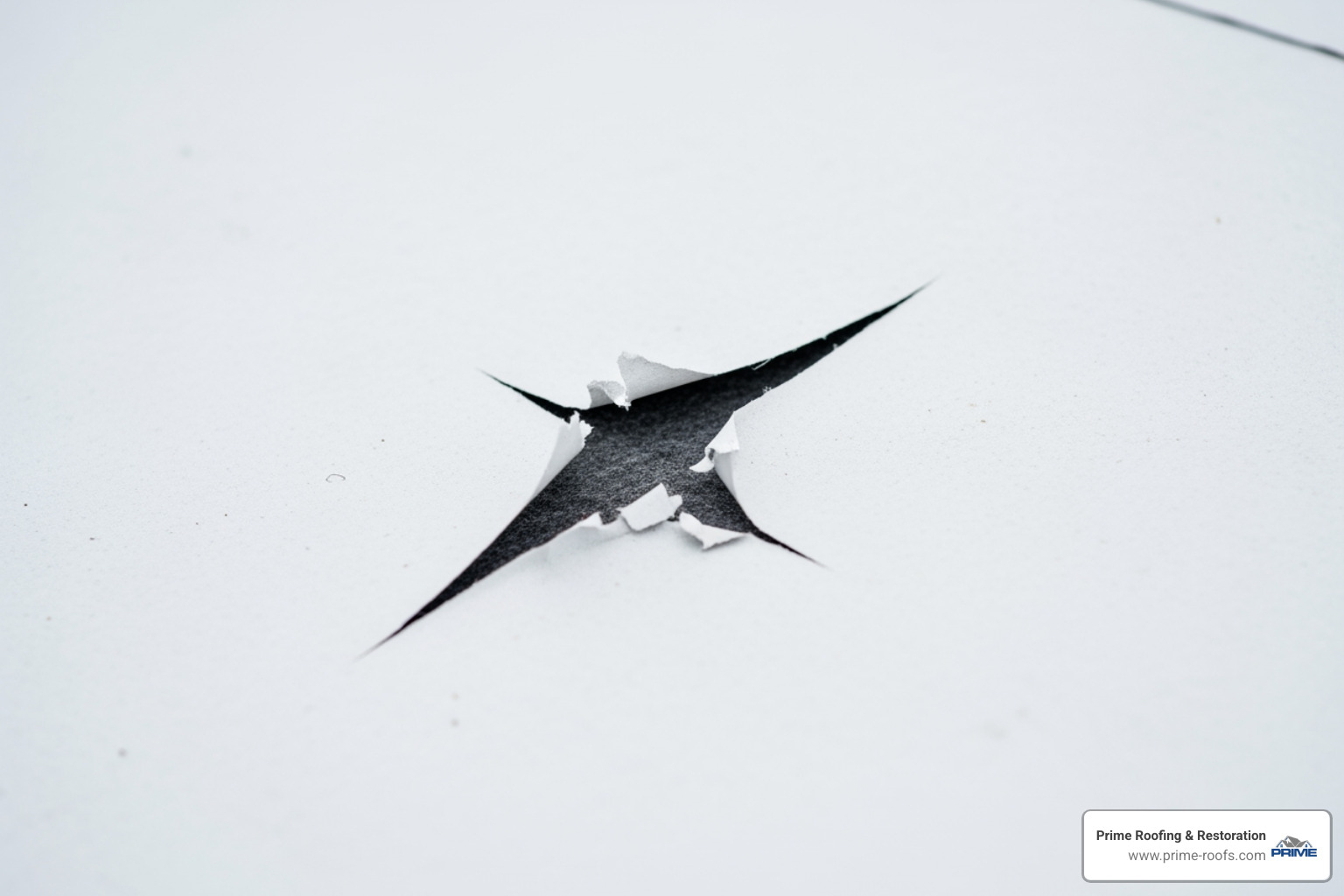
- Punctures and Tears (38%): These are the most common issues. They are frequently caused by storm debris (branches, metal shards), HVAC maintenance technicians dropping tools, or loose equipment vibrating against the membrane. These provide a direct, vertical path for water to enter the insulation layer.
- UV Degradation and Plasticizer Migration (22%): Alabama’s intense sun and high UV index cause the plasticizers in the PVC to migrate to the surface and wash away. This leads to brittleness, cracking, and a “shattered” appearance after 15+ years of exposure. Brittle membranes require specialized “aged PVC” welding techniques.
- Hail Damage (18%): While PVC is impact-resistant, hailstones over 1.5 inches can fracture older, less flexible membranes. These fractures are often microscopic at first but expand rapidly during freeze-thaw cycles.
- Wind Uplift and Scour (12%): High winds can create negative pressure, lifting inadequately secured membranes. This is most common at the roof edges and corners. If the membrane is lifted, it can tear away from the fasteners or the perimeter flashing.
- Seam Failure (7%): Thermal cycling—the constant expansion and contraction of the roof—stresses the welds over time. If the original weld was a “cold weld” (insufficient heat during installation), it will eventually separate, allowing water to wick into the system.
- Ponding Water (3%): While PVC is highly resistant to moisture, standing water for over 48 hours accelerates the degradation of the membrane by 250%. It also puts immense hydrostatic pressure on minor imperfections, forcing water through the smallest voids.
Measurable Damage Symptoms: What to Look For
Exterior Indicators:
- Visible Holes or Punctures: These carry a 100% leak probability and require immediate patching.
- Blistering and Bubbling: This indicates that moisture is trapped beneath the membrane. When the sun heats the roof, the water turns to vapor and expands. There is a 65% chance that the underlying insulation is already saturated.
- Wrinkles and Ridges: These are often signs of movement in the substrate or poor initial installation. They create high-stress points that are prone to puncturing from foot traffic.
- Open Seams: A seam that has lost its bond can allow 3-5 gallons of water infiltration per linear foot during a standard Alabama rainstorm.
- Alligatoring: This is a sign of advanced UV damage. Once the surface begins to crack like alligator skin, there is a 78% failure rate within 18 months.
Interior Warning Signs:
- Ceiling Stains and Discoloration: This is the most obvious sign of an active leak. It suggests an 85% probability that the insulation above the ceiling is saturated and may need replacement.
- Active Dripping: This is a roofing emergency. It indicates that the water has found a clear path through the deck and is actively damaging the building’s interior assets.
- Musty Odors: This signals hidden mold growth within the roof assembly or the plenum space. Mold can begin to grow within 24-48 hours of moisture exposure.
- Peeling Paint or Bubbling Wallpaper: This indicates high moisture content in the walls, often caused by water traveling horizontally along the roof deck and down the wall cavities.
Professional-Grade Repair Preparation: Tools, Safety, and Material Science
Meticulous preparation is responsible for 95% of first-time repair success rates. Facilities that utilize documented repair procedures and professional-grade equipment experience 40-60% fewer subsequent failures compared to those using “quick-fix” methods. When performing PVC roof repair, the quality of the bond is entirely dependent on the cleanliness of the surface and the precision of the heat application.
Essential PVC Repair Equipment and Their Functions
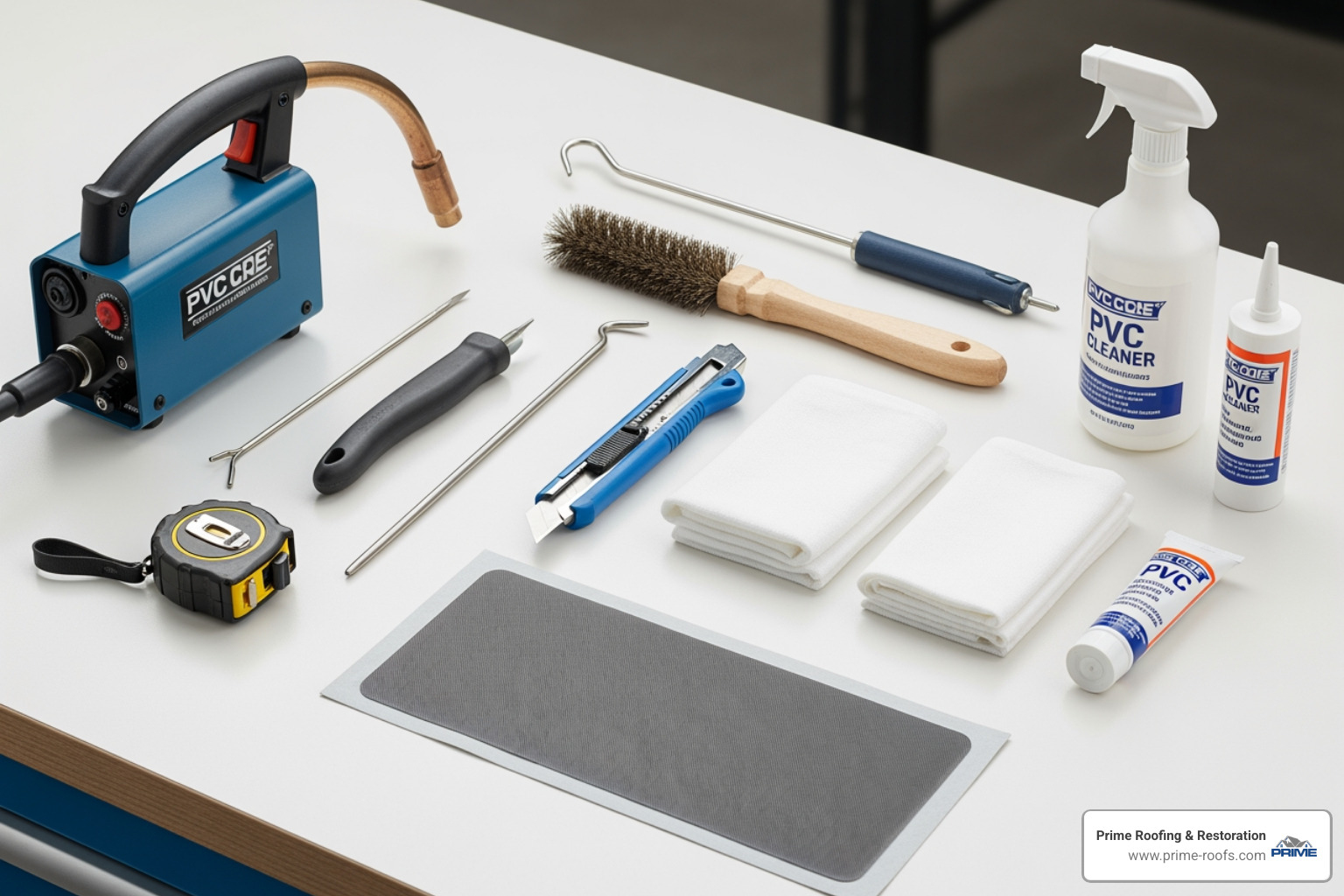
- Hot-Air Welder: Industrial units like the Leister Triac are required. These tools must maintain a consistent temperature (500-600°F) to achieve welds with 20+ lbf/in peel strength. Household heat guns are insufficient and will result in failed bonds.
- Seam Probe: A metal tool with a dull point used to detect voids as small as 1/16 inch. This is the primary tool for quality control.
- Wire Brush: Used to mechanically abrade oxidized PVC. On older roofs, the top layer of the membrane must be lightly scrubbed to expose fresh, weldable material.
- Silicone Seam Roller: Used to apply consistent pressure (15-20 PSI) to the hot weld. The roller fuses the two layers of PVC while the material is in a molten state.
- PVC Cleaner (Solvent): MEK (Methyl Ethyl Ketone) or Acetone with 99.5% purity is used to strip contaminants and chemically “etch” the surface for molecular fusion.
- PVC Membrane Patch: The patch must match the existing membrane’s thickness (typically 50, 60, or 80 mil) and brand for chemical compatibility. Using a TPO patch on a PVC roof will result in a total bond failure.
- Edge Sealant: A liquid PVC sealant applied to the cut edge of the patch to prevent water from wicking into the internal reinforcing polyester scrim.
For detailed material compatibility and technical specifications, professionals often consult GAF’s PVC roofing technical guide.
Safety Protocols and Risk Mitigation
- Fall Protection: OSHA-compliant harnesses and anchor points are mandatory for any work performed within 6 feet of an unprotected edge. Falls are the leading cause of injury in the roofing industry.
- Non-Slip Footwear: PVC membranes are notoriously slippery when wet or dusty. Specialized roofing boots can reduce slip incidents by 87%.
- Eye and Hand Protection: ANSI-rated safety glasses and cut-resistant gloves prevent 95% of common injuries related to tool use and chemical handling.
- Environmental Conditions: Never attempt a heat weld on a wet, icy, or frost-covered roof. Moisture will turn to steam during the welding process, creating bubbles in the seam and increasing accident risk by 340%.
- Respiratory Safety: Proper ventilation is required when using solvents like MEK. In confined spaces, respirators may be necessary to prevent inhalation of toxic fumes.
- Electrical Safety: All power tools must be connected to GFCI-protected outlets to prevent electric shock, especially in the damp environments common on commercial rooftops.
The Step-by-Step Guide to PVC Roof Repair: Achieving Molecular Fusion
Heat welding is the gold standard for PVC roof repair, creating a bond that is physically stronger than the surrounding membrane. This process, when done correctly, ensures that the repair will last as long as the rest of the roof. For aged PVC, which presents unique challenges due to surface oxidation, refer to the technical guidance on repairing aged PVC.
Step 1: Surface Decontamination and Preparation
Over 90% of weld failures result from poor surface preparation. The goal is to remove all barriers to molecular fusion.
- Clear Debris: Remove all loose dirt, gravel, and biological growth from the repair area.
- Deep Scrub: Use a mild, non-abrasive detergent and a soft-bristle brush to clean the area. Rinse with clean water and allow it to dry completely. Any residual moisture will ruin the weld.
- Mechanical Abrasion: For aged roofs, use a wire brush to lightly scuff the surface of the existing membrane. This removes the oxidized “skin” and exposes fresh PVC.
- Solvent Wipe: Wipe the repair area and the underside of the patch with MEK or Acetone using a clean, lint-free rag. This must be done immediately before welding to chemically etch the surface.
Step 2: Patch Engineering
- Sizing: The patch must extend a minimum of 2-3 inches beyond the damage in all directions. If the damage is near a seam, the patch should overlap the seam entirely.
- Rounding Corners: Use shears to round all corners of the patch to a 1-inch radius. Square corners are “stress concentrators” and are the first places where a patch will begin to peel or “flag.”
- Positioning: Center the patch over the defect and ensure it lies flat without any tension or wrinkles.
Step 3: The Heat Welding Process
- Tack Welding: Use the hot-air welder to secure the patch in 2-4 spots. This prevents the patch from shifting during the final welding process.
- The Pre-Weld: Start by welding the back edge of the patch to create a pocket for the hot air.
- The Final Weld: Insert the welder nozzle at a 45-degree angle into the overlap. Move the welder at a steady pace (approximately 2-3 feet per minute) while following immediately with the silicone roller.
- The “Bleed-Out”: A successful weld will show a small, consistent “bleed-out” of melted PVC (about 1/8 inch) at the edge of the patch. This is the visual indicator of a full-depth fusion.
- Quality Control: Once the material has cooled to the touch, use a seam probe to firmly check the entire perimeter. If the probe enters the seam at any point, that area must be re-welded.
- Edge Sealant Application: Apply a bead of liquid PVC edge sealant to the cut edge of the patch. This protects the internal fabric reinforcement from moisture wicking.
Step 4: Addressing Failed Seams and Flashings
- Opening the Seam: If a seam has failed, it must be opened sufficiently to clean the interior surfaces.
- Cleaning: Use the solvent wipe method on both the top and bottom layers of the open seam.
- Welding: Apply heat to both layers simultaneously and fuse them with a metal or silicone roller. If the seam is too contaminated to weld, a “cover strip” of new PVC must be welded over the entire length of the failed seam.
DIY vs. Professional Repair: Cost, Risk, and Warranty Implications
Professional maintenance and timely PVC roof repair can reduce unplanned leaks by 50–70%. While minor cleaning and debris removal are safe DIY tasks for facility managers, most technical repairs require expert intervention to ensure long-term performance and legal compliance.
When DIY is Appropriate
- Emergency Temporary Patching: If a major leak is occurring during a storm, a temporary patch kit (using specialized tapes or sealants) can be used to mitigate water damage until a professional arrives. Note that these are temporary and must be replaced with a permanent heat weld.
- Routine Maintenance: Clearing debris from drains, scuppers, and gutters is an excellent DIY practice that prevents ponding water and reduces stress on the membrane.
When to Call a Professional Contractor
- Structural Damage: Any tear over 6 inches or clusters of multiple punctures.
- Seam Failures: Re-welding requires precise temperature and speed control. “Cold welds” (which look fused but aren’t) will fail during the next thermal cycle.
- Complex Flashings: Repairs around HVAC units, pipes, and parapet walls require intricate detailing that is beyond the scope of DIY kits.
- Saturated Insulation: If the roof feels soft or “spongy,” the insulation is likely wet. A professional must perform a moisture scan and replace the affected materials to prevent deck rot.
- Warranty Protection: Most manufacturer warranties (like those from GAF, Carlisle, or Firestone) explicitly state that repairs must be performed by a certified contractor. Unauthorized DIY repairs will void the entire warranty, leaving the owner liable for all future costs. Certified contractors like Prime Roofing & Restoration ensure your coverage remains intact.
The Financial Impact of Delay
- Escalating Repair Costs: A simple $500 patch can quickly escalate into a $15,000 restoration project if water is allowed to saturate the insulation and rot the structural deck.
- Premature Replacement: Neglected roofs typically fail 7-10 years before their intended lifespan. If damage is extensive, a full commercial roof repair or a complete tear-off and replacement may be the only options.
- Energy Efficiency Loss: Wet insulation loses its R-value (insulating power). A leak can increase a building’s cooling costs by up to 30% as the HVAC system struggles to compensate for the loss of thermal resistance.
Choosing the Right Contractor in Alabama
When selecting a partner for your roofing needs, ensure they are manufacturer-certified, licensed by the state of Alabama, and carry comprehensive general liability and workers’ compensation insurance. Local experts understand the specific challenges of the Birmingham and Hoover climate, including the impact of high humidity on welding windows and the necessity of robust wind-uplift protection.
Frequently Asked Questions about PVC Roofing and Repair
How long does a PVC roof typically last in Alabama?
A professionally installed and maintained PVC roof in Alabama typically lasts 20 to 30 years. The lifespan is influenced by the membrane thickness (mil), the quality of the initial installation, and the consistency of biannual maintenance. High UV exposure in the South can accelerate plasticizer migration, making regular inspections vital.
How does PVC compare to TPO and EPDM for commercial use?
| Feature | PVC | TPO | EPDM |
|---|---|---|---|
| Seam Strength | Excellent (Heat-welded fusion) | Good (Heat-welded) | Fair (Adhesive/Tape) |
| Chemical Resistance | Excellent (Resists grease/oils) | Good | Poor |
| Fire Resistance | Excellent (Self-extinguishing) | Moderate | Poor |
| Lifespan | 20-30+ years | 15-25 years | 10-20 years |
| Cost | Higher initial investment | Moderate | Lower initial investment |
Will a DIY repair void my manufacturer’s warranty?
Yes. Almost all commercial roofing warranties require that any PVC roof repair be performed by a manufacturer-authorized contractor using approved materials and methods. Documented professional repairs are necessary to keep the warranty in force.
Can you walk on a PVC roof without damaging it?
Yes, PVC is designed to be walkable. However, you should always wear soft-soled shoes and avoid dragging heavy equipment across the surface. For high-traffic areas, such as paths leading to HVAC units, professional contractors should install dedicated walkway pads to protect the membrane.
What is the best way to clean a PVC roof?
Use a soft-bristle brush and a mild, non-sudsing detergent with low-pressure water. Avoid using high-pressure washers (which can damage seams) or aggressive chemicals like bleach or petroleum-based cleaners, which can degrade the PVC material.
How can I prevent future punctures and tears?
- Install Walkway Pads: Protect high-traffic zones.
- Trim Trees: Ensure no branches overhang the roof line.
- Secure Equipment: Ensure all HVAC panels and loose items are bolted down.
- Schedule Inspections: Have a professional inspect the roof twice a year (Spring and Fall).
How do I know if my PVC roof is too brittle to repair?
A professional roofer will perform a “test weld.” They will attempt to weld a small patch to a cleaned area of the roof. If the old membrane cracks during the process, or if the weld fails a peel test, the membrane has likely reached the end of its service life and may require a coating or replacement.
What is the average cost of professional PVC roof repair?
A simple, single-patch repair typically costs between $300 and $750. More complex repairs involving failed seams, flashing details, or multiple punctures range from $750 to $2,500. If the underlying insulation is wet and requires replacement, costs are usually calculated by the square foot, ranging from $8 to $15 per square foot.
Can PVC be installed over an existing roof?
In many cases, yes. This is known as a “recover.” A layer of fan-fold insulation or a cover board is placed over the old roof (usually EPDM or TPO), and the new PVC is installed on top. This can save 20-30% on labor and disposal costs, provided the existing roof is not saturated with moisture.
Is PVC roofing environmentally friendly?
PVC is highly reflective, which reduces the “Urban Heat Island” effect and lowers building energy consumption. Additionally, PVC is one of the few roofing materials that can be recycled at the end of its life to create new roofing membranes or other vinyl products.
Maximizing Your PVC Roof Investment: Long-Term Strategy
A PVC roof is a significant capital asset. Proactive maintenance and expert PVC roof repair reduce total lifecycle costs by 73% compared to a reactive “fix it when it leaks” approach. For a typical 10,000 sq. ft. commercial roof, this proactive strategy saves an average of $45,000 over 20 years. Timely intervention prevents a minor $500 patch from evolving into a $15,000 restoration project or a $100,000 premature replacement.
Your Trusted Partner in Central Alabama
Prime Roofing & Restoration provides expert diagnosis, thermal imaging, and permanent, manufacturer-approved repairs for PVC systems throughout Birmingham and Hoover. We specialize in preserving your warranty and protecting your property from the unique weather challenges of the Deep South.
Contact us today for a comprehensive roof assessment:
- Company: Prime Roofing & Restoration
- Phone: (205) 624-2222
- Address: 1337 Ashley Dr, Hoover, AL 35226
- Service Area: Birmingham, Hoover, Vestavia Hills, Mountain Brook, and surrounding Jefferson/Shelby Counties.
- Map: View Our Location on Google Maps
Professional PVC roof repair offers a 95% success rate and significant lifespan extensions. Don’t wait for a minor drip to become a major liability for your business. Call (205) 624-2222 or connect with our expert roofers near me in Hoover, AL to schedule your professional inspection and secure your facility’s future.