
Why Understanding Roof Cleaning Impact Matters
Does cleaning your roof damage it? The short answer is: it depends entirely on the method used. Improper cleaning techniques—particularly high-pressure washing—can cause irreversible harm, shortening the lifespan of your home’s most critical shield. Understanding the right way to clean is essential for protecting your home’s most vital asset. When performed correctly using soft washing methods with low-pressure application and appropriate cleaning solutions, roof cleaning is a safe and essential maintenance practice that extends your roof’s lifespan by removing damaging organic growth.
Quick Answer Summary:
- High-pressure washing damages roofs by removing protective granules, adhesive bonds, and surface materials
- Harsh chemicals can degrade roofing materials and void warranties
- Soft washing is safe when performed by trained professionals using biodegradable, low-pressure methods
- Professional cleaning preserves warranties and prevents costly repairs
A dirty roof isn’t just an aesthetic problem—it’s a ticking time bomb for your home’s most critical defense system. Moss, algae, and organic debris trap moisture against your shingles, accelerating deterioration and potentially cutting your roof’s lifespan in half. Yet the temptation to grab a pressure washer and blast away the grime can lead to even more devastating consequences. The Roofing Contractors Association of British Columbia warns that high-pressure washing can remove the pulp of cedar roofs themselves, while the Asphalt Roofing Manufacturers Association explicitly discourages pressure washing devices, stating they can “remove the surface or break away pieces of material, causing immediate leaks or shortening the service life of the roof system.”
The reality facing Alabama homeowners is particularly challenging. Our humid climate creates ideal conditions for organic growth, making regular roof maintenance essential—but it must be done right. Between spring storms and summer humidity, your roof faces constant assault from the elements, making informed cleaning decisions critical to protecting your investment.
As Bill Spencer, Owner and President of Prime Roofing & Restoration with over five years of experience, I’ve seen how does cleaning your roof damage it becomes a critical question when homeowners face algae-stained shingles and moss buildup. Through countless inspections across Alabama, I’ve witnessed both the devastating effects of improper cleaning methods and the remarkable preservation achieved through correct professional maintenance.
The High Cost of a “Quick Clean”: How Improper Methods Damage Your Roof
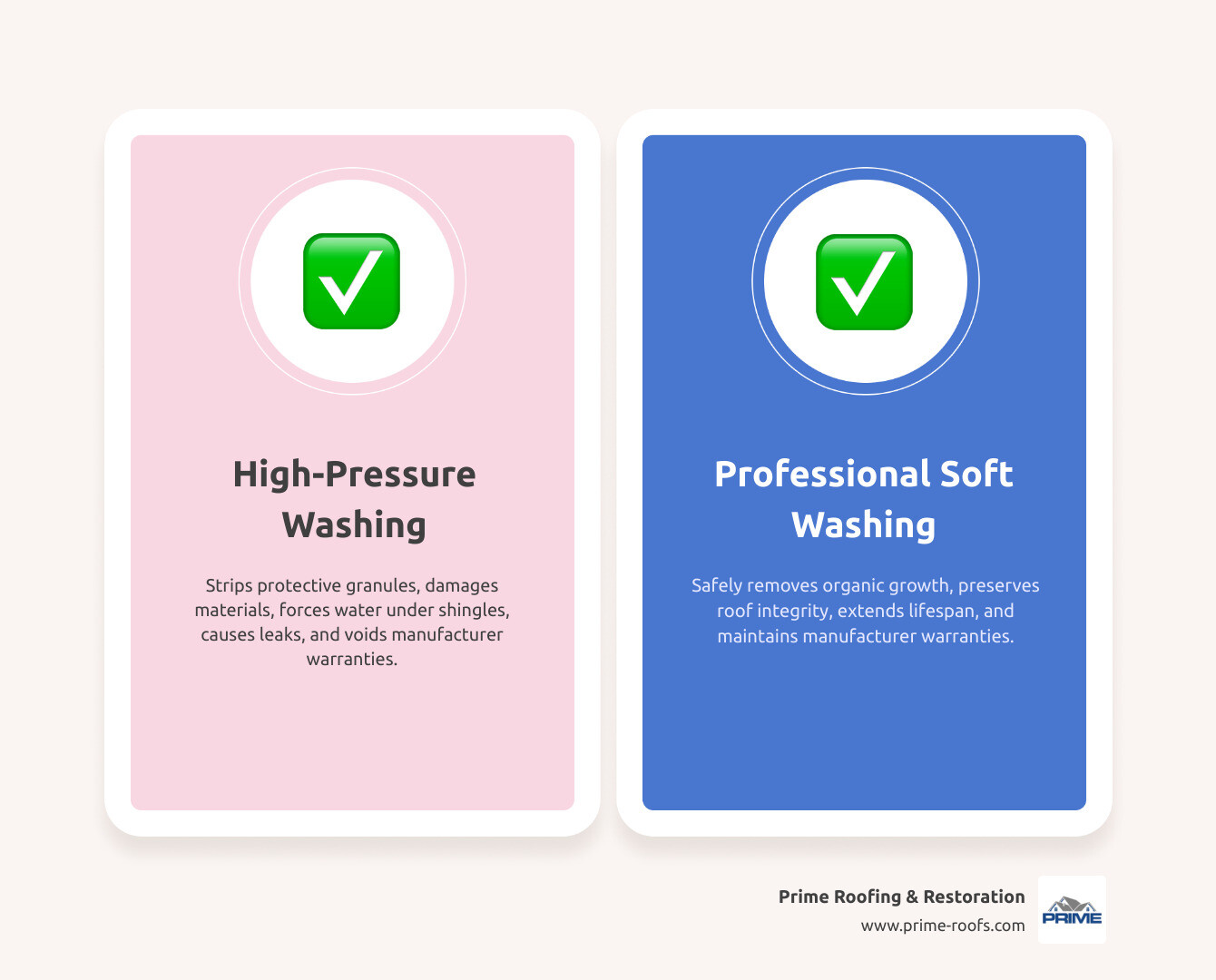
The primary culprit in roof damage is the misuse of high-pressure equipment. While satisfying to watch, a pressure washer in the wrong hands can be a destructive force. The Asphalt Roofing Manufacturers Association (ARMA) explicitly warns that pressure washing can do more harm than good, potentially causing immediate leaks and shortening your roof’s service life. We’ve seen how an attempt to save a few dollars on a DIY cleaning can quickly turn into thousands in repairs or even a full roof replacement.
The Truth About Pressure Washing and Roof Damage
Pressure washing wrecks roofs. This isn’t just an opinion; it’s a stark reality backed by industry experts and countless unfortunate anecdotes. The high-force water jet from a pressure washer is simply too aggressive for most residential roofing materials.
Here’s how pressure washing specifically damages roofs:
- Granule Stripping: For asphalt shingles, power washing can remove the important UV protection and granulation that shields the underlying asphalt from the sun’s damaging rays. This premature loss of granules accelerates the aging process, leading to early roof failure.
- UV Protection Loss: Once granules are stripped, the roof’s UV protection is compromised, causing the asphalt to become brittle, crack, and lose its effectiveness much faster than its intended lifespan.
- Water Intrusion: High-pressure water, being pushed in the wrong direction through corners and edges of protrusions, can cause damage where the roof is most vulnerable. It can force water underneath shingles, flashing, and into the roof’s fabric underlayment, leading to leaks, rot, and structural damage. Power washers can even get water behind vapor barriers on concrete roofs, causing structural rot.
- Voided Warranties: Many roofing product manufacturers and associations explicitly recommend against using power washing devices. As such, using a pressure washer on your roof will likely void its warranty, a fact stated in the fine print of most manufacturer agreements (see an example in GAF’s Shingle & Accessory Limited Warranty). This leaves you responsible for any subsequent damage.
- Shingle Lifting and Adhesive Bond Damage: The intense water pressure can loosen shingles, damage the adhesive bond holding them together, or even tear them off completely. This leaves your roof vulnerable to wind and rain, risking instant leaks.
- Material Erosion: For cedar roofs, high-pressure water removes important and valuable resin, which acts as the cedar shake preservative. The Roofing Contractors Association of British Columbia states that high-pressure washing can do more damage than good by removing the pulp of the cedar itself. Similarly, power washers wear away at the surface of concrete and exploit cracks, and they leach protective resins out of wood fences.
- Physical Wear and Tear: It’s not just the water. Power washers often have heavy hoses that are dragged around your roof, doing their own wear and tear, as do the boots of workers who might not be trained in proper roof safety.
- Caulking Damage: Power washers can tear caulking out of architectural edges, such as windows, doors, and skylights, allowing rainwater in. They can also tear caulking out of gutters and roof penetrations, causing miserable leaks.
We’ve heard stories, like the one about a crew mistakenly power-washing a roof at the wrong address, leading to its complete destruction and necessitating a full re-roofing. While this might sound extreme, it highlights the immense destructive power of these machines when used improperly on a roof.
Does cleaning your roof damage it if you use the wrong chemicals?
Yes, improper chemical use is a significant risk. Using the wrong cleaning solution can be just as damaging as using excessive force. Here’s why:
- Chemical Burns: Harsh, undiluted chemicals like industrial-strength bleach can degrade roofing materials, causing them to break down prematurely. Bleach and other harsh chemicals can damage your asphalt shingles, reducing their lifespan. We generally do not recommend bleach for roof cleaning due to its potential for harm.
- Material Degradation: Certain chemicals can react negatively with roofing materials, corroding metal flashings, dissolving sealants, or weakening the structural integrity of shingles. This can lead to faster deterioration and shorten your roof’s overall lifespan.
- Plant Damage: Runoff from harsh chemicals can severely harm or kill surrounding landscaping, including plants, shrubs, and lawns. Protecting your property’s vegetation is crucial during any cleaning process.
- Gutter Corrosion: Aggressive chemicals can corrode metal gutters and downspouts, leading to rust, leaks, and an early need for replacement.
Telltale Signs Your Roof Has Been Damaged by Cleaning
Knowing the signs of cleaning-related damage can help you address issues before they escalate into costly repairs. A professional roof inspection can definitively identify these problems.
Here are the key indicators that your roof may have been damaged by improper cleaning:
- Granules in Gutters: If you notice an excessive amount of gritty, sand-like material accumulating in your gutters or downspouts, it’s a strong sign that protective granules have been stripped from your asphalt shingles.
- Cracked or Curled Shingles: High-pressure washing or harsh chemicals can cause shingles to become brittle, leading to cracks, splits, or an upward curling of the edges.
- Visible Pitting or Pockmarks: On asphalt shingles, this indicates areas where granules have been blasted away, leaving behind small craters. On concrete or tile roofs, it could be signs of surface erosion.
- Discolored Patches: Uneven cleaning, streaking, or permanent discoloration can occur if chemicals are applied incorrectly or if pressure washing has removed the surface layer.
- New Leaks or Water Stains in Attic: If water was forced under your roofing materials, you might start noticing damp patches on your ceilings, musty smells in your attic, or actual leaks inside your home.
- Loose or Lifted Shingles: The force of a pressure washer can weaken the adhesive bonds, causing shingles to lift, become loose, or even detach entirely, making them susceptible to wind damage.
Material Matters: How Cleaning Affects Different Roof Types
Not all roofs are created equal, and their susceptibility to cleaning damage varies significantly. Using a one-size-fits-all approach is a recipe for disaster. The climate in Alabama, with its high humidity and frequent rainfall, makes certain materials more prone to organic growth, but also more vulnerable to aggressive cleaning. Whether you’re in Alabaster, Hoover, or Gulf Shores, understanding your specific roof material is key to its longevity. If you’re looking for expert advice custom to our local climate, our team of roofers in Alabaster, AL is always ready to assist.
Asphalt Shingles: The Granule Protection Problem
Asphalt shingles are the most popular roofing choice in Alabama, and for good reason—they’re affordable, durable, and relatively easy to maintain. However, their durability relies heavily on a protective layer of ceramic granules embedded in the surface. These granules serve several critical functions:
- UV Damage Protection: They shield the asphalt from the sun’s harsh ultraviolet rays, which can cause the material to dry out, crack, and become brittle.
- Fire Resistance: The granules contribute to the shingle’s fire-resistant properties.
- Aesthetics: They give shingles their color and texture.
When high-pressure washing is applied to asphalt shingles, it blasts away these vital granules. This “granule stripping” exposes the underlying asphalt to direct UV radiation, accelerating its deterioration and significantly shortening the roof’s lifespan. We’ve seen roofs that should last 25-30 years needing major repairs or full replacements 5-10 years sooner due to granule loss from improper cleaning.
Dark streaks on asphalt shingles, common in our humid climate, are often caused by a specific type of algae called Gloeocapsa magma. While this algae is largely cosmetic on its own, it can combine with fungus to create lichen and moss, which can trap moisture and further degrade the shingles. While it’s tempting to blast these stains away, doing so with high pressure will only cause more harm than good. You can read more about the scientific research on how algae discolors roofs in the United States and Canada here.
Wood Shakes & Shingles: The Risk of Stripping Natural Oils
Wood roofs, such as cedar shakes and shingles, offer a beautiful, rustic aesthetic, but they require specific care. These roofs contain natural resins and oils that act as preservatives, protecting the wood from moisture, UV damage, rot, and insect infestations.
Power washing is particularly detrimental to wood roofs because it:
- Leaches Resin: High-pressure water removes these valuable natural resins, leaving the wood porous, brittle, and without its natural protection.
- Removes Wood Pulp: The force can literally blast away the marginal wood cells and pulp of the cedar itself, weakening the material and making it more susceptible to damage.
- Causes Splintering and Rot: Once these protective elements are gone, the wood becomes prone to splintering, cracking, and premature rot, especially in Alabama’s moist environment. What was meant to be a 20-40 year roof can quickly deteriorate.
Tile and Metal Roofs: The Danger of Cracking and Finish Damage
While often considered more durable than asphalt or wood, Tile and Metal Roofs are not immune to damage from improper cleaning.
- Tile Cracking: Clay, concrete, and slate tiles are incredibly strong, but they can be brittle. High-pressure washing can crack or chip individual tiles, especially if they have pre-existing hairline fractures or if the pressure is too concentrated. Once a tile is cracked, water can easily seep underneath, leading to leaks and damage to the underlayment. Even lower-pressure settings can cause damage if used on traditional tile roofs.
- Finish Stripping on Metal: Metal roofs, while robust, often have protective coatings or paint finishes designed to prevent rust and improve durability. Abrasive chemicals or high-pressure washing can strip these finishes, exposing the bare metal to the elements and leading to rust and corrosion.
- Water Intrusion and Caulking Damage: The force of a pressure washer can push water underneath overlapping tiles or metal panels, compromising the watertight seal. Furthermore, power washers can tear caulking out of architectural edges around skylights or vents, allowing rainwater to enter where it shouldn’t. If your roof has suffered such damage, our damaged roof repair guide 2025 offers comprehensive insights.
The Right Way to Clean Your Roof: Soft Washing and Preventative Care
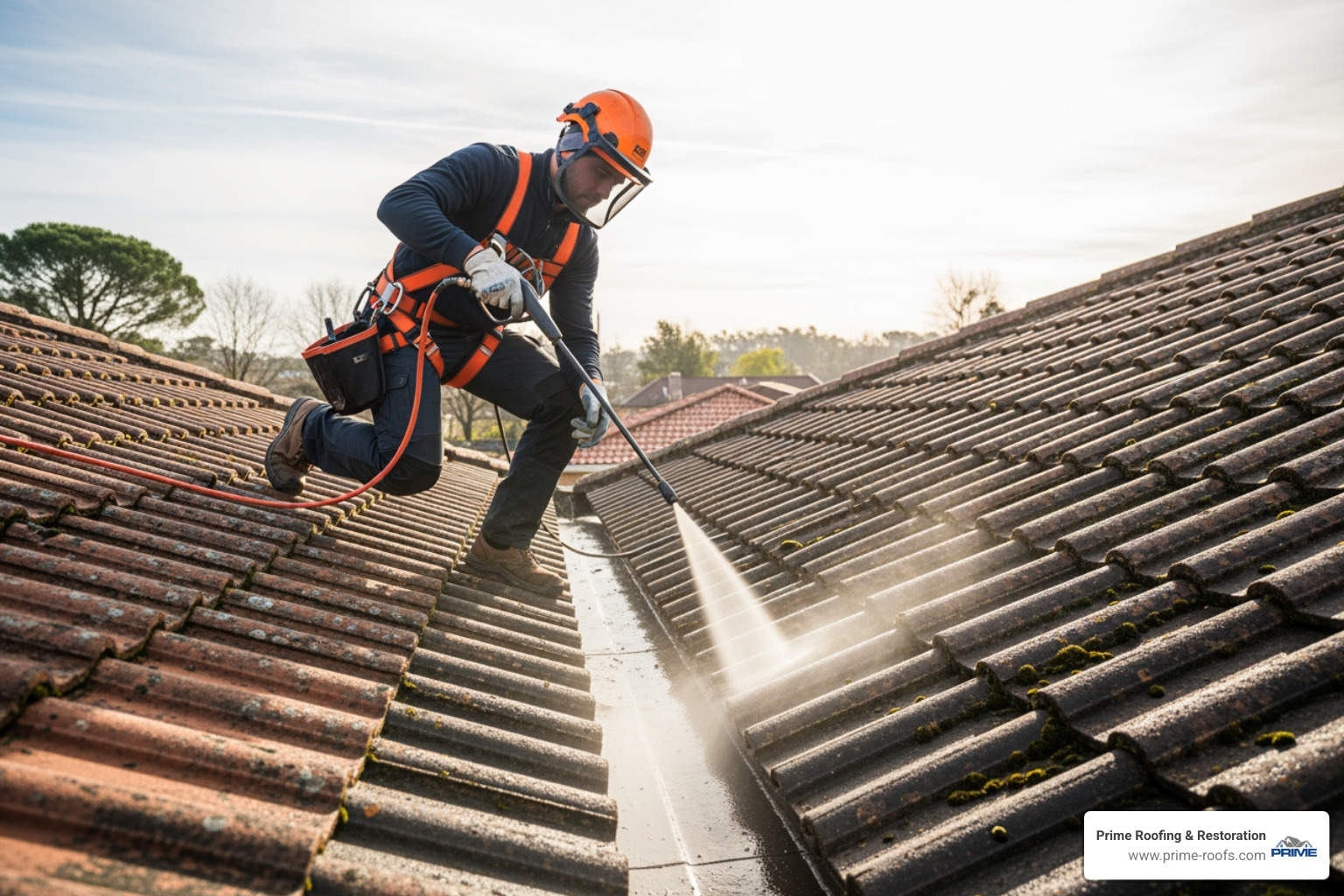
Effective roof cleaning prioritizes killing the organic growth at its root without using damaging high pressure. The industry-approved method is known as soft washing, a technique that relies on specialized cleaning solutions and low-pressure rinsing. It’s the method we trust to protect our clients’ homes across Alabama, from Orange Beach to Hoover.
What is Soft Washing?
Soft washing is a cleaning method that completely avoids the destructive force of high pressure. Instead, it uses a gentle, low-pressure application (similar to a garden hose) to deliver a water-based, biodegradable cleaning solution. This solution is specifically formulated to kill mold, mildew, algae, and moss at a cellular level.
Here’s how it works:
- Low-Pressure Application: The solution is applied with minimal force, ensuring no damage to shingles, granules, or underlying roof structures.
- Biodegradable Cleaners: We use eco-friendly treatments that break down organic matter without harming your roof, landscaping, or the environment. The Asphalt Roofing Manufacturers Association (ARMA) even recommends a 50/50 solution of household strength sodium hypochlorite and water for removing moss and algae.
- Kills Organisms at the Root: Unlike pressure washing which merely blasts away the surface growth (only for it to return quickly), soft washing penetrates the organic material, killing the spores and roots. This ensures a longer-lasting clean and significantly slows regrowth.
- ARMA Recommended Method: Soft washing aligns with the recommendations from leading roofing associations, making it the safest and most effective choice for roof cleaning.
Does cleaning your roof damage it when done professionally?
No, when performed by trained professionals using the correct soft washing techniques, roof cleaning does not damage your roof. In fact, it’s quite the opposite. Professional soft washing is a crucial part of roof maintenance that actually extends your roof’s life by removing harmful organic growth that traps moisture, degrades materials, and accelerates wear.
Our licensed and insured professionals understand the nuances of different roofing materials and the specific challenges presented by Alabama’s climate. We use specialized equipment and proven techniques to ensure your roof is cleaned thoroughly, safely, and without voiding your warranty. This expertise is a key reason why homeowners in Gulf Shores, Ono Island, and throughout Alabama trust us with their roofing needs.
Preventative Measures to Keep Your Roof Cleaner for Longer
Beyond professional cleaning, there are several steps you can take to keep your roof looking its best and extend the time between cleanings:
- Zinc or Copper Strips: Installing strips of zinc or copper along your roof’s ridge can help prevent algae and moss growth. As rain washes over these metals, it carries microscopic particles down the roof, creating an environment hostile to organic invaders.
- Regular Debris Removal: Keep your roof free of leaves, twigs, and other organic debris. These materials trap moisture and provide a food source for algae and moss. A leaf blower can be an efficient way to remove loose debris without damaging your roof.
- Gutter Cleaning: Ensure your gutters are clean and free-flowing. Clogged gutters can cause water to back up onto your roof, creating standing water that promotes organic growth and can lead to water intrusion. We recommend cleaning gutters at least twice a year.
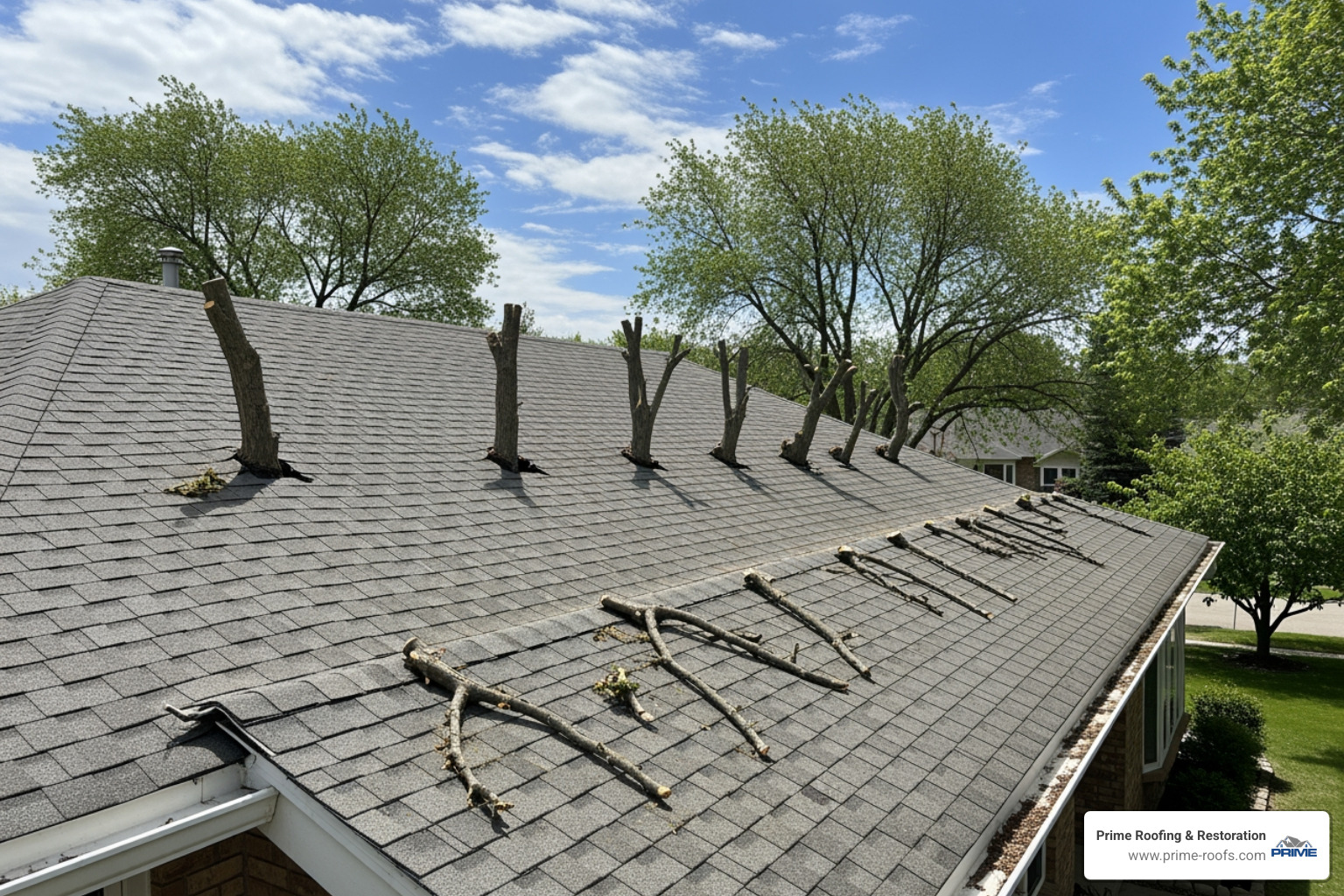
- Trimming Overhanging Trees: Trim any tree branches that hang over your roof. This reduces shade (which moss and algae love), minimizes debris accumulation, and prevents physical damage from falling branches during storms. Aim for branches to be at least four feet from the roof’s edge.
- Annual Roof Inspections: Schedule regular professional roof inspections. These inspections can identify early signs of organic growth or potential issues before they become major problems, allowing for proactive and less costly interventions.
DIY vs. Professional Roof Cleaning: A Cost and Safety Analysis
Deciding whether to tackle roof cleaning yourself or hire a professional involves weighing the costs, risks, and potential for damage. While DIY may seem cheaper upfront, a single mistake can lead to thousands in roof repair costs or, worse, a serious injury.
Consider the following comparison:
| Feature | DIY Roof Cleaning | Professional Roof Cleaning |
|---|---|---|
| Cost | Lower initial cost (supplies, rental) | Higher upfront cost (typically $300-$620, average $450) |
| Risk of Damage | High (improper technique/solutions, pressure) | Very Low (trained experts, correct methods) |
| Safety | High risk of falls and injury | Low risk (proper safety gear, experience) |
| Effectiveness | Often incomplete, short-lived results, potential for streaks | Thorough, long-lasting results, even coverage |
| Warranty | High risk of voiding manufacturer warranty | Preserves warranty (ARMA-approved methods) |
| Equipment | Consumer-grade tools, rented pressure washers | Professional-grade soft wash systems, specialized chemicals |
The DIY Dilemma:
We understand the appeal of a DIY project. It feels satisfying, and it seems to save money. However, when it comes to your roof, the stakes are incredibly high. DIY roof cleaning is a hazardous endeavor. Most novice DIY-ers should not climb on or stand on a roof for a few hours of work. The risk of falling from a height is substantial, and a serious injury could lead to medical bills far exceeding any savings.
Beyond safety, the risk of damaging your roof is immense. As we’ve discussed, improper cleaning—especially with a pressure washer or harsh chemicals—can strip granules, cause leaks, and degrade materials. This damage can result in increased energy costs, reduced indoor comfort, and necessitate expensive roof repairs or even a full roof replacement. To add insult to injury, if the damage results from improper maintenance or unauthorized cleaning methods, insurance companies often classify it as avoidable, making claims unlikely to be approved. According to the Insurance Information Institute, policies typically exclude damage resulting from neglect or improper maintenance.
The Professional Advantage:
Professional roof cleaning, especially soft washing, is a wise investment in your home’s longevity and your peace of mind. Our trained experts have the specialized knowledge, equipment, and safety gear to perform the job effectively and safely. We know which solutions work best for specific types of growth and roofing materials, ensuring a thorough clean without causing harm.
Professional services offer:
- Safety: We prioritize safety, using proper fall protection and techniques to work on your roof without risk of injury.
- Expertise: We can identify existing damage, address specific organic growth effectively, and ensure every inch of your roof is cleaned properly.
- Warranty Preservation: By using manufacturer-recommended methods, we help ensure your roofing warranty remains intact.
- Long-Lasting Results: Our soft washing techniques kill growth at the root, providing a longer-lasting clean than surface-level DIY efforts.
- Time and Effort Savings: You save your valuable time and effort, letting us handle the hard, dirty, and dangerous work.
Frequently Asked Questions about Roof Cleaning Damage
Homeowners often have many questions about the best way to care for their roofs. Here are some of the most common concerns we address:
How often should a roof be cleaned?
Most roofs in humid climates like Alabama benefit from professional soft washing every 3 to 5 years. However, this can vary based on several factors:
- Shade and Trees: If your home is surrounded by trees or has shaded areas, organic growth will likely appear more frequently, requiring more frequent cleaning (perhaps every 1-2 years).
- Roofing Material: While soft washing is safe for most materials, some may show growth faster than others.
- Local Environment: High humidity and frequent rainfall in areas like Gulf Shores and Ono Island can accelerate moss and algae growth.
Annual inspections (either DIY from the ground or professional) can help determine the ideal cleaning schedule for your specific roof.
Can cleaning my roof void its warranty?
Yes, cleaning your roof with improper methods can absolutely void its warranty. Roofing product manufacturers, including major shingle brands, explicitly state that using high-pressure washing can damage their products and will nullify your warranty. This means if you pressure wash your roof and later experience issues, the manufacturer is not obligated to cover the repair or replacement costs. Professional soft washing, which adheres to industry best practices and manufacturer recommendations (like those from ARMA), helps preserve your warranty, protecting your investment.
Is it ever safe to pressure wash a roof?
Generally, no, it is not safe to pressure wash a roof, especially for common residential materials. The risk of damage to asphalt shingles, wood shakes, and even many types of tiles is simply too high. High-pressure water can:
- Strip protective granules from shingles.
- Force water underneath roofing materials, leading to leaks.
- Damage the adhesive bonds of shingles.
- Erode wood and crack brittle tiles.
Even lower-pressure settings can cause damage if used on traditional tile or shingle roofs. While some metal roofs or very specific commercial roofing membranes (like GAF’s EverGuard TPO and PVC, which may allow low-pressure washing at 2000 psi or lower, as detailed in their official maintenance and repair guide) might tolerate light rinsing, this should only be done by trained professionals following strict manufacturer guidelines. For the average homeowner, there are no circumstances where high-pressure washing is the recommended method for cleaning residential roof surfaces.
Protect Your Investment with Professional Roof Care from Prime Roofing & Restoration
The answer to “does cleaning your roof damage it?” is a firm yes—if done incorrectly. The risks associated with high-pressure washing and harsh chemicals far outweigh any potential savings from a DIY attempt. A clean roof is a healthy roof, but only when the cleaning is performed safely and effectively using professional soft washing methods. By entrusting your home to certified experts, you not only preserve your roof’s structural integrity and appearance but also protect its warranty and your property value.
Your roof is one of the most critical investments you make in your Alabama home. Protecting it from damaging organic growth, while ensuring it can withstand our humid climate and stormy seasons, is our top priority. Don’t let a “quick clean” become a costly mistake that leads to premature roof failure, expensive repairs, or a voided warranty.
For a professional assessment and safe, effective cleaning that protects your investment, contact the local experts at Prime Roofing & Restoration. Our team is equipped with the right tools and knowledge for comprehensive roof maintenance services throughout Alabaster, Hoover, Gulf Shores, Orange Beach, and Ono Island. We are committed to providing exceptional service and lasting results for our community.
Contact Us Today for a Free, No-Obligation Inspection:
- Company: Prime Roofing & Restoration
- Phone: (205) 740-3382
- Address: 106 Whippoorwill Lane, Alabaster, AL 35007
- Online: Schedule a free inspection online
View Our Location on Google Maps
Protect your investment and ensure the longevity of your roof. Call us or visit our website to get started.