
Understanding Emergency Roofer Costs
When a storm hits or a leak appears, understanding the emergency roofer cost is your top priority. You need fast, reliable information to protect your home and wallet. Here’s a quick look at typical costs:
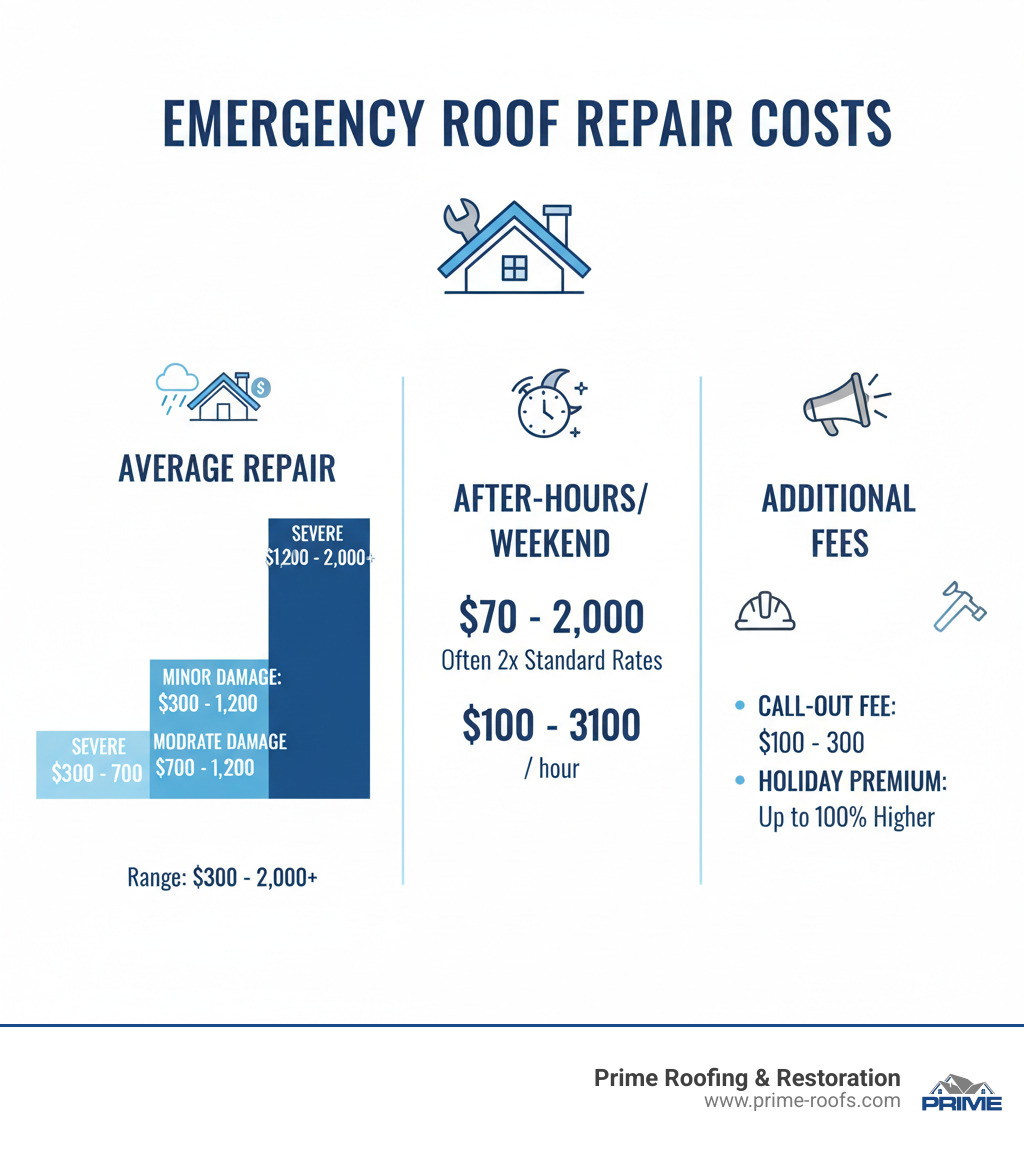
- Average Emergency Repair: $300 to $1,500
- After-Hours/Weekend Repair: $700 to $2,000 (often double standard rates)
- After-Hours Labor Rates: $100 to $300 per hour
- Emergency Call-Out Fee: An additional $100 to $300
- Holiday/Weekend Premium: Up to 100% higher than regular rates
A damaged roof is incredibly stressful. Prompt action is essential to prevent small issues from becoming major disasters, which can save you thousands in further damage.
I’m Bill Spencer, Owner of Prime Roofing & Restoration. With over five years of experience leading our company, I’ve seen the critical importance of providing swift, reliable solutions. This guide will help you understand the emergency roofer cost so you can make informed decisions during a crisis.
The Anatomy of an Emergency Roofing Bill: What Are You Paying For?
An emergency roofing bill can cause sticker shock, but the emergency roofer cost reflects more than just materials and labor. You’re paying for immediate, around-the-clock service when your home needs it most. Emergency repairs can cost 1.5 to 3 times more than scheduled work because they require crews to mobilize instantly, often in hazardous conditions like at night or during a storm.
You’re not just paying for shingles; you’re paying for the peace of mind that comes from professionals answering your call at 2 AM and preventing a small leak from becoming a catastrophe.

Regular vs. Emergency Repairs: The Urgency Premium
A scheduled roof repair for minor issues typically runs between $380 and $1,770. These can often wait a few days or weeks without serious risk.
Emergency repairs are different. They address crises like water pouring into your living room or a tree punching a hole through your roof. In these moments, you’ll typically pay between $700 and $2,000 for after-hours service. This urgency premium is roughly double the standard cost for good reason: it covers immediate response and prevents further damage. A swift repair can be the difference between a $1,000 fix and $10,000 in water damage to your ceilings, walls, and belongings. For guidance on handling severe weather aftermath, see our guide on What to Do After a Storm Damages Your Roof.
After-Hours Labor, Holidays, and Service Fees
A significant portion of the emergency roofer cost comes from after-hours service. While standard labor rates are $50 to $150 per hour, emergency rates often jump to $100 to $300 per hour. This premium compensates skilled technicians for working inconvenient and often dangerous hours.
Holiday and weekend calls carry even steeper premiums, potentially costing up to 100% more than regular rates. This ensures qualified professionals are available to secure your home.
Most services also include an emergency call-out fee of $100 to $300, which covers the cost of immediate dispatch. Depending on your location in areas like Alabaster, Orange Beach, or Gulf Shores, travel fees may also apply.
The Cost of Temporary vs. Permanent Fixes
In an emergency, the immediate goal is to stop further damage. This is where temporary fixes are critical.
Emergency roof tarping is the essential first step, creating an immediate water barrier. The cost typically ranges from $150 to $600, depending on the damage size and complexity. This investment prevents thousands in interior water damage and buys you time to plan permanent repairs. Our Emergency Tarping Complete Guide provides more detail.
Once the crisis is contained, permanent repair materials like underlayment, shingles, and sealants will cost between $100 and $500 or more, separate from labor. A temporary tarp is not a long-term solution; it may last a few weeks to several months. Scheduling permanent repairs as soon as possible is crucial for your roof’s integrity.
Key Factors That Influence Your Final Emergency Roofer Cost
No two roofing emergencies are identical, and several variables impact the final invoice. The size of the damaged area, the type of damage, and your roof’s specific characteristics all determine the complexity and cost of the repair.
The Extent and Type of Roof Damage
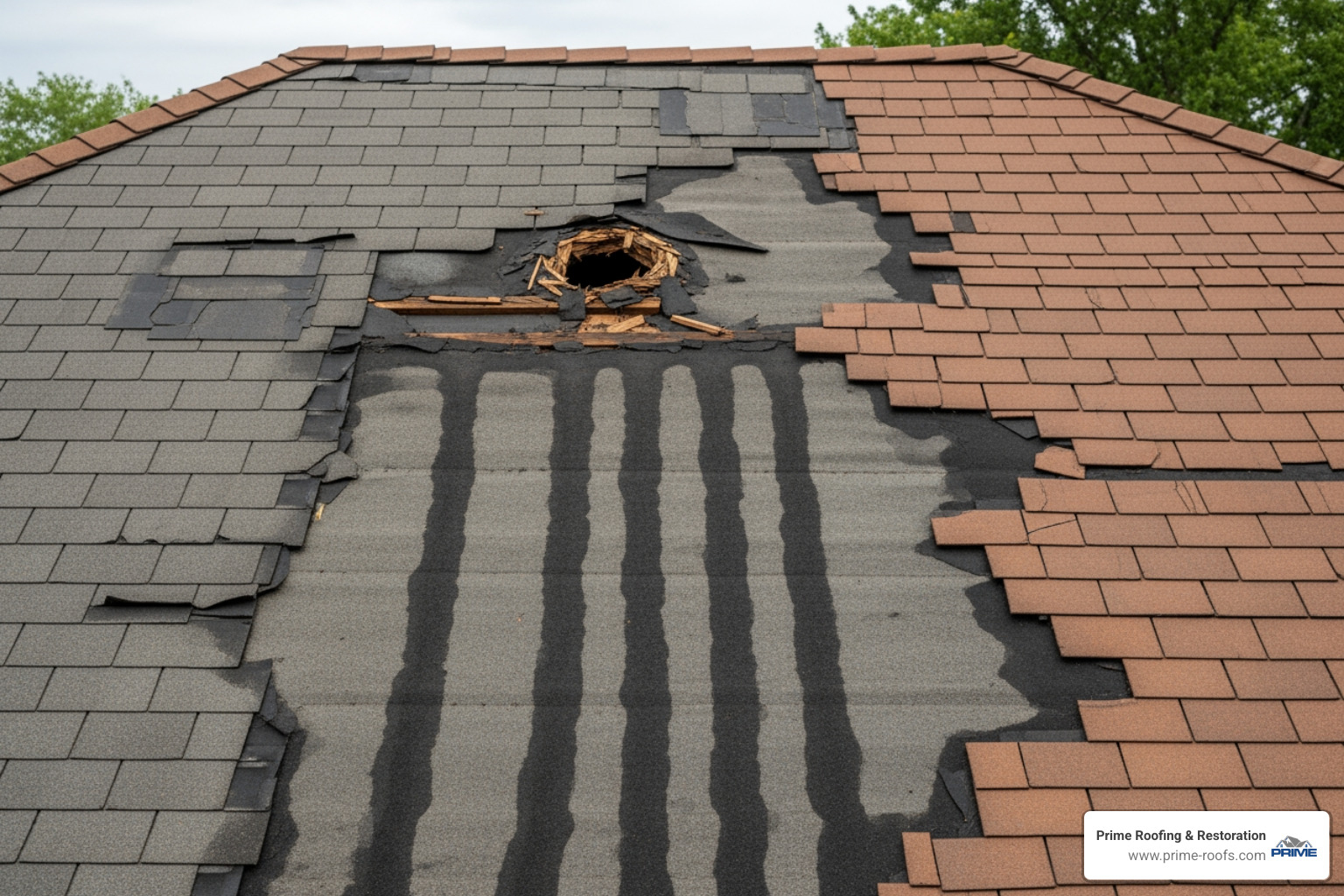
The nature of the damage is a primary driver of your emergency roofer cost. A seemingly small issue can indicate a larger problem.
- Minor Repairs ($250 – $1,000): These are straightforward fixes like replacing a few missing shingles, patching small punctures, or sealing a minor leak.
- Moderate Repairs ($1,001 – $3,000): This involves more substantial work, such as repairing damaged roof decking, compromised flashing around chimneys, or larger leaks.
- Major Repairs ($3,001 – $15,000+): These are serious emergencies involving structural damage to rafters or trusses. Structural repairs alone can cost $1,200 to $6,000. This category also includes partial roof reconstruction.
- Compound Damage: This is the most expensive scenario, where roof damage leads to interior water damage in ceilings, walls, or electrical systems. While the roof structure repair might cost $500 to $3,200, remediating interior damage can add thousands more. This is why prompt emergency repair is so critical.
How the Cause of Damage Affects Your Emergency Roofer Cost
The origin of the damage impacts the repair strategy and final emergency roofer cost.
- Water Damage Repair ($500 – $3,200): The cost depends on how long the leak has been active and how far water has spread. Extensive saturation leading to rot will be on the higher end.
- Wind Damage Repair ($250 – $10,000): This wide range reflects wind’s unpredictable nature. Minor shingle replacement is inexpensive, but if large sections of the roof are torn off, costs escalate quickly.
- Fire Damage Repair ($1,000 – $15,000): This is one of the most severe and costly scenarios. Fire compromises structural integrity and requires specialized cleaning, odor remediation, and thorough assessments to meet safety codes, as outlined in FEMA’s safety guidelines.
Roof Characteristics: Material, Accessibility, and Design
Your home’s unique roof features can dramatically influence the final emergency roofer cost.
- Roof Material: Asphalt shingle repair is generally the most affordable. Metal roof repair is more complex and requires specialized tools. Tile or slate roof repair is the most expensive, as these materials are delicate and require careful handling.
- Roof Accessibility: A steeply pitched roof or a multi-story home requires more safety equipment and time, increasing labor costs. Obstacles like dense landscaping can also impede access and raise the price.
- Roof Design Complexity: Roofs with numerous gables, valleys, and dormers are more complex and time-consuming to repair than a simple roofline. This intricacy increases both labor and material costs, directly impacting your final bill.
Navigating Insurance and Minimizing Your Out-of-Pocket Expenses
A roofing emergency is stressful enough without the financial strain. Fortunately, homeowners insurance often covers sudden and accidental damage. Knowing how to steer your policy and take proactive steps can significantly reduce your out-of-pocket costs.
Does Homeowners Insurance Cover Emergency Repairs?
Homeowners insurance typically covers emergency roof repairs, but understanding your policy’s caveats is crucial to managing your emergency roofer cost. Most policies cover damage from sudden events or “perils” like storms (wind, hail), fire, and falling objects.
However, insurance generally does not cover damage from lack of maintenance or wear and tear from old age. If your roof has deteriorated from neglect, your claim may be denied. If your roof is past its lifespan, an insurer might only pay its depreciated “actual cash value” instead of the full replacement cost.
Before coverage begins, you must pay your deductible, which can range from $500 to $2,500. In storm-prone areas, it may be a percentage-based deductible (1-5% of your home’s insured value) for wind or hurricane damage.
Properly filing a claim is essential. Document all damage with photos and videos before repairs start and contact your insurer immediately. Navigating claims can be overwhelming, which is why we offer support through our Insurance Claims Assistance Complete Guide.
How to Minimize Your Emergency Roofer Cost
While some emergency roofer cost is unavoidable, proactive steps can minimize expenses and prevent future crises.
- Perform Regular Maintenance: Annual roof inspections, especially before storm season, can catch minor issues before they become emergencies. Clear gutters and trim overhanging branches.
- Build an Emergency Fund: Setting aside money for home repairs can alleviate financial stress when an unexpected issue arises.
- Use Safe DIY Temporary Fixes: Inside your home, place buckets to catch water and move valuables. Be extremely cautious about getting on a damaged roof. As FEMA warns, storm-damaged areas can be even more dangerous because of downed tree limbs and power lines. Professional tarping is the safest option.
- Get Multiple Quotes: If time permits, getting at least three quotes from reputable contractors helps ensure a fair price.
- Schedule Permanent Repairs: If a temporary fix secures your home, scheduling permanent repairs during regular business hours helps you avoid after-hours premiums.
Choosing a Reliable Emergency Roofer in Alabaster, AL
When your home is at risk, you need a contractor who is fast, reliable, and transparent. Vetting an emergency roofer means checking credentials, understanding their pricing, and ensuring they stand behind their work.
What to Look for in a 24/7 Roofing Contractor
In a crisis, taking a moment to verify a roofer’s qualifications can prevent future headaches. Here’s what to confirm:
- Licensed and Insured: This is your protection. A licensed contractor meets local codes, and insurance (liability and workers’ comp) shields you from financial responsibility for accidents. We are proud to be a Licensed Roof Contractor serving Alabaster and nearby communities.
- Positive Local Reviews: Check Google, Facebook, or the BBB for feedback on response times, communication, and quality. A strong local reputation is a reliable indicator of trustworthiness.
- True 24/7 Availability: Ensure they have dedicated emergency teams, not just an answering service that takes messages for the next business day.
- Clear Communication: A good contractor explains the damage, necessary repairs, and the emergency roofer cost in understandable terms.
- Local Expertise: A contractor familiar with Alabaster, AL, understands local weather challenges and building codes and has relationships with suppliers for faster material access. Learn more about our commitment to your area at Roofers Near Me: Alabaster AL.
Understanding Estimates and Warranties for Your Emergency Roofer Cost
Understanding the details of your estimate protects your wallet and your peace of mind.
A reputable contractor provides an itemized estimate that separates costs for labor, materials, service fees, and debris removal. This transparency helps you see where your money is going. Always insist on a written quote before work begins to document the agreed-upon scope and pricing.
Equally important are warranties:
- Labor Warranty: Covers the quality of the installation. If issues arise from the workmanship, the contractor will fix them for a specified period.
- Material Warranty: Comes from the manufacturer and covers defects in the roofing products themselves.
- Workmanship Guarantee: Reinforces the contractor’s commitment to quality and standing behind their work.
At Prime Roofing & Restoration, we provide detailed written estimates and back our work with solid warranties. For more guidance, explore our guide on Choosing a Roofer.
Frequently Asked Questions About Emergency Roofing Costs
When a roofing crisis hits, you need clear, straightforward answers. Here are some of the most common questions homeowners ask about emergency roof repairs and the associated emergency roofer cost.
How do I know if I need an emergency roof repair?
You need an emergency repair if you see significant water actively entering your home, notice visible structural damage like a sagging roofline, or have a large, gaping hole from an impact. If you can see exposed roof decking, it’s an urgent situation. While a few drips might wait for a scheduled appointment, uncontrolled water flow or immediate safety risks demand professional attention to prevent far greater damage.
Can I perform an emergency roof repair myself to save money?
For your safety, we advise against complex DIY roof repairs. Your efforts should be limited to actions inside the home, such as placing buckets to catch water and moving valuables. Getting on a damaged, unstable roof is extremely dangerous and can lead to serious falls or void your insurance. While temporary tarping seems simple, professional installation is safer and more effective at preventing further water intrusion. The risk of injury or a botched job far outweighs any potential savings on the emergency roofer cost.
How long does a temporary emergency repair last?
A professionally installed roof tarp is a short-term solution designed to offer protection until permanent repairs can be made. A quality tarp can last from a few weeks to several months, depending on the material quality, underlying damage, and weather conditions. It is crucial to understand that a temporary fix is not a permanent solution. Its purpose is to stop immediate water intrusion. We always advise replacing temporary measures with a durable, permanent repair as soon as possible to ensure your roof’s long-term safety and integrity.
Your First Call in a Roofing Crisis
When disaster strikes your roof, every minute counts. Understanding the potential emergency roofer cost empowers you to make quick, informed decisions. While emergency repairs carry a premium, the price reflects the immediate, specialized response needed to protect your home.
Prompt action is your best investment. An ignored leak can quickly cause thousands in water damage. Calling a professional immediately prevents a cascade of expensive damage. The emergency roofer cost is an investment in peace of mind and your property’s long-term value, securing expertise and protection when you need it most.
If you’re facing a roofing emergency, don’t hesitate. The licensed experts at Prime Roofing & Restoration are standing by 24/7 to provide swift, reliable solutions with transparent pricing. Request Emergency Roof Service online for rapid assistance.
Your home deserves a partner who will be there when you need them. Let us help turn this crisis into a manageable repair, backed by quality workmanship and genuine care.