
Why Home Roof Installation Matters for Every Homeowner
A home roof installation is one of the most significant and critical investments you will ever make in your property. More than just a layer of shingles, your roof is a complex, integrated system that serves as the primary shield for your home. It protects your family, your possessions, and the very structural integrity of your house from the elements. For homeowners in Alabama, where severe weather is a constant and formidable threat, partnering with a team of expert Alabama roofers is not just a good idea—it’s essential for securing a durable, long-lasting result that provides true peace of mind.
A failing roof can lead to a cascade of devastating problems. A small, unnoticed leak can allow water to seep into your attic, soaking insulation, rotting wooden rafters and decking, and creating the perfect environment for hazardous black mold to grow. This damage can compromise your home’s structure and even impact your family’s health. A professionally installed new roof prevents these issues before they start, preserving your home from the top down.
Beyond protection, a new roof dramatically enhances your home’s curb appeal and overall value. It’s one of the first things visitors and potential buyers notice, and a modern, well-maintained roof can transform the entire aesthetic of your property. Furthermore, modern roofing materials and installation techniques can significantly improve your home’s energy efficiency. By reflecting solar radiation and ensuring proper attic ventilation, a new roof can reduce the workload on your HVAC system, leading to tangible savings on your energy bills.
Key factors to consider:
- Structural Protection: A sound roof is the first line of defense against water intrusion, which can cause rot, mold, and structural failure.
- Material Longevity: High-quality materials like metal can last 50-100 years, while modern architectural asphalt shingles typically last 20-30 years, offering different levels of long-term value.
- Professional Installation: This is non-negotiable. A professional process includes a thorough inspection, deck repair, installation of high-performance underlayment and flashing, and ensuring proper ventilation for the Alabama climate.
- Enhanced Value: A new roof can increase energy efficiency by up to 25% and provides a significant return on investment, boosting home resale value.
Choosing a qualified contractor for your roof replacement is the single most important step in this process. An experienced local roofer ensures your home is equipped to withstand our region’s intense summer heat, heavy rainfall, and the ever-present threat of hurricane-force winds. A professionally installed roof is a shield for your family, your belongings, and your financial future.
I’m Bill Spencer, Owner of Prime Roofing & Restoration. My team and I are dedicated to providing homeowners across the Gulf Coast with residential and commercial roofing systems designed to meet the highest standards for storm resistance, energy efficiency, and longevity. We don’t just build roofs; we build relationships based on trust and quality craftsmanship.
Understanding Your Roofing Options: Materials That Matter
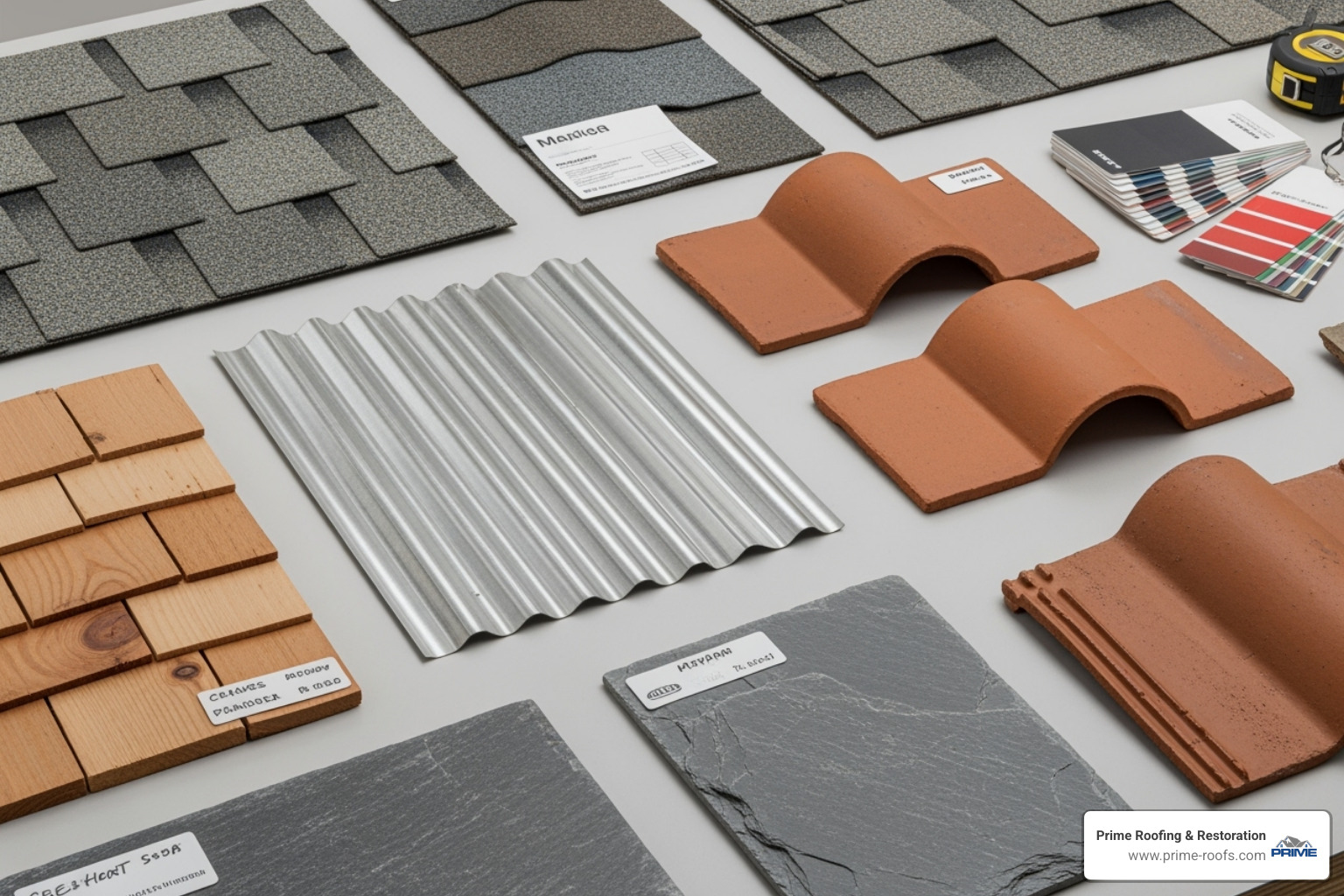
Choosing the right material is the foundational decision in your home roof installation. This choice directly dictates your roof’s lifespan, its ability to withstand weather, its upfront cost versus long-term value, your future maintenance obligations, and even your monthly energy bills. In a demanding climate like Alabama’s, characterized by intense summer heat, high humidity, and the potential for severe storms, selecting a material engineered to perform under these specific conditions is paramount to protecting your investment.
To help you make an informed decision, let’s explore the most popular and effective roofing materials available today.
| Feature | Metal Roofing | Architectural Asphalt Shingles |
|---|---|---|
| Lifespan | 50-100 years | 20-30 years |
| Durability | Exceptional; superior resistance to wind, hail, and fire | Good; can be prone to hail damage and wind uplift over time |
| Energy Savings | Up to 25% reduction in cooling costs due to high reflectivity | Limited reflectivity; tends to absorb and retain heat |
| Upfront Cost | Higher | Lower |
| Maintenance | Very low; periodic inspection recommended | Moderate; requires inspection for granule loss, cracked shingles |
| Environmental | Highly sustainable; made with recycled content and is 100% recyclable | Contributes significantly to landfill waste (20 billion lbs/year) |
| Resale Value | Can increase home resale value by up to 5% | Considered standard; may not add significant value |
The Rise of Metal Roofing: A Lifetime Investment
For homeowners seeking the ultimate in longevity, durability, and performance, metal roofing is the premier choice. A properly installed metal roof can last 50 to 100 years, meaning it is truly a ‘once-in-a-lifetime’ installation for most. Its resilience is unmatched against Alabama’s toughest weather, easily resisting wind speeds well over 140 mph, shedding heavy rain, and standing up to hail. Metal roofs are also exceptionally energy-efficient. Their reflective surfaces can bounce a significant amount of solar heat away from your home, reducing attic temperatures and cutting cooling costs by up to 25% during our hot summers. This efficiency is recognized by programs like ENERGY STAR®, which certify qualifying metal roof products.
One of the most popular styles is the standing seam metal roof. It features concealed fasteners and long, clean vertical lines that provide a sleek, modern aesthetic while offering superior protection against leaks. For those who prefer a more traditional look, metal is also available in shingle, shake, and tile profiles. Modern metal roofs are typically made of steel with a Galvalume coating for corrosion resistance or aluminum, which is an excellent choice for coastal areas due to its inherent resistance to salt spray. These panels are finished with advanced Kynar 500® coatings that resist fading, chalking, and chipping, ensuring your roof’s color stays vibrant for decades.
Architectural Asphalt Shingles: The Reliable Standard, Evolved
Asphalt shingles remain the most common roofing material in the United States, largely due to their affordability and wide range of aesthetic options. However, not all shingles are created equal. The old, flat 3-tab shingles are being phased out in favor of modern architectural shingles (also known as dimensional or laminate shingles). These are thicker, heavier, and constructed with multiple layers fused together, creating a rich, textured appearance that mimics the look of natural wood shake. This dimensional look adds significant curb appeal and value.
Architectural shingles offer solid protection and a lifespan of 20 to 30 years. For enhanced durability, many homeowners in storm-prone areas opt for Class 4 impact-resistant shingles. These have been tested to withstand the impact of a 2-inch steel ball dropped from 20 feet, simulating severe hail. Installing Class 4 shingles can often lead to substantial discounts on your homeowner’s insurance policy. While the upfront cost of asphalt is lower than metal, it’s important to weigh this against the shorter lifespan and the environmental impact, as old shingles contribute nearly 20 billion pounds of non-recyclable waste to U.S. landfills annually.
Specialty Options: The Beauty of Synthetics
For homeowners who desire a specific high-end look without the associated cost or structural challenges, synthetic roofing materials offer a compelling alternative. Synthetic (or composite) shingles are engineered to flawlessly replicate the appearance of natural slate or cedar shake. Made from advanced polymer compounds, these materials are lightweight, incredibly durable, and virtually maintenance-free. They won’t crack, rot, or curl like their natural counterparts and often come with Class 4 impact resistance and Class A fire ratings. This allows you to achieve the timeless beauty of a slate or wood roof with the enhanced performance and longevity of a modern engineered product.
The Step-by-Step Guide to Professional Home Roof Installation
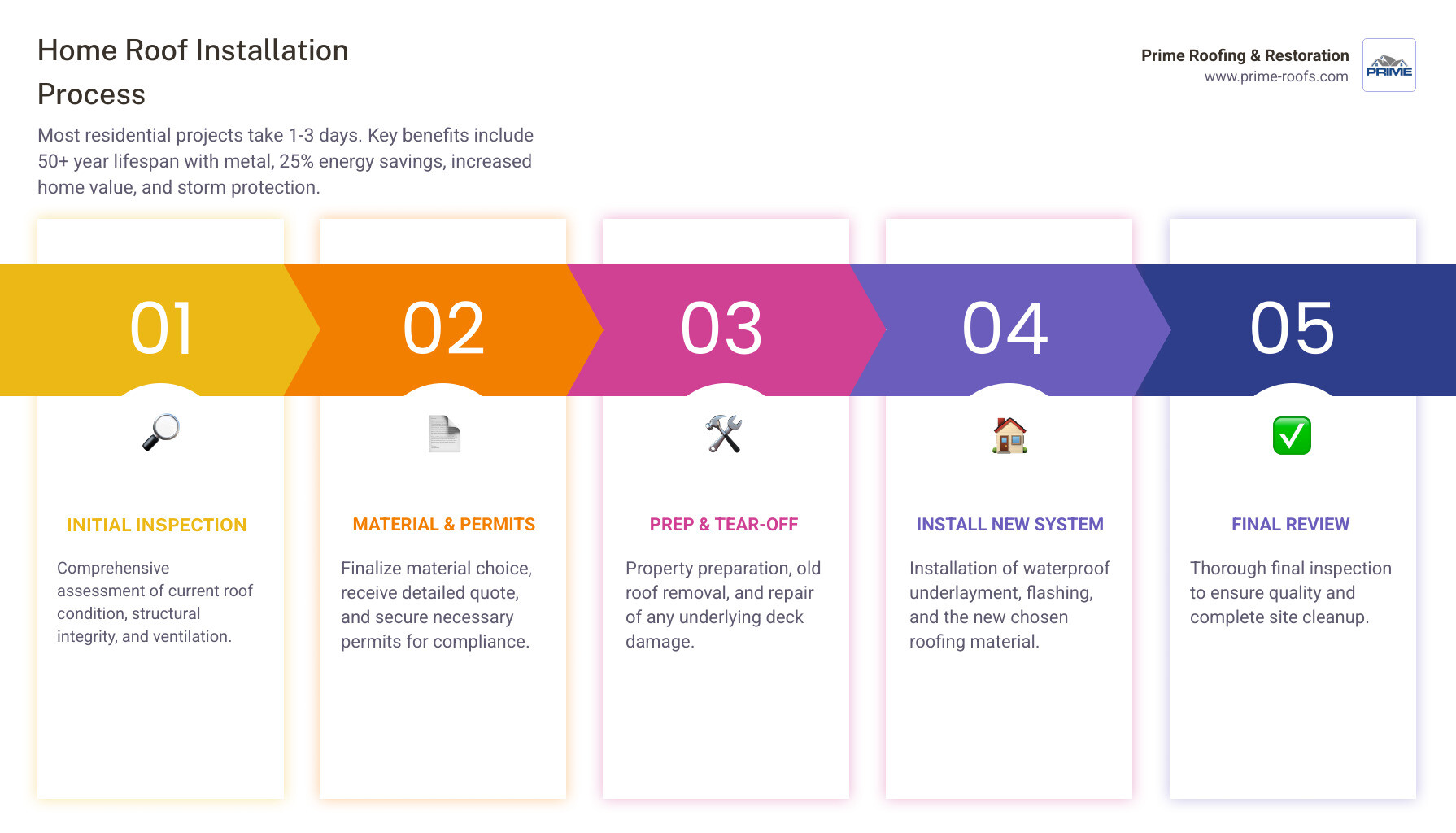
A successful home roof installation is a systematic, meticulous process where every single step is critical to achieving a watertight, wind-resistant, and durable result. Cutting corners at any stage can compromise the entire system and lead to premature failure. Understanding this professional process helps you know what to expect, how to identify a quality contractor, and ensures you receive the full value of your investment. While most residential roof installations are completed in 1 to 3 days, the timeline can vary based on the size and complexity of the roof, the materials chosen, and weather conditions.
Step 1: Initial Consultation and Thorough Roof Inspection
Your project should always begin with a comprehensive assessment of your entire roofing system. A true professional will get on the roof for a hands-on inspection, examining the condition of your current shingles, checking for nail pops, identifying granule loss, and inspecting all flashing around chimneys, vents, and skylights. They will also enter your attic to assess the underside of the roof deck for signs of leaks (water stains, dark spots) or rot, and to evaluate the state of your ventilation and insulation. Proper attic airflow is absolutely crucial in Alabama’s humid climate to prevent moisture buildup that can destroy your roof from the inside out. This initial meeting is your opportunity to discuss your goals for curb appeal, budget, energy efficiency, and long-term storm durability, allowing the contractor to provide tailored, educated recommendations.
Step 2: Detailed Estimate, Material Selection, and Permitting
Following the inspection, you should receive a detailed, transparent, line-item estimate that clearly outlines all anticipated costs—labor, specific materials, dumpster fees for disposal, and permits. There should be no hidden fees. A professional contractor will take the time to walk you through the estimate and answer all your questions. During this step, you will finalize your material selection, from the type and color of your shingles or metal panels to the quality of the underlayment. Once you approve the scope of work, the contractor should handle all necessary permitting with your local municipality to ensure your project is fully compliant with current building codes. You will also receive a clear project timeline and be provided with copies of both the material and workmanship warranties for your review.
Step 3: The Installation Process: A Symphony of Craftsmanship
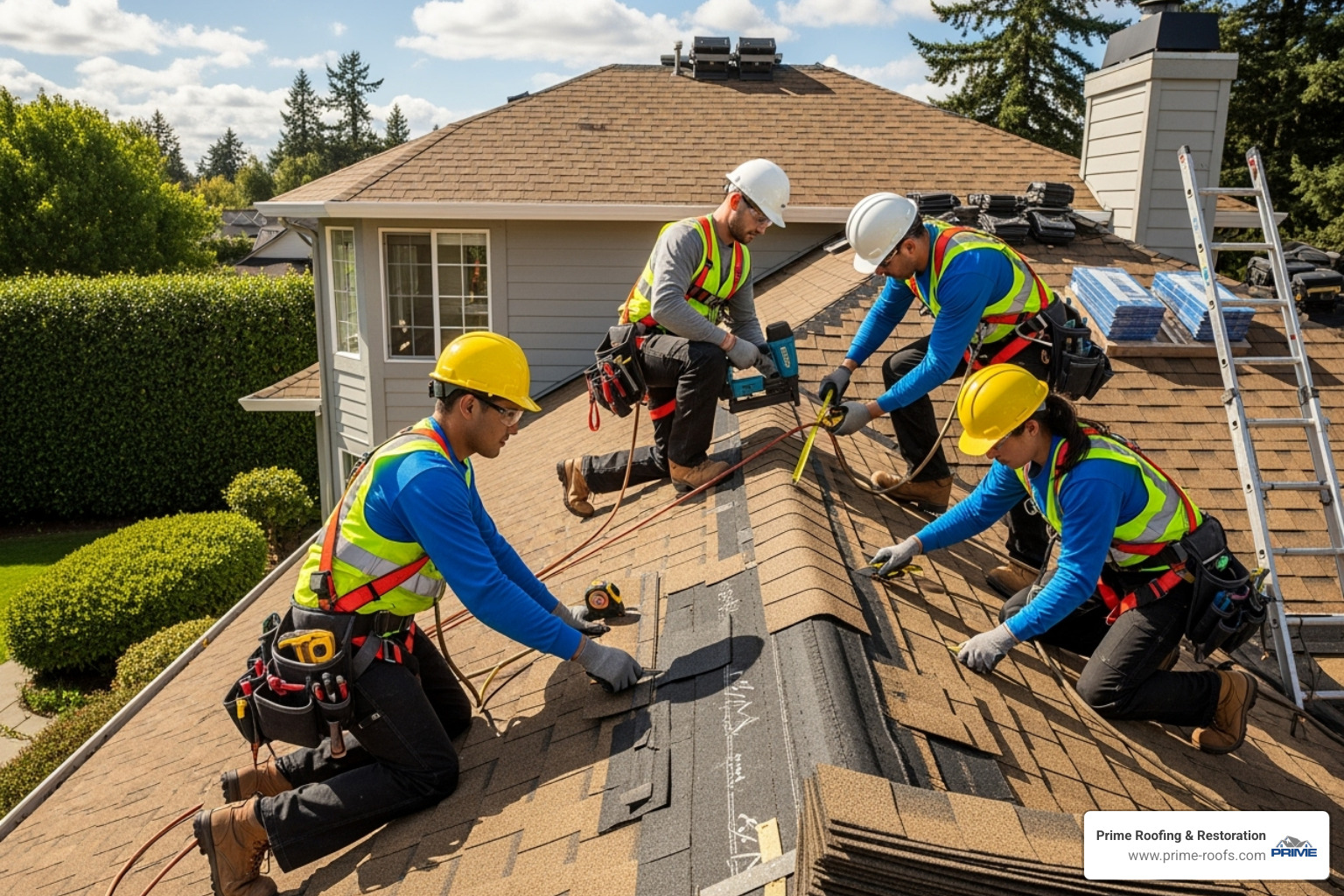
The installation phase is where a contractor’s expertise and attention to detail truly shine. A high-quality installation is a sequence of critical steps:
- Site Preparation: The crew’s first priority is protecting your property. They will lay tarps over landscaping, siding, and windows, and move patio furniture or other items out of the work zone. All necessary safety equipment, such as harnesses and fall protection, is set up.
- Complete Tear-Off: The old roofing materials are completely removed down to the bare wood deck. A reputable contractor will never recommend an “overlay” or “roof-over,” as this practice traps heat, adds excessive weight, and prevents the crucial inspection of the roof deck. This step is non-negotiable for a lasting installation.
- Deck Inspection and Repair: With the deck exposed, a thorough inspection is performed. Any rotted, soft, or delaminated plywood or OSB sheathing is identified, cut out, and replaced with new wood. This creates a solid, structural foundation for your new roof.
- Installation of a High-Performance Water Barrier: This is one of the most critical stages. A high-quality synthetic underlayment is installed over the entire roof deck. This material acts as a powerful secondary barrier against water intrusion, especially from wind-driven rain. In addition, a specialized self-adhering ice and water shield is installed in the most vulnerable areas, such as valleys, eaves, and around all roof penetrations.
- Flashing and Drip Edge Installation: New, durable metal flashing is custom-fitted and installed around chimneys, walls, vents, and in valleys. Flashing is what directs water away from these leak-prone areas. A metal drip edge is also installed along all eaves to prevent water from wicking back onto your fascia boards.
- Ventilation System Configuration: As recommended by organizations like FEMA, proper attic ventilation is key to roof longevity and energy efficiency. The system is configured to ensure a balanced flow of cool, dry air entering through intake vents (at the soffits) and hot, moist air exiting through exhaust vents (at the ridge). This keeps the attic cooler in the summer and drier in the winter.
- New Roofing Material Installation: Finally, your chosen roofing material—whether standing seam metal panels or architectural asphalt shingles—is installed with precision, adhering strictly to the manufacturer’s specifications and industry best practices. This includes using the correct number and type of fasteners and following precise layout patterns.
- Thorough Cleanup and Final Inspection: The crew conducts a meticulous cleanup of your property, including using magnetic rollers to collect any stray nails from your lawn and driveway. A final walkthrough and inspection are performed to ensure every detail meets the highest quality standards, leaving you with a beautiful, secure roof ready to protect your home for decades.
Navigating Home Insurance for Your New Roof
Your roof is your home’s first and most important line of defense against weather, a fact that insurance companies understand and weigh heavily when calculating your premiums. A new, professionally installed roof not only protects you and your family from storms but can also lead to significant savings on your homeowner’s insurance, especially in a storm-prone state like Alabama.
Will a New Roof Lower My Homeowners Insurance?
Yes, in many cases, a new roof can lower your insurance premiums. Insurance providers view a new roof as a reduction in risk. It’s less likely to fail during a storm, which means you are less likely to file a costly claim. This reduced risk is often passed on to you in the form of a discount. The savings can be even more substantial if you invest in superior materials and installation methods.
For Alabama homeowners, the key is to install a roof that meets specific resilience standards. This includes:
- Impact-Resistant Shingles: Installing Class 4 rated shingles that are proven to better withstand hail damage can trigger premium discounts.
- FORTIFIED Roof™ Certification: This is the gold standard for storm resilience in our region. The FORTIFIED Roof™ program from the Insurance Institute for Business & Home Safety (IBHS) specifies enhanced installation techniques—such as ring-shank nails, sealed roof decks, and locked-down edges—that are proven to make roofs far more resistant to high winds. A certified FORTIFIED Roof™ can lead to some of the largest available discounts on homeowner’s insurance in Alabama.
After your home roof installation is complete, you must notify your insurance agent. Provide them with documentation of the installation date, the materials used (especially if they are impact-resistant), and any certifications like FORTIFIED Roof™. This will ensure you receive all the discounts you are entitled to.
Filing a Claim for a Storm-Damaged Roof
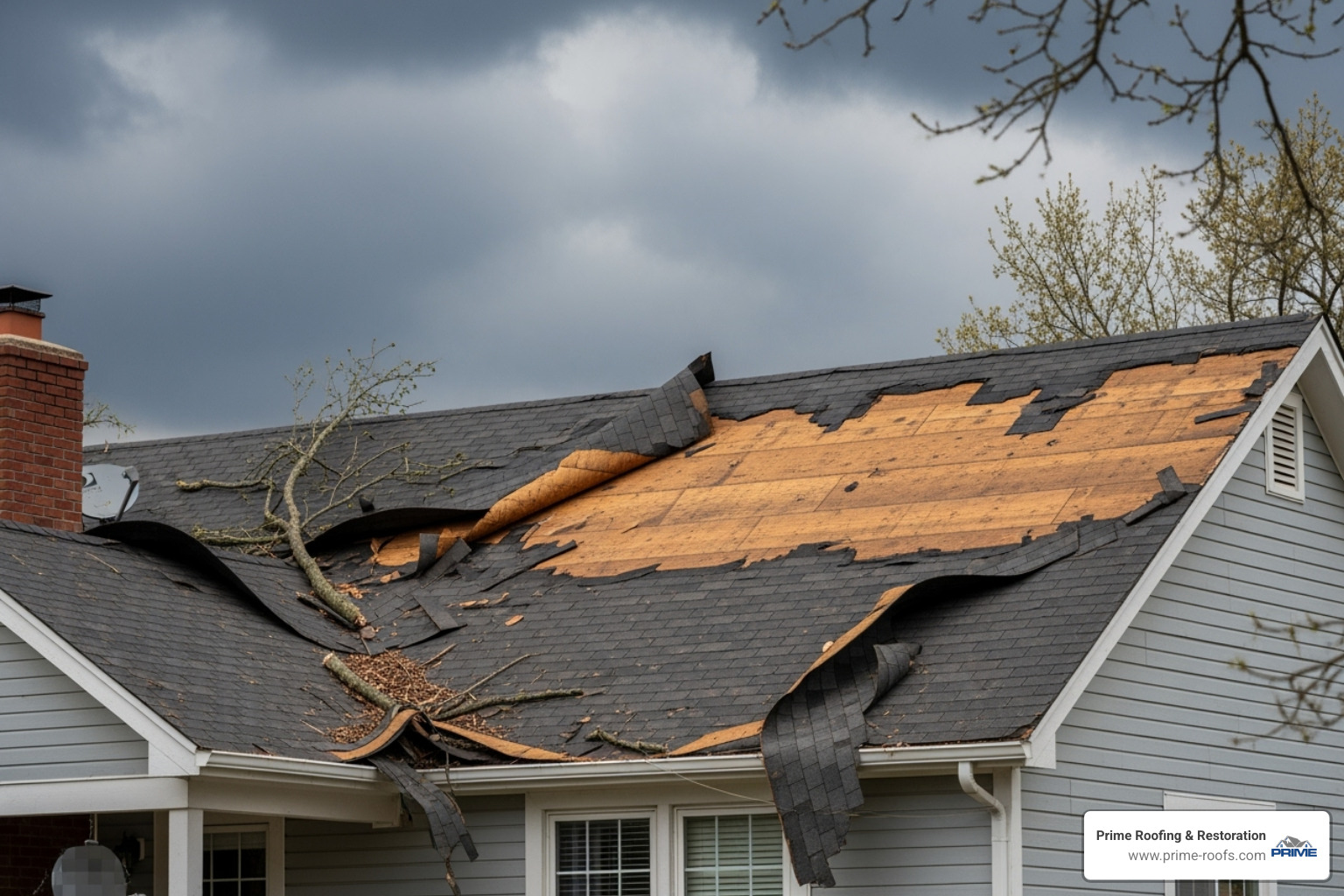
If your existing roof has suffered significant storm damage from wind or hail, your homeowner’s policy may cover a full replacement. However, the insurance claims process can be confusing and adversarial. Partnering with an experienced, reputable roofing contractor is invaluable. A trustworthy roofer will act as your advocate.
The process should look like this:
- Initial Damage Assessment: Your roofer will perform a thorough inspection, documenting all storm-related damage with detailed photos and notes.
- Meeting the Adjuster: The roofer should be present when the insurance adjuster visits your property. They can point out damage the adjuster might otherwise miss and ensure the scope of damage is accurately assessed using the same terminology and software that adjusters use.
- Understanding Your Policy: A good roofer can help you understand the difference between Replacement Cost Value (RCV) and Actual Cash Value (ACV) policies. An RCV policy covers the full cost to replace your roof, while an ACV policy only pays for the depreciated value of your old roof. Your roofer will provide a detailed estimate that aligns with your policy’s requirements to ensure a fair settlement.
If you suspect you have storm damage or have questions about filing a claim, call us at (205) 623-0151 for an honest assessment and expert guidance.
Choosing the Right Contractor for Your Home Roof Installation
The quality, durability, and ultimate performance of your new roof are only as good as the contractor who installs it. You can choose the most expensive, advanced materials on the market, but if they are installed improperly, the roof will fail. Choosing a skilled, reputable, and professional contractor is the single most important decision you will make in the entire home roof installation process. A great contractor not only ensures your investment is protected but also provides a smooth, stress-free experience from start to finish.
Key Credentials to Verify: The Non-Negotiables
Before you even consider signing a contract, you must verify these critical credentials. A failure in any of these areas is a major red flag.
- License and Insurance: This is paramount. Always confirm the contractor holds a valid license from the state of Alabama. Crucially, ask for a certificate of insurance that proves they carry both general liability (to cover any damage to your property) and workers’ compensation insurance. Workers’ comp is vital, as it protects you from being sued if a worker is injured on your property. A Licensed Roof Contractor who is fully insured demonstrates professionalism and protects your financial well-being.
- Manufacturer Certifications: Top-tier contractors pursue certifications from leading manufacturers (e.g., GAF Master Elite®, Owens Corning Platinum Preferred). These are not easy to obtain. They require the contractor to prove financial stability, carry proper insurance, have a proven reputation, and undergo continuous factory training. This status allows them to offer enhanced, exclusive warranties that cover both materials and workmanship, providing you with superior protection.
- Deep Local Experience: A contractor with deep roots in Alabama understands our unique climate challenges. They know which materials and installation techniques stand up to the brutal summer sun, high humidity, and hurricane-force winds. They have established relationships with local suppliers and are familiar with the specific requirements of local building code inspectors in communities like Alabaster, AL.
- Verifiable Reputation: Don’t just take their word for it. Check online reviews on Google, the Better Business Bureau (BBB), and other third-party sites. Ask for a list of local references—and actually call them. A strong, consistent track record of satisfied customers is the most powerful indicator of reliability and quality.
Critical Questions to Ask Your Potential Roofer
A professional roofer will welcome your questions and provide clear, confident answers. Be wary of any contractor who is evasive or tries to pressure you. Here are the essential questions to ask:
- What is your full company name, physical address, and phone number?
- Can you provide me with a copy of your state license and insurance certificates?
- Are you certified by any manufacturers? If so, which ones?
- Will you be using your own employees or subcontractors for the installation?
- Who will be the on-site project manager and my main point of contact?
- What specific steps will you take to protect my landscaping and property during the project?
- What warranties do you offer on your workmanship, and what does the material warranty cover?
- How do you handle unexpected issues, such as the discovery of rotted decking?
- What is your process for cleanup, and how do you ensure all debris (especially nails) is removed?
- Will you provide a lien waiver upon final payment, confirming that your suppliers and crew have been paid?
- Do you offer financing options?
At Prime Roofing & Restoration, we believe in complete transparency. We are proud to be a permanent part of the local community.
Our Location:
Prime Roofing & Restoration
106 Whippoorwill Ln
Alabaster, AL 35007
(205) 623-0151
Long-Term Value: Maintenance, Warranties, and Cost Benefits
A new roof is a significant long-term investment in your home’s safety and value. To realize the full benefit of that investment, it’s crucial to understand the warranty that protects it, the simple maintenance that extends its life, and the financial returns it provides over time. A proactive approach ensures your roof performs optimally for its entire expected lifespan.
Understanding Your Roof Warranty: Your Protection Plan
After your home roof installation is complete, you should receive two distinct warranties. It’s vital to know the difference:
- Material Warranty: This comes directly from the manufacturer and covers defects in the roofing materials themselves (e.g., shingles, metal panels). These warranties can range from 20 years to a “lifetime” (which is often prorated). A key feature to look for is a non-prorated period. During this initial period (often 10-20 years), the manufacturer will cover 100% of the cost of defective materials. After that, the coverage amount decreases over time.
- Workmanship Warranty: This is provided by your contractor and covers defects related to the installation itself. This is arguably the more important warranty, as most roof failures are due to installation errors, not material defects. A reputable contractor will stand behind their work with a solid workmanship warranty of at least 5-10 years, with some offering even longer terms.
The Gold Standard: Enhanced System Warranties
When you hire a manufacturer-certified contractor (like a GAF Master Elite®), you gain access to enhanced system warranties. These premium warranties, such as GAF’s Golden Pledge®, cover both materials and workmanship under a single policy, backed directly by the manufacturer. This means if an installation error causes a leak 15 years down the road, the manufacturer—not just the contractor—guarantees the repair. Also, ask if your warranties are transferable to the next homeowner. A transferable warranty is a powerful selling point that can increase your home’s resale value.
Essential Roof Maintenance to Maximize Lifespan
While modern roofs are designed to be low-maintenance, a small amount of proactive care can prevent minor issues from escalating into major, expensive problems. Here is a simple seasonal checklist:
- Twice a Year (Spring and Fall): Gutter Cleaning. Clogged gutters are a roof’s enemy. When water can’t drain, it backs up, seeps under shingles, and can rot your fascia boards and roof decking. Ensure your gutters and downspouts are clear of leaves and debris.
- After Major Storms: Visual Inspection. From the safety of the ground, walk around your house and look for any obvious signs of damage. Are any shingles missing, cracked, or lifted? Are there dents on metal panels or vents? If you see anything concerning, call a professional for a closer look.
- Annually: Debris Removal and Surface Check. Gently remove any accumulated leaves, pine needles, or branches from the roof surface. Trapped debris holds moisture and can promote algae or moss growth. While you’re at it, look for any dark streaks (algae), which can be cleaned, or excessive granule loss in your gutters, which can signal that shingles are nearing the end of their life.
While these visual checks are helpful, scheduling an annual professional inspection is the smartest way to protect your investment. A trained eye can spot subtle issues like deteriorating sealant around pipe collars or loose flashing that an untrained homeowner would miss, ensuring your roof performs at its best for decades.
Cost vs. Value: A Proven Return on Investment
According to the respected Remodeling Magazine’s Cost vs. Value Report, a roof replacement is one of the smartest home improvement projects for recouping your investment. For the South Atlantic region, homeowners can expect to recover a significant portion of the cost of a new asphalt or metal roof upon resale. This, combined with the potential for lower insurance premiums and monthly energy savings, makes a new roof not just an expense, but a sound financial decision.
Your Partner for a Secure and Lasting Roof
Your roof does far more than just keep out the rain—it is the guardian of your home, protecting your family, your possessions, and your peace of mind against Alabama’s beautiful but often unpredictable weather. A professional home roof installation is a foundational investment in your home’s security and long-term value. By choosing the right storm-ready materials, insisting on a meticulous installation process, and selecting a qualified, local contractor, you ensure a successful outcome that will stand the test of time.
At Prime Roofing & Restoration, we are more than just a roofing company; we are your neighbors, proudly based in Alabaster, Alabama. We are committed to building lasting relationships with every homeowner we serve by delivering unparalleled craftsmanship and transparent communication. Our licensed and certified experts use only the highest quality materials and are available 24/7 for emergency services because we know that peace of mind doesn’t keep business hours. We are here to protect your home and family as if they were our own.
We proudly serve homeowners throughout the greater Birmingham area, including Alabaster, Pelham, Helena, Hoover, Chelsea, and beyond. If you’re ready to invest in your home’s future with a roof built to last, we invite you to experience the Prime difference.
Contact us today for a free, no-obligation estimate and a comprehensive consultation. You can also explore our work and find trusted roofers near you by visiting our website. Let’s work together to give your home the superior protection it deserves.