
Why Metal Roof Leaks Happen and How to Fix Them
Metal roofs are renowned for their durability, often lasting 50 years or more. However, even these robust systems can develop leaks over time. If you notice a drip, act quickly—small leaks can lead to rotted framing, damaged insulation, and mold. For fast help or a pro opinion, work with trusted roofing experts in Alabama. This guide covers the essentials of leaky metal roof repair: how to identify common causes, what tools you need, step-by-step DIY fixes, and clear guidance on when to call an expert. For complex issues or a professional assessment, the expert roofers at Prime Roofing & Restoration are ready to help keep your structure safe and dry.
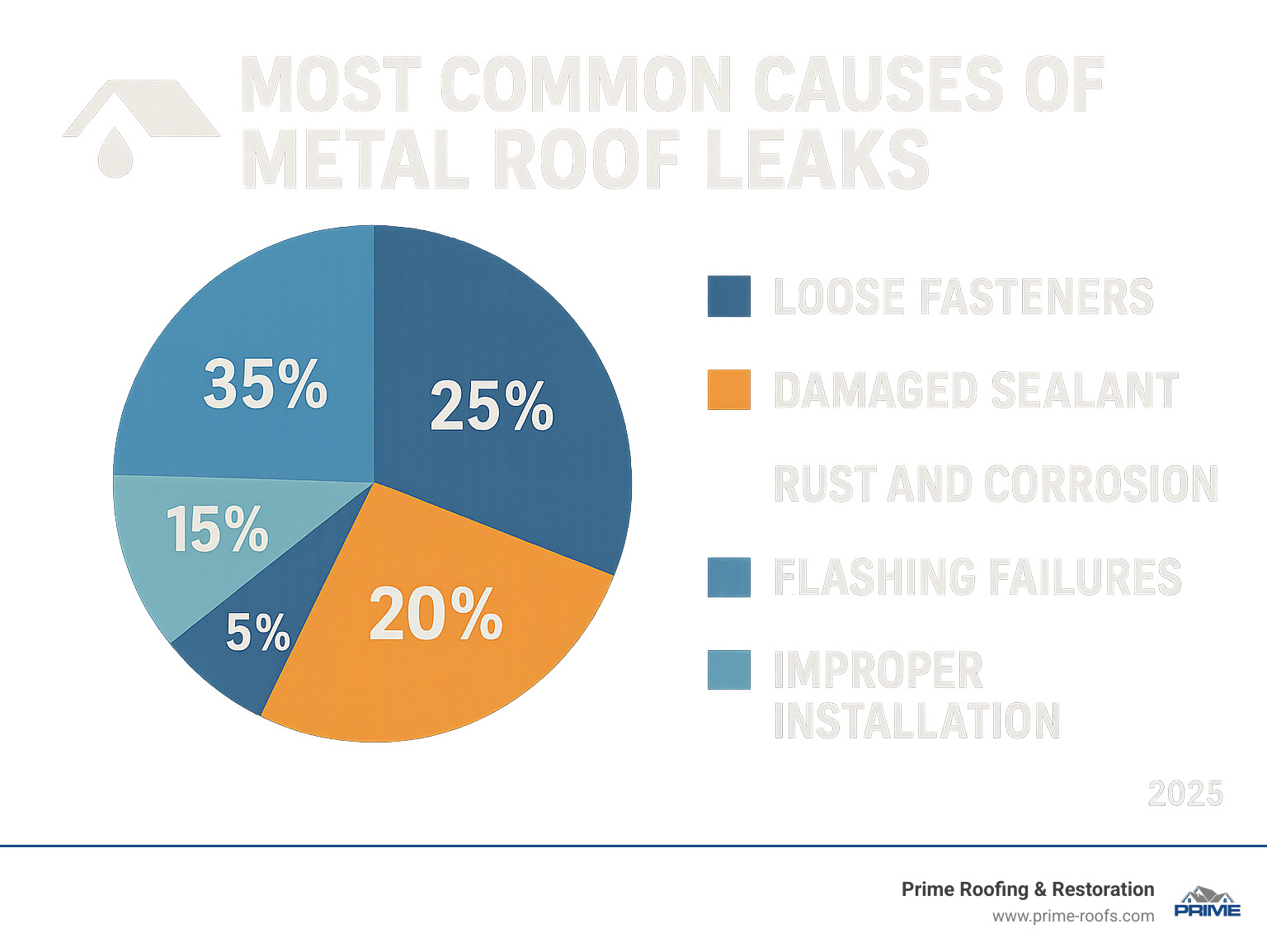
Why Metal Roofs Leak: 5 Common Culprits
Even the toughest metal roofs can fall victim to wear and tear. Most leaks stem from a handful of predictable issues, many of which develop gradually as your roof ages and weathers the elements.
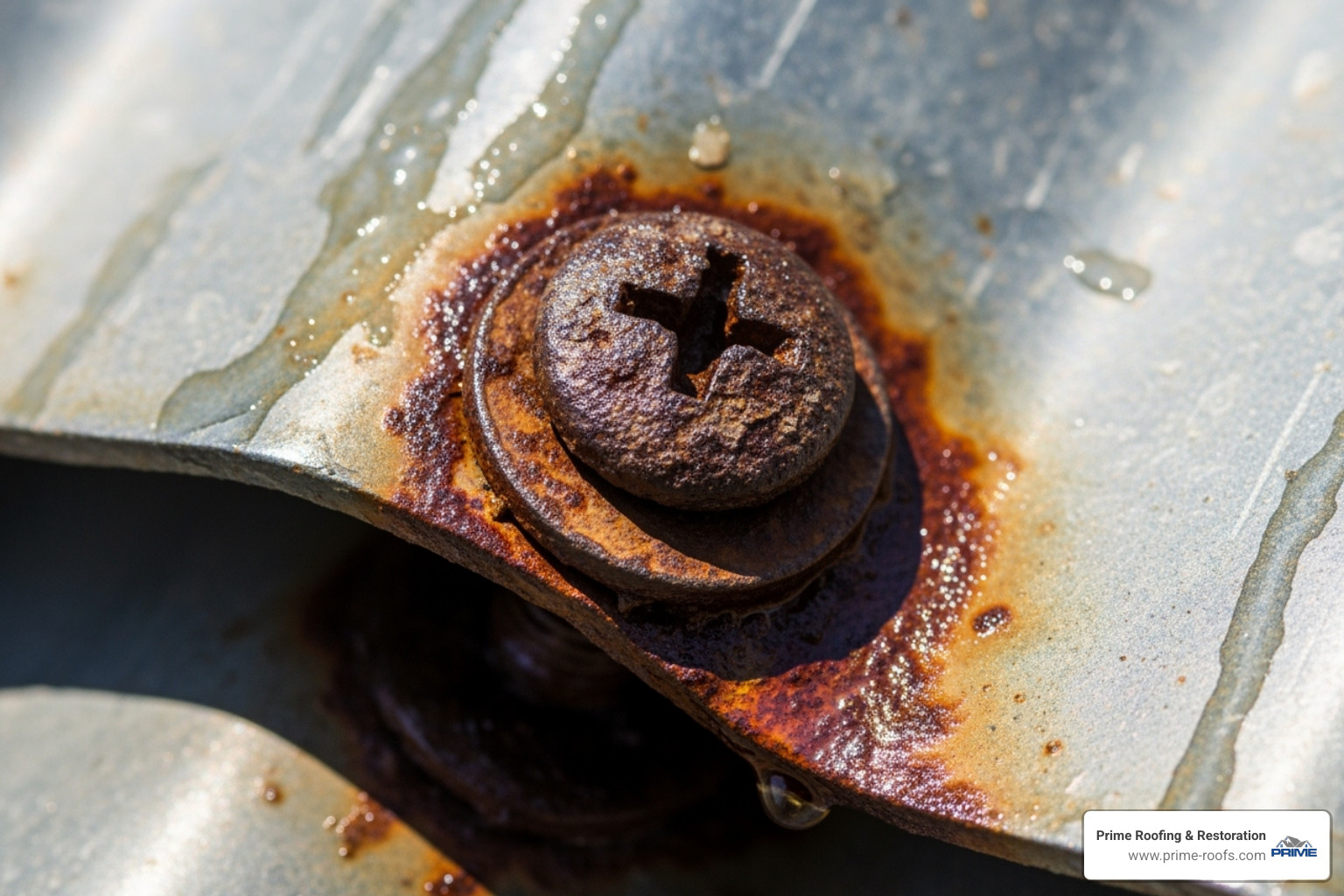
- Loose Fasteners: The screws holding your roof together have rubber washers that create a watertight seal. Over time, sun exposure and temperature changes can cause these washers to crack and fail. The metal’s natural expansion and contraction can also cause screws to back out, creating a direct path for water.
- Damaged Sealant: The caulk and sealant around seams, vents, and flashing are critical barriers. As they age, they can shrink, crack, or pull away, compromising the waterproof seal.
- Rust and Corrosion: When the protective coating on a metal panel wears away, the exposed metal can rust. This is often accelerated by “ponding water”—areas where water collects due to debris or improper drainage.
- Flashing Failures: Flashing is the metal trim that seals joints around chimneys, skylights, and vents. If it’s installed incorrectly or becomes damaged by wind or debris, it’s a prime spot for leaks.
- Improper Installation: Sometimes, the problem starts from day one. Misaligned panels, over-tightened screws, or poorly sealed seams can create vulnerabilities that lead to leaks down the road.
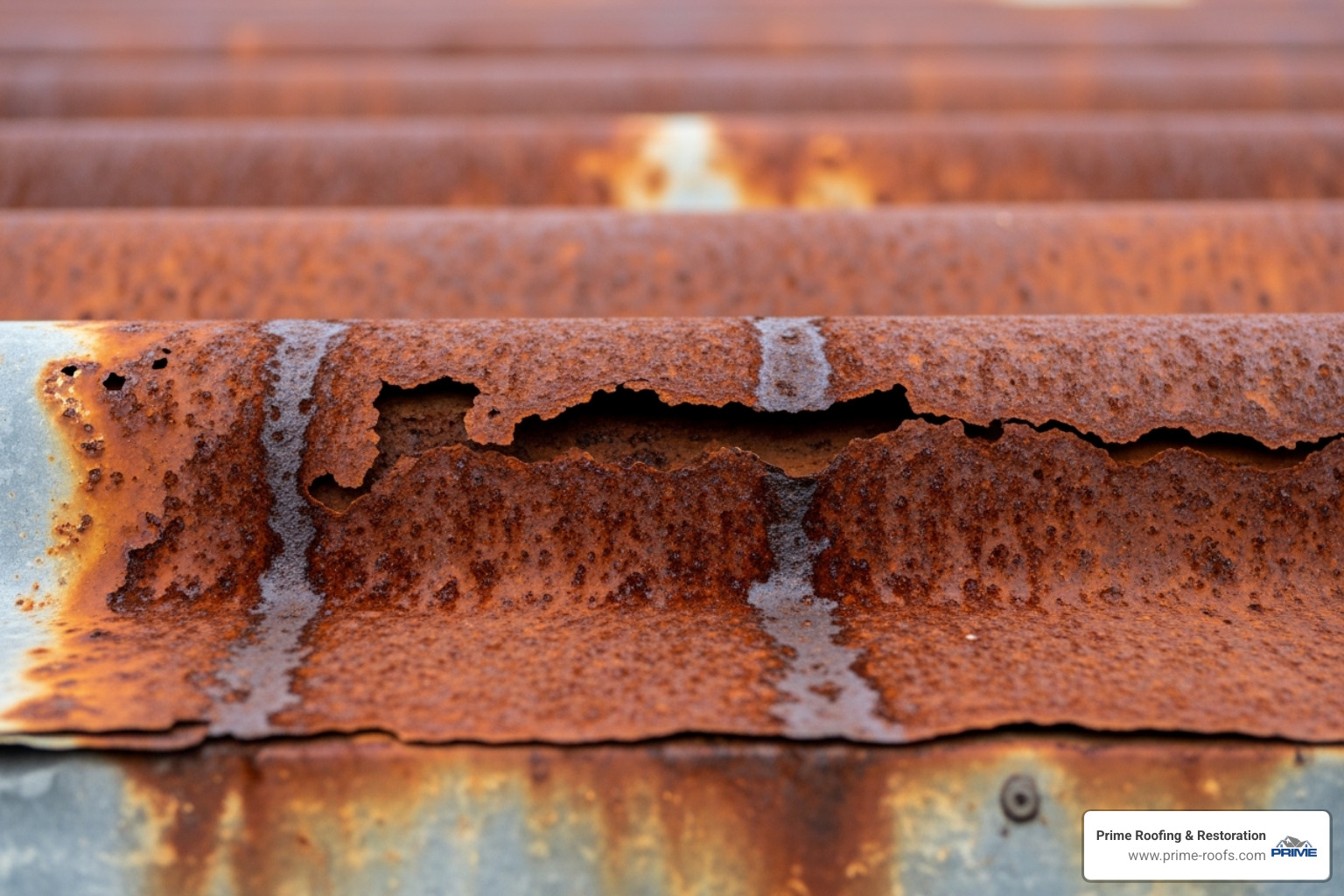
Despite these potential issues, the advantages are clear, as outlined in the Benefits of Metal Roofing for Alabama Homes. Understanding these vulnerabilities is key to proactive maintenance. After a severe weather event, it’s especially important to know what to do after a storm damages your roof to prevent small issues from becoming major ones.
Your DIY Toolkit: Essential Tools & Materials for Metal Roof Repair
Before you climb that ladder, gathering the right tools and materials will make your repair safer and more effective. Safety is non-negotiable—metal roofs can be extremely slippery, even when dry.

Essential Tools:
- Safety Gear: Non-slip shoes, work gloves, and safety glasses are a must. For steep roofs, use a safety harness.
- Sturdy Ladder: Ensure it’s placed on level ground and extends above the roofline.
- Wire Brush or Sandpaper: To clean away rust, debris, and old sealant.
- Caulking Gun: For precise application of sealant.
- Drill or Screwdriver: To tighten or replace fasteners.
- Putty Knife: To spread sealant evenly.
Essential Materials:
- Metal-Compatible Sealant: Use a high-quality urethane or silicone-based sealant designed for metal roofs. This flexibility is key, as explained in this guide to Choosing a Metal Roof Sealant.
- Replacement Screws: Get self-tapping screws with new, oversized neoprene washers.
- Roofing Tape (Butyl Tape): Excellent for sealing seams and small punctures.
- Metal Patching Material: For larger holes, use galvanized metal or a dedicated roofing patch.
- Rust-Inhibiting Primer: A crucial step for treating any corrosion before sealing or patching.
A Step-by-Step Guide to Leaky Metal Roof Repair
With your tools ready, it’s time to tackle the repair. Water can travel, so the leak’s entry point on the roof may not be directly above the water stain inside. Always prioritize safety by working on a dry roof and using proper safety gear. If you feel unsafe, it’s always best to call for professional roof repair services.
1. Find and Prep the Area:
- Locate the Leak: Start inside, then inspect the corresponding area on the roof for loose screws, cracked sealant, rust, or damaged flashing.
- Clean the Surface: Use a wire brush to remove all rust, dirt, and old sealant from the problem area. The surface must be completely clean and dry for the new sealant to adhere properly.
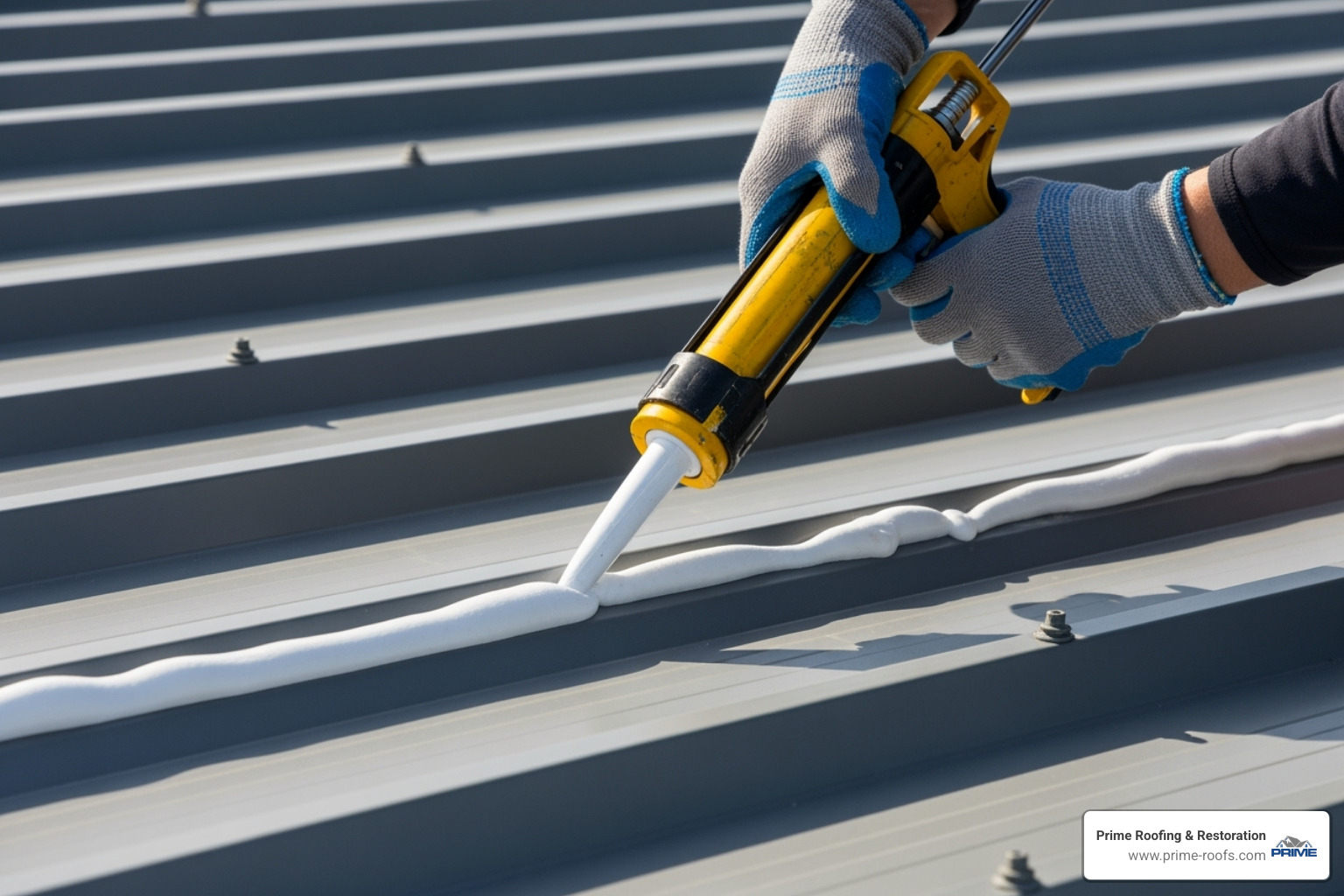
2. Fix the Leak:
- For Loose Fasteners & Small Holes: Tighten any loose screws, but don’t overtighten and crush the washer. If a screw is rusted or its washer is cracked, replace it with a new one. Apply a generous dab of metal roof sealant over the fastener head or small hole and smooth it out.
- For Seam Problems: Scrape away all old, failing sealant. Apply a new, continuous bead of high-quality sealant along the seam. For extra durability, you can embed a strip of butyl tape or polyester fabric into the sealant.
- For Rusted Areas: Vigorously scrub the area with a wire brush to remove all rust down to the bare metal. Apply a coat of rust-inhibiting primer. For larger holes, cut a metal patch that generously overlaps the damaged area, bed it in roofing cement or sealant, and seal all edges thoroughly.
3. Allow to Cure:
Let the sealant or cement cure completely according to the manufacturer’s instructions before the next rain. Patience here prevents having to do the job twice.
DIY vs. Professional Repair: When to Call the Experts
While many small repairs are manageable, knowing your limits is crucial. A DIY fix gone wrong can lead to more significant damage. Sometimes, what appears to be a simple leak is a symptom of a larger, more complex problem that requires a professional diagnosis.
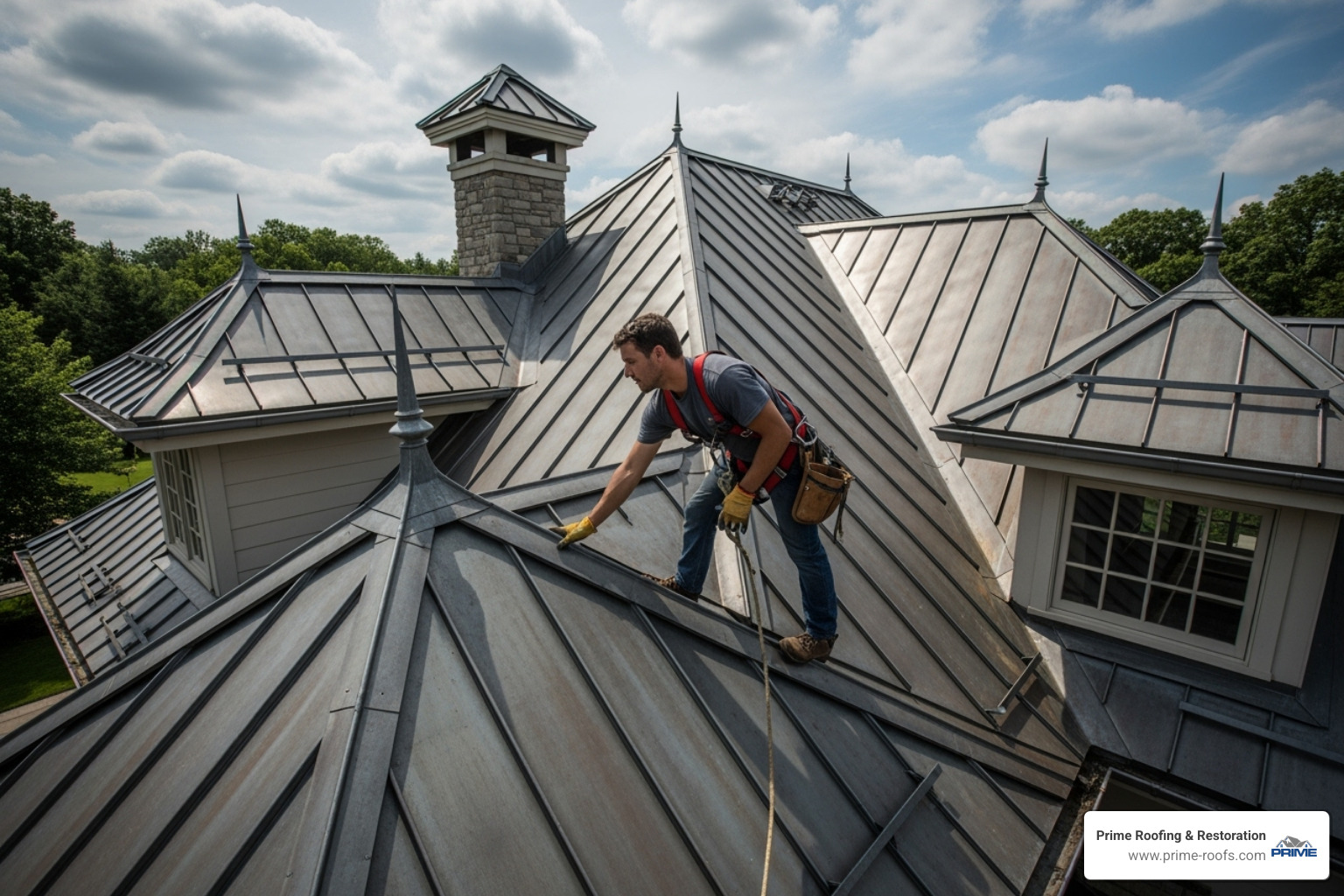
Call a professional roofer if you encounter:
- Multiple Leak Sources: This often points to a systemic issue, not just isolated problems.
- Safety Risks: Don’t risk injury on a steep, high, or slippery roof. Professionals have the right safety equipment and training.
- Signs of Structural Damage: If you see sagging rooflines or feel soft spots on the roof deck, call for an inspection immediately.
- Warranty Concerns: A DIY repair could void your roof’s warranty. Check your paperwork before starting.
- Persistent Leaks: If a leak returns after you’ve tried to fix it, it’s time for an expert to find the true source.
The True Cost of Leaky Metal Roof Repair
A simple DIY repair might only cost $50 to $200 in materials. However, a professional repair, which typically ranges from $300 to $1,000+, offers significant value. Professionals use commercial-grade materials, provide expert diagnosis to fix the root cause, and often guarantee their work. This can save you money in the long run by ensuring the repair is done right the first time.
If you’re in the Alabaster area and notice any of these red flags, it’s time to call a professional. The experienced team at Prime Roofing & Restoration understands the unique challenges of Alabama’s climate and can provide comprehensive solutions for complex roofing issues.
Prime Roofing & Restoration
Address: 5 Brown Cir, Alabaster, AL 35007
Phone: (205) 661-8190
For residents in the area seeking reliable roofing expertise, connect with Your Local Roofers in Alabaster, AL for a comprehensive evaluation.
Preventative Maintenance: How to Avoid Future Leaks
An ounce of prevention is worth a pound of cure—especially with roofing. Keep your metal roof watertight and long-lived with simple, proactive upkeep:
- Conduct regular inspections twice a year (spring and fall) and after major storms. Look for loose fasteners, cracked sealants, rust, or damaged flashing.
- Keep gutters clean so water can drain freely at the eaves.
- Remove debris (leaves, pine needles, branches) to prevent trapped moisture and corrosion.
- Trim overhanging branches to avoid coating damage and punctures from falling limbs.
- Check all sealants around vents, pipes, chimneys, and seams; clean and reapply as needed.
Catching issues early is the most cost-effective way to avoid future leaky metal roof repair. If you’re unsure what to look for, consider scheduling a professional evaluation from a licensed roofer.
Your Partner in Protecting Your Property
A leaky metal roof doesn’t have to be a disaster. By understanding the common causes, having the right tools, and knowing when to call for help, you can make smart decisions to protect your home. For small fixes like a loose screw or a minor seam issue, a DIY approach can be a satisfying and cost-effective solution.
However, it’s just as important to recognize when a problem is beyond a simple fix. For complex leaks, extensive damage, or any repair that feels unsafe, the expertise of a professional is invaluable. At Prime Roofing & Restoration, we’ve built our reputation on providing reliable solutions for homeowners across Alabama. We’re here to offer peace of mind, whether that means giving advice, performing a thorough inspection, or handling a complete repair from start to finish.
We are committed to being your trusted partner in keeping your home safe and dry for years to come. If you’re facing a roof leak or want to ensure your roof is in top condition, don’t hesitate to reach out.
Contact Us for a Free Estimate
DIY vs. Professional Repair: Costs, Risks, and When to Call the Experts
Many small metal roof leaks can be handled by a capable DIYer, but some problems demand professional expertise. Call a pro if you face multiple leak sources, safety risks (steep or slippery roofs), suspected structural damage, warranty concerns, or a leak that keeps returning.
- Typical DIY material cost: $50–$200 (sealant, replacement screws, patching supplies)
- Typical professional localized repair: $300–$1,000+
Pros bring commercial-grade materials, proper diagnostics, safety equipment, and warranties that protect your investment—often saving money over time by fixing root causes the first time.
Why Metal Roof Leaks Happen and How to Fix Them
Leaky metal roof repair starts with the usual suspects: loose fasteners, deteriorated sealant, rust/corrosion, damaged flashing, and installation errors. Tackle small issues quickly to prevent costly damage.
Quick solutions for common leaks:
- Loose fasteners – tighten or replace screws and neoprene washers
- Small holes – clean thoroughly and apply high-quality metal roof sealant
- Seam problems – remove old sealant, apply butyl tape, and reseal
- Rust spots – wire-brush clean, apply rust-inhibiting primer, then patch
- Flashing issues – repair or replace damaged flashing around penetrations
If the leak source isn’t obvious, or there are multiple trouble spots, the expert roofers at Prime Roofing & Restoration can perform a thorough diagnosis and repair.
Why Metal Roofs Leak: 5 Common Culprits
Even top-tier metal roofs can leak as components age or weather. The most common causes are:
- Loose fasteners and worn neoprene washers
- Cracked, shrunken, or pulled-away sealants at seams and penetrations
- Rust/corrosion where protective coatings have worn
- Flashing failures at vents, chimneys, skylights, and pipe boots
- Installation errors that lead to gaps or misaligned seams
Metal systems still offer major advantages; see the Benefits of Metal Roofing for Alabama Homes. After severe weather, inspect promptly and follow best practices for what to do after a storm damages your roof.
Your DIY Toolkit: Essential Tools & Materials for Metal Roof Repair
For the full list of gear and materials, see the earlier toolkit section. At minimum, use non-slip shoes, gloves, eye protection, a stable ladder, wire brush/sandpaper, a caulking gun, drill/driver, and metal snips. Stock metal-compatible sealant, replacement screws with neoprene washers, butyl tape, rust-inhibiting primer, and patch metal. For product selection tips, review Choosing a Metal Roof Sealant.
A Step-by-Step Guide to Leaky Metal Roof Repair
Work only in dry conditions and use proper safety gear. Trace leaks from interior stains to the roof area, then:
- Clean and prep: Remove rust, dirt, and failed sealant so new materials bond.
- Minor holes/loose fasteners: Tighten or replace screws; seal and smooth.
- Seams: Remove old sealant; apply butyl tape if separated; reseal continuously.
- Rusted areas: Wire-brush to bare metal, prime, then patch and seal edges.
- Allow proper cure time per the manufacturer before the next rain.
If the leak returns or the roof has multiple issues, consider a professional inspection and repair plan.
DIY vs. Professional Repair: Costs, Risks, and When to Call the Experts
Know your limits. Call a professional if you see widespread corrosion, multiple leaks, structural concerns, or if the roof’s pitch/height makes it unsafe to access. Typical costs: DIY materials $50–$200; localized professional repairs $300–$1,000+. The right pro will diagnose root causes and stand behind the work—often the best long-term value.
Why Metal Roof Leaks Happen and How to Fix Them
Metal roofs commonly leak at fasteners, seams, flashing, and rusted spots. Small, well-prepped repairs with the correct sealant and patches can stop most drips. When the source isn’t obvious or issues are widespread, book a professional assessment with the trusted team at Prime Roofing & Restoration.
Why Metal Roofs Leak: 5 Common Culprits
Despite excellent life expectancy, leaks usually trace back to a few areas: fasteners/washer failure, cracked or shrunken sealants, damaged flashing at penetrations, rust where coatings wore thin, and weather- or install-related seam issues. Proactive checks after severe weather help catch problems early. Learn more about metal roofing’s advantages in the Benefits of Metal Roofing for Alabama Homes and see what to do next in What to do after a storm damages your roof?
Your DIY Toolkit: Essential Tools & Materials for Metal Roof Repair
Safety first: non-slip footwear, gloves, eye protection, and a secure ladder. For effective repairs, use a wire brush/sandpaper, caulking gun, drill/driver, metal snips, and a putty knife. Materials include metal-compatible sealant, self-tapping screws with neoprene washers, butyl tape, rust-inhibiting primer, and patch metal. See product advice in Choosing a Metal Roof Sealant.
A Step-by-Step Guide to Leaky Metal Roof Repair
- Leak detection: trace interior stains to roof penetrations or seams; use a careful hose test if needed.
- Surface prep: clean to bare metal where rusted and remove failed sealants.
- Fixes: tighten/replace fasteners; reseal seams (add butyl tape if separated); prime rusted metal and apply a patch with sealed edges.
- Cure: follow manufacturer cure times before exposure to rain.
If conditions are unsafe or the leak persists, consult a pro for a comprehensive solution.
DIY vs. Professional Repair: Costs, Risks, and When to Call the Experts
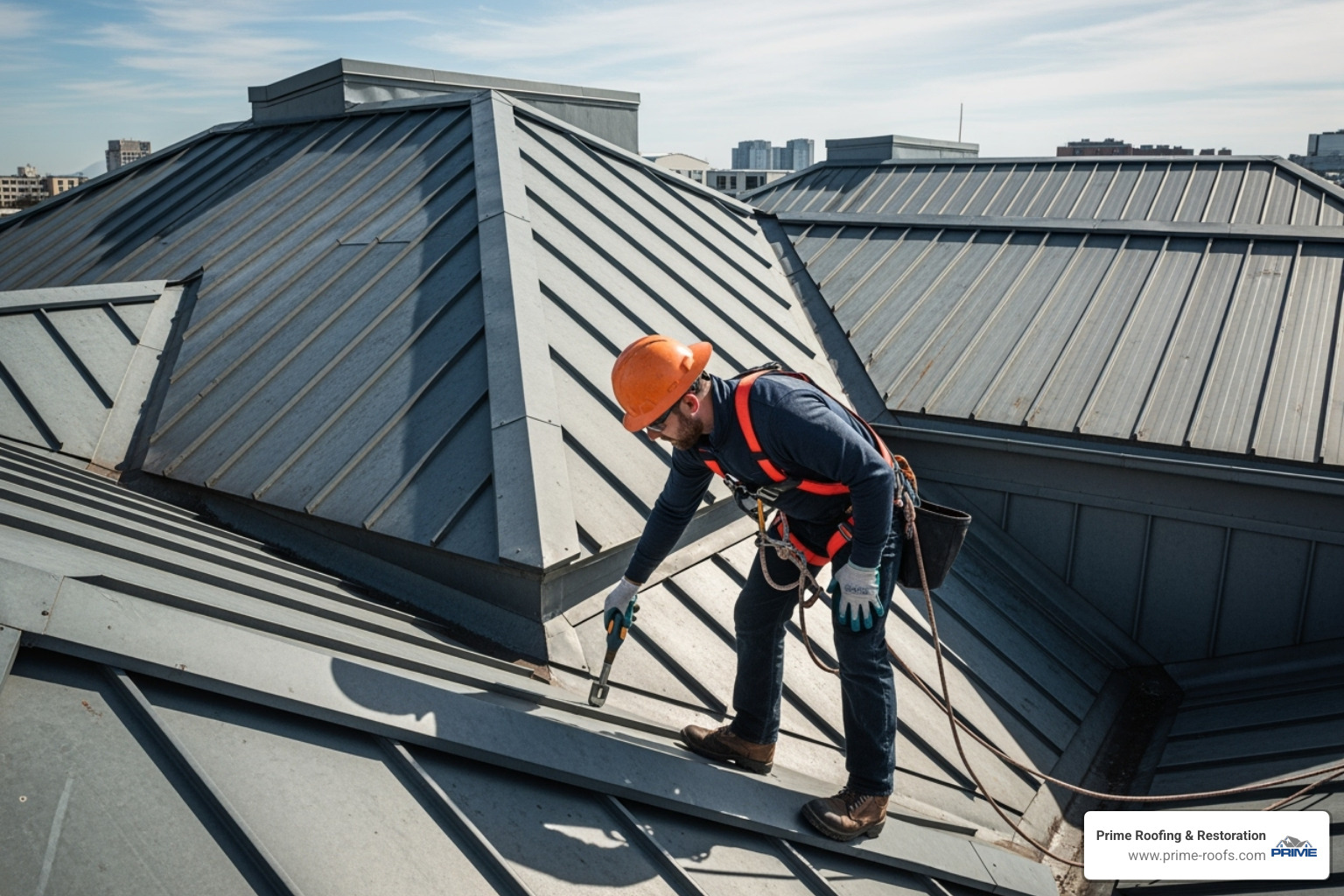
If you’re seeing multiple leak points, widespread corrosion, or signs of structural damage—or if your roof is steep/slippery—hire a licensed roofer. Expect $50–$200 for DIY materials and $300–$1,000+ for professional localized repairs, with higher costs for large or complex projects. Pros provide accurate diagnosis, safe access, quality materials, and warranties that can extend roof life and prevent repeat problems.
Preventative Maintenance: How to Avoid Future Leaks
Schedule semiannual roof checks and post-storm inspections. Keep gutters clear, remove debris, trim overhanging branches, and monitor/refresh sealants at seams and penetrations. Addressing loose fasteners, minor rust, and cracked sealants early is the most cost-effective way to avoid future leaks.
Your Partner in Protecting Your Property
A leaky metal roof doesn’t have to become a disaster. With the right tools and a cautious approach, many small leaks are DIY-friendly; for complex issues or safety concerns, call the pros. Prime Roofing & Restoration provides reliable guidance, thorough inspections, and long-lasting repairs to protect your home.