
Why Understanding Alabaster’s Storm History Matters for Homeowners
Alabaster storm damage is a significant and recurring concern for every property owner in our Central Alabama community. Situated squarely in the notorious “Dixie Alley,” a region known for its violent and often unpredictable severe weather, Alabaster experiences meteorological threats at an alarming rate. The statistics from the past year alone paint a stark picture: our city endured 32 severe weather warnings and a staggering 74 radar-detected hail events. This relentless barrage of storms means that for Alabaster residents, comprehensive preparation and a plan for rapid response are not just advisable—they are essential for protecting your home and family. From powerful supercell thunderstorms that spawn tornadoes to hailstorms capable of causing widespread destruction, Alabaster’s weather history underscores the critical need for every homeowner to have a robust strategy for storm damage restoration and recovery.
This isn’t just about dealing with the occasional storm; it’s about building resilience in a high-risk environment. The constant threat of high winds, large hail, and tornadic activity can take a cumulative toll on a home’s exterior, particularly the roof, which serves as the primary shield against the elements. Understanding this pattern of risk is the first step toward making informed, proactive decisions about home protection, choosing the right insurance coverage, and, most importantly, selecting experienced local contractors who can provide immediate and effective assistance when disaster strikes.
Key Facts About Alabaster Storm Damage:
- 32 severe weather warnings issued in the last 12 months, indicating a frequent potential for damaging conditions.
- 74 distinct hail events detected by advanced Doppler radar systems, highlighting the persistent threat to roofs, vehicles, and siding.
- 5 confirmed hail reports from trained storm spotters on the ground, verifying the severity of these events.
- Destructive wind gusts that frequently reach and exceed 60-70 mph, powerful enough to rip shingles from roofs and topple large trees.
- Hail sizes that commonly range from penny-sized (0.75 inches) to golf ball-sized (1.75 inches), each capable of inflicting different but serious types of damage.
My name is Bill Spencer, and I am the owner of Prime Roofing & Restoration. For over five years, my dedicated team and I have been on the front lines, helping Alabaster families steer the chaotic aftermath of severe weather. We have witnessed how a combination of smart preparation and a swift, professional response can be the deciding factor in preventing minor issues from escalating into catastrophic failures, ultimately saving homeowners thousands of dollars in additional damages and emotional distress. We are not just a business; we are part of this community, and we are committed to helping our neighbors protect their most valuable asset—their home.
Alabaster’s Weather by the Numbers: A High-Risk Zone for Storms
Living in Alabaster, Alabama, means developing a deep respect for the power of nature and keeping a constant eye on the sky. Our geographical location within “Dixie Alley” makes severe weather a year-round possibility, unlike the more seasonal “Tornado Alley” of the Plains. The local climate, influenced by moisture from the Gulf of Mexico, creates a volatile atmosphere ripe for storm development in almost any month. The numbers from the past year are not just statistics; they represent real-world impacts on our homes and lives. Doppler radar detected 74 separate hail events in or near Alabaster, with 5 of those events confirmed by trained spotters on the ground who reported significant hail sizes. During these storms, wind speeds frequently surged to 60-70 mph, a velocity that is more than capable of lifting and creasing shingles, tearing siding from walls, and turning loose outdoor items into dangerous projectiles.
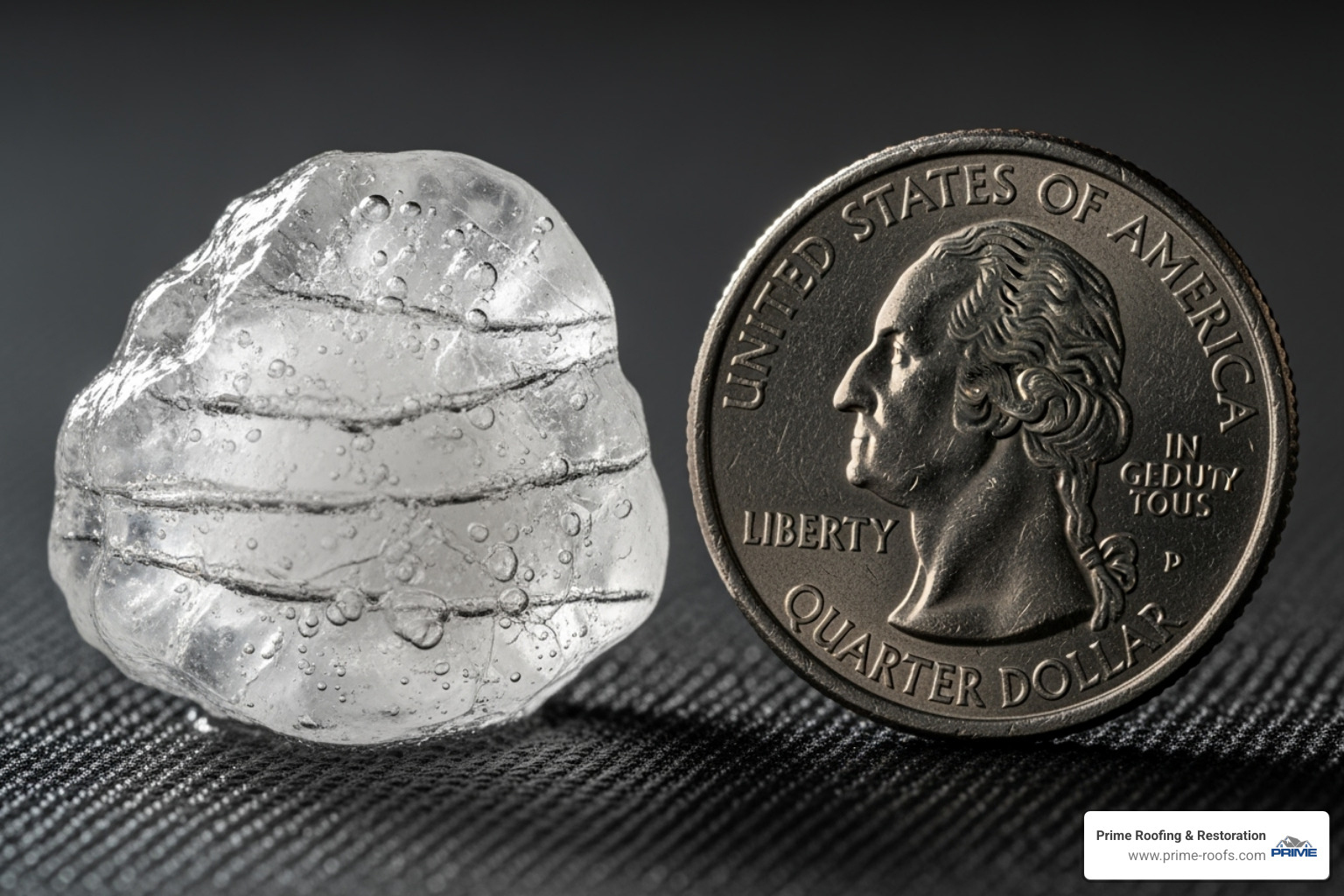
Hail in our region is a frequent and destructive visitor, with sizes commonly ranging from penny-sized to golf ball-sized. Even small hail can cause significant problems. Penny-sized hail, for instance, acts like a sandblaster, stripping away the protective granules from asphalt shingles. This granule loss exposes the underlying asphalt to UV radiation, drastically shortening the roof’s lifespan. Larger hail, from quarter to golf ball size, causes more immediate and obvious damage. It can crack vinyl siding, shatter windows, and leave deep bruises or divots on shingles, compromising your roof’s structural integrity and creating entry points for water. To stay ahead of these threats, we strongly recommend that all residents regularly check the latest severe weather outlooks from the Storm Prediction Center (SPC), a division of NOAA. This knowledge is your first and most powerful line of defense.
Common Storm Types in Alabaster
- Severe Thunderstorms: This is our most frequent weather threat. While many thunderstorms are harmless, a severe thunderstorm is defined by its ability to produce hail of one inch in diameter or larger, winds of 58 mph or higher, or a tornado. These storms can cause significant Alabaster storm damage through straight-line winds, flash flooding from heavy rain, and dangerous lightning.
- Tornadoes: As a city in Dixie Alley, Alabaster is susceptible to tornadoes, which can occur any time of year, including overnight. While less frequent than thunderstorms, they are the most violent and destructive weather phenomena. Even a weak EF-0 or EF-1 tornado can cause substantial damage to homes, snapping trees and creating a path of destruction that requires extensive cleanup and repair.
- Hailstorms: These storms are particularly damaging to property. Hail can ruin a roof, dent vehicles, and destroy siding in a matter of minutes. The damage is often subtle and not visible from the ground, which is why a professional roof inspection is essential after any significant hail event to identify hidden issues before they lead to leaks.
- High-Wind Events: Damaging winds can occur even outside of a classic thunderstorm. Microbursts, for example, are powerful downdrafts of air that can produce straight-line wind damage that is often mistaken for a tornado. These events can peel back roofing materials, damage gutters, and bring down healthy trees.
Understanding Severe Weather Alerts: A Critical Skill
Knowing the difference between a weather watch and a warning is critical for your family’s safety. Misunderstanding these terms can lead to inaction at a crucial moment.
- Watch (e.g., Tornado Watch, Severe Thunderstorm Watch): This means conditions are favorable for severe weather to develop in and near the watch area. It does not mean severe weather is currently happening. A watch is a signal to prepare. Review your family’s emergency plan, check your emergency supplies, and stay tuned to weather updates. This is the time to ensure your phones are charged and you know where to take shelter.
- Warning (e.g., Tornado Warning, Severe Thunderstorm Warning): This means severe weather is happening now, has been spotted by trained observers, or is indicated by Doppler radar. A warning requires immediate action. When a Tornado Warning is issued for your location, it means a tornado is imminent or on the ground. You must take shelter immediately in the safest location possible (a basement, storm cellar, or interior room on the lowest floor). A Severe Thunderstorm Warning means a storm with damaging winds (58+ mph) or large hail (1+ inch) is currently affecting your area. You should move to an interior room away from windows. Staying informed through multiple sources like a NOAA Weather Radio, local news broadcasts, and reliable weather apps is essential for survival.
A History of Impact: Notable Storms in Alabaster
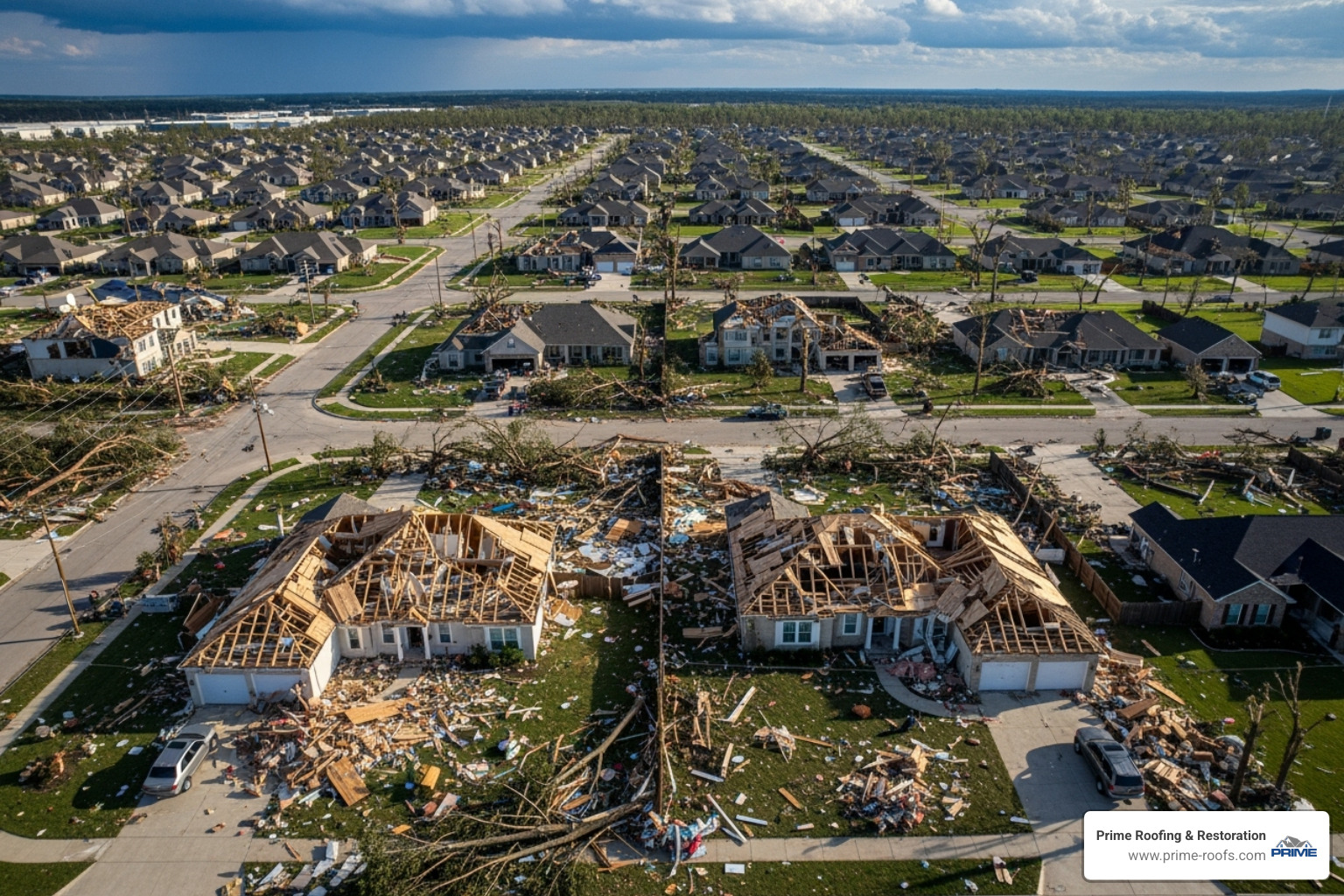
Alabaster’s history is punctuated by significant weather events, each leaving an indelible mark on the community and teaching valuable lessons in preparedness and resilience. Major storms have repeatedly caused widespread power outages, sometimes affecting over 50,000 people across Central Alabama. The aftermath often includes a landscape of downed trees and power lines, blocking critical roadways for days and isolating neighborhoods. These shared experiences have ingrained in our community the vital importance of maintaining emergency supply kits, carefully documenting property damage for insurance claims, and knowing exactly when to call for a professional storm damage assessment. These events are not abstract history; they are a living testament to the forces we must be prepared to face.
The April 15, 2011 EF-0 Tornado: A Wake-Up Call
Many long-time residents vividly remember the EF-0 tornado that struck Alabaster on April 15, 2011. While officially rated as “weak” on the Improved Fujita scale, this event was a powerful demonstration that any tornado possesses destructive potential. In a terrifying span of just 3 minutes, the tornado carved a 1.37-mile-long path of damage, up to 50 yards wide, with peak winds estimated at 70 mph. The primary source of structural damage was not the wind itself, but the dozens of large, mature trees it uprooted. These trees crashed onto homes, crushing roofs, damaging foundations, and leading to prolonged and disruptive power outages. The 2011 tornado served as a stark reminder that even lower-end tornadic events demand our utmost respect and preparation. It highlighted vulnerabilities in our urban forest and emphasized the need for homeowners to regularly assess the health of trees on their property.
Recent Severe Weather Events (2023-2024)
The relentless pattern of severe weather has continued, with recent years bringing their own set of challenges. A significant hail event on May 9, 2024, produced hail large enough to cause concern across the city, sending countless homeowners outside after the storm passed to inspect their roofs and vehicles for dents and bruises. This event led to a surge in calls for inspections and highlighted the widespread nature of hail damage.
Just months earlier, on August 11, 2023, a severe thunderstorm releaseed 70 mph wind gusts that caused considerable tree damage throughout the city. This storm gained local notoriety for famously blowing over and destroying large vendor tents at the annual Alabaster CityFest, a testament to the wind’s power. Beyond that public display, trained spotters reported significant impacts in residential areas. Neighborhoods along Colonial Drive and within the Oak Mountain community saw numerous reports of fallen trees on houses and widespread debris that blocked streets. Areas like the Weatherly and Saddle Lake Farms neighborhoods have been particularly hard-hit in recent years, underscoring the reality that storm damage is not a matter of ‘if’ but ‘when’ for Alabaster residents. Every homeowner must have a clear, actionable plan before the next storm arrives.
Your Post-Storm Action Plan: Safety, Documentation, and Restoration
The moments immediately following a severe storm are often chaotic and overwhelming. Seeing shingles scattered across your yard, finding a new water stain on your ceiling, or dealing with a power outage can make it difficult to know where to even begin. Having a clear, step-by-step action plan is the key to navigating the recovery process safely and effectively, minimizing further Alabaster storm damage and setting the stage for a smooth insurance claim.
Immediate Steps for Homeowner Safety
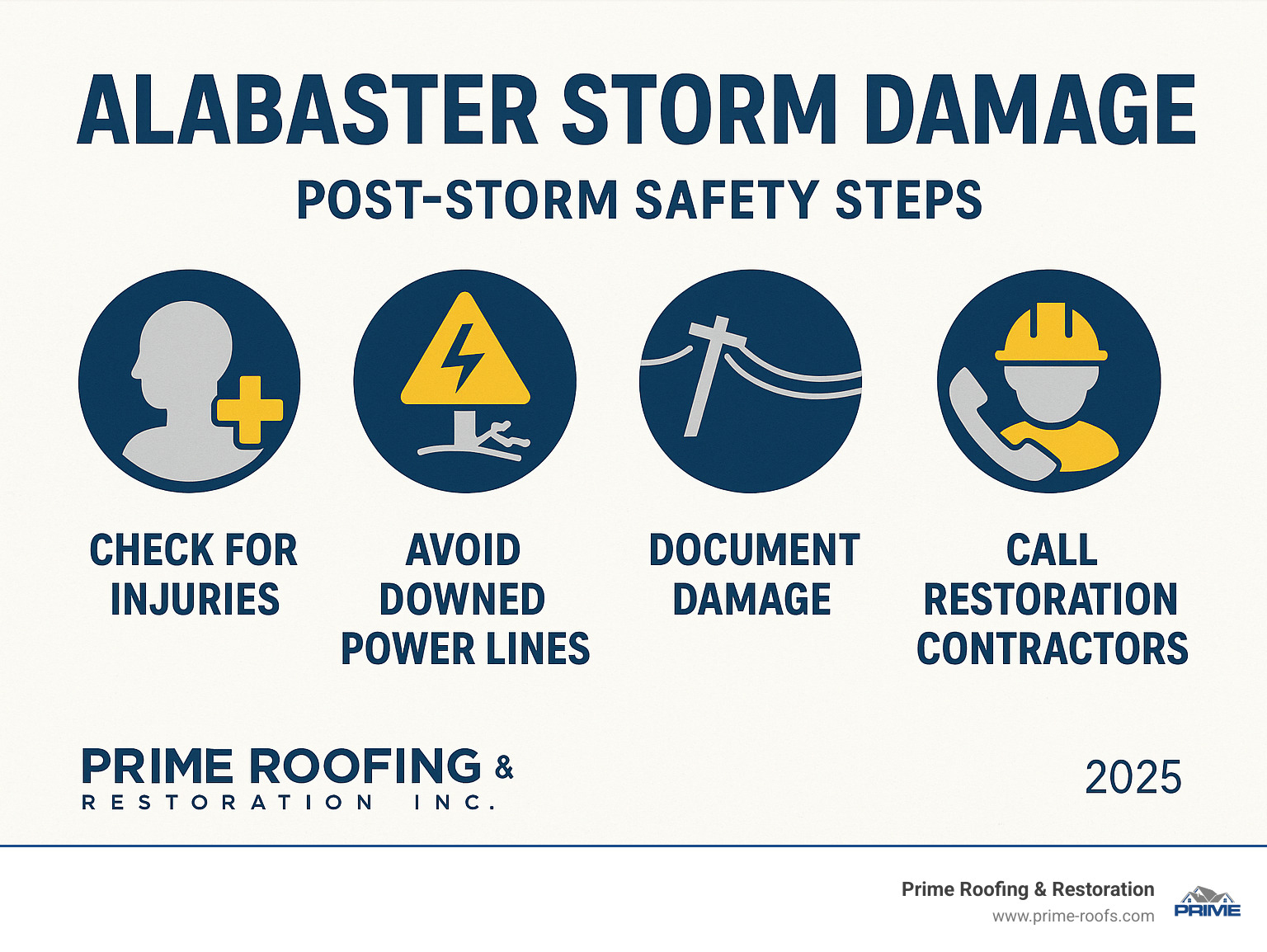
Before you even think about the damage, your absolute top priority is the safety and well-being of your family. Property can be repaired, but lives cannot be replaced. Follow these critical safety steps without exception:
- Check for Injuries: Carefully check on every member of your household. If anyone is injured, administer first aid if you are trained to do so and call 911 for immediate medical help.
- Evacuate if Necessary: Your home’s structural integrity may be compromised. If you see sagging ceilings, cracked foundation walls, or hear unusual creaking or shifting sounds, evacuate everyone immediately. Find a safe place to stay, such as with friends, family, or at a local shelter.
- Avoid All Downed Power Lines: This is a life-or-death rule. Treat every single downed wire as if it is live and energized. Stay at least 30 feet away. Do not go near them, drive over them, or touch anything they are in contact with, such as a metal fence or a puddle of water. Call 911 and your utility provider, Alabama Power, to report the hazard immediately.
- Check for Gas Leaks: A hissing sound or the distinct smell of rotten eggs can indicate a natural gas leak. If you suspect a leak, do not use any electronics, light switches, or lighters. A tiny spark could cause an explosion. Evacuate the house immediately and call your gas company from a safe distance, like a neighbor’s home.
- Stay Calm and Informed: Listen to local authorities and emergency broadcasts for instructions and updates. Wear sturdy, closed-toe shoes and protective gloves to avoid injury from debris like broken glass and nails. Use flashlights for light, never candles, to prevent fire hazards.
Documenting Alabaster Storm Damage for a Stronger Claim
Once you have confirmed that everyone is safe and the immediate dangers have been addressed, your next task is to become a detective. Thoroughly documenting all damage is the single most important thing you can do to ensure a fair and complete insurance settlement.
- Use Your Smartphone: Your phone is your most powerful tool. Take extensive photos and videos of all damage. Start with wide shots of each side of your house to establish context, then move to close-ups of specific damage points. Capture missing or creased shingles, dents on metal vents and gutters, cracked siding, broken windows, and any water stains on interior ceilings or walls. Don’t forget to check the attic for signs of leaks.
- Get Multiple Angles and Timestamp: Photograph damage from different perspectives to create a comprehensive visual record. Ensure the timestamp feature on your phone’s camera is enabled to prove the damage occurred during the storm event.
- Keep All Receipts: If you need to make emergency temporary repairs to prevent further damage, such as placing a tarp over a hole in your roof, save every single receipt. These costs are almost always reimbursable under your homeowner’s policy as part of your claim.
- Create a Detailed Inventory: Walk through your home and create a list of all damaged personal and structural items. For electronics and appliances, include brand names, model numbers, and their estimated value. This detailed documentation is crucial for a successful claim and can help demonstrate the need for comprehensive roof replacement services rather than just a simple repair.
Navigating the Restoration Process and Finding Local Help
Dealing with insurance companies and contractors can be a stressful and confusing process, especially when you’re already coping with the aftermath of a storm. Partnering with a trusted, local expert who understands the intricacies of storm damage claims in Alabaster can be your greatest asset.
- Contact Your Insurance Agent Promptly: Report the damage to your insurance company as soon as possible to get the claims process started. Provide them with the detailed documentation you’ve gathered.
- Understand Your Policy: Take a moment to review your homeowner’s policy. It’s important to know your deductible (the amount you pay out of pocket) and your coverage type. Replacement Cost Value (RCV) coverage is generally preferred, as it pays to replace your damaged property with new materials, whereas Actual Cash Value (ACV) only pays the depreciated value of your damaged property.
This is precisely where Prime Roofing & Restoration can step in to guide you. We have successfully helped hundreds of Alabaster families manage their Alabaster storm damage recovery from start to finish.
Our proven process begins with a free, no-obligation, and incredibly thorough inspection. We identify all storm-related damage, including the subtle issues that insurance adjusters and homeowners often miss. We then meet with your insurance adjuster on-site, using our expertise and evidence to advocate on your behalf and ensure your claim accurately covers the full scope of the damage. For all repairs and replacements, we use only high-quality materials and superior craftsmanship designed to withstand Alabama’s harsh weather. We are your neighbors, and we’re here to help.
Prime Roofing & Restoration
Address: 5 Brown Cir, Alabaster, AL 35007
Phone: (205) 661-8190
We are proud to be an integral part of the Alabaster community, offering 24/7 emergency service when you need it most. For immediate assistance from trusted Alabaster restoration experts, don’t hesitate to give us a call.
Assessing the Aftermath of Alabaster Storm Damage
Once the wind and rain have subsided, the true scope of Alabaster storm damage begins to come into focus. The impact on our community can be immense and multifaceted. Widespread power outages can affect thousands of residents, disrupting daily life and creating safety hazards. Downed trees and utility poles often cause major traffic disruptions on key thoroughfares, making travel difficult and delaying emergency response. For individual homeowners and city crews alike, debris removal becomes a massive and costly challenge. For the latest official updates on these community-wide impacts, including road closures and power restoration efforts, it’s always a good idea to check for local alerts from the City of Alabaster.
Common Types of Storm Damage to Your Roof
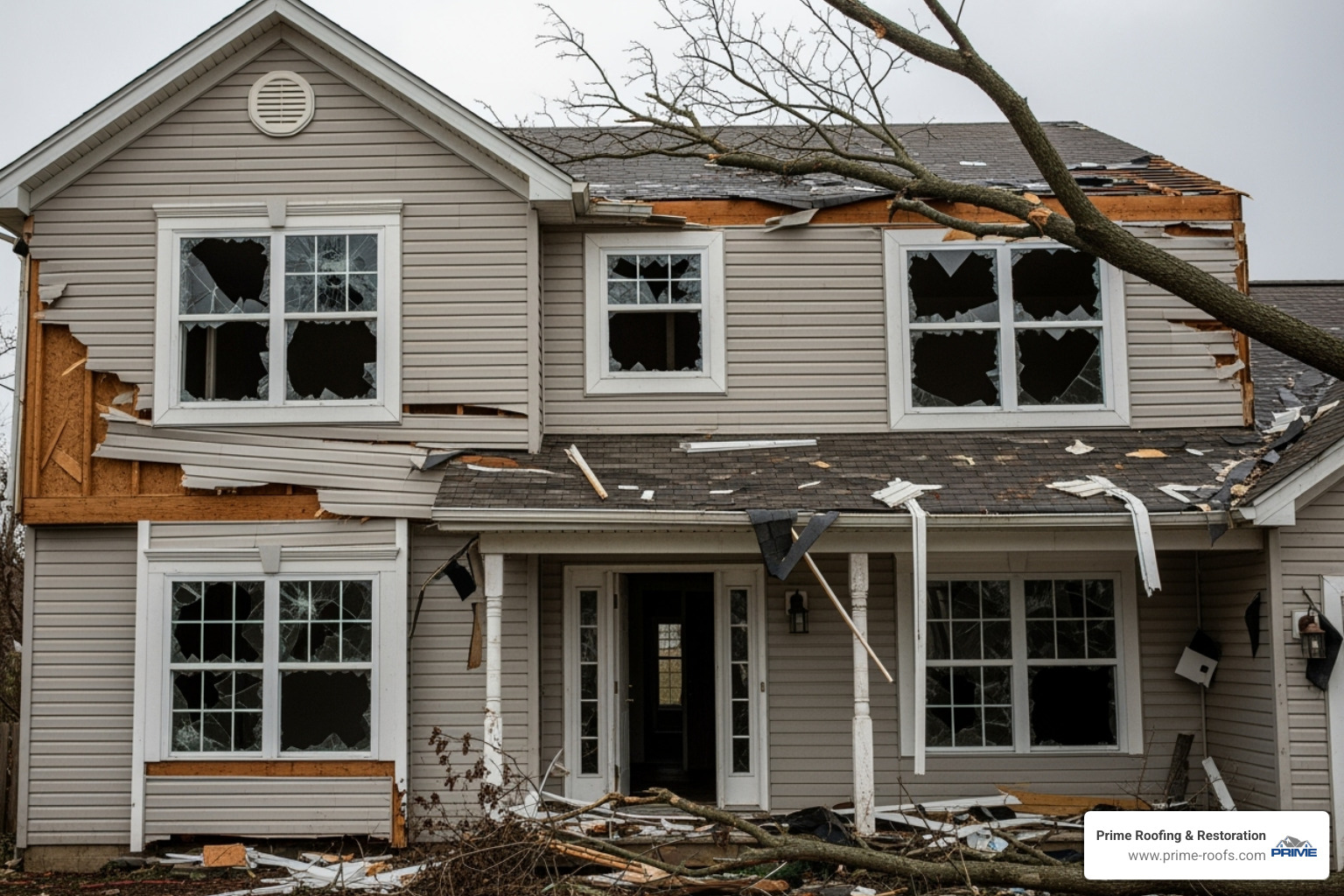
Your roof is your home’s single most important defense against severe weather, and consequently, it often bears the brunt of the storm’s fury. A post-storm inspection is critical. Here are the common signs of roof damage you should look for:
- Missing or Damaged Shingles: High winds can easily lift, crease, fold, or completely tear shingles off the roof deck. This not only leaves an obvious bald spot but also breaks the watertight seal of the surrounding shingles, creating a pathway for water to infiltrate.
- Hail Damage: This is often subtle but very destructive. On asphalt shingles, look for dark, circular spots or “bruises” where the protective granules have been forcefully knocked off. The shingle may feel soft or spongy in these spots. Hail also leaves clear evidence on metal components; check for dents on metal roof vents, flashing, and gutters.
- Granule Loss: After a storm, check your gutters and the areas around your downspouts for an accumulation of shingle granules, which look like coarse, black sand. While some granule loss is normal over time, a large amount after a storm indicates that the hail and heavy rain have aged your roof prematurely, stripping away its primary layer of protection against UV rays and fire.
- Damaged Flashing: The metal strips around chimneys, skylights, and vents are called flashing. If these are bent, lifted, or broken by wind or debris, they create some of the most common and severe leak points on a roof.
- Punctures and Penetrations: Falling tree branches or other large, wind-blown debris can puncture your roof sheathing, creating a direct hole into your attic. This type of damage requires immediate emergency tarping to prevent catastrophic water damage.
- Leaks and Water Intrusion: The most obvious sign of a problem is often the last to appear. Water stains on your ceiling or walls are a clear indication that water has already penetrated your roof and is likely soaking insulation, wood, and drywall, creating a risk for dangerous mold growth.
Damage Beyond the Roof
A thorough storm damage assessment must extend beyond the shingles. Wind, hail, and debris can damage nearly every part of your home’s exterior.
- Siding: Look for cracks, chips, or holes in vinyl, wood, or fiber cement siding caused by hail impacts or flying debris.
- Windows: Check for cracked or broken glass. Also, inspect the window frames and seals for damage that could compromise their integrity and energy efficiency.
- Gutters and Downspouts: Gutters are often dented by hail, pulled loose by high winds, or completely clogged with leaves and shingle granules, preventing them from properly directing water away from your foundation.
- Fences and Landscaping: High winds can easily knock down sections of fencing and uproot or snap trees and large shrubs, posing a threat to your home and requiring extensive cleanup.
- Outbuildings: Don’t forget to inspect sheds, detached garages, and other structures on your property, as they are often just as vulnerable to damage.
- Flooding: Intense rainfall can overwhelm drainage systems, leading to flooding in basements, crawl spaces, and other low-lying areas around your home.
Frequently Affected Areas in Alabaster
Based on our extensive experience responding to storms in the area, certain Alabaster neighborhoods and roadways consistently report higher levels of damage. Due to topography and tree density, areas like Navajo Trail, Arrowhead Trail, Thompson Road, and the Weatherly and Saddle Lake Farms neighborhoods often experience significant issues with downed trees and structural damage. Major arteries like Highway 119 also frequently face temporary closures due to fallen trees and debris, complicating post-storm travel and cleanup efforts.
Frequently Asked Questions about Alabaster Storm Damage
In the confusing aftermath of a storm, homeowners are understandably filled with questions and uncertainty. At Prime Roofing & Restoration, we believe in empowering our clients with clear, honest information. Here are detailed answers to some of the most common concerns we hear regarding Alabaster storm damage.
What is the absolute first thing I should do after a storm?
Your first priority, without question, is safety. Before inspecting any damage, conduct a wellness check on your family and neighbors. Then, assess your home for immediate, life-threatening dangers. Look and listen for downed power lines or the smell of gas. If you see a downed line, stay far away, warn others, and call 911 and Alabama Power immediately. If you smell gas, evacuate the premises instantly and call your gas utility from a safe distance. Only after you have confirmed the area is safe should you begin the process of documenting property damage. Take extensive photos and videos to support your future insurance claim.
How can I tell if my roof has hail damage?
Hail damage can be notoriously difficult for an untrained eye to spot. From the ground, the easiest signs to see are dents on soft metal objects like gutters, downspouts, and roof vents. You should also check the ground around your downspouts for a significant accumulation of shingle granules, which look like coarse sand. On the roof itself, hail creates dark, bruised-looking spots where it has impacted the shingle and knocked the granules loose. These spots may feel soft to the touch. However, because hail damage often doesn’t cause an immediate leak and can be invisible from the ground, the most reliable way to know for sure is to schedule a free professional inspection. An expert can identify subtle cracks and hidden issues that could lead to major problems down the road.
Who should I call to report a downed power line?
Never, ever approach a downed power line. Always assume it is live and extremely dangerous. The first call you should make is to Alabama Power at 1-800-888-2726 to report the specific location of the line. Your second call should be to 911. This alerts emergency services (fire department and police) to secure the area, redirect traffic, and prevent injuries until utility crews can safely handle the situation. Do not attempt to move the line or anything in contact with it.
What is the difference between a local roofer and a ‘storm chaser’?
This is a critical distinction. A local, established roofer like Prime Roofing & Restoration has a permanent physical address in the community, a long-standing reputation to uphold, and will be here to honor warranties for years to come. ‘Storm chasers’ are out-of-state contractors who travel to disaster areas, often going door-to-door. They may offer a low price, demand cash up front, and perform substandard work before disappearing, leaving homeowners with no recourse when problems arise. Always choose a licensed, insured, and local company with deep roots in Alabaster.
Will my insurance rates go up if I file a storm damage claim?
Generally, no. Homeowner’s insurance is different from auto insurance. A claim for storm damage is typically considered an ‘Act of God’ or a no-fault claim. Your individual premium should not increase simply because you filed a claim for damage that was beyond your control. However, if a region experiences a high volume of claims over several years, the rates for everyone in that area may see a slight increase to cover the insurer’s increased risk.
What if my insurance claim is denied or the settlement is too low?
This is unfortunately common, as the initial assessment from an adjuster may miss some damage. This is a key reason to have an experienced contractor on your side. If your claim is underpaid, we can help you file a supplement, which is a request for additional funds based on new evidence of damage we find. If the claim is denied, we can review the adjuster’s report with you to determine if there are grounds for an appeal. Having a professional advocate who speaks the same language as the insurance company is invaluable in these situations.
Conclusion: Your Partner in Storm Recovery
Living in Alabaster means accepting the reality of our location in “Dixie Alley.” Severe weather is not an anomaly; it is a fundamental part of our environment. The constant threat of Alabaster storm damage, from destructive high winds and tornadoes to the relentless impact of damaging hail, requires more than just hope—it demands diligent preparation and a reliable action plan. Understanding the risks, knowing what to look for after a storm, and acting swiftly and decisively can make a monumental difference in your home’s recovery and your family’s peace of mind.
The path forward after a storm is clear: prioritize safety above all else, carefully document every detail of the damage, and then immediately call for professional, local help. Attempting to steer the complex, often frustrating worlds of roof damage assessment and insurance claims on your own can be an overwhelming and costly mistake. As a local company that has proudly helped hundreds of Alabaster families recover and rebuild, Prime Roofing & Restoration possesses an intimate understanding of the unique challenges our local weather presents.
We are more than just contractors; we are your neighbors, committed to the well-being of our community and ready to assist with 24/7 emergency services. Our licensed and insured experts provide comprehensive, end-to-end support, from the critical initial inspection and insurance advocacy to the final, high-quality restoration. We ensure your home is not just repaired, but fortified against the next storm. When you face the aftermath of severe weather and need a partner you can unequivocally trust, count on Prime Roofing & Restoration to be there. Call us today at (205) 661-8190 to schedule a post-storm inspection or to discuss a proactive plan for your home’s protection.