
Why Understanding the Roof Insurance Process Matters
Getting a roof replaced on insurance can feel overwhelming, especially when you’re facing storm damage and repair bills. The good news is that most homeowners insurance policies cover roof replacement for damage from covered events like storms, hail, or fallen trees. When storm damage strikes your Alabama home, having expert guidance in protecting your home is essential. Understanding the process is the first step toward a successful claim.
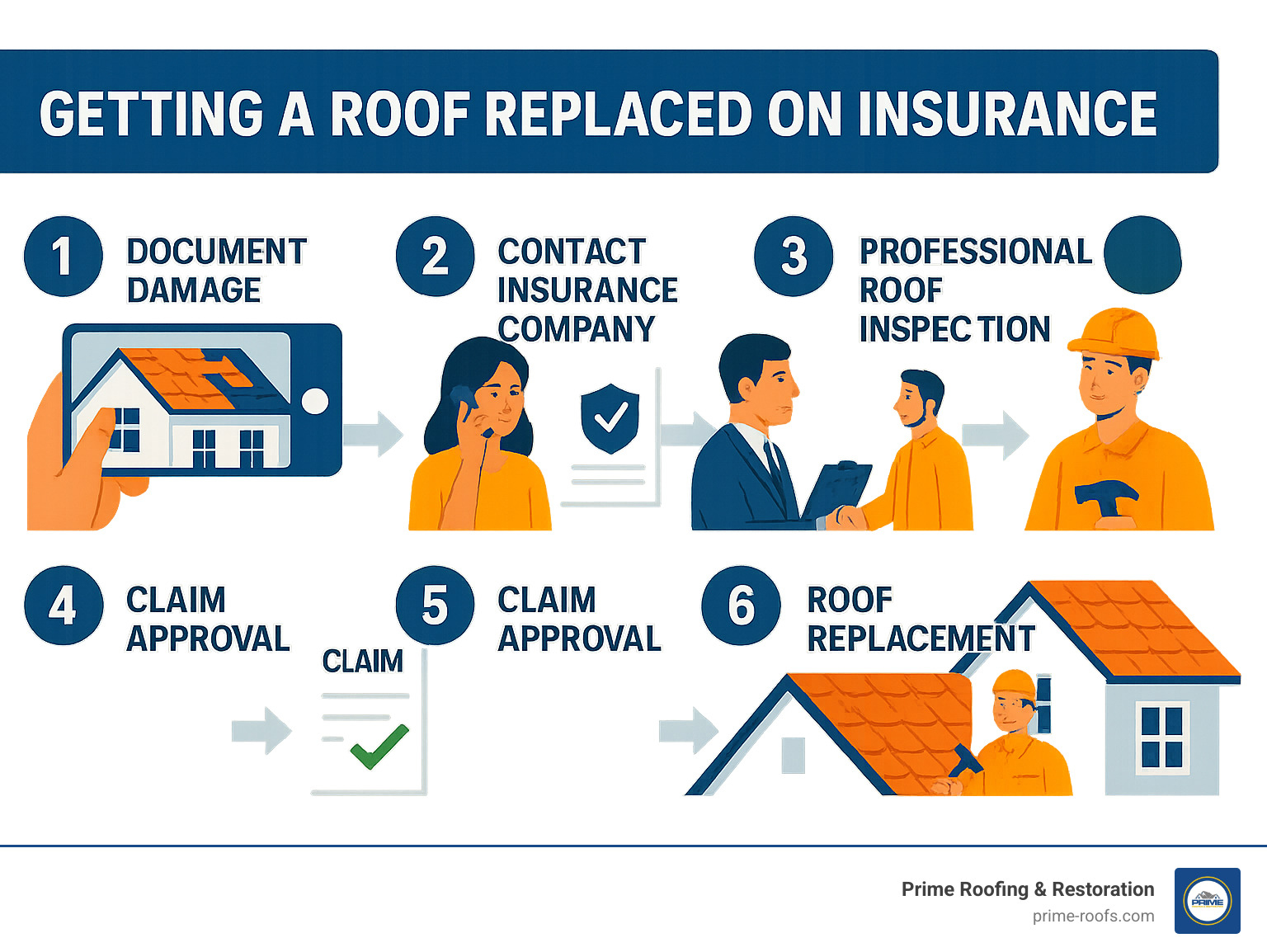
Here are the key steps involved:
- Document Damage: Take photos and videos from the ground immediately.
- Review Your Policy: Know if you have Replacement Cost Value (RCV) or Actual Cash Value (ACV) coverage.
- File Promptly: Most insurers require claims within 30-60 days.
- Get a Professional Inspection: Have a contractor assess the full extent of the damage.
- Meet the Adjuster: Ensure your roofer is present during the insurance inspection.
- Supplement if Needed: Address any missed items in the initial estimate.
The average cost for a roof replacement in Alabama can range from $8,500 to $24,000, making insurance coverage crucial. I’m Bill Spencer, owner of Prime Roofing & Restoration. With over five years of experience, I’ve helped countless Alabama homeowners steer the complex process of getting a roof replaced on insurance and secure fair compensation.
Understanding Your Roof Insurance Coverage Before You File
Before getting a roof replaced on insurance, you must understand what your policy covers. Think of it as a safety net for sudden disasters, not a maintenance plan for wear and tear. Policies protect you from “covered perils”—unexpected events like wind from severe storms, hail that cracks shingles, or damage from fallen trees and fire.
However, knowing what’s not covered is equally important. Insurance won’t pay for damage from neglect, gradual leaks, or normal aging. If your roof has deteriorated over years, the replacement cost will likely fall on you. For more details on coverage types, this resource on what is ACV vs. replacement cost for roofs? is helpful.
The Difference Between RCV and ACV Policies
Understanding your policy type—Replacement Cost Value (RCV) or Actual Cash Value (ACV)—is critical for your wallet.
Replacement Cost Value (RCV) policies are the gold standard. They pay the full cost to replace your damaged roof with new materials at today’s prices, minus your deductible. You typically get an initial payment for the depreciated value, and the rest (recoverable depreciation) is paid after the work is complete.
Actual Cash Value (ACV) policies subtract depreciation from your payout. This means your 15-year-old roof is valued as such, and you’ll receive less money, requiring you to pay more out-of-pocket to cover the full replacement cost.
| Feature | Replacement Cost Value (RCV) Policy | Actual Cash Value (ACV) Policy |
|---|---|---|
| Payout Basis | Full cost to replace with new, similar materials | Depreciated value of the roof at time of loss |
| Depreciation | Initially withheld, then paid after completion | Deducted from payout upfront |
| Out-of-Pocket | Typically only the deductible | Deductible plus depreciated amount |
| Financial Risk | Lower, covers most of new roof’s cost | Higher, you pay more for older roof |
The difference can be thousands of dollars. If you have an ACV policy, consider upgrading to RCV before you need it.
How Your Roof’s Age and Condition Impact Your Claim
Your roof’s age significantly impacts your claim. Insurers are less willing to pay full replacement costs for older roofs. Roof lifespans vary by material: asphalt shingles last about 20 years, while metal can last 50 or more.
Many insurers follow a “20-year rule.” Once a roof hits this age, coverage may become limited, with some companies only paying for repairs or applying heavy depreciation. Adjusters are trained to distinguish between storm damage and normal wear-and-tear, like granule loss or curling shingles from age. If your roof shows long-term deterioration, your claim might be denied.
Maintenance records are your best friend. They prove you’ve been a responsible homeowner and that damage is from a covered event, not neglect. Some insurers may even refuse to write or renew policies for homes with older roofs. For more insight, this article explains how a roof’s age can affect your claim.
If you’re concerned about your roof’s condition, our guide on the 5 Signs You Need Roof Replacement can help you be proactive.
The Step-by-Step Guide to Getting a Roof Replaced on Insurance
The journey of getting a roof replaced on insurance is manageable when you know the steps. The key ingredients are thorough documentation, clear communication, and a professional team on your side. Here’s a walkthrough of the process.

Step 1: Assess and Document the Damage
After a storm, your first mission is to document the damage—safely. Do not climb on your roof.
- Ground-Level Inspection: Walk around your property and look for missing shingles, torn materials, or debris. Check gutters, downspouts, and siding.
- Photo and Video Evidence: Use your phone to take wide shots of the roof and close-ups of damaged areas. Document any interior damage like water stains.
- Date and Time: Note when the storm occurred and when you found the damage to establish a timeline.
- Collateral Damage: Photograph dents on your garage door, A/C unit, or car as evidence of the storm’s severity.
For help identifying specific issues, see our guide on how to spot roof hail damage.
Step 2: Make Temporary Repairs and Contact a Professional
Next, prevent further damage. Cover exposed areas with tarps to mitigate water intrusion. Keep all receipts for materials used in temporary fixes, as most policies reimburse these reasonable costs.
Should you call a roofer or your insurer first? I always recommend calling a reputable roofing contractor first. An experienced roofer can assess the full scope of damage before you even speak to your insurance company. A professional inspection provides a detailed assessment that strengthens your claim and can make the difference between approval and denial. For an overview of the process, you can download the steps for the storm restoration process from GAF.
Step 3: File Your Claim and Prepare for the Adjuster
Now it’s time to file your claim. Contact your insurance company promptly, as most have a filing deadline (often 30-60 days). Have your documentation ready and provide clear, factual information.
You’ll be assigned a claim number—keep it handy. Your insurer will then assign an adjuster to schedule an on-site inspection. This is the most critical meeting in the process.
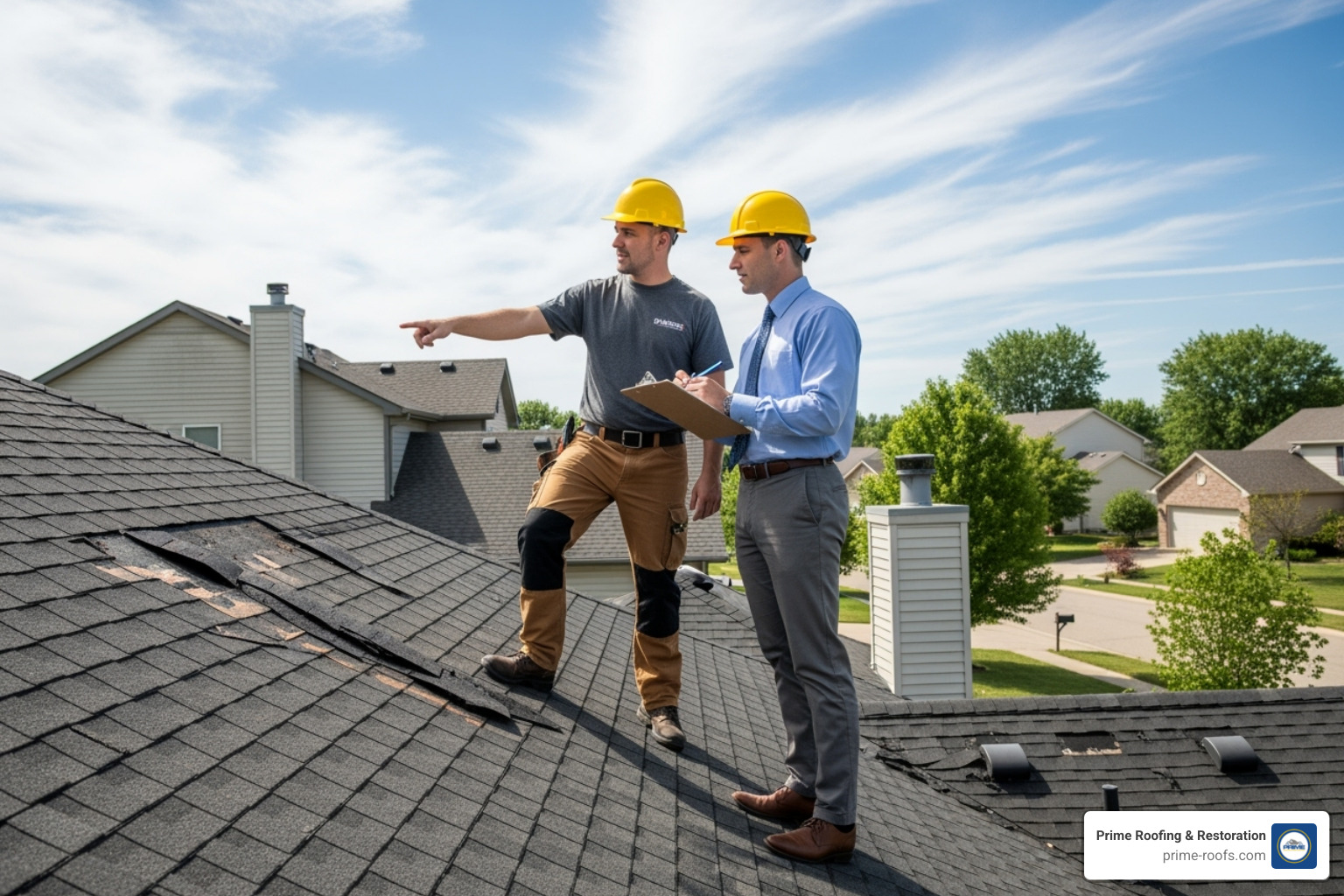
Have your chosen roofing contractor present during the adjuster’s visit. Your contractor is a roofing specialist who can point out damage the adjuster might miss and explain technical repair requirements. After the inspection, the adjuster will provide a settlement estimate. Compare this carefully with your contractor’s assessment. Having a professional advocate is key to securing fair compensation for getting a roof replaced on insurance.
Learn more about how we streamline this with our Insurance Roof Replacement process and support homeowners every step of the way.
Maximizing Your Claim and Working with Professionals
After the adjuster’s inspection, the critical phase of ensuring you receive full compensation begins. This is where getting a roof replaced on insurance hinges on having the right professional team.
The Crucial Role of a Reputable Roofing Contractor
Think of your roofing contractor as your advocate. They are your insurance claim partner who speaks the language of adjusters.
- Advocacy and Expertise: Experienced contractors understand insurance processes and what’s needed to approve your claim.
- Detailed Estimates: A professional provides comprehensive documentation covering every material, labor cost, and code requirement to justify your claim.
- Identifying Missed Items: Contractors often spot subtle damage or overlooked components (like flashing or ventilation) that adjusters might miss.
- Code Compliance: Building codes evolve. Your new roof must meet current standards, and these upgrade costs are often covered by insurance.
A Haag Certified Roof Inspector adds significant credibility to damage assessments, which insurers respect. Understanding why a Haag Certified Roof Inspector matters can give you confidence in the process.
How to Maximize Your Payout for Getting a Roof Replaced on Insurance
Getting the maximum payout is about ensuring you receive every dollar you’re entitled to. Here’s how:
- Maintain Thorough Documentation: Your photos, videos, and notes are crucial evidence.
- Know Your Policy: Understand if you have ACV or RCV coverage and what your deductible is.
- Use Professional Estimates: Your contractor’s itemized estimate is the foundation for ensuring the insurance payout covers everything.
- Supplement the Claim: It’s standard practice for your contractor to submit a supplement with documentation for items the adjuster missed or underestimated. Use a Supplementing Checklist to stay organized.
- Recover Depreciation: With an RCV policy, your contractor must submit completion paperwork to release the final payment.
- Keep Meticulous Records: Maintain a file of all correspondence, estimates, and invoices.
What to Do If Your Claim for Getting a Roof Replaced on Insurance is Denied
A denial isn’t always the final word. Many claims can be successfully appealed.
- Understand the Reason: Insurers must provide a written explanation for the denial. Address their reasoning directly.
- Request a Second Inspection: A different adjuster, accompanied by your contractor, may see things differently.
- Provide Additional Evidence: Submit more photos, maintenance records, or weather reports to strengthen your appeal.
- Consider a Public Adjuster: For complex claims, these independent professionals work for you, not the insurer, to negotiate a settlement.
- Seek Legal Advice: If you believe your claim was handled in bad faith, an attorney can advise you on your options.
Persistence pays off. Don’t give up if you believe your claim is legitimate.
Common Pitfalls and Potential Consequences
Getting a roof replaced on insurance isn’t always a smooth process. Understanding potential roadblocks can help you prepare and avoid frustration.

Top Reasons Roof Insurance Claims Are Denied
Most claim denials follow predictable patterns, meaning you can often avoid them with proper preparation.
- Lack of Maintenance: Insurers cover sudden accidents, not years of neglect. Clogged gutters or moss-covered shingles can lead to a denial.
- Pre-existing Damage: Insurance won’t pay for problems that existed before the storm. Photos of your roof’s prior condition are valuable.
- Wear and Tear: Adjusters are trained to distinguish normal aging (like curling shingles) from actual storm damage (like hail impacts).
- Improper Installation: If your roof fails because it was installed incorrectly, the claim will likely be denied. This may fall under a contractor’s warranty, not your home policy.
- Filing Too Late: Most policies require you to report damage within 30 to 60 days.
- Non-Covered Perils: Standard policies exclude events like floods or earthquakes, which require separate coverage. This resource details common perils not covered by insurance.
Will Filing a Claim Increase Your Future Premiums?
This is a common concern. While the answer isn’t always straightforward, here’s what you should know.
Claims for “Acts of God” (like hail or wind) are generally viewed more favorably than claims from negligence. However, your overall claim history matters; multiple claims in a few years can signal higher risk and lead to premium increases or even non-renewal.
Sometimes, regional rate increases occur after widespread storm damage affects an entire area, raising premiums for everyone regardless of their individual claim history.
The bottom line is to weigh the cost versus the benefit. For significant damage far exceeding your deductible, filing a claim makes financial sense. For minor damage, paying out-of-pocket might be a smarter long-term strategy. Don’t let fear stop you from filing a legitimate claim—that’s what insurance is for.
Frequently Asked Questions about Roof Insurance Claims
When homeowners are getting a roof replaced on insurance, many questions come up. Here are answers to the most common ones we hear.
How much does a new roof cost?
The cost depends on several factors, but in Alabama, you can expect a range. The average roof replacement typically costs between $8,500 and $24,000.
- Asphalt Shingles: The most popular choice, costing between $10,000 and $24,000 for a typical home. They offer a great balance of cost and durability, lasting about 20 years.
- Metal Roofing: More expensive upfront but lasts up to 50 years and can sometimes lower insurance premiums due to its durability.
- Slate Roofing: A premium, long-term investment that can last over 100 years, but with a significantly higher price tag.
Your roof’s complexity, pitch, and local labor rates will also affect the final price.
Can I choose my own roofing contractor?
Yes, you have the right to choose your own contractor. Your insurance company may offer a list of “preferred” contractors, but you are not required to use them.
Choose a local contractor who will be around to honor their warranty. When vetting contractors, check for:
- Proper Licensing and Insurance: This is non-negotiable.
- Insurance Claim Experience: A contractor who understands the claims process is invaluable.
- Positive Reviews and References: See what past customers have to say.
- Strong Warranties: Ensure they stand behind their workmanship and materials.
If you’re in our service area, you can find trusted roofers near me in Alabaster, AL who know the local market.
Can I keep the leftover insurance money?
The short answer is no. Attempting to pocket leftover insurance money is not advisable.
Insurance payouts are specifically for restoring your home to its pre-damage condition. Using the funds for other purposes can be considered insurance fraud. If you have a mortgage, the insurance check is typically co-payable to you and your mortgage company, which releases funds in stages as work is completed.
With an RCV policy, the final payment (recoverable depreciation) is only released after you provide proof of completion. If you don’t fix the roof, you won’t get that money, and any future claims for the same damage will likely be denied.
You can, however, use the insurance money as a base and pay out-of-pocket to upgrade your materials. The key is to use the funds for their intended purpose: getting a roof replaced on insurance.
Let the Experts Guide You Through Your Roof Replacement
Getting a roof replaced on insurance doesn’t have to be an overwhelming ordeal. With the right knowledge and a trusted partner, you can steer the process with confidence.
The keys to a successful claim are simple:
- Be Proactive: Regular maintenance and inspections are your first line of defense.
- Document Everything: Photos, videos, and notes are undeniable proof of damage.
- Understand Your Policy: Knowing your coverage (RCV vs. ACV) and deductible is crucial.
- Partner with a Professional: An experienced roofing contractor is your advocate, translator, and guide through the insurance maze.
Here in Alabama, storms can create roofing emergencies in an instant. At Prime Roofing & Restoration, we’ve built our reputation on simplifying this complex process for homeowners. We understand that behind every claim is a family that wants their home restored quickly and fairly.
Don’t let storm damage leave you feeling defeated. With expert help with your Insurance Roof Replacement, you can get back under a safe, sturdy roof and move forward with confidence. We offer free estimates to help you get started. Call us at (205) 661-8190 to schedule your free inspection.